Czech Republic Cottonseed Oil Market: Import Trend Analysis
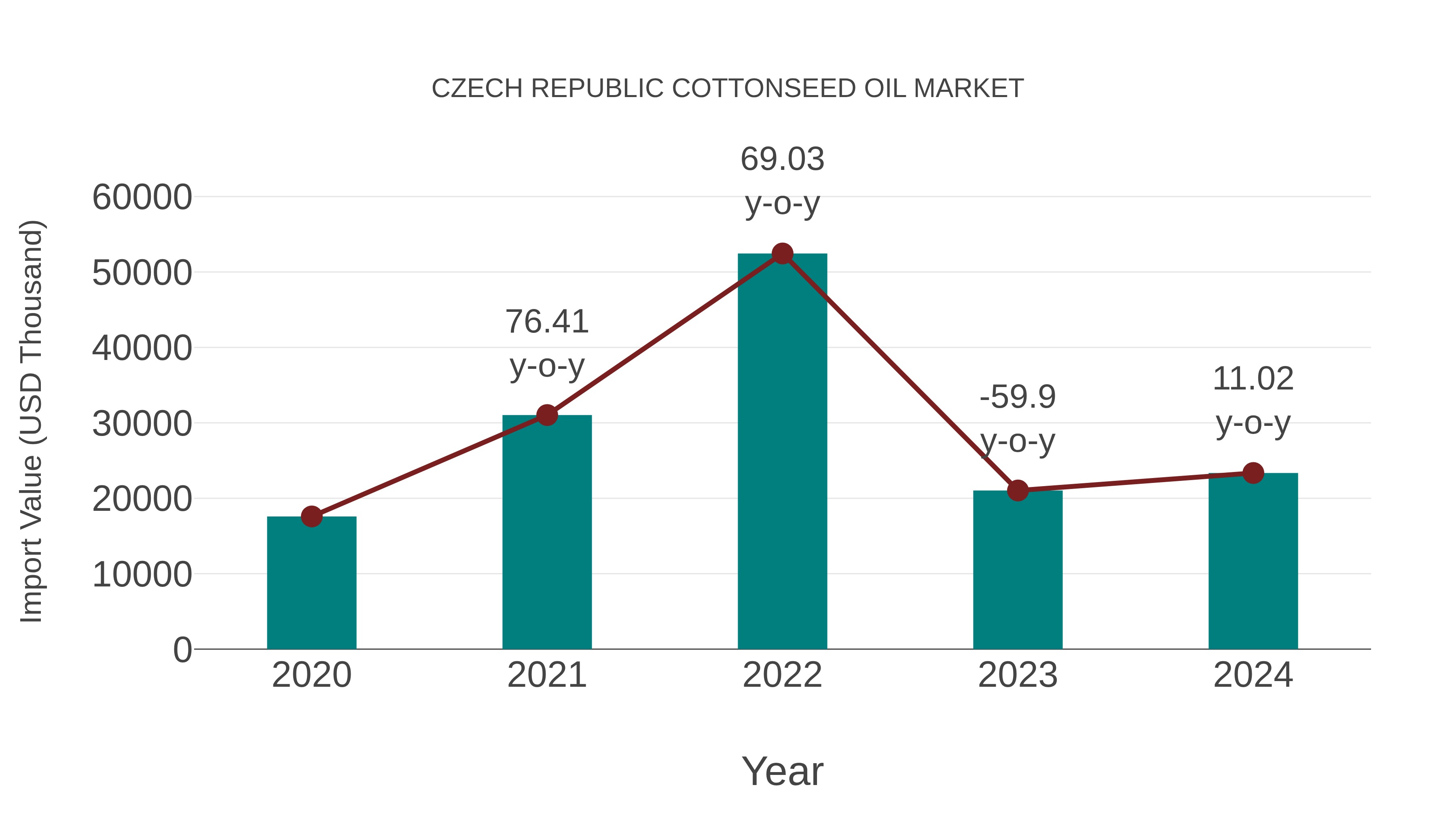
In the Czech Republic`s cottonseed oil market, the import trend exhibited positive momentum from 2023 to 2024, with a growth rate of 11.02%. The compound annual growth rate (CAGR) for imports between 2020 and 2024 stood at 7.34%. This growth can be attributed to a steady demand shift towards cottonseed oil products in the region, indicating market stability and consumer preferences for this particular commodity.
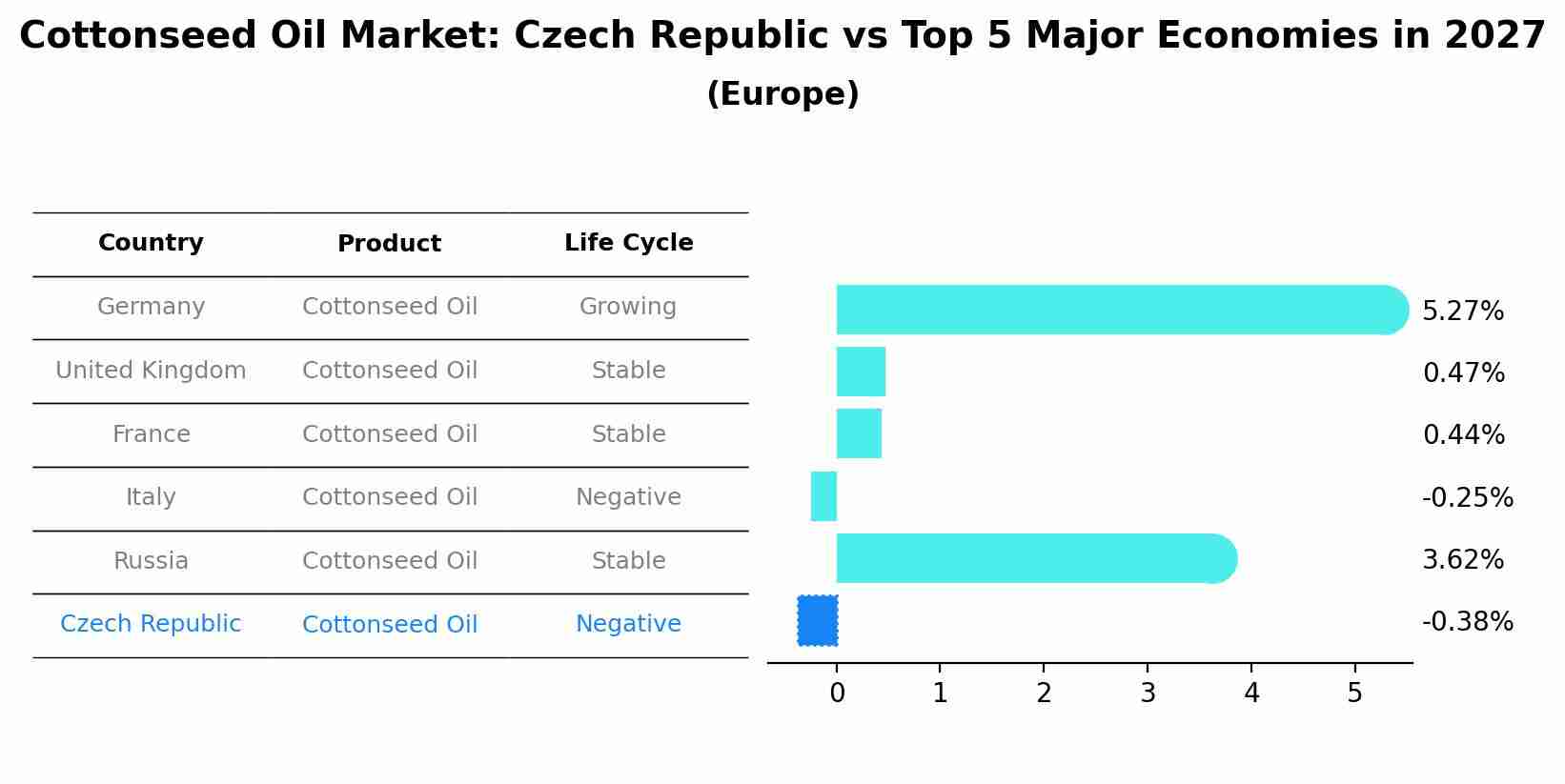
Cottonseed Oil Market: Czech Republic vs Top 5 Major Economies in 2027 (Europe)
By 2027, the Cottonseed Oil market in Czech Republic is anticipated to reach a growth rate of -0.38%, as part of an increasingly competitive Europe region, where Germany remains at the forefront, supported by United Kingdom, France, Italy and Russia, driving innovations and market adoption across sectors.
Czech Republic Cottonseed Oil Market Overview
The cottonseed oil market in the Czech Republic is witnessing growth as consumers seek healthy cooking oils and ingredients. Cottonseed oil, known for its light flavor and high smoke point, is commonly used in food processing, frying, and salad dressings. The market is driven by the rising awareness of healthy eating habits and the demand for versatile cooking oils. Additionally, the growth of the food industry and the increasing use of cottonseed oil as an ingredient in processed foods are contributing to its market expansion. As health-conscious consumers continue to seek healthier alternatives, the cottonseed oil market is expected to thrive.
Drivers of the market
The cottonseed oil market in the Czech Republic is witnessing growth due to its applications in cooking and food processing. As consumers seek healthier cooking oils, cottonseed oil, known for its mild flavor and high smoke point, is gaining popularity, driving demand for this product.
Challenges of the market
The Cottonseed Oil Market in the Czech Republic faces challenges related to raw material availability, health perceptions, and market competition. The production of cottonseed oil is highly dependent on the availability of cotton, which can fluctuate due to agricultural conditions or global market trends. Additionally, there is growing consumer concern over the health effects of cottonseed oil, particularly its high omega-6 fatty acid content, which has been linked to inflammation. The market is also competitive, with other vegetable oils, such as sunflower or olive oil, offering alternatives to consumers.
Government Policy of the market
The production of cottonseed oil in the Czech Republic is subject to food safety regulations that align with EU directives. The government supports the agricultural sector by promoting sustainable farming practices and providing subsidies for the processing of cotton byproducts. The emphasis is on maintaining high quality and safety standards in food production.
Key Highlights of the Report:
- Czech Republic Cottonseed Oil Market Outlook
- Market Size of Czech Republic Cottonseed Oil Market, 2025
- Forecast of Czech Republic Cottonseed Oil Market, 2032
- Historical Data and Forecast of Czech Republic Cottonseed Oil Revenues & Volume for the Period 2022-2032F
- Czech Republic Cottonseed Oil Market Trend Evolution
- Czech Republic Cottonseed Oil Market Drivers and Challenges
- Czech Republic Cottonseed Oil Price Trends
- Czech Republic Cottonseed Oil Porter's Five Forces
- Czech Republic Cottonseed Oil Industry Life Cycle
- Historical Data and Forecast of Czech Republic Cottonseed Oil Market Revenues & Volume By Raw Material for the Period 2022-2032F
- Historical Data and Forecast of Czech Republic Cottonseed Oil Market Revenues & Volume By Genetically Modified Cotton for the Period 2022-2032F
- Historical Data and Forecast of Czech Republic Cottonseed Oil Market Revenues & Volume By Non-GM Cotton for the Period 2022-2032F
- Historical Data and Forecast of Czech Republic Cottonseed Oil Market Revenues & Volume By End-Users for the Period 2022-2032F
- Historical Data and Forecast of Czech Republic Cottonseed Oil Market Revenues & Volume By Retail for the Period 2022-2032F
- Historical Data and Forecast of Czech Republic Cottonseed Oil Market Revenues & Volume By Food Processing for the Period 2022-2032F
- Historical Data and Forecast of Czech Republic Cottonseed Oil Market Revenues & Volume By Cosmetics for the Period 2022-2032F
- Historical Data and Forecast of Czech Republic Cottonseed Oil Market Revenues & Volume By Other Applications for the Period 2022-2032F
- Czech Republic Cottonseed Oil Import Export Trade Statistics
- Market Opportunity Assessment By Raw Material
- Market Opportunity Assessment By End-Users
- Czech Republic Cottonseed Oil Top Companies Market Share
- Czech Republic Cottonseed Oil Competitive Benchmarking By Technical and Operational Parameters
- Czech Republic Cottonseed Oil Company Profiles
- Czech Republic Cottonseed Oil Key Strategic Recommendations






































