Czech Republic Dermatology Drugs Market Size, Share & Growth Rate
The Czech Republic Dermatology Drugs Market was estimated at USD 942 Million in 2025 and is projected to reach USD 1368 Million by 2032, growing at a CAGR of 5.5% from 2026 to 2032. This upward trajectory is propelled by an increasing prevalence of skin conditions, such as acne, psoriasis, and eczema, coupled with heightened public awareness regarding skin health. Furthermore, the burgeoning demand for effective treatments and innovative therapies is expected to significantly contribute to the market's growth.
Czech Republic Dermatology Drugs Market Year-wise Growth Rate and Key Drivers
This graph highlights how the Czech Republic Dermatology Drugs Market has steadily grown over the years, supported by major growth factors.
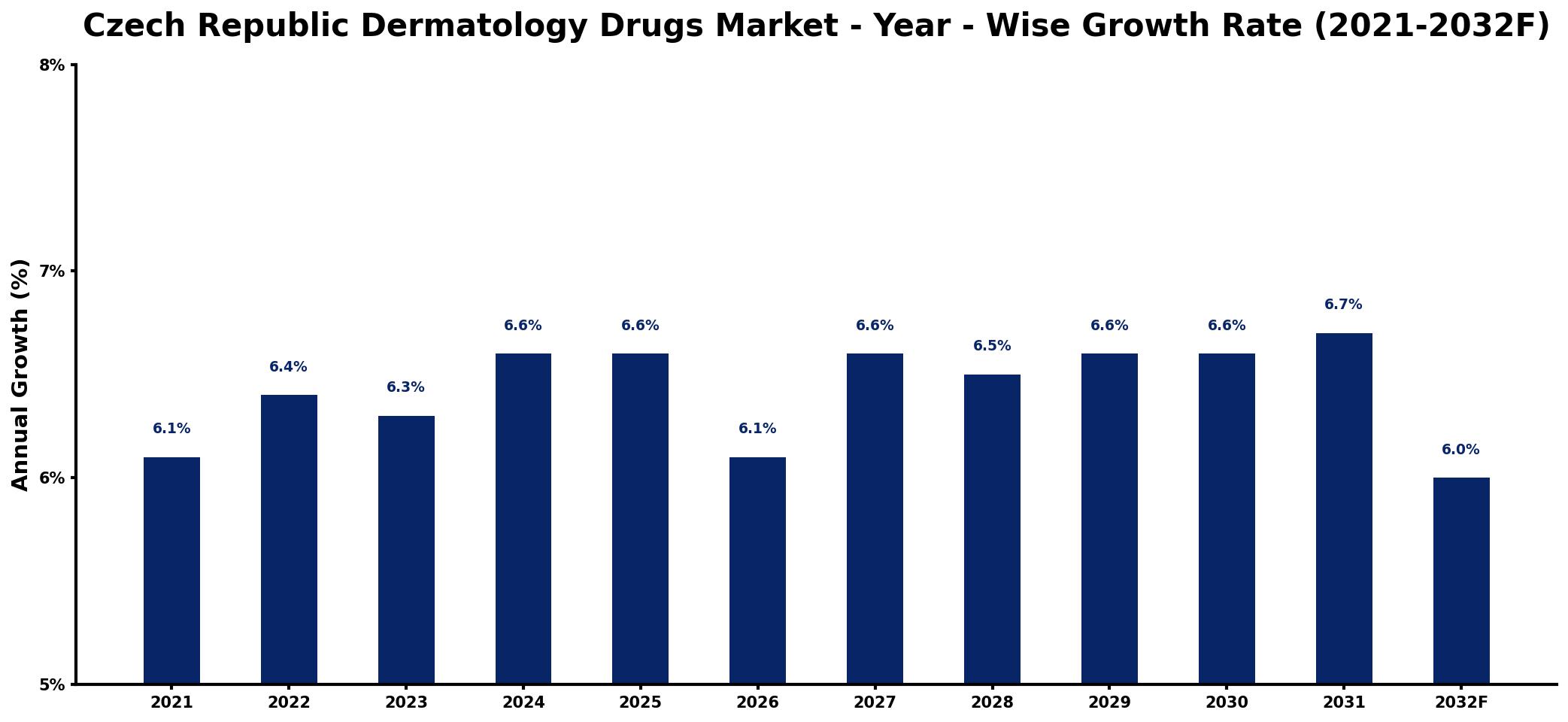
The table below presents the year‑wise growth rates along with the key drivers influencing the market
| Year | Growth Rate | Major Drivers |
| 2021 | 6.1% | Rising demand for skin treatments |
| 2022 | 6.4% | Expansion of healthcare facilities |
| 2023 | 6.3% | Increased investment in R&D |
| 2024 | 6.6% | Growing awareness of skin conditions |
| 2025 | 6.6% | Technological advancements in treatments |
| 2026 | 6.1% | Emerging trends in holistic care |
| 2027 | 6.6% | increased domestic production output |
| 2028 | 6.5% | Collaborations with research institutions |
| 2029 | 6.6% | Enhanced digital health platforms |
| 2030 | 6.6% | Focus on preventive care strategies |
| 2031 | 6.7% | Growing emphasis on patient education |
| 2032 | 6.0% | Rise in telehealth consultations |
Note: Market size estimations and growth projections presented in this report are based on 6Wresearch's proprietary forecasting methodology, utilizing the latest available industry data, government publications, and primary research inputs.
Czech Republic Dermatology Drugs Market Synopsis
The Czech Republic's dermatology drugs market is witnessing substantial momentum, attributed largely to the evolving landscape of skin disorder treatments. As the market expands, opportunities for novel drug formulations and biologics continue to emerge, fostering a competitive environment that focuses on patient outcomes and therapeutic effectiveness.
However, despite this growth, the market faces ongoing challenges related to regulatory hurdles and competitive pressures. With numerous products vying for market share, stakeholders must navigate a complex approval process while ensuring they meet rising patient expectations for effective dermatological solutions.
Czech Republic Dermatology Drugs Market Key Takeaways
- The market is projected to reach USD 1368 Million by 2032, highlighting a significant growth opportunity.
- Rising public awareness about skin health is driving demand for dermatology treatments.
- Innovative drug formulations and biologics are enhancing therapeutic effectiveness.
- Aesthetic dermatology is becoming a crucial segment of the market, contributing to expansion.
- Regulatory challenges continue to pose risks for new product introductions and market dynamics.
Evaluation of Restraints in Czech Republic Dermatology Drugs Market
While the Czech Republic dermatology drugs market demonstrates robust growth potential, several restraints could inhibit its advancement. Regulatory approval processes are often lengthy and costly, which can delay the introduction of groundbreaking therapies. The market's saturation with diverse treatment options creates intense competition, leading to price pressures that can compromise profitability for pharmaceutical companies. Additionally, ensuring patient adherence to prescribed treatments remains a significant challenge for healthcare providers, affecting overall treatment outcomes.
Czech Republic Dermatology Drugs Market Trends
Current trends in the Czech Republic dermatology drugs market include an increasing focus on personalized medicine and the integration of digital health solutions. Patients are becoming more involved in their treatment journeys, prompting a rise in teledermatology services and mobile health applications. This shift not only improves access to care but also enhances patient engagement, fostering better adherence to treatment plans. Moreover, the growing interest in anti-aging treatments and cosmetic dermatology is reshaping the product offerings and marketing strategies within the sector.
Czech Republic Dermatology Drugs Market Opportunities
Significant growth opportunities lie within the Czech Republic dermatology drugs market, particularly in niche segments like biologics and personalized treatments. Companies investing in research and development of novel therapies for chronic skin conditions can capitalize on the increasing demand for effective solutions. Furthermore, expanding the range of aesthetic products that cater to anti-aging concerns presents an avenue for revenue generation. Engaging with patients through educational initiatives about skin health can also enhance market penetration and foster loyalty to innovative treatment options.
Government Initiatives in the Czech Republic Dermatology Drugs Market
The Czech government actively supports the dermatology drugs market by regulating the approval processes for medications and fostering an environment that encourages transparency and safety. Public initiatives aimed at raising awareness about skin health are instrumental in driving demand for dermatological treatments. These government programs not only promote effective treatment availability but also empower patients to seek timely medical advice for skin conditions, thereby positively impacting market growth.
Future Insights of the Czech Republic Dermatology Drugs Market
Looking ahead to 2026-2032, the Czech Republic dermatology drugs market is poised for significant transformation. Advances in biotechnology and personalized medicine will likely dominate the landscape, offering targeted therapies that address specific skin disorders more effectively. The integration of digital health technologies will continue to evolve, enhancing patient access and adherence. As consumer attitudes shift towards proactive skin health management, market players will need to adapt their strategies to meet the growing expectations for innovative and effective dermatological solutions.
Czech Republic Dermatology Drugs Market Latest Developments (2025 - 2026)
Recent developments in the Czech Republic dermatology drugs market reflect a dynamic shift towards innovative treatment solutions. Companies are increasingly focusing on research collaborations to develop advanced therapies, particularly in the realm of biologics. There's also a notable rise in partnerships aimed at integrating digital health platforms to streamline patient engagement and care delivery. These trends highlight the market's commitment to enhancing therapeutic options and improving patient outcomes.
Czech Republic Dermatology Drugs Market - Key Attractiveness of the Report
- 10 Years of Market Numbers
- Historical Data Starting from 2022 to 2025
- Base Year: 2025
- Forecast Data until 2032
- Key Performance Indicators Impacting the Market
- Major Upcoming Developments and Projects
Key Highlights of the Report:
- Czech Republic Dermatology Drugs Market Outlook
- Market Size of Czech Republic Dermatology Drugs Market, 2025
- Forecast of Czech Republic Dermatology Drugs Market, 2032
- Historical Data and Forecast of Czech Republic Dermatology Drugs Revenues & Volume for the Period 2022-2032F
- Czech Republic Dermatology Drugs Market Trend Evolution
- Czech Republic Dermatology Drugs Market Drivers and Challenges
- Czech Republic Dermatology Drugs Price Trends
- Czech Republic Dermatology Drugs Porter's Five Forces
- Czech Republic Dermatology Drugs Industry Life Cycle
- Historical Data and Forecast of Czech Republic Dermatology Drugs Market Revenues & Volume By Application for the Period 2022-2032F
- Historical Data and Forecast of Czech Republic Dermatology Drugs Market Revenues & Volume By Acne for the Period 2022-2032F
- Historical Data and Forecast of Czech Republic Dermatology Drugs Market Revenues & Volume By Atopic Dermatitis for the Period 2022-2032F
- Historical Data and Forecast of Czech Republic Dermatology Drugs Market Revenues & Volume By Psoriasis for the Period 2022-2032F
- Historical Data and Forecast of Czech Republic Dermatology Drugs Market Revenues & Volume By Others for the Period 2022-2032F
- Historical Data and Forecast of Czech Republic Dermatology Drugs Market Revenues & Volume By Route of Administration for the Period 2022-2032F
- Historical Data and Forecast of Czech Republic Dermatology Drugs Market Revenues & Volume By Oral for the Period 2022-2032F
- Historical Data and Forecast of Czech Republic Dermatology Drugs Market Revenues & Volume By Parenteral for the Period 2022-2032F
- Historical Data and Forecast of Czech Republic Dermatology Drugs Market Revenues & Volume By Topical for the Period 2022-2032F
- Historical Data and Forecast of Czech Republic Dermatology Drugs Market Revenues & Volume By Distribution Channel for the Period 2022-2032F
- Historical Data and Forecast of Czech Republic Dermatology Drugs Market Revenues & Volume By Hospital Pharmacy for the Period 2022-2032F
- Historical Data and Forecast of Czech Republic Dermatology Drugs Market Revenues & Volume By Retail Pharmacy for the Period 2022-2032F
- Historical Data and Forecast of Czech Republic Dermatology Drugs Market Revenues & Volume By Online Pharmacy for the Period 2022-2032F
- Czech Republic Dermatology Drugs Import Export Trade Statistics
- Market Opportunity Assessment By Application
- Market Opportunity Assessment By Route of Administration
- Market Opportunity Assessment By Distribution Channel
- Czech Republic Dermatology Drugs Top Companies Market Share
- Czech Republic Dermatology Drugs Competitive Benchmarking By Technical and Operational Parameters
- Czech Republic Dermatology Drugs Company Profiles
- Czech Republic Dermatology Drugs Key Strategic Recommendations






































