Czech Republic Sodium Sulfide Market Size (2020-2030)
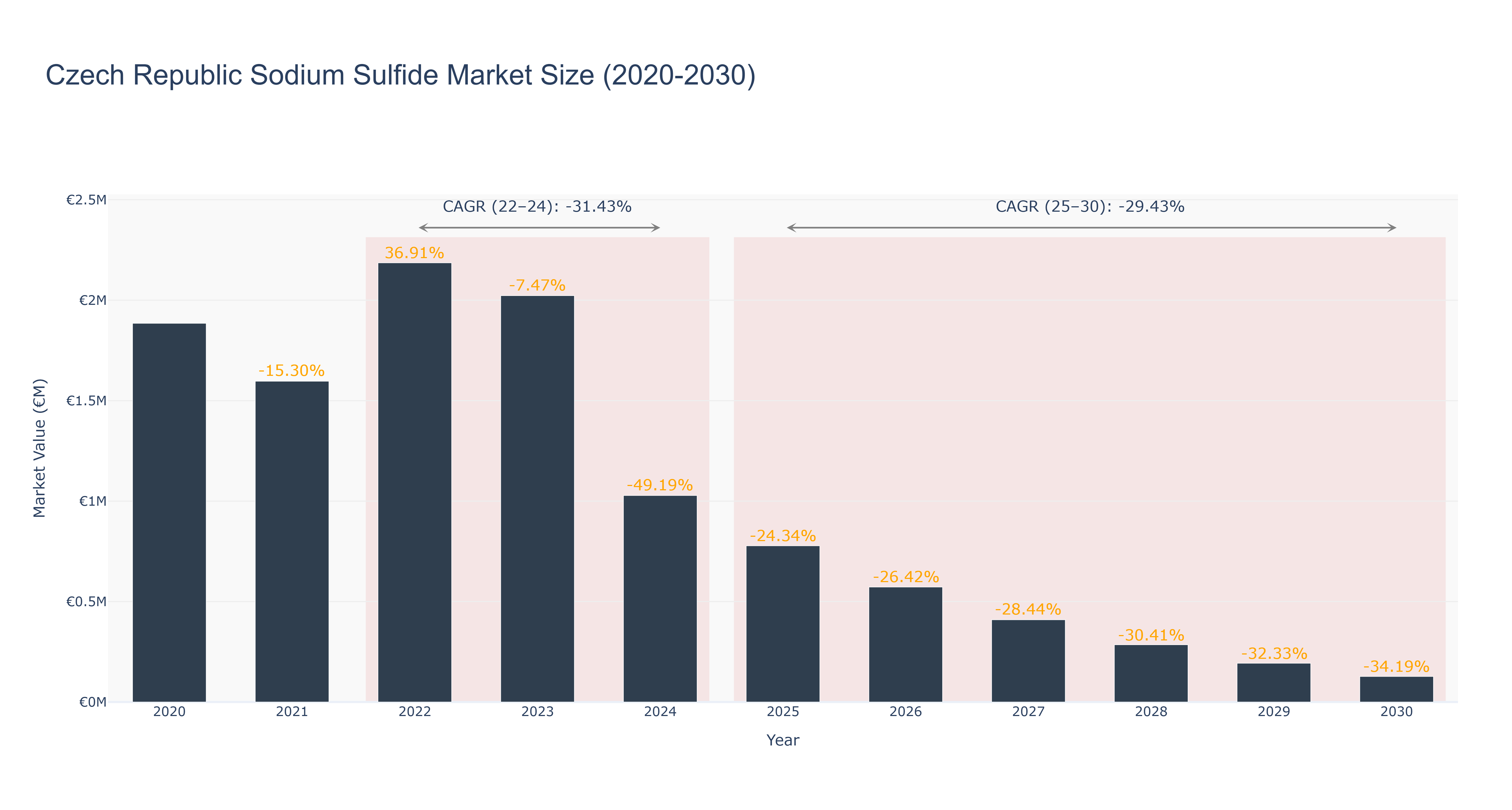
Czech Republic's Sodium Sulfide Market has seen a significant fluctuation in market size over the years. The peak market size was €2.19 million in 2022, followed by a sharp decline to €0.13 million in 2030. The market experienced a steady decrease from 2020 to 2024, with a negative compound annual growth rate (CAGR) of -31.43% from 2022 to 2024. The forecasted CAGR from 2025 to 2030 is -29.43%. This downward trend can be attributed to various factors such as changing consumer preferences, regulatory challenges, and the emergence of alternative products in the market. Looking ahead, the Czech Republic Sodium Sulfide Market is expected to undergo further transformation, with upcoming projects focusing on sustainability and eco-friendly solutions to meet evolving market demands.
Czech Republic Sodium Sulfide Market: Production & Trade Performance (2019-2025)
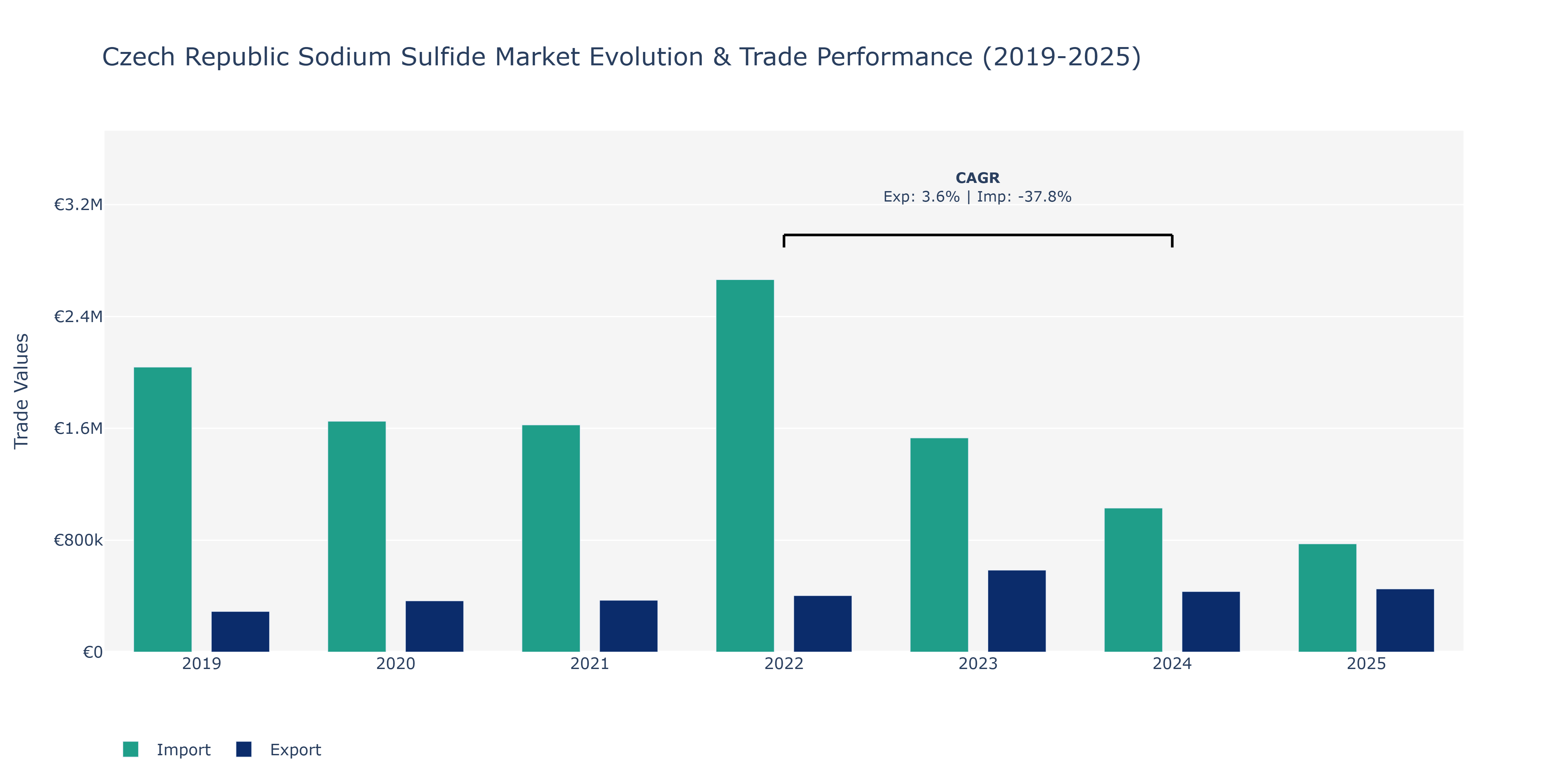
In the Czech Republic Sodium Sulfide Market, exports displayed a gradual increasing trend from 2019 to 2025, with the peak value of €586.09 thousand recorded in 2023. This growth can be attributed to the rising demand for sodium sulfide in various industries such as chemicals, textiles, and paper manufacturing. On the other hand, imports fluctuated over the years, reaching a low of €1.03 million in 2024 after a peak of €2.66 million in 2022. The significant decline in imports could be linked to shifts in global trade dynamics, cost fluctuations, or changes in domestic production capacities. To sustain a competitive position in the market, local manufacturers may need to focus on enhancing production efficiencies and optimizing supply chain operations. Furthermore, exploring strategic partnerships or investments in technology to improve product quality could help mitigate the impact of import volatility.
Czech Republic Sodium sulfide Market Overview
The Czech Republic sodium sulfide market is primarily driven by the country`s chemical and manufacturing industries, which utilize this chemical compound in various applications such as leather processing, water treatment, and as a reagent in chemical reactions. The market is expected to witness steady growth due to the increasing demand for sodium sulfide in diverse industrial sectors. Key factors influencing market trends include technological advancements in production processes, growing environmental concerns leading to the adoption of sustainable practices, and the expanding manufacturing sector in the Czech Republic. Market players are focusing on product innovation and strategic collaborations to strengthen their market presence and gain a competitive edge. Overall, the sodium sulfide market in the Czech Republic is poised for growth with opportunities for market expansion and development in the foreseeable future.
Czech Republic Sodium sulfide Market Trends
In the Czech Republic, the Sodium sulfide market is experiencing steady growth due to its widespread use in various industries such as textiles, paper, and chemical processing. The market is witnessing an increasing demand for Sodium sulfide as a reducing agent in the manufacturing of dyes and pigments, as well as in the production of leather goods. Additionally, the rising awareness about the environmental benefits of using Sodium sulfide in wastewater treatment processes is driving its adoption in the country. With a focus on sustainable practices and stringent regulations regarding industrial waste management, the Sodium sulfide market in the Czech Republic is expected to continue its growth trajectory in the coming years. Manufacturers are also investing in research and development to innovate new applications for Sodium sulfide, further boosting market growth.
Czech Republic Sodium sulfide Market Challenges
In the Czech Republic, the sodium sulfide market faces several challenges. One of the primary challenges is the increasing competition from alternative chemicals that can perform similar functions, leading to pricing pressure and potential loss of market share. Additionally, environmental regulations in the country are becoming more stringent, requiring sodium sulfide manufacturers to invest in sustainable production processes and waste management practices. Another challenge is the fluctuation in raw material prices, impacting the overall cost of production and potentially affecting the profitability of sodium sulfide producers. Lastly, the market dynamics are constantly evolving, with changing customer preferences and demands, making it essential for companies to stay agile and innovative to remain competitive in the Czech Republic sodium sulfide market.
Czech Republic Sodium sulfide Market Investment Opportunities
Investment opportunities in the Czech Republic Sodium sulfide market are promising due to the country`s strong chemical industry and increasing demand for sodium sulfide in various applications such as water treatment, textiles, and paper production. The market is expected to grow steadily with the rising industrial activities and the shift towards more sustainable and eco-friendly practices. Investing in the production or distribution of sodium sulfide in the Czech Republic could be lucrative, especially with the potential for export opportunities to neighboring countries in Europe. Additionally, there is room for innovation and technological advancements in sodium sulfide production processes, offering opportunities for investors to differentiate themselves in the market and cater to evolving customer needs. Overall, the Czech Republic Sodium sulfide market presents a favorable investment landscape for those looking to capitalize on the growing demand for this essential chemical compound.
Czech Republic Sodium sulfide Market Government Policy
The Czech Republic has implemented strict regulations and policies regarding the use and sale of sodium sulfide in the market. The chemical is classified as a hazardous substance under the EU regulations, requiring companies to adhere to strict safety protocols in handling, storage, and disposal to protect human health and the environment. Companies are required to obtain permits and licenses for the production, import, and distribution of sodium sulfide, with regular inspections to ensure compliance with safety standards. Additionally, the government has set limits on the concentration of sodium sulfide in products to prevent potential health risks. Overall, the Czech Republic`s government policies aim to regulate the sodium sulfide market effectively and safeguard public health and environmental sustainability.
Czech Republic Sodium sulfide Market Future Outlook
The future outlook for the Czech Republic Sodium sulfide market appears positive, with steady growth anticipated in the coming years. The increasing demand from industries such as textiles, mining, and chemical processing is expected to drive market expansion. Additionally, the country`s strong manufacturing sector and growing investments in infrastructure projects are likely to further boost the demand for sodium sulfide. With a focus on sustainability and environmental regulations becoming more stringent, there is also a push towards the use of eco-friendly chemicals like sodium sulfide, which could open up new opportunities for market growth. Overall, the Czech Republic Sodium sulfide market is poised for a promising future with potential for increased market penetration and development of innovative applications.
Key Highlights of the Report:
- Czech Republic Sodium sulfide Market Outlook
- Market Size of Czech Republic Sodium sulfide Market, 2025
- Forecast of Czech Republic Sodium sulfide Market, 2032
- Historical Data and Forecast of Czech Republic Sodium sulfide Revenues & Volume for the Period 2022 - 2032F
- Czech Republic Sodium sulfide Market Trend Evolution
- Czech Republic Sodium sulfide Market Drivers and Challenges
- Czech Republic Sodium sulfide Price Trends
- Czech Republic Sodium sulfide Porter's Five Forces
- Czech Republic Sodium sulfide Industry Life Cycle
- Historical Data and Forecast of Czech Republic Sodium sulfide Market Revenues & Volume By Product for the Period 2022 - 2032F
- Historical Data and Forecast of Czech Republic Sodium sulfide Market Revenues & Volume By Low ferric sodium sulfide for the Period 2022 - 2032F
- Historical Data and Forecast of Czech Republic Sodium sulfide Market Revenues & Volume By Anhydrous sodium sulfide for the Period 2022 - 2032F
- Historical Data and Forecast of Czech Republic Sodium sulfide Market Revenues & Volume By Crystal sodium sulfide for the Period 2022 - 2032F
- Historical Data and Forecast of Czech Republic Sodium sulfide Market Revenues & Volume By Grade for the Period 2022 - 2032F
- Historical Data and Forecast of Czech Republic Sodium sulfide Market Revenues & Volume By Technical for the Period 2022 - 2032F
- Historical Data and Forecast of Czech Republic Sodium sulfide Market Revenues & Volume By Purified for the Period 2022 - 2032F
- Historical Data and Forecast of Czech Republic Sodium sulfide Market Revenues & Volume By Application for the Period 2022 - 2032F
- Historical Data and Forecast of Czech Republic Sodium sulfide Market Revenues & Volume By Pulp & paper for the Period 2022 - 2032F
- Historical Data and Forecast of Czech Republic Sodium sulfide Market Revenues & Volume By Water treatment for the Period 2022 - 2032F
- Historical Data and Forecast of Czech Republic Sodium sulfide Market Revenues & Volume By Tanneries (leather industry) for the Period 2022 - 2032F
- Historical Data and Forecast of Czech Republic Sodium sulfide Market Revenues & Volume By Chemical processing for the Period 2022 - 2032F
- Historical Data and Forecast of Czech Republic Sodium sulfide Market Revenues & Volume By Textile industry for the Period 2022 - 2032F
- Historical Data and Forecast of Czech Republic Sodium sulfide Market Revenues & Volume By Ore processing for the Period 2022 - 2032F
- Historical Data and Forecast of Czech Republic Sodium sulfide Market Revenues & Volume By Others for the Period 2022 - 2032F
- Czech Republic Sodium sulfide Import Export Trade Statistics
- Market Opportunity Assessment By Product
- Market Opportunity Assessment By Grade
- Market Opportunity Assessment By Application
- Czech Republic Sodium sulfide Top Companies Market Share
- Czech Republic Sodium sulfide Competitive Benchmarking By Technical and Operational Parameters
- Czech Republic Sodium sulfide Company Profiles
- Czech Republic Sodium sulfide Key Strategic Recommendations






































