Czech Republic Tea Market Size (2020-2030)
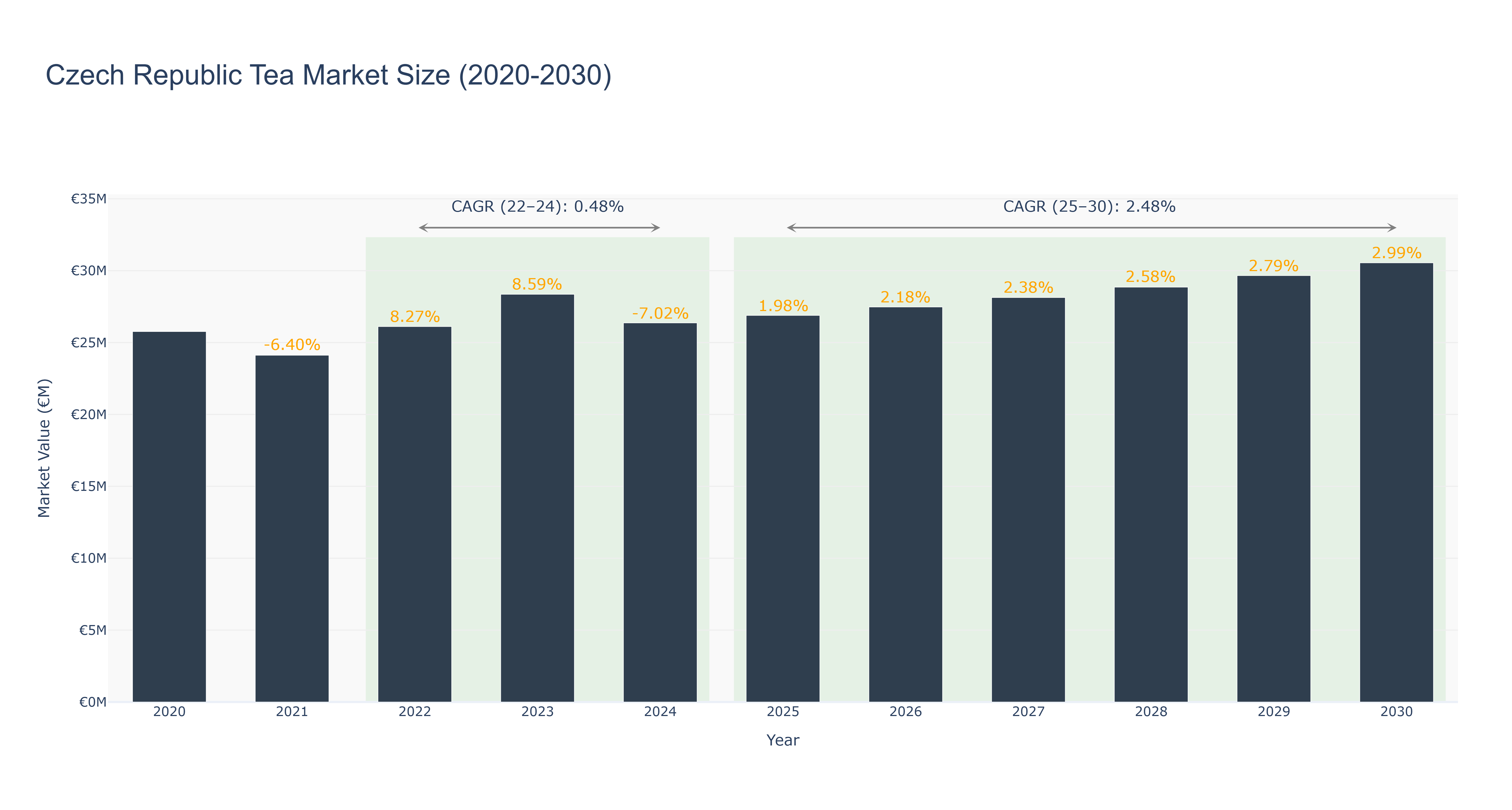
Czech Republic Tea Market has shown a fluctuating trend in recent years. The peak market size was €30.55 million in 2030, with steady growth from 2020 to 2024 despite a slight dip in 2024. The forecasted market size is on an upward trajectory from 2025 to 2030, with a CAGR of 2.48% during this period. The market experienced a decline in 2024 due to changing consumer preferences and increased competition. However, the subsequent growth can be attributed to strategic marketing efforts and product innovation by key players in the market. Looking ahead, the Czech Republic Tea Market is expected to witness further growth driven by increasing health consciousness among consumers and the introduction of new tea variants tailored to evolving preferences. Additionally, upcoming sustainability initiatives by major tea brands are set to enhance the market's appeal and drive future growth.
Czech Republic Tea Market: Production & Trade Performance (2019-2025)
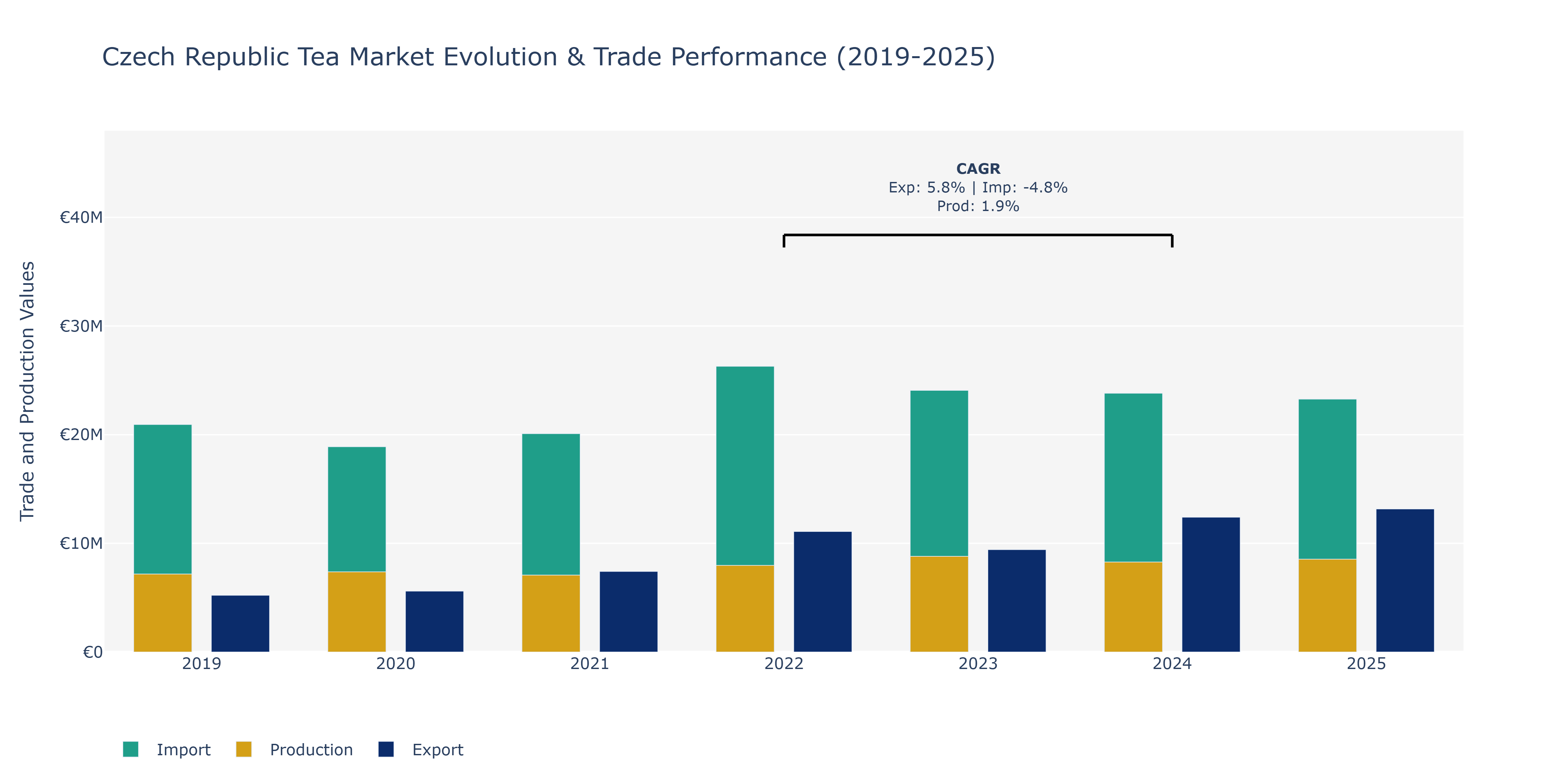
The Czech Republic Tea Market experienced notable dynamics from 2019 to 2025. In 2025, exports reached approximately €13.17 million, showcasing consistent growth since 2019 when they stood at around €5.22 million. This upward trend can be attributed to increasing global demand for specialty teas and the country's reputation for high-quality tea production. Imports, on the other hand, fluctuated over the years, with a peak of around €26.29 million in 2022, followed by a decrease to about €23.27 million in 2025. This decline could be due to shifts in consumer preferences towards locally sourced teas and the rise of domestic tea production. Production levels remained relatively stable, with a slight increase from around €7.18 million in 2019 to about €8.54 million in 2025. This growth aligns with the global trend of health-conscious consumers driving the demand for tea products, leading to increased domestic production. By focusing on enhancing the quality and variety of tea offerings, the Czech Republic can further capitalize on the growing market.
Czech Republic Tea Market Overview
The Czech Republic tea market has been experiencing steady growth in recent years, driven by increasing consumer awareness of the health benefits associated with tea consumption. Green tea and herbal teas are particularly popular among Czech consumers due to their perceived health benefits. Black tea also holds a significant market share, especially among older generations who prefer traditional tea varieties. The market is characterized by a wide range of tea offerings, including loose-leaf tea, tea bags, and ready-to-drink teas. The trend towards premium and specialty teas is on the rise, with consumers showing interest in unique flavor profiles and higher quality tea products. Retail channels such as supermarkets, specialty tea shops, and online platforms play a key role in distributing tea products across the country. Overall, the Czech Republic tea market presents opportunities for both domestic and international tea brands to expand their presence and cater to the growing demand for diverse tea options.
Czech Republic Tea Market Trends
The Czech Republic Tea Market is experiencing a shift towards premium and specialty teas, driven by the growing consumer preference for high-quality and unique tea varieties. Green tea, herbal blends, and wellness teas are gaining popularity due to their perceived health benefits and natural ingredients. There is also a rising interest in organic and sustainable tea options, reflecting the increasing awareness of environmental and ethical concerns among consumers. Additionally, the tea market in the Czech Republic is witnessing a rise in online tea purchases, as more consumers seek convenience and a wider range of choices. Overall, the market is evolving to cater to the changing preferences and lifestyles of Czech consumers, with a focus on quality, variety, and sustainability.
Czech Republic Tea Market Challenges
In the Czech Republic Tea Market, one of the main challenges faced is the dominance of coffee consumption over tea. The strong coffee culture in the country makes it harder for tea to gain significant market share. Additionally, limited awareness and understanding of the health benefits of tea among Czech consumers present a hurdle for the growth of the tea market. Another challenge is the competition from other popular beverages like beer and traditional herbal drinks. Furthermore, the relatively small size of the market and the presence of established international tea brands make it difficult for new or local tea companies to penetrate and establish a foothold in the industry. Overcoming these challenges would require targeted marketing efforts, educational campaigns, and innovative product offerings to attract and retain tea consumers in the Czech Republic.
Czech Republic Tea Market Investment Opportunities
The Czech Republic Tea Market presents promising investment opportunities due to the increasing consumer interest in health and wellness products. With a growing trend towards healthier lifestyles and a preference for natural and organic products, there is a rising demand for specialty teas, herbal blends, and unique tea variants in the market. Investors can explore opportunities in importing high-quality teas from renowned tea-producing countries, establishing specialty tea shops or cafes, developing online tea retail platforms, and creating innovative tea products tailored to local preferences. The market is relatively untapped, offering room for growth and innovation. Additionally, the Czech Republic`s strategic location within Europe allows for easy access to a wider consumer base, making it an attractive market for tea-related investments.
Czech Republic Tea Market Government Policy
The Czech Republic`s tea market is regulated by the European Union`s legislation, as the country is a member state. The government has implemented policies related to food safety and labeling requirements, ensuring that tea products meet certain standards before being allowed on the market. Additionally, there are regulations in place regarding advertising and marketing practices for tea products to protect consumers from false or misleading information. The government also monitors the import and export of tea products to ensure compliance with trade agreements and quality standards. Overall, the Czech Republic`s government policies aim to safeguard consumer interests, promote fair competition, and maintain the quality and safety of tea products available in the market.
Czech Republic Tea Market Future Outlook
The future outlook for the Czech Republic Tea Market appears promising, driven by increasing health awareness among consumers and a growing demand for natural and functional beverages. The market is expected to experience steady growth due to the rising popularity of specialty teas, such as herbal and organic blends, as well as innovative tea products. The trend towards premiumization and a focus on sustainability and ethical sourcing practices are likely to shape consumer preferences in the coming years. Additionally, the convenience of tea as an on-the-go beverage option and the expanding distribution channels, including online retail platforms, are anticipated to further fuel market growth. Overall, the Czech Republic Tea Market is poised for expansion, offering opportunities for both domestic and international tea brands to capitalize on the evolving consumer trends.
Key Highlights of the Report:
- Czech Republic Tea Market Outlook
- Market Size of Czech Republic Tea Market, 2025
- Forecast of Czech Republic Tea Market, 2032
- Historical Data and Forecast of Czech Republic Tea Revenues & Volume for the Period 2022 - 2032F
- Czech Republic Tea Market Trend Evolution
- Czech Republic Tea Market Drivers and Challenges
- Czech Republic Tea Price Trends
- Czech Republic Tea Porter's Five Forces
- Czech Republic Tea Industry Life Cycle
- Historical Data and Forecast of Czech Republic Tea Market Revenues & Volume By Type for the Period 2022 - 2032F
- Historical Data and Forecast of Czech Republic Tea Market Revenues & Volume By Green Tea for the Period 2022 - 2032F
- Historical Data and Forecast of Czech Republic Tea Market Revenues & Volume By Black Tea for the Period 2022 - 2032F
- Historical Data and Forecast of Czech Republic Tea Market Revenues & Volume By Oolong Tea for the Period 2022 - 2032F
- Historical Data and Forecast of Czech Republic Tea Market Revenues & Volume By Fruit/Herbal Tea for the Period 2022 - 2032F
- Historical Data and Forecast of Czech Republic Tea Market Revenues & Volume By Others for the Period 2022 - 2032F
- Historical Data and Forecast of Czech Republic Tea Market Revenues & Volume By Packaging for the Period 2022 - 2032F
- Historical Data and Forecast of Czech Republic Tea Market Revenues & Volume By Plastic Containers for the Period 2022 - 2032F
- Historical Data and Forecast of Czech Republic Tea Market Revenues & Volume By Loose Tea for the Period 2022 - 2032F
- Historical Data and Forecast of Czech Republic Tea Market Revenues & Volume By Paperboards for the Period 2022 - 2032F
- Historical Data and Forecast of Czech Republic Tea Market Revenues & Volume By Aluminum Tins for the Period 2022 - 2032F
- Historical Data and Forecast of Czech Republic Tea Market Revenues & Volume By Tea Bags for the Period 2022 - 2032F
- Historical Data and Forecast of Czech Republic Tea Market Revenues & Volume By Distribution Channel for the Period 2022 - 2032F
- Historical Data and Forecast of Czech Republic Tea Market Revenues & Volume By Supermarkets/Hypermarkets for the Period 2022 - 2032F
- Historical Data and Forecast of Czech Republic Tea Market Revenues & Volume By Specialty Stores for the Period 2022 - 2032F
- Historical Data and Forecast of Czech Republic Tea Market Revenues & Volume By Convenience Stores for the Period 2022 - 2032F
- Historical Data and Forecast of Czech Republic Tea Market Revenues & Volume By Online Stores for the Period 2022 - 2032F
- Historical Data and Forecast of Czech Republic Tea Market Revenues & Volume By Others for the Period 2022 - 2032F
- Historical Data and Forecast of Czech Republic Tea Market Revenues & Volume By Application for the Period 2022 - 2032F
- Historical Data and Forecast of Czech Republic Tea Market Revenues & Volume By Residential for the Period 2022 - 2032F
- Historical Data and Forecast of Czech Republic Tea Market Revenues & Volume By Commercial for the Period 2022 - 2032F
- Czech Republic Tea Import Export Trade Statistics
- Market Opportunity Assessment By Type
- Market Opportunity Assessment By Packaging
- Market Opportunity Assessment By Distribution Channel
- Market Opportunity Assessment By Application
- Czech Republic Tea Top Companies Market Share
- Czech Republic Tea Competitive Benchmarking By Technical and Operational Parameters
- Czech Republic Tea Company Profiles
- Czech Republic Tea Key Strategic Recommendations






































