Ecuador Cement Market Growth Rate Analysis (2025 - 2031)
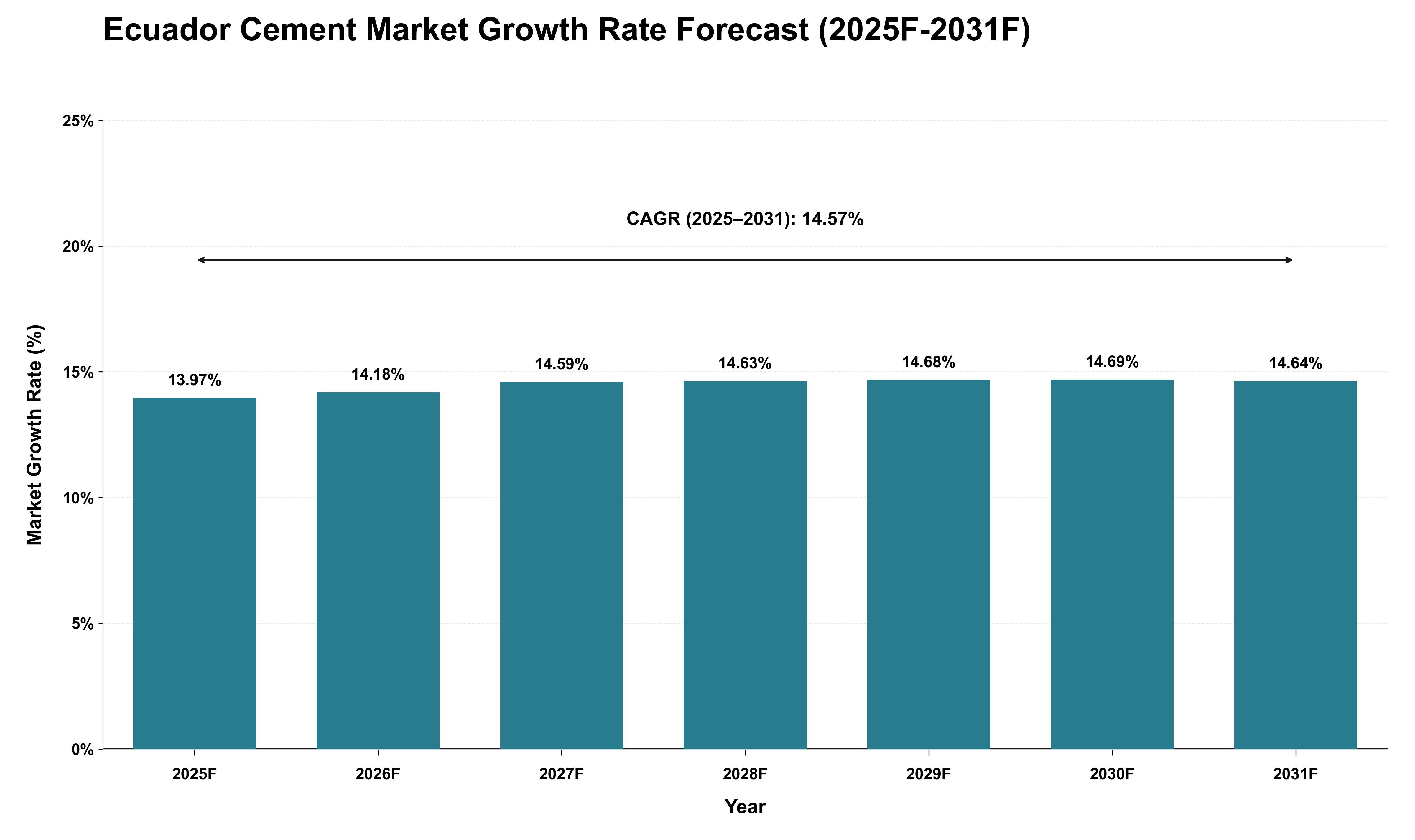
The Ecuador cement market is projected to experience a robust compound annual growth rate of 14.57% from 2025 to 2031, reflecting a strong demand driven by anticipated infrastructure projects and urbanization trends. Each year within this period shows incremental growth, peaking at 14.69% in 2030, suggesting a consistent upward trajectory influenced by macroeconomic cycles that favor construction and real estate development. The expected increase in public and private investments will likely enhance domestic production capabilities while reducing import dependencies, as local manufacturers ramp up output to meet rising demand. Additionally, cyclical trends in the global economy may bolster Ecuador's export potential for cement products, further supporting local industry growth. This dynamic interplay of domestic demand and external market conditions will shape the cement sector's performance throughout the forecast period, positioning it as a critical component of Ecuador's economic landscape.
Key Highlights of the Report:
- Ecuador Cement Market Outlook
- Market Size of Ecuador Cement Market, 2024
- Forecast of Ecuador Cement Market, 2031
- Historical Data and Forecast of Ecuador Cement Revenues & Volume for the Period 2021-2031
- Ecuador Cement Market Trend Evolution
- Ecuador Cement Market Drivers and Challenges
- Ecuador Cement Price Trends
- Ecuador Cement Porter`s Five Forces
- Ecuador Cement Industry Life Cycle
- Historical Data and Forecast of Ecuador Cement Market Revenues & Volume By Product for the Period 2021-2031
- Historical Data and Forecast of Ecuador Cement Market Revenues & Volume By Portland for the Period 2021-2031
- Historical Data and Forecast of Ecuador Cement Market Revenues & Volume By Others for the Period 2021-2031
- Historical Data and Forecast of Ecuador Cement Market Revenues & Volume By Application for the Period 2021-2031
- Historical Data and Forecast of Ecuador Cement Market Revenues & Volume By Residential for the Period 2021-2031
- Historical Data and Forecast of Ecuador Cement Market Revenues & Volume By Non-residential/Infrastructure for the Period 2021-2031
- Ecuador Cement Import Export Trade Statistics
- Market Opportunity Assessment By Product
- Market Opportunity Assessment By Application
- Ecuador Cement Top Companies Market Share
- Ecuador Cement Competitive Benchmarking By Technical and Operational Parameters
- Ecuador Cement Company Profiles
- Ecuador Cement Key Strategic Recommendations






































