Ecuador Glycine Market Growth Rate Analysis (2021 - 2031)
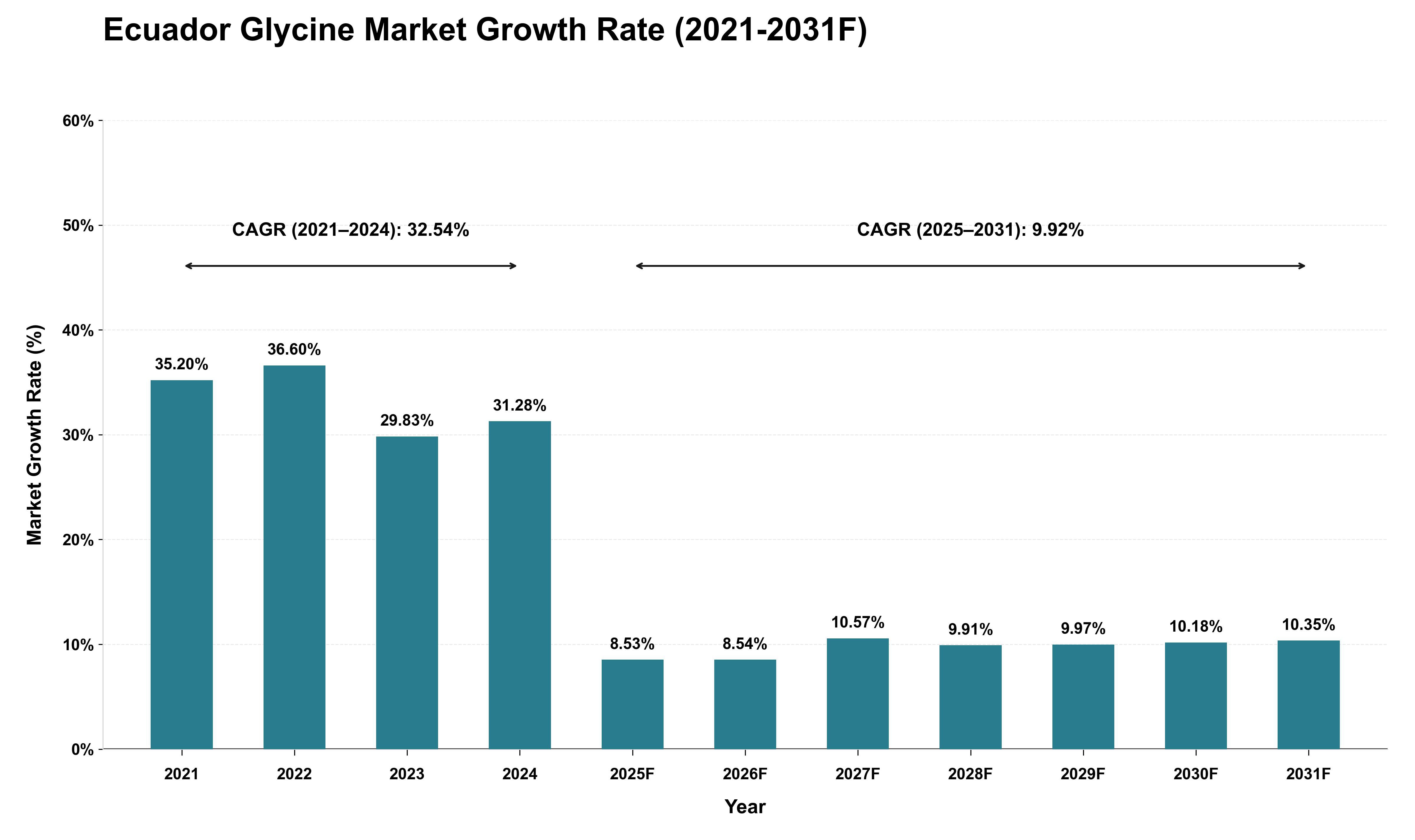
The Ecuador glycine market experienced a robust historical CAGR of 32.54% from 2021 to 2024, driven by heightened global demand for amino acids in pharmaceuticals and food industries, alongside favorable trade policies that facilitated imports and exports. The annual growth rates reflected strong momentum, peaking at 36.60% in 2022 before gradually moderating to 29.83% in 2023, likely influenced by supply chain disruptions and fluctuating commodity prices during the post-pandemic recovery phase. As the market transitions into the forecast period (2025-2031), a projected CAGR of 9.92% suggests a stabilization trend influenced by evolving regulatory frameworks and potential shifts in import reliance as domestic production capabilities improve. This anticipated growth will be supported by ongoing global demand for glycine derivatives while navigating trade policy adjustments that may impact international competitiveness and pricing structures within the sector.
Key Highlights of the Report:
- Ecuador Glycine Market Outlook
- Market Size of Ecuador Glycine Market,2024
- Forecast of Ecuador Glycine Market, 2031
- Historical Data and Forecast of Ecuador Glycine Revenues & Volume for the Period 2021-2031
- Ecuador Glycine Market Trend Evolution
- Ecuador Glycine Market Drivers and Challenges
- Ecuador Glycine Price Trends
- Ecuador Glycine Porter's Five Forces
- Ecuador Glycine Industry Life Cycle
- Historical Data and Forecast of Ecuador Glycine Market Revenues & Volume By Grade for the Period 2021-2031
- Historical Data and Forecast of Ecuador Glycine Market Revenues & Volume By Food Grade for the Period 2021-2031
- Historical Data and Forecast of Ecuador Glycine Market Revenues & Volume By Pharmaceutical Grade for the Period 2021-2031
- Historical Data and Forecast of Ecuador Glycine Market Revenues & Volume By Technical Grade for the Period 2021-2031
- Historical Data and Forecast of Ecuador Glycine Market Revenues & Volume By Application for the Period 2021-2031
- Historical Data and Forecast of Ecuador Glycine Market Revenues & Volume By Animal Feed for the Period 2021-2031
- Historical Data and Forecast of Ecuador Glycine Market Revenues & Volume By Chemical and Industrial for the Period 2021-2031
- Historical Data and Forecast of Ecuador Glycine Market Revenues & Volume By Food Additives for the Period 2021-2031
- Historical Data and Forecast of Ecuador Glycine Market Revenues & Volume By Intermediate for the Period 2021-2031
- Historical Data and Forecast of Ecuador Glycine Market Revenues & Volume By Pharmaceutical for the Period 2021 - 2029
- Historical Data and Forecast of Ecuador Glycine Market Revenues & Volume By Other Application for the Period 2021 - 2029
- Historical Data and Forecast of Ecuador Glycine Market Revenues & Volume By End user for the Period 2021-2031
- Historical Data and Forecast of Ecuador Glycine Market Revenues & Volume By Agriculture for the Period 2021-2031
- Historical Data and Forecast of Ecuador Glycine Market Revenues & Volume By Chemical & Industries for the Period 2021-2031
- Historical Data and Forecast of Ecuador Glycine Market Revenues & Volume By Cosmetics & Personal care for the Period 2021-2031
- Historical Data and Forecast of Ecuador Glycine Market Revenues & Volume By Food & Beverages for the Period 2021-2031
- Historical Data and Forecast of Ecuador Glycine Market Revenues & Volume By Pharmaceutical for the Period 2021 - 2029
- Historical Data and Forecast of Ecuador Glycine Market Revenues & Volume By Other End-User for the Period 2021 - 2029
- Ecuador Glycine Import Export Trade Statistics
- Market Opportunity Assessment By Grade
- Market Opportunity Assessment By Application
- Market Opportunity Assessment By End user
- Ecuador Glycine Top Companies Market Share
- Ecuador Glycine Competitive Benchmarking By Technical and Operational Parameters
- Ecuador Glycine Company Profiles
- Ecuador Glycine Key Strategic Recommendations






































