Ecuador Malt Beverages Market Growth Rate Analysis (2021 - 2031)
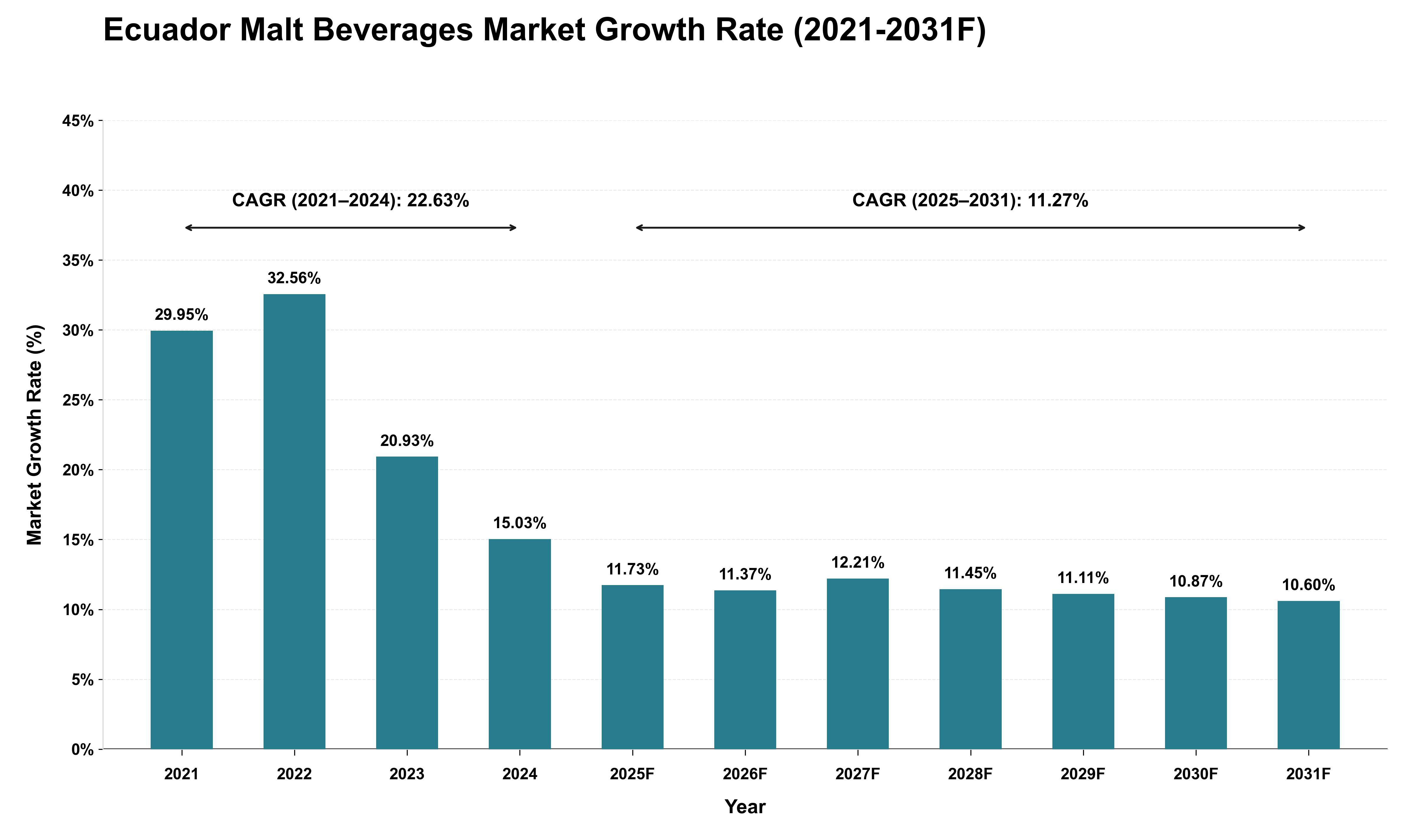
Between 2021 and 2024, the Ecuador malt beverages market experienced a robust CAGR of 22.63%, driven by a post-pandemic resurgence in consumer demand and a shift towards premiumization in beverage choices. The annual growth rates peaked in 2022 at 32.56%, reflecting heightened consumption as hospitality sectors reopened globally, which also influenced local preferences for diverse beverage options. However, as the market transitioned into a more normalized phase, growth rates began to decelerate, with projections indicating an 11.27% CAGR from 2025 to 2031. This anticipated slowdown can be attributed to increased competition from alternative beverages and evolving consumer tastes favoring health-conscious options, alongside potential supply chain adjustments stemming from global commodity price fluctuations and import reliance dynamics. As technology continues to innovate within the beverage sector, product substitution will likely play a critical role in shaping market trajectories moving forward.
Key Highlights of the Report:
- Ecuador Malt Beverages Market Outlook
- Market Size of Ecuador Malt Beverages Market, 2025
- Forecast of Ecuador Malt Beverages Market, 2032
- Historical Data and Forecast of Ecuador Malt Beverages Revenues & Volume for the Period 2022 - 2032F
- Ecuador Malt Beverages Market Trend Evolution
- Ecuador Malt Beverages Market Drivers and Challenges
- Ecuador Malt Beverages Price Trends
- Ecuador Malt Beverages Porter`s Five Forces
- Ecuador Malt Beverages Industry Life Cycle
- Historical Data and Forecast of Ecuador Malt Beverages Market Revenues & Volume By Product Type for the Period 2022 - 2032F
- Historical Data and Forecast of Ecuador Malt Beverages Market Revenues & Volume By Flavored for the Period 2022 - 2032F
- Historical Data and Forecast of Ecuador Malt Beverages Market Revenues & Volume By Unflavored for the Period 2022 - 2032F
- Historical Data and Forecast of Ecuador Malt Beverages Market Revenues & Volume By Applications for the Period 2022 - 2032F
- Historical Data and Forecast of Ecuador Malt Beverages Market Revenues & Volume By Alcoholic for the Period 2022 - 2032F
- Historical Data and Forecast of Ecuador Malt Beverages Market Revenues & Volume By Non-Alcoholic for the Period 2022 - 2032F
- Ecuador Malt Beverages Import Export Trade Statistics
- Market Opportunity Assessment By Product Type
- Market Opportunity Assessment By Applications
- Ecuador Malt Beverages Top Companies Market Share
- Ecuador Malt Beverages Competitive Benchmarking By Technical and Operational Parameters
- Ecuador Malt Beverages Company Profiles
- Ecuador Malt Beverages Key Strategic Recommendations






































