Ecuador Meat Market Growth Rate Analysis (2025 - 2031)
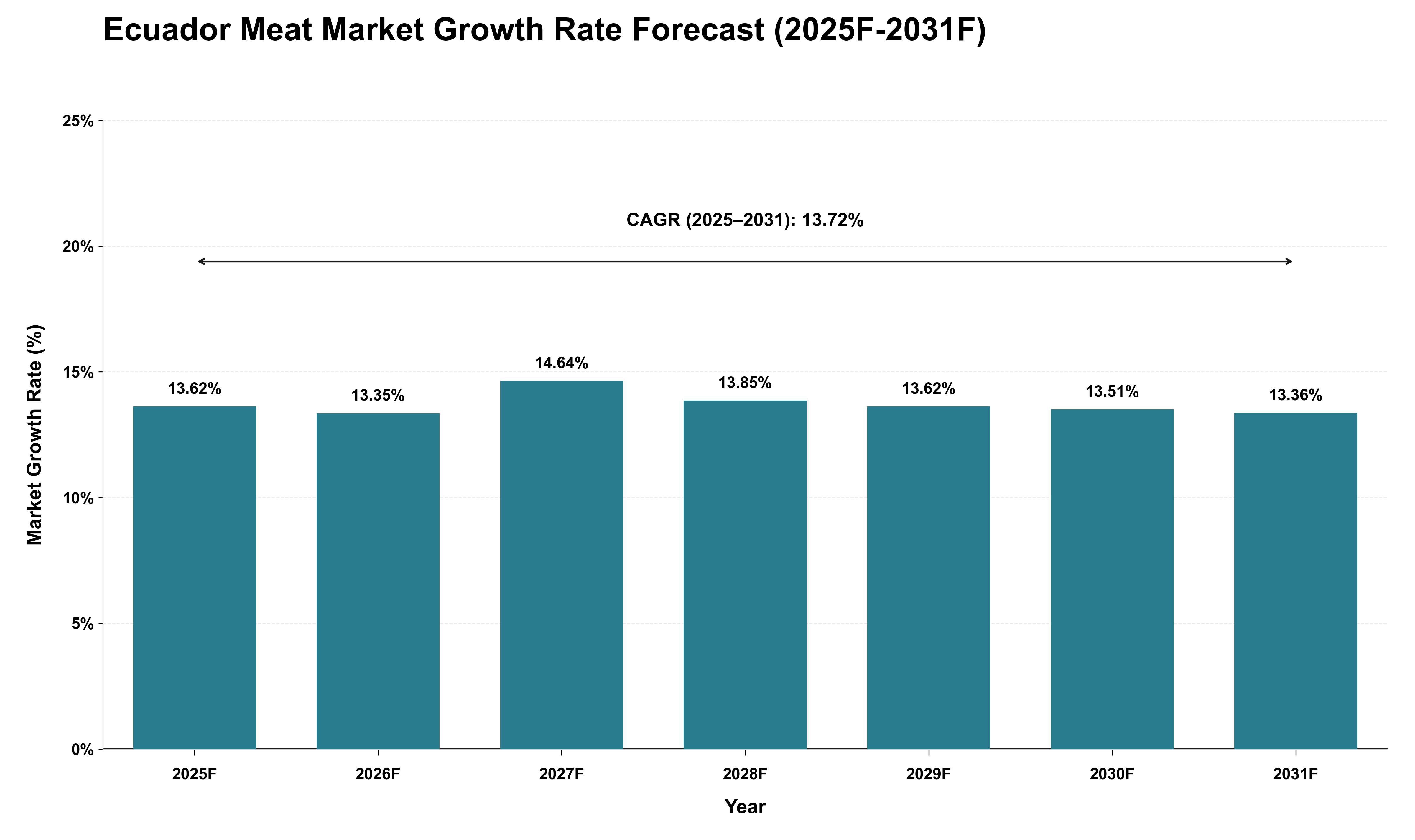
The Ecuador meat market is projected to experience a robust compound annual growth rate of 13.72% from 2025 to 2031, reflecting significant shifts in end-use demand driven by evolving consumer preferences and dietary trends. As urbanization continues to rise, an increasing middle class will likely drive higher consumption of protein-rich foods, particularly meat products. The annual growth rates indicate fluctuations that suggest cyclical trends influenced by seasonal demand and potential supply chain adjustments. Additionally, Ecuador's reliance on imports for certain meat types may create volatility in pricing and availability, further impacting consumption patterns. The anticipated growth trajectory will also be supported by innovations in meat processing and distribution technologies, enhancing product accessibility and variety for consumers. Overall, the interplay of these macroeconomic factors will shape a dynamic landscape for the Ecuador meat market during this forecast period.
Key Highlights of the Report:
- Ecuador Meat Market Outlook
- Market Size of Ecuador Meat Market, 2024
- Forecast of Ecuador Meat Market, 2031
- Historical Data and Forecast of Ecuador Meat Revenues & Volume for the Period 2021-2031
- Ecuador Meat Market Trend Evolution
- Ecuador Meat Market Drivers and Challenges
- Ecuador Meat Price Trends
- Ecuador Meat Porter`s Five Forces
- Ecuador Meat Industry Life Cycle
- Historical Data and Forecast of Ecuador Meat Market Revenues & Volume By End Users for the Period 2021-2031
- Historical Data and Forecast of Ecuador Meat Market Revenues & Volume By Food Processing Industry for the Period 2021-2031
- Historical Data and Forecast of Ecuador Meat Market Revenues & Volume By Food Service Providers for the Period 2021-2031
- Historical Data and Forecast of Ecuador Meat Market Revenues & Volume By Household/ Retail for the Period 2021-2031
- Historical Data and Forecast of Ecuador Meat Market Revenues & Volume By Distribution Channel for the Period 2021-2031
- Historical Data and Forecast of Ecuador Meat Market Revenues & Volume By B2B Direct for the Period 2021-2031
- Historical Data and Forecast of Ecuador Meat Market Revenues & Volume By Hypermarkets/ Supermarkets for the Period 2021-2031
- Historical Data and Forecast of Ecuador Meat Market Revenues & Volume By Convenience Stores for the Period 2021-2031
- Historical Data and Forecast of Ecuador Meat Market Revenues & Volume By Specialty Stores for the Period 2021-2031
- Historical Data and Forecast of Ecuador Meat Market Revenues & Volume By Butcher Shop/ Wets for the Period 2021-2031
- Historical Data and Forecast of Ecuador Meat Market Revenues & Volume By Online Retailing for the Period 2021-2031
- Ecuador Meat Import Export Trade Statistics
- Market Opportunity Assessment By End Users
- Market Opportunity Assessment By Distribution Channel
- Ecuador Meat Top Companies Market Share
- Ecuador Meat Competitive Benchmarking By Technical and Operational Parameters
- Ecuador Meat Company Profiles
- Ecuador Meat Key Strategic Recommendations






































