Ecuador Plastic Pipe Market Growth Rate Analysis (2025 - 2031)
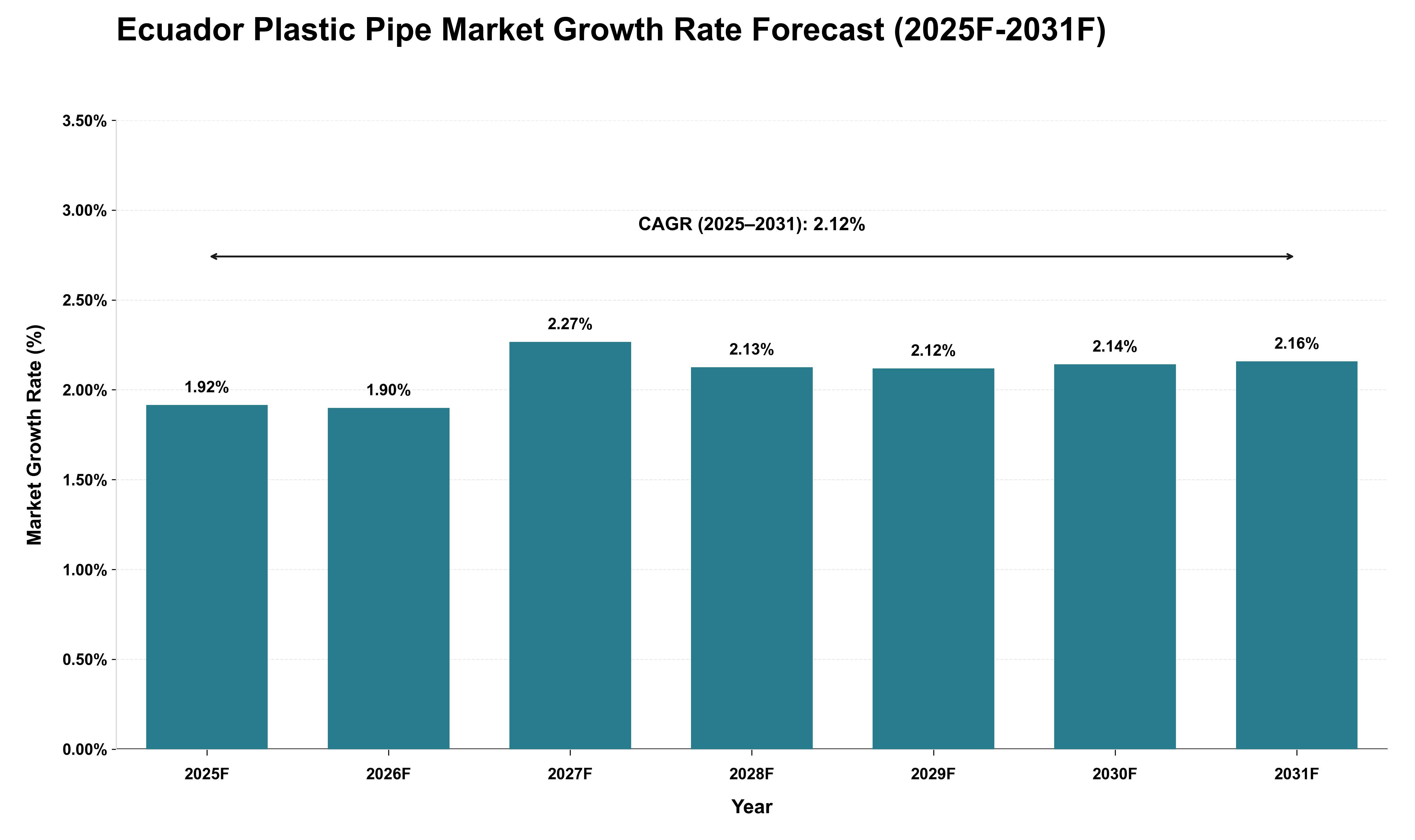
From 2025 onward, the Ecuador plastic pipe market will experience a steady growth trajectory, driven by anticipated shifts in end-use demand across various sectors such as construction, agriculture, and infrastructure development. The forecasted CAGR of 2.12% reflects a consistent annual growth pattern, with rates fluctuating slightly between 1.90% and 2.27%. This growth will likely be supported by increasing urbanization and investment in public works projects, which will elevate the need for durable piping solutions. Additionally, Ecuador's reliance on imported raw materials may influence pricing dynamics and availability, potentially impacting production costs and market competitiveness. As global supply chains stabilize post-pandemic disruptions, the market is expected to benefit from improved logistics and procurement strategies that enhance efficiency. Overall, these macroeconomic factors will shape a favorable environment for sustained demand in the plastic pipe sector through 2031.
Key Highlights of the Report:
- Ecuador Plastic Pipe Market Outlook
- Market Size of Ecuador Plastic Pipe Market, 2024
- Forecast of Ecuador Plastic Pipe Market, 2031
- Historical Data and Forecast of Ecuador Plastic Pipe Revenues & Volume for the Period 2021- 2031
- Ecuador Plastic Pipe Market Trend Evolution
- Ecuador Plastic Pipe Market Drivers and Challenges
- Ecuador Plastic Pipe Price Trends
- Ecuador Plastic Pipe Porter's Five Forces
- Ecuador Plastic Pipe Industry Life Cycle
- Historical Data and Forecast of Ecuador Plastic Pipe Market Revenues & Volume By Material for the Period 2021- 2031
- Historical Data and Forecast of Ecuador Plastic Pipe Market Revenues & Volume By Polyvinyl Chloride for the Period 2021- 2031
- Historical Data and Forecast of Ecuador Plastic Pipe Market Revenues & Volume By Polypropylene for the Period 2021- 2031
- Historical Data and Forecast of Ecuador Plastic Pipe Market Revenues & Volume By Polyethylene for the Period 2021- 2031
- Historical Data and Forecast of Ecuador Plastic Pipe Market Revenues & Volume By Others for the Period 2021- 2031
- Historical Data and Forecast of Ecuador Plastic Pipe Market Revenues & Volume By Application Type for the Period 2021- 2031
- Historical Data and Forecast of Ecuador Plastic Pipe Market Revenues & Volume By Irrigation for the Period 2021- 2031
- Historical Data and Forecast of Ecuador Plastic Pipe Market Revenues & Volume By Water Supply for the Period 2021- 2031
- Historical Data and Forecast of Ecuador Plastic Pipe Market Revenues & Volume By Sewerage for the Period 2021- 2031
- Historical Data and Forecast of Ecuador Plastic Pipe Market Revenues & Volume By Plumbing for the Period 2021- 2031
- Historical Data and Forecast of Ecuador Plastic Pipe Market Revenues & Volume By HVAC for the Period 2021- 2031
- Historical Data and Forecast of Ecuador Plastic Pipe Market Revenues & Volume By Others for the Period 2021- 2031
- Historical Data and Forecast of Ecuador Plastic Pipe Market Revenues & Volume By End-use for the Period 2021- 2031
- Historical Data and Forecast of Ecuador Plastic Pipe Market Revenues & Volume By Building & Construction for the Period 2021- 2031
- Historical Data and Forecast of Ecuador Plastic Pipe Market Revenues & Volume By Agriculture for the Period 2021- 2031
- Historical Data and Forecast of Ecuador Plastic Pipe Market Revenues & Volume By Oil & Gas for the Period 2021- 2031
- Historical Data and Forecast of Ecuador Plastic Pipe Market Revenues & Volume By Others for the Period 2021- 2031
- Ecuador Plastic Pipe Import Export Trade Statistics
- Market Opportunity Assessment By Material
- Market Opportunity Assessment By Application Type
- Market Opportunity Assessment By End-use
- Ecuador Plastic Pipe Top Companies Market Share
- Ecuador Plastic Pipe Competitive Benchmarking By Technical and Operational Parameters
- Ecuador Plastic Pipe Company Profiles
- Ecuador Plastic Pipe Key Strategic Recommendations






































