Ecuador Roasted Coffee Market Growth Rate Analysis (2021 - 2031)
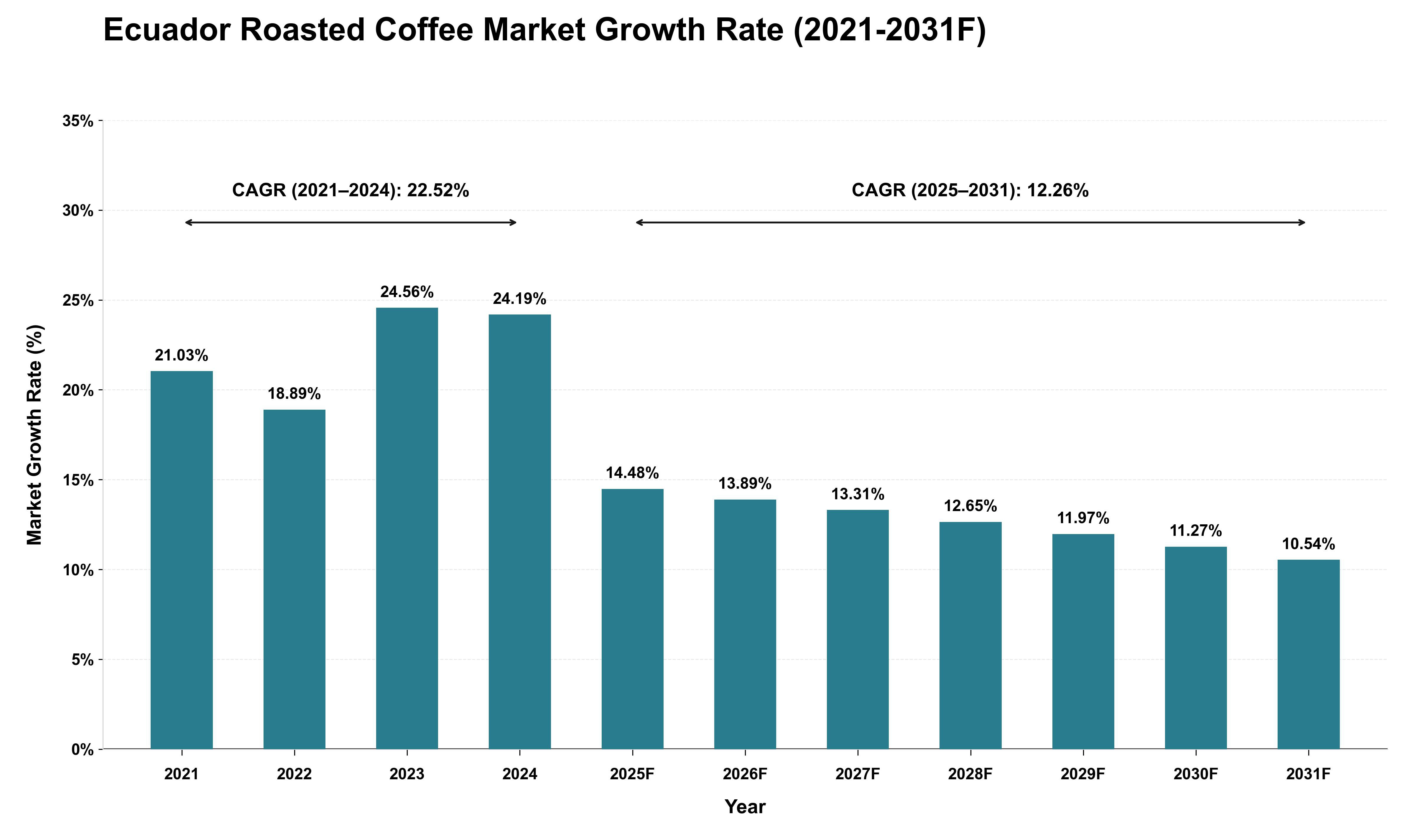
Between 2021 and 2024, the Ecuador roasted coffee market experienced a robust CAGR of 22.52%, driven by heightened end-use demand as global coffee consumption surged post-pandemic, alongside supply chain disruptions that limited availability and increased prices. The annual growth rates peaked in 2023 at 24.56%, reflecting a rebound in hospitality and tourism sectors, which significantly boosted coffee consumption in cafes and restaurants. However, as the market transitioned into the forecast period of 2025-2031, growth is expected to moderate to a CAGR of 12.26%. This deceleration can be attributed to stabilizing supply chains and shifting consumer preferences towards sustainable sourcing practices, which may impact import reliance on Ecuadorian coffee. Additionally, global economic conditions will likely influence discretionary spending on premium coffee products, leading to a gradual decline in growth rates from 14.48% in 2025 to approximately 10.54% by 2031.
Key Highlights of the Report:
- Ecuador Roasted Coffee Market Outlook
- Market Size of Ecuador Roasted Coffee Market, 2024
- Forecast of Ecuador Roasted Coffee Market, 2031
- Historical Data and Forecast of Ecuador Roasted Coffee Revenues & Volume for the Period 2021-2031
- Ecuador Roasted Coffee Market Trend Evolution
- Ecuador Roasted Coffee Market Drivers and Challenges
- Ecuador Roasted Coffee Price Trends
- Ecuador Roasted Coffee Porter`s Five Forces
- Ecuador Roasted Coffee Industry Life Cycle
- Historical Data and Forecast of Ecuador Roasted Coffee Market Revenues & Volume By End-user for the Period 2021-2031
- Historical Data and Forecast of Ecuador Roasted Coffee Market Revenues & Volume By Industrial for the Period 2021-2031
- Historical Data and Forecast of Ecuador Roasted Coffee Market Revenues & Volume By Commercial for the Period 2021-2031
- Historical Data and Forecast of Ecuador Roasted Coffee Market Revenues & Volume By Household for the Period 2021-2031
- Historical Data and Forecast of Ecuador Roasted Coffee Market Revenues & Volume By Type for the Period 2021-2031
- Historical Data and Forecast of Ecuador Roasted Coffee Market Revenues & Volume By Light Roast for the Period 2021-2031
- Historical Data and Forecast of Ecuador Roasted Coffee Market Revenues & Volume By Medium Roast for the Period 2021-2031
- Historical Data and Forecast of Ecuador Roasted Coffee Market Revenues & Volume By Dark or Full Roast for the Period 2021-2031
- Historical Data and Forecast of Ecuador Roasted Coffee Market Revenues & Volume By Double Roast for the Period 2021-2031
- Historical Data and Forecast of Ecuador Roasted Coffee Market Revenues & Volume By Others for the Period 2021-2031
- Ecuador Roasted Coffee Import Export Trade Statistics
- Market Opportunity Assessment By End-user
- Market Opportunity Assessment By Type
- Ecuador Roasted Coffee Top Companies Market Share
- Ecuador Roasted Coffee Competitive Benchmarking By Technical and Operational Parameters
- Ecuador Roasted Coffee Company Profiles
- Ecuador Roasted Coffee Key Strategic Recommendations






































