Ecuador Truck Market Growth Rate Analysis (2025 - 2031)
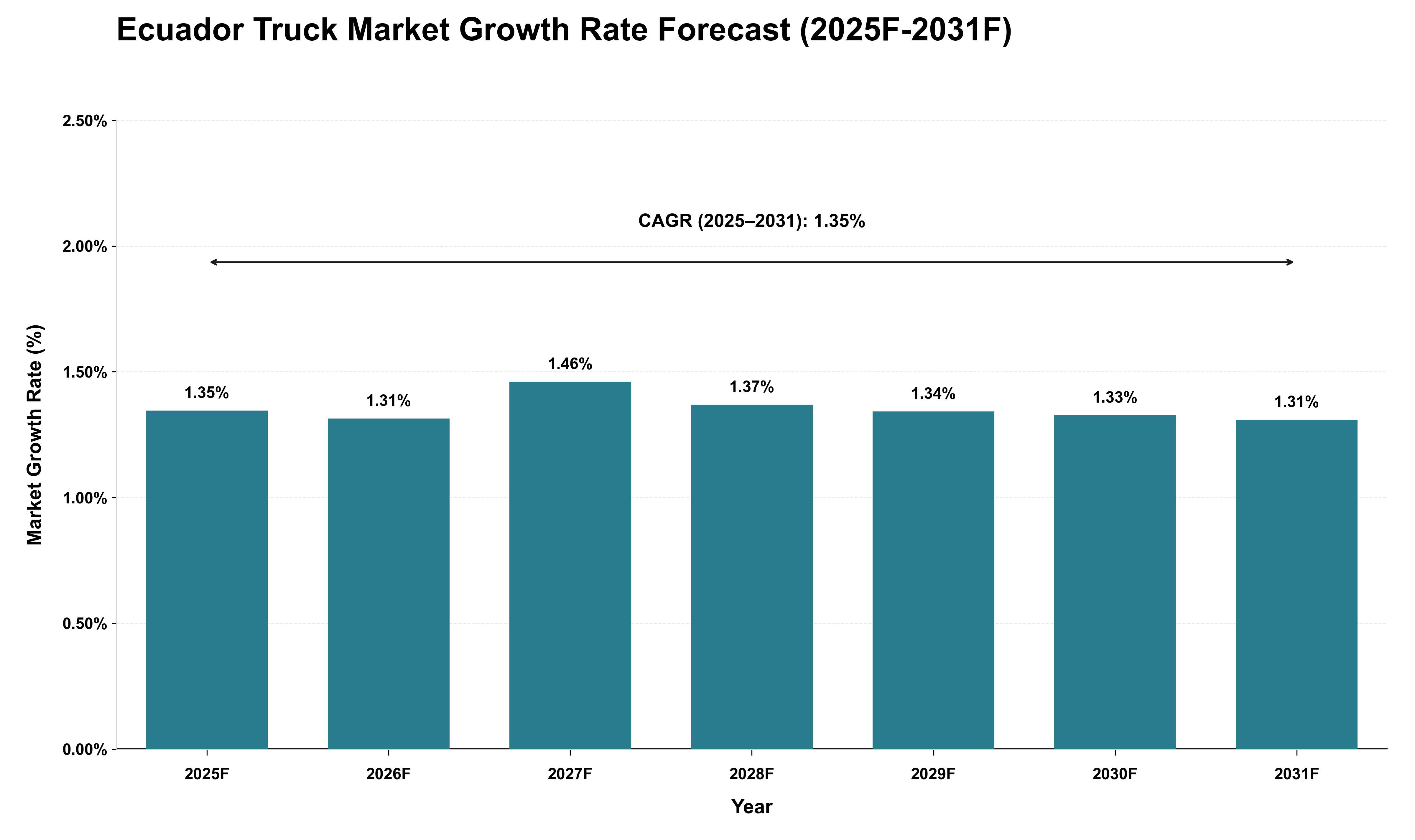
The Ecuador truck market is projected to experience a compound annual growth rate of 1.35% from 2025 to 2031, reflecting a nuanced interplay of end-use demand shifts driven by economic activity and infrastructure development. As the economy expands, increased urbanization and industrialization will likely elevate the need for logistics and transportation solutions, particularly in sectors such as construction and agriculture. The annual growth rates indicate slight fluctuations, with a peak in 2027 at 1.46%, suggesting that cyclical trends may influence purchasing patterns as businesses respond to changing economic conditions. Additionally, import dependencies on truck components could introduce volatility based on global supply chain dynamics and trade policies, impacting overall market performance. Consequently, while steady growth is anticipated, external factors will play a critical role in shaping the trajectory of demand within this sector throughout the forecast period.
Key Highlights of the Report:
- Ecuador Truck Market Outlook
- Market Size of Ecuador Truck Market, 2024
- Forecast of Ecuador Truck Market, 2031
- Historical Data and Forecast of Ecuador Truck Revenues & Volume for the Period 2021-2031
- Ecuador Truck Market Trend Evolution
- Ecuador Truck Market Drivers and Challenges
- Ecuador Truck Price Trends
- Ecuador Truck Porter`s Five Forces
- Ecuador Truck Industry Life Cycle
- Historical Data and Forecast of Ecuador Truck Market Revenues & Volume By Vehicle Type for the Period 2021-2031
- Historical Data and Forecast of Ecuador Truck Market Revenues & Volume By Heavy Duty Truck for the Period 2021-2031
- Historical Data and Forecast of Ecuador Truck Market Revenues & Volume By Medium Duty Truck for the Period 2021-2031
- Historical Data and Forecast of Ecuador Truck Market Revenues & Volume By Light Duty Truck for the Period 2021-2031
- Historical Data and Forecast of Ecuador Truck Market Revenues & Volume By Tonnage Capacity for the Period 2021-2031
- Historical Data and Forecast of Ecuador Truck Market Revenues & Volume By 3.5 7.5 Tons for the Period 2021-2031
- Historical Data and Forecast of Ecuador Truck Market Revenues & Volume By 7.5 16 Tons for the Period 2021-2031
- Historical Data and Forecast of Ecuador Truck Market Revenues & Volume By 16 30 Tons for the Period 2021-2031
- Historical Data and Forecast of Ecuador Truck Market Revenues & Volume By Above 30 Tons for the Period 2021-2031
- Historical Data and Forecast of Ecuador Truck Market Revenues & Volume By Fuel Type for the Period 2021-2031
- Historical Data and Forecast of Ecuador Truck Market Revenues & Volume By Diesel for the Period 2021-2031
- Historical Data and Forecast of Ecuador Truck Market Revenues & Volume By Petrol for the Period 2021-2031
- Historical Data and Forecast of Ecuador Truck Market Revenues & Volume By CNG & LNG for the Period 2021-2031
- Historical Data and Forecast of Ecuador Truck Market Revenues & Volume By Application for the Period 2021-2031
- Historical Data and Forecast of Ecuador Truck Market Revenues & Volume By Construction for the Period 2021-2031
- Historical Data and Forecast of Ecuador Truck Market Revenues & Volume By Logistics for the Period 2021-2031
- Historical Data and Forecast of Ecuador Truck Market Revenues & Volume By Others for the Period 2021-2031
- Ecuador Truck Import Export Trade Statistics
- Market Opportunity Assessment By Vehicle Type
- Market Opportunity Assessment By Tonnage Capacity
- Market Opportunity Assessment By Fuel Type
- Market Opportunity Assessment By Application
- Ecuador Truck Top Companies Market Share
- Ecuador Truck Competitive Benchmarking By Technical and Operational Parameters
- Ecuador Truck Company Profiles
- Ecuador Truck Key Strategic Recommendations






































