Egypt Cleaning Products and Detergents Market Summary
The egypt cleaning products and detergents market was estimated at USD 299 Million in 2025 and is projected to reach USD 394 Million by 2032, growing at a CAGR of 4.9% from 2026 to 2032.
Egypt Cleaning Products and Detergents Market Year-wise Growth Rate and Key Drivers
This graph highlights how the Egypt Cleaning Products and Detergents Market has steadily grown over the past five years, supported by major growth factors.
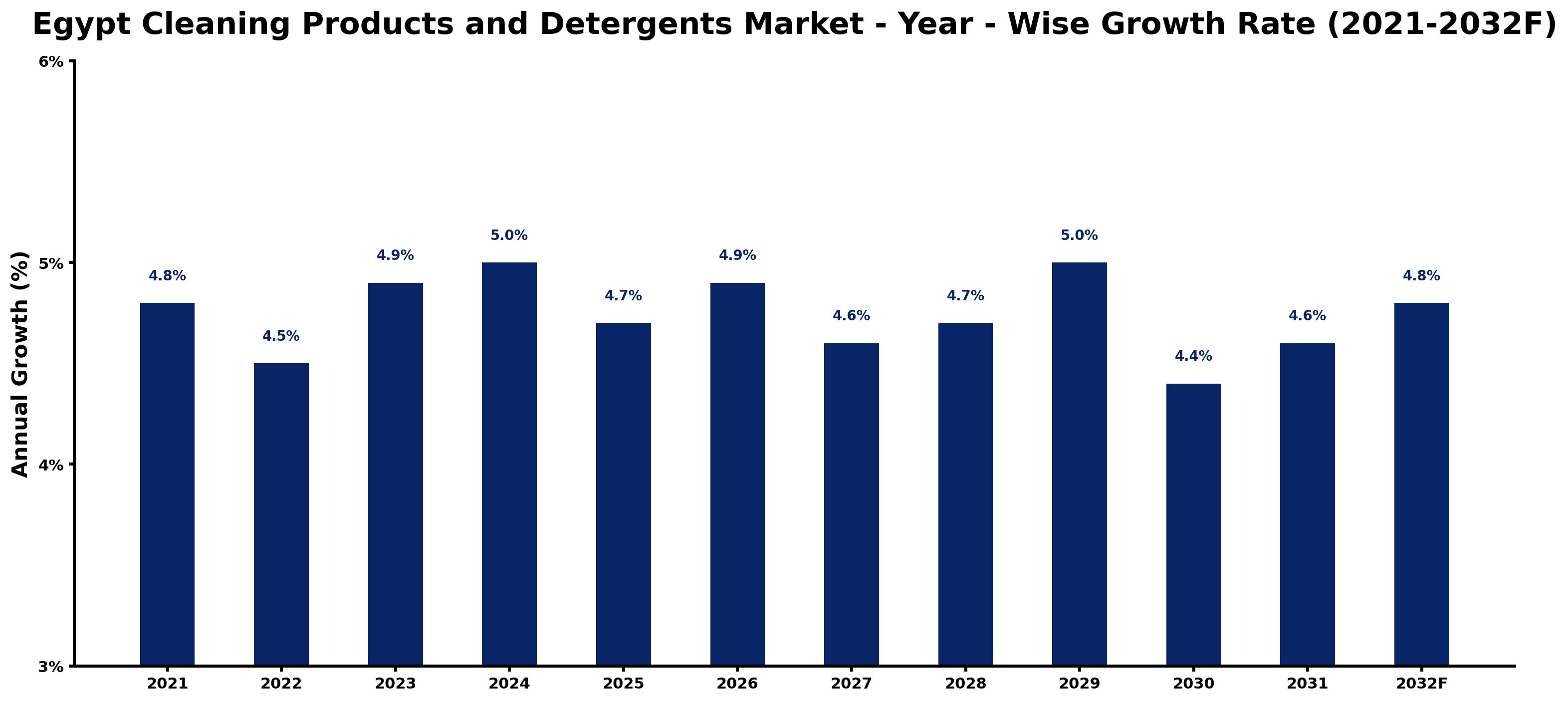
The table below presents the year wise growth rates along with the key drivers influencing the market
| Year | Growth Rate | Major Drivers |
| 2021 | 4.8% | Post-lockdown retail projects sparked renewed interest in household cleaning solutions. |
| 2022 | 4.5% | Increased urbanization led to higher demand for efficient cleaning products in households. |
| 2023 | 4.9% | A focus on health and hygiene amplified sales of eco-friendly detergents and cleaners. |
| 2024 | 5.0% | Investments in distributing e-commerce platforms expanded product accessibility for consumers. |
| 2025 | 4.7% | Economic recovery encouraged consumers to explore premium cleaning brands and formulations. |
| 2026 | 4.9% | Brand loyalty increased as families sought trusted names during uncertain times. |
| 2027 | 4.6% | Rising awareness of sustainability influenced the popularity of biodegradable cleaning agents. |
| 2028 | 4.7% | The introduction of innovative product formats attracted younger demographics seeking convenience. |
| 2029 | 5.0% | Partnerships with local manufacturers enhanced supply chain resilience and reduced lead times. |
| 2030 | 4.4% | Market players focused on consumer education to bolster the effective use of products. |
| 2031 | 4.6% | Technological advancements in formulation improved product efficiency and efficacy significantly. |
| 2032 | 4.8% | Cultural shifts towards cleanliness in urban settings drove consistent demand for diverse options. |
Note - Market size estimations and growth projections presented in this report are based on 6Wresearch's advanced forecasting approach, validated with industry datasets as of June 2026.
Egypt Cleaning Products and Detergents Market Synopsis
The Egypt Cleaning Products and Detergents Market is projected to reach 4.9% and witness significant growth during the forecast period (2026-2032). In 2020, the market was valued at USD 8.2 billion and is expected to expand at a compound annual growth rate (CAGR) of 5.1% through 2026. This growth trajectory is largely driven by an urbanizing population and increasing disposable income among consumers. Additionally, shifts in lifestyle choices are eliciting a demand for sophisticated personal care products, including hygiene soaps, washing powders, and fabric softeners. The growing awareness of health issues, particularly skin allergies linked to synthetic substances in traditional laundry detergents, is fostering a rising preference for organic and natural alternatives. This trend positions eco-friendly cleaning products and detergents as pivotal components of future market expansion in Egypt.
Egypt Cleaning Products and Detergents Market Growth Drivers
Several factors are propelling the growth of the Egypt Cleaning Products and Detergents Market. First and foremost, the rapid increase in the urban population is enhancing the demand for various cleaning solutions, as more households adopt modern cleaning habits. Additionally, rising disposable incomes are enabling consumers to invest in premium cleaning products that promise better efficacy and convenience. The transformation in lifestyle habits, especially among the younger demographic, is also conducive to an increased consumption of advanced cleaning agents.
- The ongoing urbanization process in Egypt is contributing to the growth of the housing and real estate sector, subsequently increasing the demand for cleaning products.
- As disposable incomes rise, consumers are more willing to purchase quality cleaning products, which has prompted manufacturers to innovate and expand their product lines.
- Social awareness regarding hygiene and cleanliness, particularly following the COVID-19 pandemic, has heightened the focus on maintaining health and safety standards, driving sales of disinfectants and sanitizers.
- The increasing presence of e-commerce platforms is making cleaning products more accessible to consumers, facilitating broader market reach.
- Shifting preferences towards sustainable and eco-friendly products are encouraging manufacturers to develop organic cleaning solutions, catering to the growing health-conscious segment of the population.
Egypt Cleaning Products and Detergents Market Trends and Opportunities
The Egypt Cleaning Products and Detergents Market is characterized by dynamic trends that reflect both consumer preferences and technological advancements. Notably, the demand for organic products is on the rise, driven by a growing segment of health-conscious consumers seeking alternatives to conventional synthetic products. This trend is creating significant opportunities for companies to introduce innovative, eco-friendly cleaning solutions that align with consumer values.
- Integration of technology in product formulation is becoming prevalent, with manufacturers investing in research and development to create more effective cleaning agents.
- The trend towards sustainable packaging is gaining momentum, as companies aim to reduce their carbon footprint and appeal to environmentally-conscious consumers.
- Customization of cleaning products to fit specific consumer needs, such as hypoallergenic options, is becoming increasingly popular.
- Product diversification, including the introduction of multipurpose cleaners that cater to various surfaces, is also a notable trend within the market.
- Collaboration with local influencers and digital marketing campaigns are being utilized to enhance product visibility and engage younger consumers effectively.
Egypt Cleaning Products and Detergents Market Challenges and Restraints
Despite the promising growth prospects for the Egypt Cleaning Products and Detergents Market, there are several challenges that stakeholders must navigate. Price sensitivity among consumers remains a significant hurdle, as many households prioritize affordability over premium product features. Furthermore, the prevalence of counterfeit products poses a risk to brand reputation and consumer trust.
- The fluctuating costs of raw materials can affect production expenses, leading to price adjustments that might deter price-sensitive consumers.
- Competition from unbranded and low-cost alternatives influences market dynamics, compelling established brands to continuously innovate and enhance their value propositions.
- Consumer education regarding the benefits of using specialized cleaning products over generic options is essential to stimulate demand in a crowded marketplace.
- Logistical challenges within the supply chain can affect product availability and distribution efficiency, potentially impeding market growth.
- Regulatory hurdles concerning product safety and environmental impact can pose challenges for compliance and product development.
Egypt Cleaning Products and Detergents Market Government Investment and Initiatives
The Egyptian government is increasingly acknowledging the importance of the cleaning products and detergents sector as part of its broader economic development agenda. Various initiatives are being implemented to stimulate the industry, including regulatory reforms aimed at enhancing product safety and environmental sustainability. Furthermore, public investment in infrastructure development is anticipated to create a favorable environment for market expansion, facilitating improved access to distribution channels for cleaning product manufacturers.
- Government policies are encouraging domestic production of cleaning products, aimed at reducing imports and bolstering local industries.
- Public spending on hygiene and sanitation initiatives, especially in response to public health challenges, is supporting the growth of the cleaning products segment.
- Programs addressing environmental concerns are urging manufacturers to adopt eco-friendly practices and contribute to a sustainable economy.
- Support for research and innovation is being promoted through grants and subsidies aimed at developing improved product formulations.
- Collaboration with international organizations is facilitating knowledge transfer and capacity building within the local cleaning products industry.
Egypt Cleaning Products and Detergents Market Latest Developments (May 2025 - June 2026)
In recent months, the Egypt Cleaning Products and Detergents Market has witnessed several noteworthy developments. Companies have been actively enhancing their portfolios with eco-friendly product lines, reflecting the growing consumer preference for sustainable cleaning solutions. Additionally, the integration of advanced technologies into product formulation has become a focal point for innovation, enabling manufacturers to offer more efficient cleaning agents. As the emphasis on hygiene continues to dominate consumer concerns, market players are prioritizing the development of disinfection products, thereby expanding their offerings. Promotional campaigns aimed at educating consumers about the benefits of specialized cleaning products are also gaining traction, positioning brands to capitalize on evolving market dynamics.
Egypt Cleaning Products and Detergents Market - Key Attractiveness of the Report
- 10 Years of Market Numbers
- Historical Data Starting from 2022 to 2025
- Base Year: 2025
- Forecast Data until 2032
- Key Performance Indicators Impacting the Market
- Major Upcoming Developments and Projects
Key Highlights of the Report:
- Egypt Cleaning Products and Detergents Market Outlook
- Market Size of Egypt Cleaning Products and Detergents Market, 2025
- Forecast of Egypt Cleaning Products and Detergents Market, 2032F
- Historical Data and Forecast of Egypt Cleaning Products and Detergents Revenues & Volume for the Period 2022-2032F
- Egypt Cleaning Products and Detergents Market Trend Evolution
- Egypt Cleaning Products and Detergents Market Drivers and Challenges
- Egypt Cleaning Products and Detergents Price Trends
- Egypt Cleaning Products and Detergents Porter's Five Forces
- Egypt Cleaning Products and Detergents Industry Life Cycle
- Historical Data and Forecast of Egypt Cleaning Products and Detergents Market Revenues & Volume By Type for the Period 2022-2032F
- Historical Data and Forecast of Egypt Cleaning Products and Detergents Market Revenues & Volume By Anionic Detergents for the Period 2022-2032F
- Historical Data and Forecast of Egypt Cleaning Products and Detergents Market Revenues & Volume By Cationic Detergents for the Period 2022-2032F
- Historical Data and Forecast of Egypt Cleaning Products and Detergents Market Revenues & Volume By Non-ionic Detergents for the Period 2022-2032F
- Historical Data and Forecast of Egypt Cleaning Products and Detergents Market Revenues & Volume By Zwitterionic (Amphoteric) Detergents for the Period 2022-2032F
- Historical Data and Forecast of Egypt Cleaning Products and Detergents Market Revenues & Volume By Applications for the Period 2022-2032F
- Historical Data and Forecast of Egypt Cleaning Products and Detergents Market Revenues & Volume By Laundry Cleaning Products for the Period 2022-2032F
- Historical Data and Forecast of Egypt Cleaning Products and Detergents Market Revenues & Volume By Household Cleaning Products for the Period 2022-2032F
- Historical Data and Forecast of Egypt Cleaning Products and Detergents Market Revenues & Volume By Dishwashing Products for the Period 2022-2032F
- Historical Data and Forecast of Egypt Cleaning Products and Detergents Market Revenues & Volume By Fuel Additives for the Period 2022-2032F
- Historical Data and Forecast of Egypt Cleaning Products and Detergents Market Revenues & Volume By Biological Reagent for the Period 2022-2032F
- Historical Data and Forecast of Egypt Cleaning Products and Detergents Market Revenues & Volume By Others for the Period 2022-2032F
- Egypt Cleaning Products and Detergents Import Export Trade Statistics
- Market Opportunity Assessment By Type
- Market Opportunity Assessment By Applications
- Egypt Cleaning Products and Detergents Top Companies Market Share
- Egypt Cleaning Products and Detergents Competitive Benchmarking By Technical and Operational Parameters
- Egypt Cleaning Products and Detergents Company Profiles
- Egypt Cleaning Products and Detergents Key Strategic Recommendations






































