El Salvador Dairy Protein Market Size Growth Rate
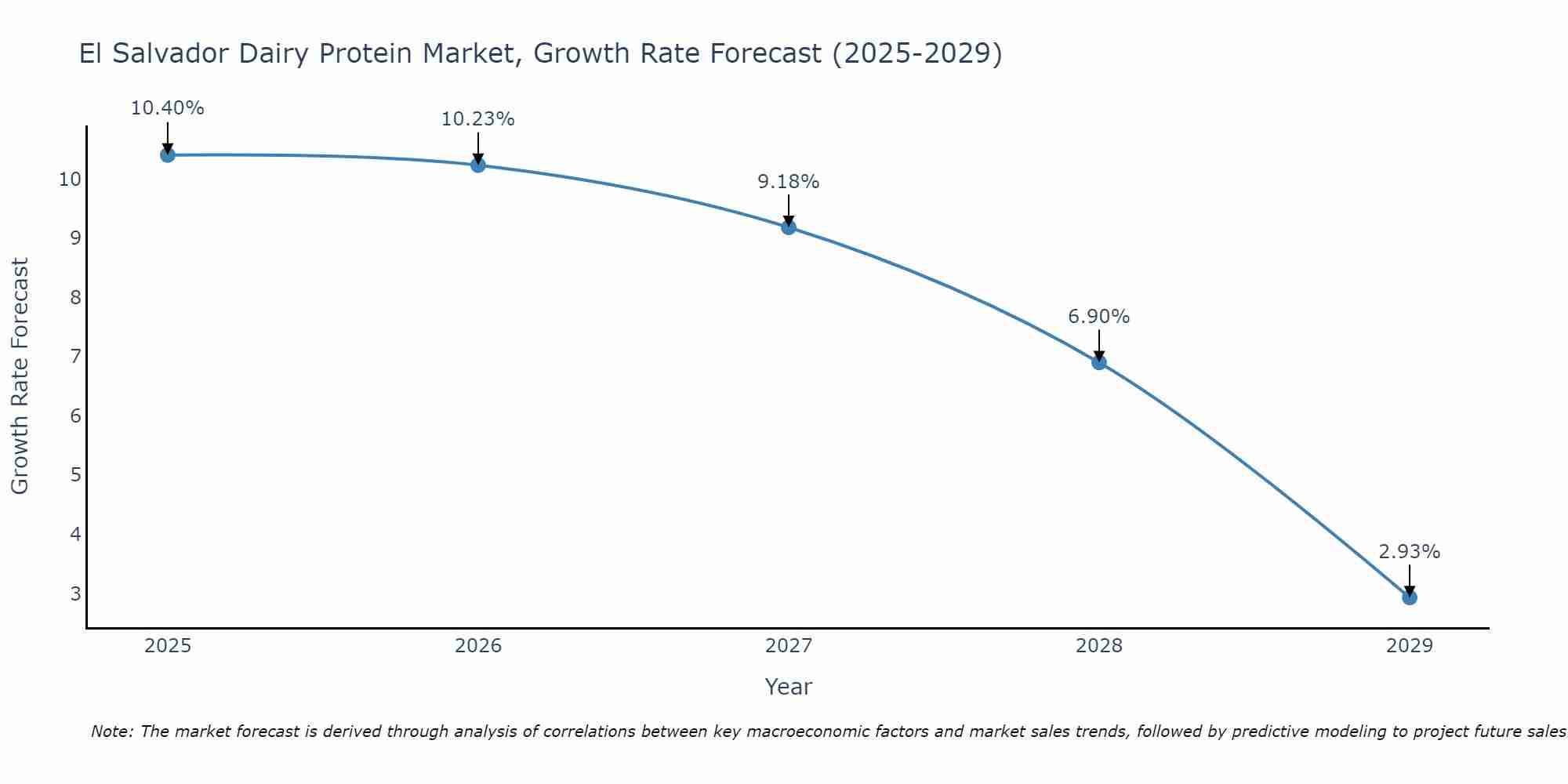
The El Salvador Dairy Protein Market could see a tapering of growth rates over 2025 to 2029. Although the growth rate starts strong at 10.40% in 2025, it steadily loses momentum, ending at 2.93% by 2029.
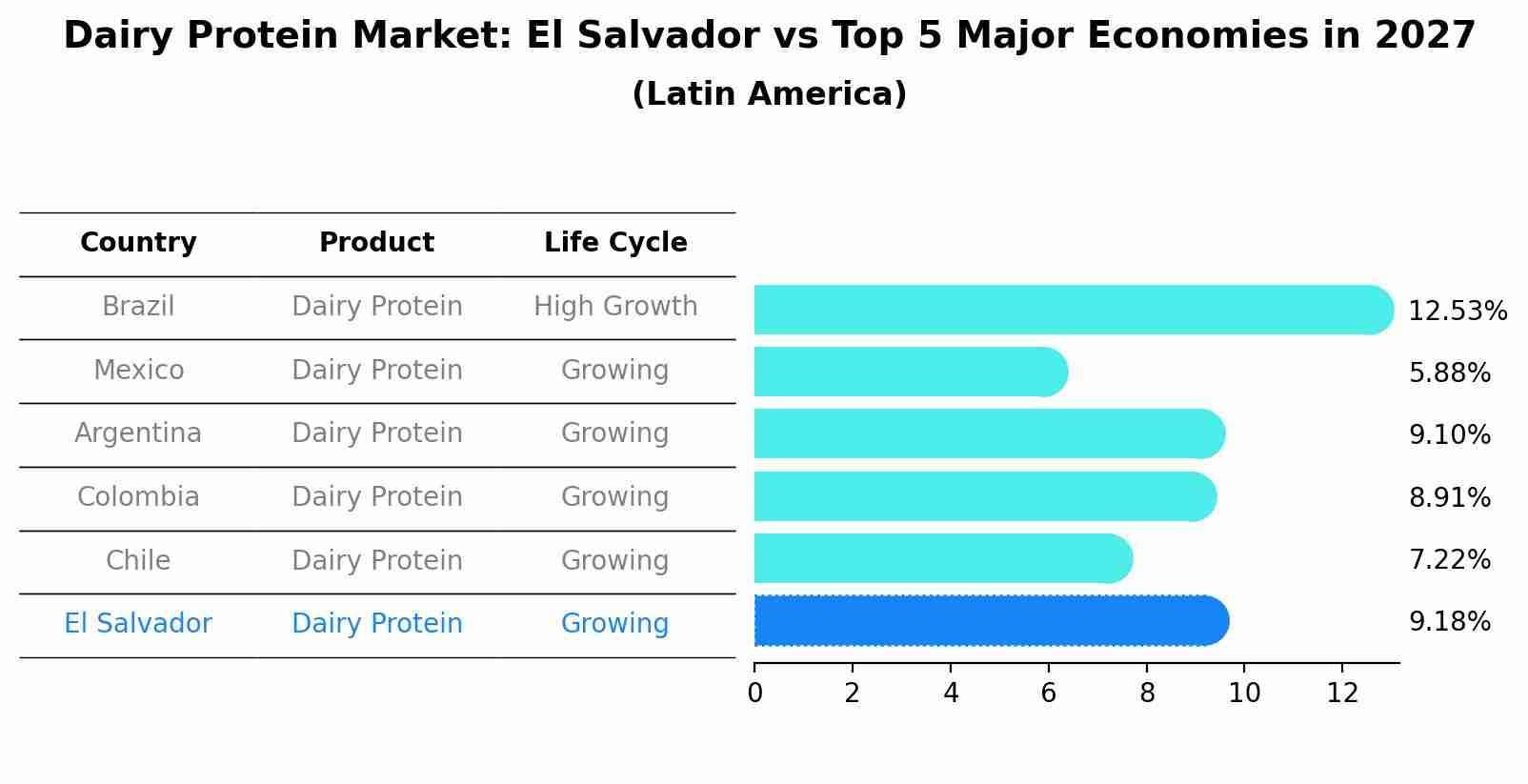
Dairy Protein Market: El Salvador vs Top 5 Major Economies in 2027 (Latin America)
El Salvador's Dairy Protein market is anticipated to experience a growing growth rate of 9.18% by 2027, reflecting trends observed in the largest economy Brazil, followed by Mexico, Argentina, Colombia and Chile.
El Salvador Dairy Protein Market Overview
The dairy protein market in El Salvador is growing as dairy proteins become a key ingredient in various food and beverage products, including protein shakes, nutrition bars, and functional foods. Dairy proteins, such as whey and casein, are highly valued for their nutritional benefits, particularly their high protein content and amino acid profile. The growing trend toward healthy eating and fitness is driving demand for dairy protein-based products in El Salvador. As consumer interest in protein-enriched diets increases, the dairy protein market is expected to expand, with companies offering more specialized and value-added dairy protein products to cater to these needs.
Drivers of the market
The dairy protein market in El Salvador is being driven by the rising consumer demand for high-protein products, especially in the health and wellness sector. Dairy proteins, such as whey protein and casein, are essential ingredients in the production of sports nutrition products, protein supplements, and functional foods. The increasing popularity of fitness and bodybuilding, along with a growing focus on nutrition and weight management, is fueling the demand for dairy proteins in the country. Additionally, the versatility of dairy proteins in a wide range of applications, including food, beverages, and pharmaceuticals, is contributing to the market`s expansion. The continued development of the dairy industry in El Salvador, coupled with the global rise in health-conscious consumer behavior, is expected to sustain growth in the dairy protein market.
Challenges of the market
The dairy protein market faces competition from plant-based protein alternatives, which are gaining popularity. High production and import costs make dairy protein products expensive, limiting accessibility for price-sensitive consumers. Additionally, limited awareness of dairy protein benefits restricts market growth.
Government Policy of the market
The government of El Salvador regulates the dairy protein market to ensure that dairy proteins, which are used in a wide range of food products, meet quality and safety standards. Regulations focus on ensuring that dairy proteins are derived from healthy, well-managed dairy herds and are free from contaminants. The government may encourage the use of locally produced dairy proteins, providing support for dairy farmers and processors. Policies may also promote research into new uses for dairy proteins in food products, particularly those focused on health and wellness, such as high-protein snacks and supplements.
Key Highlights of the Report:
- El Salvador Dairy Protein Market Outlook
- Market Size of El Salvador Dairy Protein Market, 2024
- Forecast of El Salvador Dairy Protein Market, 2031
- Historical Data and Forecast of El Salvador Dairy Protein Revenues & Volume for the Period 2021-2031
- El Salvador Dairy Protein Market Trend Evolution
- El Salvador Dairy Protein Market Drivers and Challenges
- El Salvador Dairy Protein Price Trends
- El Salvador Dairy Protein Porter`s Five Forces
- El Salvador Dairy Protein Industry Life Cycle
- Historical Data and Forecast of El Salvador Dairy Protein Market Revenues & Volume By Type for the Period 2021-2031
- Historical Data and Forecast of El Salvador Dairy Protein Market Revenues & Volume By Casein and Derivatives for the Period 2021-2031
- Historical Data and Forecast of El Salvador Dairy Protein Market Revenues & Volume By Whey protein for the Period 2021-2031
- Historical Data and Forecast of El Salvador Dairy Protein Market Revenues & Volume By Milk Protein Concentrate for the Period 2021-2031
- Historical Data and Forecast of El Salvador Dairy Protein Market Revenues & Volume By Application for the Period 2021-2031
- Historical Data and Forecast of El Salvador Dairy Protein Market Revenues & Volume By Food & Beverages for the Period 2021-2031
- Historical Data and Forecast of El Salvador Dairy Protein Market Revenues & Volume By Nutrition for the Period 2021-2031
- Historical Data and Forecast of El Salvador Dairy Protein Market Revenues & Volume By Personal Care & Cosmetics for the Period 2021-2031
- Historical Data and Forecast of El Salvador Dairy Protein Market Revenues & Volume By Feed for the Period 2021-2031
- Historical Data and Forecast of El Salvador Dairy Protein Market Revenues & Volume By Others for the Period 2021-2031
- Historical Data and Forecast of El Salvador Dairy Protein Market Revenues & Volume By Form for the Period 2021-2031
- Historical Data and Forecast of El Salvador Dairy Protein Market Revenues & Volume By Solid for the Period 2021-2031
- Historical Data and Forecast of El Salvador Dairy Protein Market Revenues & Volume By Liquid for the Period 2021-2031
- El Salvador Dairy Protein Import Export Trade Statistics
- Market Opportunity Assessment By Type
- Market Opportunity Assessment By Application
- Market Opportunity Assessment By Form
- El Salvador Dairy Protein Top Companies Market Share
- El Salvador Dairy Protein Competitive Benchmarking By Technical and Operational Parameters
- El Salvador Dairy Protein Company Profiles
- El Salvador Dairy Protein Key Strategic Recommendations






































