Estonia Basketball Market Size (2020-2030)
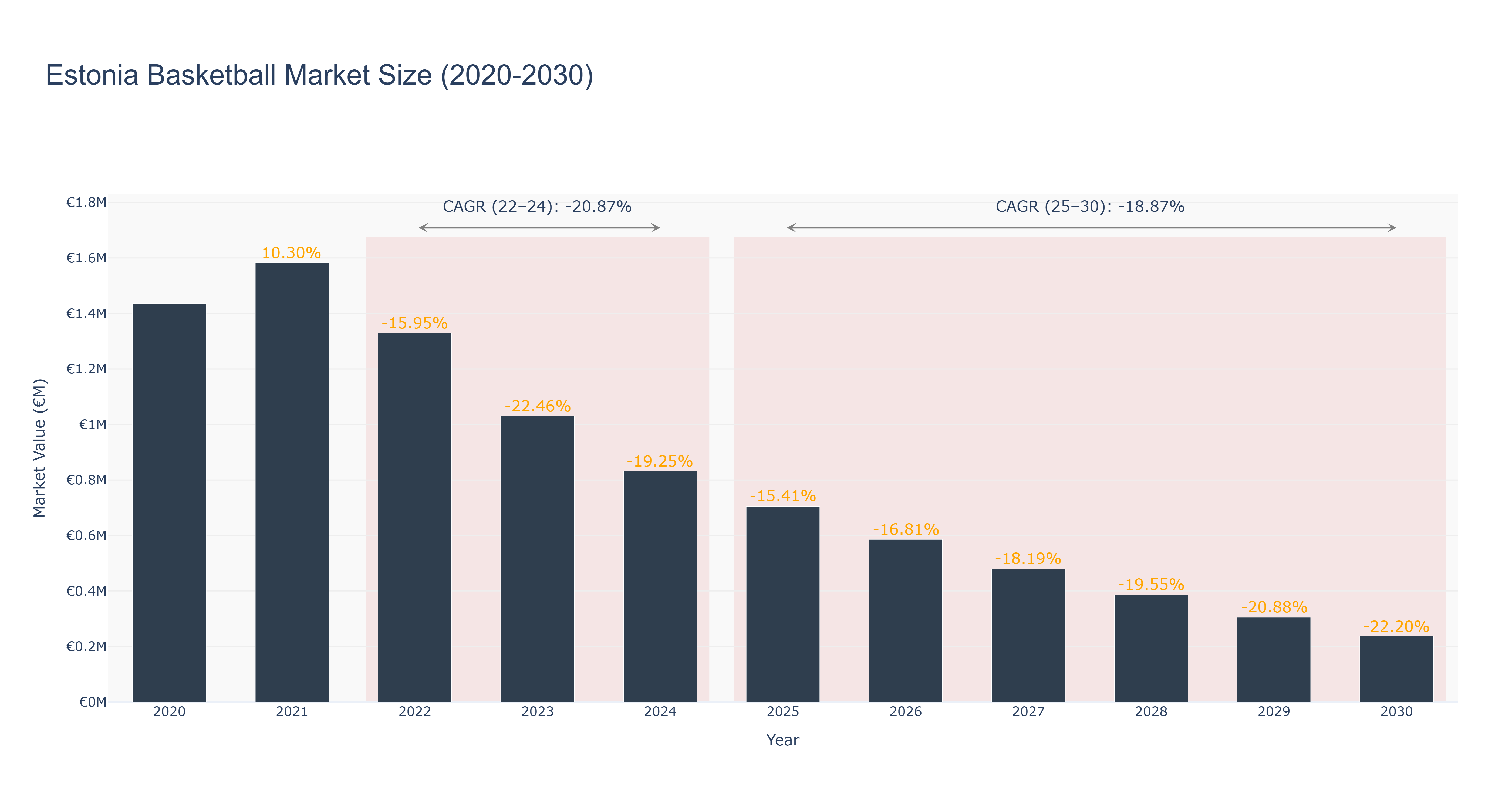
The Estonia Basketball Market experienced its peak in 2021, with a market size of €1.58 million, reflecting a commendable growth of 10.30%. However, this upward momentum was short-lived, as the market faced significant declines in subsequent years, culminating in a market size of €832.64 thousand in 2024, representing a CAG of -20.87% for the actual period from 2022 to 2024. Looking ahead to the forecasted period from 2025 to 2030, the market is projected to continue its downward trend, with sizes declining to €237.38 thousand by 2030, indicating a CAGR of -18.87%. The decline can be attributed to various factors, including reduced sponsorship and economic challenges affecting consumer spending on sports. While no specific upcoming projects have been highlighted, broader economic recovery and potential increases in youth engagement in basketball could serve as critical drivers for future stabilization and growth in this market.
Estonia Basketball Market: Production & Trade Performance (2019-2025)
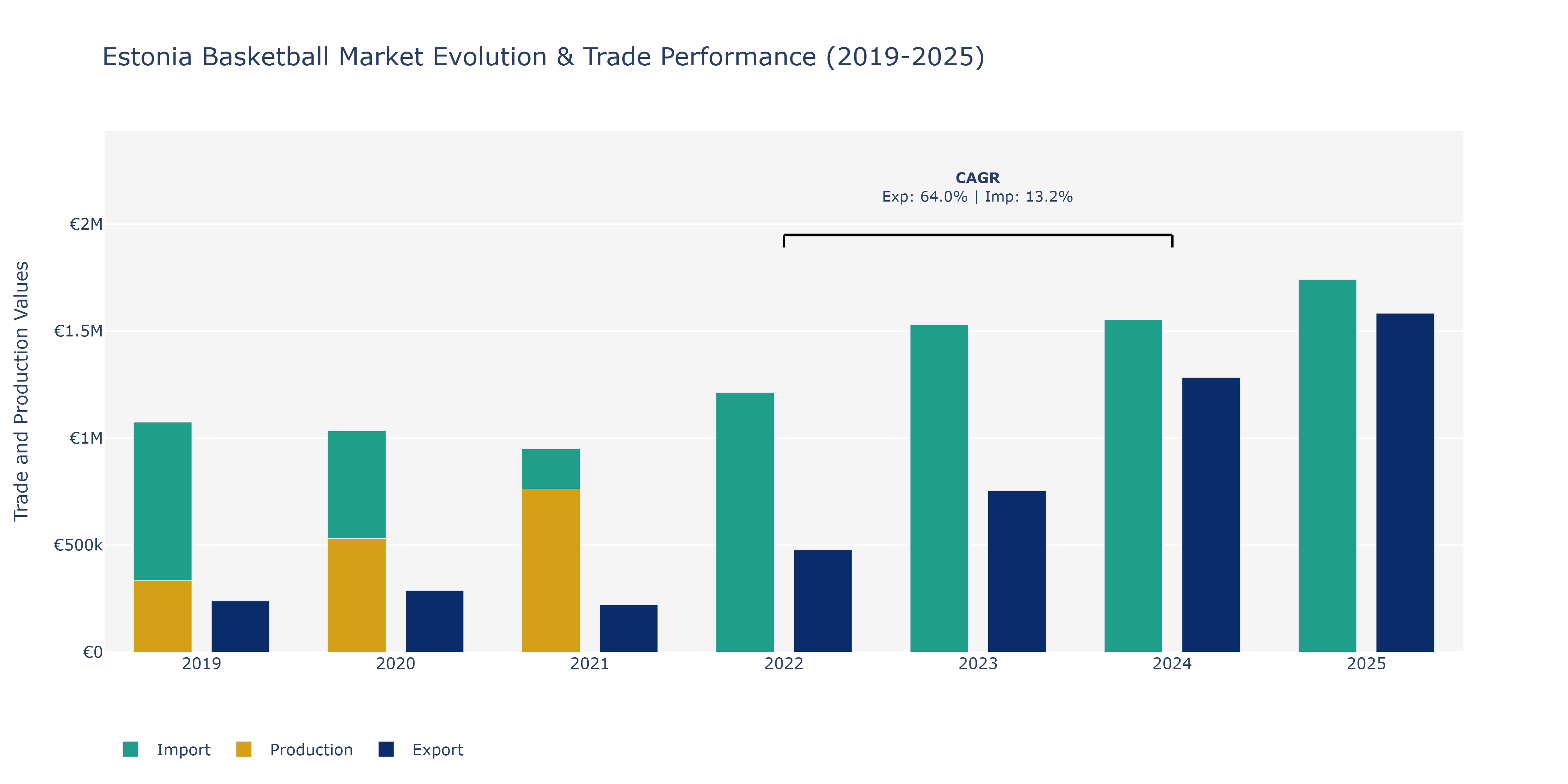
Between 2019 and 2025, the Estonia Basketball Market witnessed notable trends in exports, imports, and production. Exports showed a steady increase from €239.07 thousand in 2019 to €1.58 million in 2025, indicating a growing international demand for Estonian basketball-related products. In contrast, imports fluctuated, reaching a peak of €1.74 million in 2025 after a dip in 2021. This trend suggests varying domestic consumption patterns and evolving preferences for imported goods. Production also exhibited significant growth, more than doubling from €335.06 thousand in 2019 to €762 million in 2021, highlighting the market's increasing manufacturing capacity. The surge in exports can be attributed to Estonia's rising reputation for producing high-quality basketball equipment and apparel, potentially fueled by strategic partnerships with global brands and enhanced marketing efforts to capitalize on the sport's popularity worldwide. On the imports front, shifts in consumer behavior, such as changing preferences for foreign brands or specific product categories, likely influenced the fluctuations observed. These developments align with broader industry trends where countries with a strong basketball culture are capitalizing on the sport's global appeal, driving both production and trade volumes.
Key Highlights of the Report:
- Estonia Basketball Market Outlook
- Market Size of Estonia Basketball Market, 2025
- Forecast of Estonia Basketball Market, 2032
- Historical Data and Forecast of Estonia Basketball Revenues & Volume for the Period 2022 - 2032F
- Estonia Basketball Market Trend Evolution
- Estonia Basketball Market Drivers and Challenges
- Estonia Basketball Price Trends
- Estonia Basketball Porter`s Five Forces
- Estonia Basketball Industry Life Cycle
- Historical Data and Forecast of Estonia Basketball Market Revenues & Volume By Type for the Period 2022 - 2032F
- Historical Data and Forecast of Estonia Basketball Market Revenues & Volume By Rubber for the Period 2022 - 2032F
- Historical Data and Forecast of Estonia Basketball Market Revenues & Volume By Cattle Hide for the Period 2022 - 2032F
- Historical Data and Forecast of Estonia Basketball Market Revenues & Volume By PU for the Period 2022 - 2032F
- Historical Data and Forecast of Estonia Basketball Market Revenues & Volume By PVC for the Period 2022 - 2032F
- Estonia Basketball Import Export Trade Statistics
- Market Opportunity Assessment By Type
- Estonia Basketball Top Companies Market Share
- Estonia Basketball Competitive Benchmarking By Technical and Operational Parameters
- Estonia Basketball Company Profiles
- Estonia Basketball Key Strategic Recommendations






































