Estonia Cellulose Fiber Market Size Growth Rate
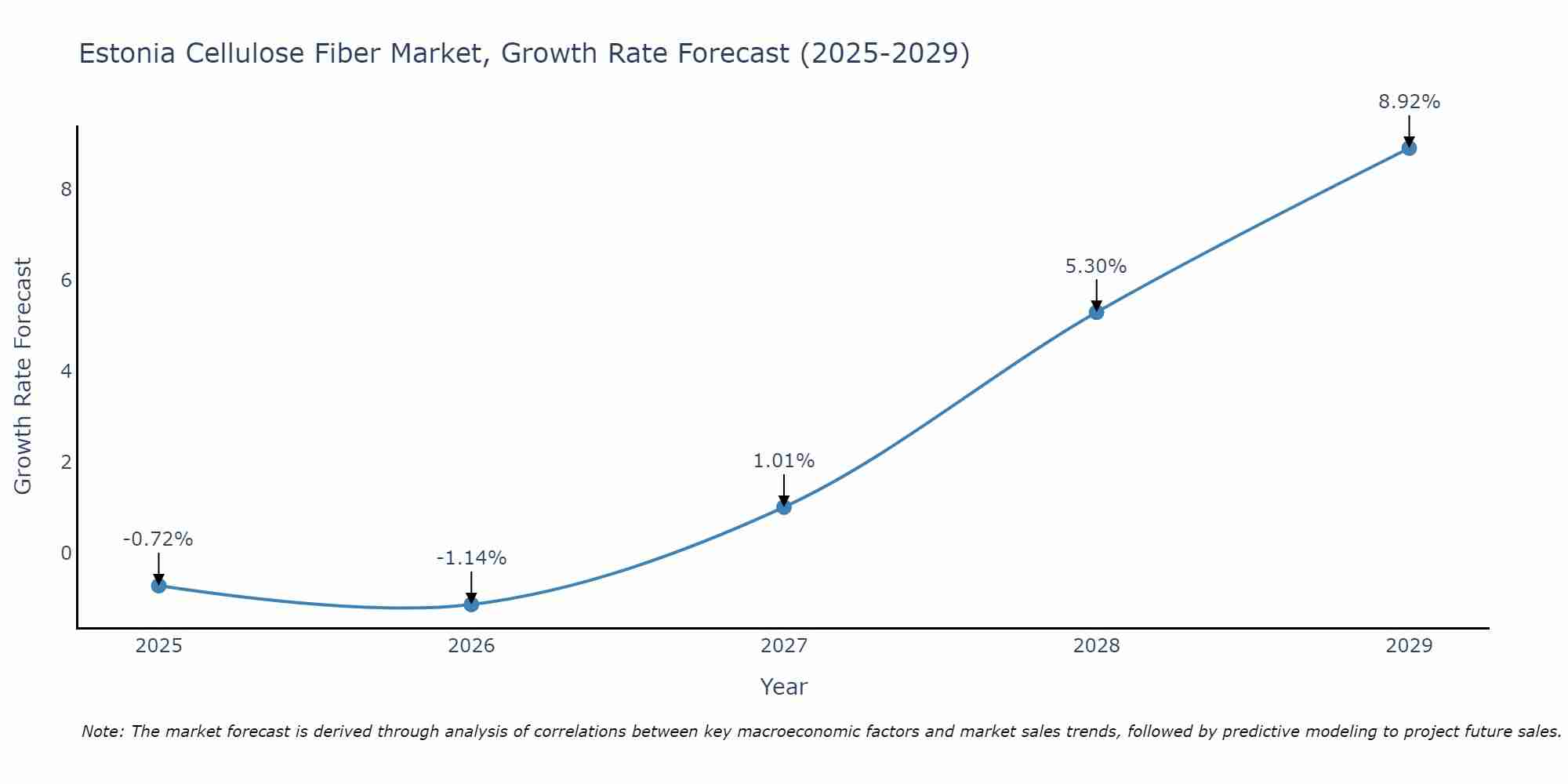
The Estonia Cellulose Fiber Market is projected to witness mixed growth rate patterns during 2025 to 2029. Commencing at -0.72% in 2025, growth builds up to 8.92% by 2029.
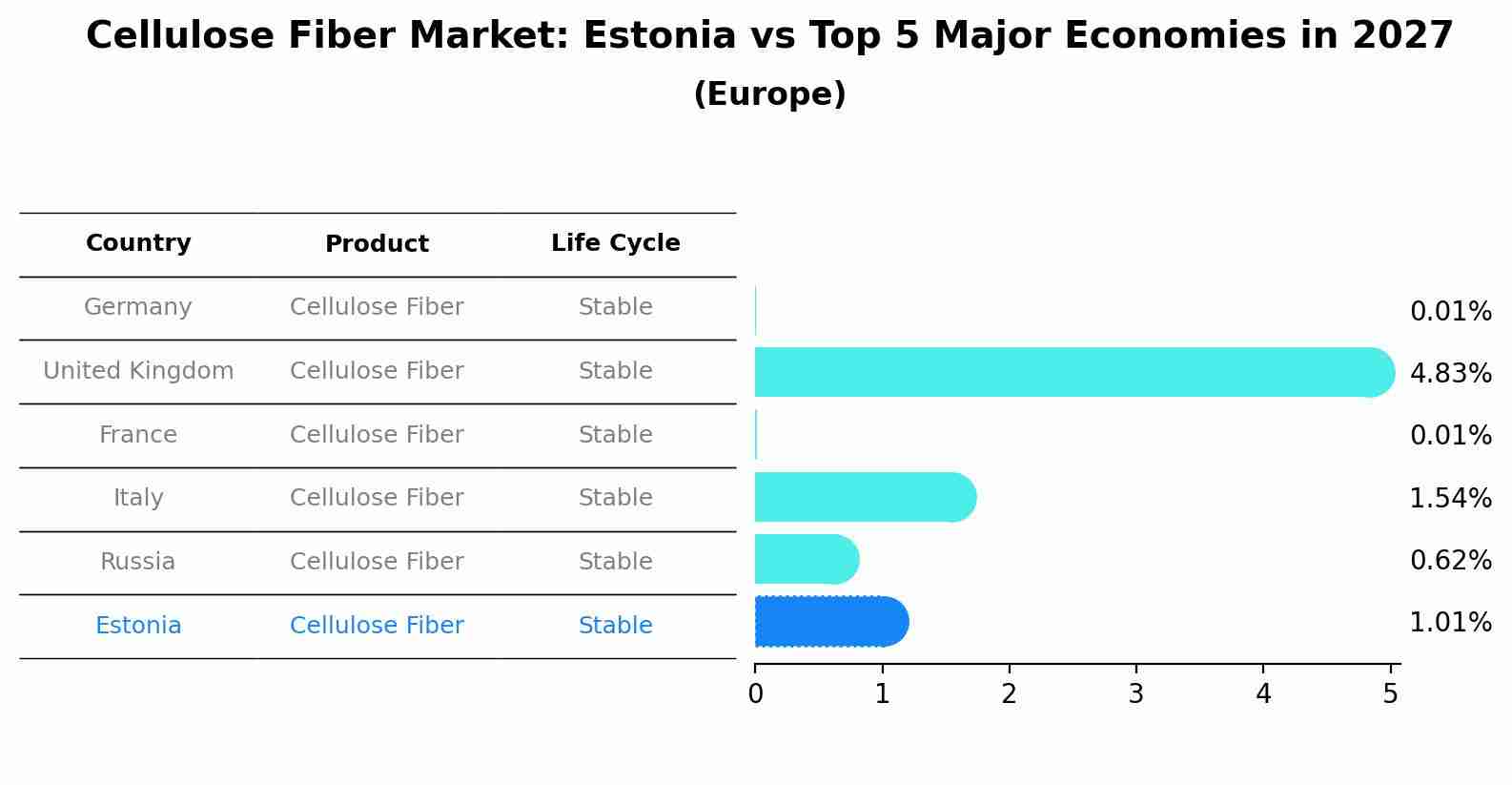
Cellulose Fiber Market: Estonia vs Top 5 Major Economies in 2027 (Europe)
By 2027, Estonia's Cellulose Fiber market is forecasted to achieve a stable growth rate of 1.01%, with Germany leading the Europe region, followed by United Kingdom, France, Italy and Russia.
Estonia Cellulose Fiber Market Overview
An overview of Estonias cellulose fiber market, relevant in textiles, hygiene products, and construction materials for sustainable, biodegradable fibers.
Drivers of the market
The Cellulose Fiber market in Estonia is growing as the demand for sustainable and eco-friendly materials increases. Cellulose fibers, derived from wood or plant-based sources, are widely used in textiles, paper products, and bioplastics. The growing awareness of environmental sustainability and the desire for alternatives to synthetic fibers are key factors driving the market. As Estonia focuses on sustainable practices and promotes the use of renewable resources, cellulose fibers are becoming increasingly popular in various industries, contributing to the expansion of the market.
Challenges of the market
The Estonia cellulose fiber market faces competition from both natural and synthetic fiber alternatives. While cellulose fibers are a renewable resource and considered environmentally friendly, they must contend with the growing use of synthetic fibers, which are often cheaper to produce. Additionally, there are challenges related to sourcing high-quality cellulose and maintaining consistency in fiber properties. Environmental concerns are also at the forefront, as both producers and consumers are increasingly seeking sustainable practices and solutions. Manufacturers must address these concerns while ensuring the fibers meet the performance standards expected by end-users in textiles and other industries.
Government Policy of the market
Estonias government promotes the cellulose fiber market as part of its commitment to sustainable textiles and packaging industries. Policies support the use of cellulose fibers as eco-friendly alternatives to synthetic fibers in clothing, packaging, and industrial applications. The government offers incentives for businesses developing innovative and sustainable cellulose fiber technologies.
Key Highlights of the Report:
- Estonia Cellulose Fiber Market Outlook
- Market Size of Estonia Cellulose Fiber Market, 2024
- Forecast of Estonia Cellulose Fiber Market, 2031
- Historical Data and Forecast of Estonia Cellulose Fiber Revenues & Volume for the Period 2021-2031
- Estonia Cellulose Fiber Market Trend Evolution
- Estonia Cellulose Fiber Market Drivers and Challenges
- Estonia Cellulose Fiber Price Trends
- Estonia Cellulose Fiber Porter`s Five Forces
- Estonia Cellulose Fiber Industry Life Cycle
- Historical Data and Forecast of Estonia Cellulose Fiber Market Revenues & Volume By Fiber Type for the Period 2021-2031
- Historical Data and Forecast of Estonia Cellulose Fiber Market Revenues & Volume By Introduction for the Period 2021-2031
- Historical Data and Forecast of Estonia Cellulose Fiber Market Revenues & Volume By Natural Cellulose Fibers for the Period 2021-2031
- Historical Data and Forecast of Estonia Cellulose Fiber Market Revenues & Volume By Man-made Cellulose Fibers for the Period 2021-2031
- Historical Data and Forecast of Estonia Cellulose Fiber Market Revenues & Volume By Others for the Period 2021-2031
- Historical Data and Forecast of Estonia Cellulose Fiber Market Revenues & Volume By Applications for the Period 2021-2031
- Historical Data and Forecast of Estonia Cellulose Fiber Market Revenues & Volume By Introduction for the Period 2021-2031
- Historical Data and Forecast of Estonia Cellulose Fiber Market Revenues & Volume By Apparel for the Period 2021-2031
- Historical Data and Forecast of Estonia Cellulose Fiber Market Revenues & Volume By Home Textile for the Period 2021-2031
- Historical Data and Forecast of Estonia Cellulose Fiber Market Revenues & Volume By Industrial for the Period 2021-2031
- Historical Data and Forecast of Estonia Cellulose Fiber Market Revenues & Volume By Others for the Period 2021-2031
- Estonia Cellulose Fiber Import Export Trade Statistics
- Market Opportunity Assessment By Fiber Type
- Market Opportunity Assessment By Applications
- Estonia Cellulose Fiber Top Companies Market Share
- Estonia Cellulose Fiber Competitive Benchmarking By Technical and Operational Parameters
- Estonia Cellulose Fiber Company Profiles
- Estonia Cellulose Fiber Key Strategic Recommendations






































