Estonia Handbag Market Size (2020-2030)
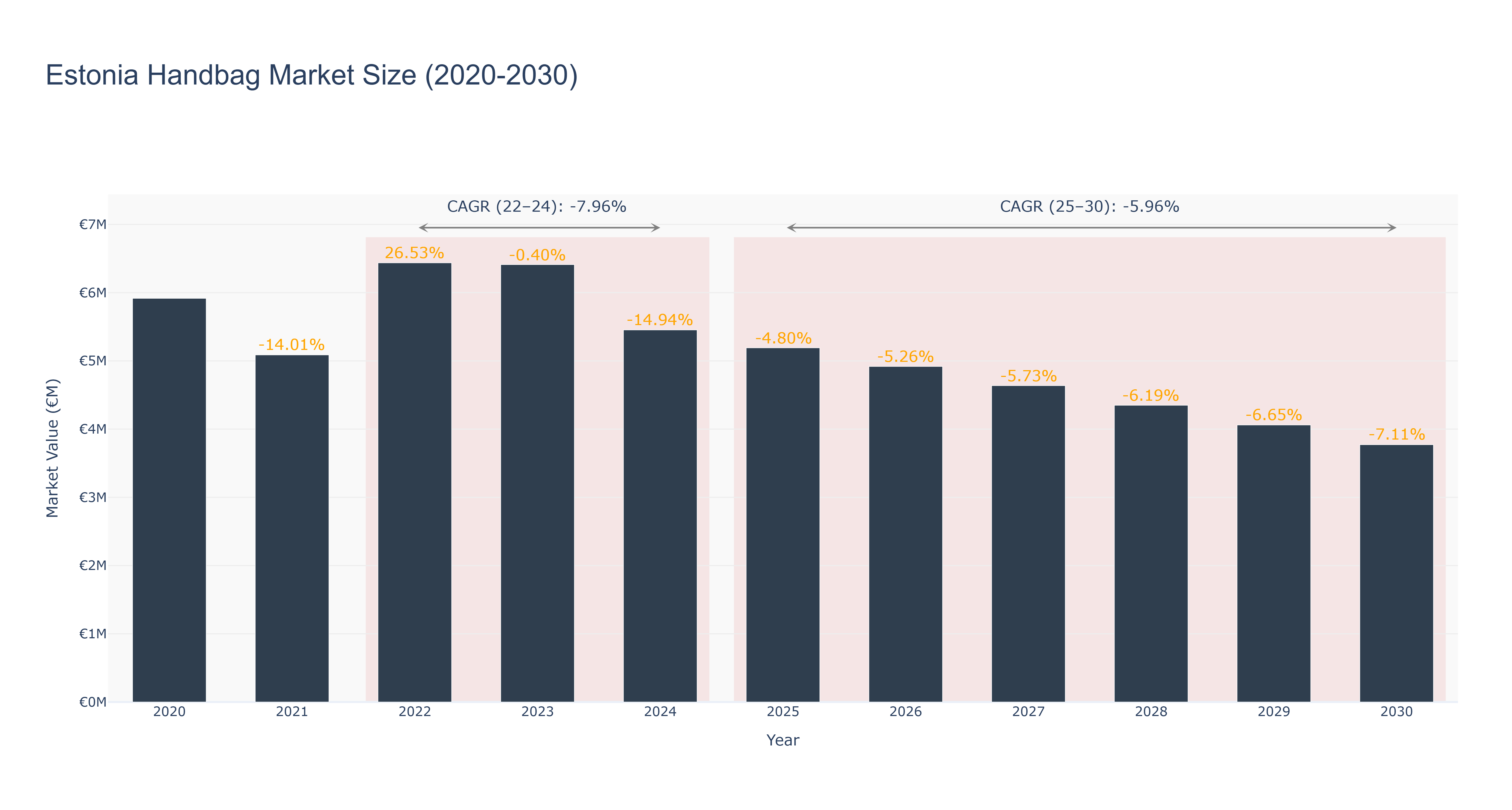
The Estonia Handbag Market experienced a peak size of €6.44 million in 2022, followed by a decline to €5.45 million in 2024. The market is forecasted to further decrease to €3.77 million by 2030, with a CAGR of -5.96% from 2025 to 2030. The market has been facing challenges with a negative growth trend due to changing consumer preferences, economic uncertainties, and increased competition. However, recent developments indicate a shift towards sustainable and ethically sourced handbags, which could potentially drive market growth in the future. Additionally, upcoming collaborations with local designers and international brands are expected to bring fresh perspectives and innovation to the market, paving the way for recovery and rejuvenation in the coming years.
Estonia Handbag Market: Production & Trade Performance (2019-2025)
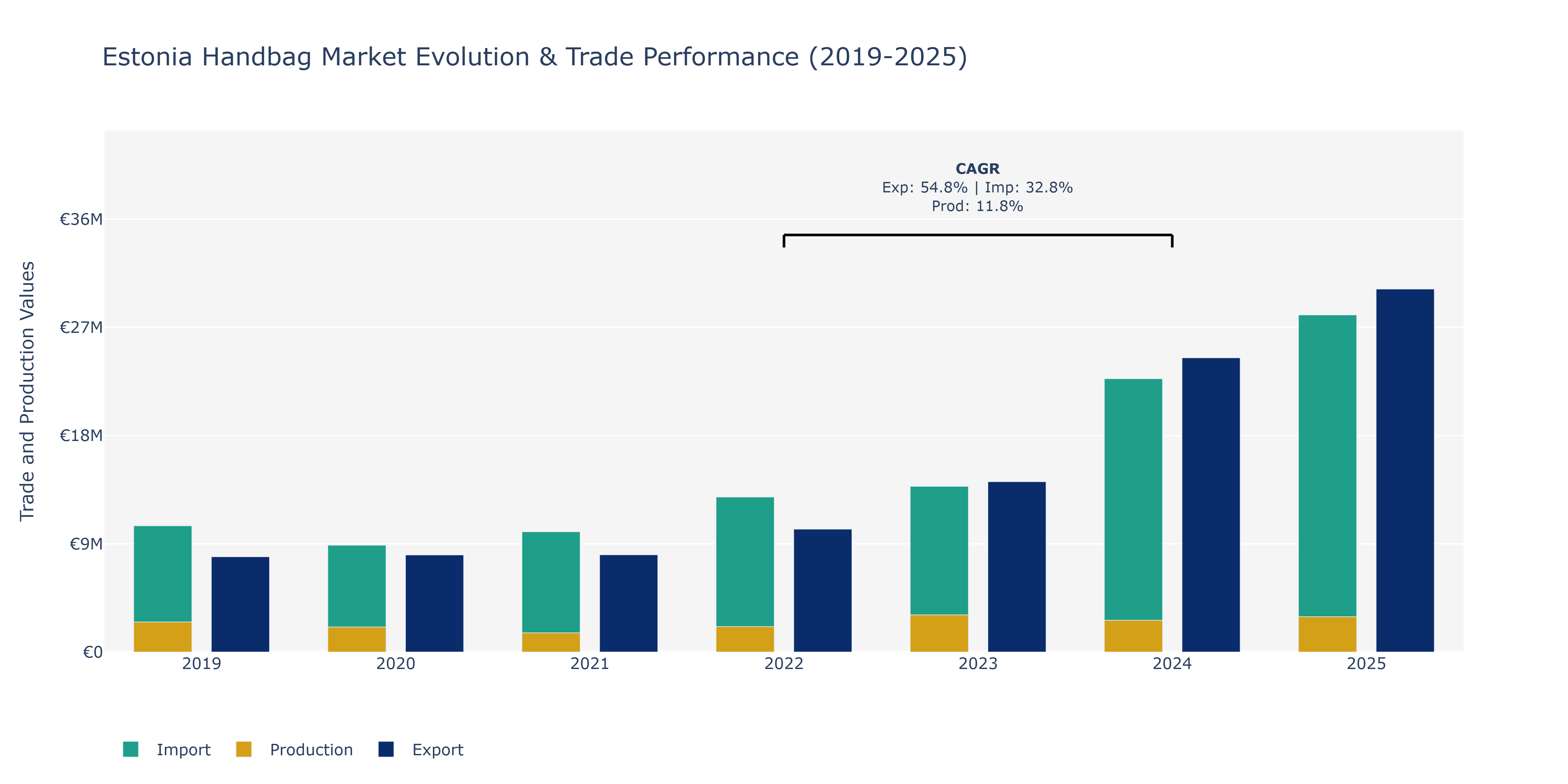
In the Estonia Handbag Market, from 2019 to 2025, exports displayed a consistent upward trajectory, increasing from €7.93 million to €30.19 million. Notably, a substantial spike was observed in 2024, nearly tripling the export value compared to 2023. Imports also demonstrated growth over the same period, rising from €10.5 million in 2019 to €28.04 million in 2025. Production, however, fluctuated throughout the years, reaching its peak in 2023 at €3.09 million before slightly declining in 2024 and 2025. These fluctuations in production could be attributed to shifts in consumer preferences, changing fashion trends, or adjustments in manufacturing capabilities within the local market. The surge in exports might be fueled by increased demand for Estonian handbags in international markets, potentially due to successful marketing strategies or the establishment of new trade partnerships. To sustain growth, market players could focus on innovation, quality improvement, and sustainable practices to retain and attract customers amidst evolving market dynamics.
Key Highlights of the Report:
- Estonia Handbag Market Outlook
- Market Size of Estonia Handbag Market, 2025
- Forecast of Estonia Handbag Market, 2032
- Historical Data and Forecast of Estonia Handbag Revenues & Volume for the Period 2022 - 2032F
- Estonia Handbag Market Trend Evolution
- Estonia Handbag Market Drivers and Challenges
- Estonia Handbag Price Trends
- Estonia Handbag Porter`s Five Forces
- Estonia Handbag Industry Life Cycle
- Historical Data and Forecast of Estonia Handbag Market Revenues & Volume By Product Type for the Period 2022 - 2032F
- Historical Data and Forecast of Estonia Handbag Market Revenues & Volume By Satchel for the Period 2022 - 2032F
- Historical Data and Forecast of Estonia Handbag Market Revenues & Volume By Bucket Bag for the Period 2022 - 2032F
- Historical Data and Forecast of Estonia Handbag Market Revenues & Volume By Clutch for the Period 2022 - 2032F
- Historical Data and Forecast of Estonia Handbag Market Revenues & Volume By Tote Bag for the Period 2022 - 2032F
- Historical Data and Forecast of Estonia Handbag Market Revenues & Volume By Other Product Types for the Period 2022 - 2032F
- Historical Data and Forecast of Estonia Handbag Market Revenues & Volume By Distribution Channel for the Period 2022 - 2032F
- Historical Data and Forecast of Estonia Handbag Market Revenues & Volume By Online Retail Stores for the Period 2022 - 2032F
- Historical Data and Forecast of Estonia Handbag Market Revenues & Volume By Offline Retail Stores for the Period 2022 - 2032F
- Estonia Handbag Import Export Trade Statistics
- Market Opportunity Assessment By Product Type
- Market Opportunity Assessment By Distribution Channel
- Estonia Handbag Top Companies Market Share
- Estonia Handbag Competitive Benchmarking By Technical and Operational Parameters
- Estonia Handbag Company Profiles
- Estonia Handbag Key Strategic Recommendations






































