Estonia Home Textile Market Size (2020-2030)
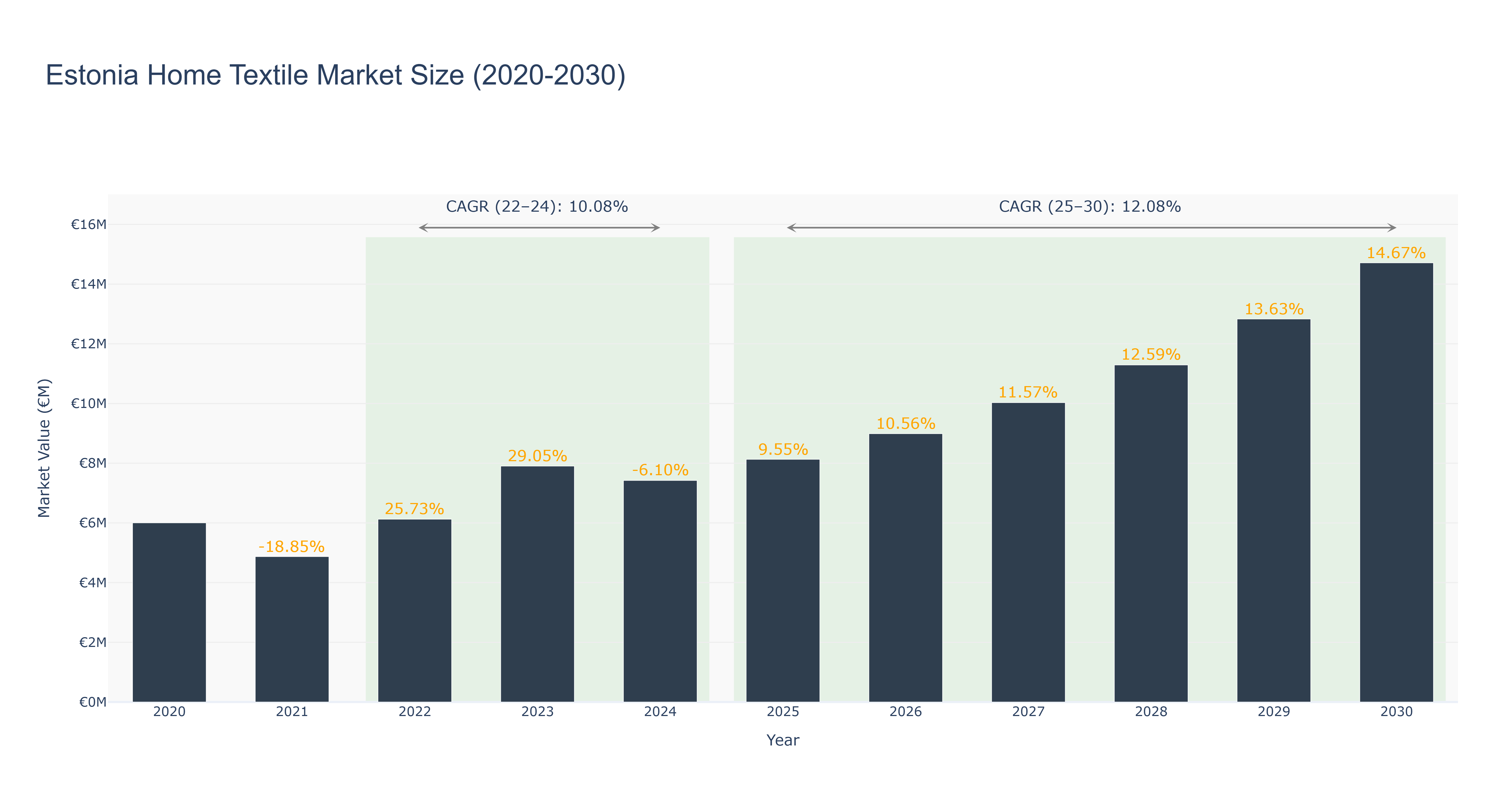
Estonia Home Textile Market has shown a consistent growth trend over the years. The peak market size was €14.71 million in 2030, with a forecasted growth rate of 14.67%. From 2020 to 2024, the market size fluctuated, reaching a low of €4.87 million in 2021 and recovering to €7.42 million in 2024. The market experienced a significant decline in 2021 due to external economic factors affecting consumer spending, followed by a steady recovery driven by increased consumer confidence and disposable income. The future outlook for the Estonia Home Textile Market is positive, with a projected CAGR of 12.08% from 2025 to 2030. Recent developments in sustainable textile production and increased focus on digital marketing strategies are expected to further boost market growth in the coming years.
Estonia Home Textile Market: Production & Trade Performance (2019-2025)
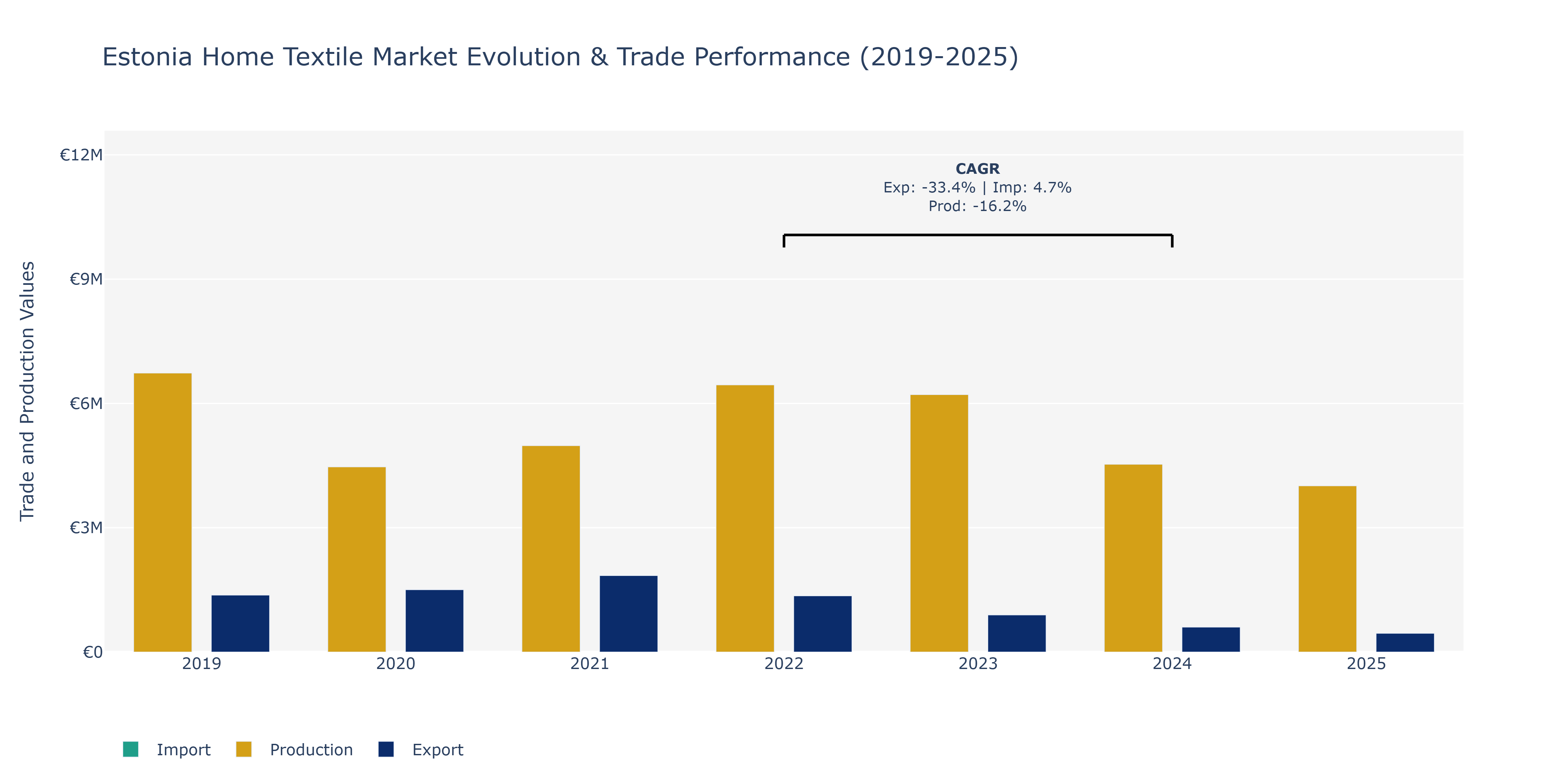
From 2019 to 2025, the Estonia Home Textile Market saw varying trends in exports, imports, and production. In 2021, exports peaked at €1.85 million, showing a substantial increase from the previous year. However, the following years saw a downward trend, with exports dropping to €0.45 million in 2025. Imports remained relatively stable, with a peak of €2.77 million in 2023. Production experienced fluctuations, reaching its highest point at €6.45 million in 2022, followed by a decline to €4.01 million in 2025. These fluctuations could be attributed to external factors such as global economic conditions impacting consumer demand, changes in raw material prices affecting production costs, and shifting trade policies influencing import and export volumes. The decline in exports post-2021 may signal a need for market diversification or enhanced marketing strategies to regain market share.
Key Highlights of the Report:
- Estonia Home Textile Market Outlook
- Market Size of Estonia Home Textile Market, 2025
- Forecast of Estonia Home Textile Market, 2032
- Historical Data and Forecast of Estonia Home Textile Revenues & Volume for the Period 2022 - 2032F
- Estonia Home Textile Market Trend Evolution
- Estonia Home Textile Market Drivers and Challenges
- Estonia Home Textile Price Trends
- Estonia Home Textile Porter's Five Forces
- Estonia Home Textile Industry Life Cycle
- Historical Data and Forecast of Estonia Home Textile Market Revenues & Volume By Product Type for the Period 2022 - 2032F
- Historical Data and Forecast of Estonia Home Textile Market Revenues & Volume By Bed Linen for the Period 2022 - 2032F
- Historical Data and Forecast of Estonia Home Textile Market Revenues & Volume By Curtains and Drapes for the Period 2022 - 2032F
- Historical Data and Forecast of Estonia Home Textile Market Revenues & Volume By Upholstery Fabrics for the Period 2022 - 2032F
- Historical Data and Forecast of Estonia Home Textile Market Revenues & Volume By Bathroom Textiles for the Period 2022 - 2032F
- Historical Data and Forecast of Estonia Home Textile Market Revenues & Volume By Material Type for the Period 2022 - 2032F
- Historical Data and Forecast of Estonia Home Textile Market Revenues & Volume By Cotton and Silk for the Period 2022 - 2032F
- Historical Data and Forecast of Estonia Home Textile Market Revenues & Volume By Polyester and Velvet for the Period 2022 - 2032F
- Historical Data and Forecast of Estonia Home Textile Market Revenues & Volume By Leather and Microfiber for the Period 2022 - 2032F
- Historical Data and Forecast of Estonia Home Textile Market Revenues & Volume By Terry Cloth and Bamboo Fiber for the Period 2022 - 2032F
- Historical Data and Forecast of Estonia Home Textile Market Revenues & Volume By End User for the Period 2022 - 2032F
- Historical Data and Forecast of Estonia Home Textile Market Revenues & Volume By Households and Hotels for the Period 2022 - 2032F
- Historical Data and Forecast of Estonia Home Textile Market Revenues & Volume By Homeowners and Interior Designers for the Period 2022 - 2032F
- Historical Data and Forecast of Estonia Home Textile Market Revenues & Volume By Furniture Manufacturers for the Period 2022 - 2032F
- Historical Data and Forecast of Estonia Home Textile Market Revenues & Volume By Families and Spas for the Period 2022 - 2032F
- Historical Data and Forecast of Estonia Home Textile Market Revenues & Volume By Application for the Period 2022 - 2032F
- Historical Data and Forecast of Estonia Home Textile Market Revenues & Volume By Bedroom Furnishing for the Period 2022 - 2032F
- Historical Data and Forecast of Estonia Home Textile Market Revenues & Volume By Window and Room Dcor for the Period 2022 - 2032F
- Historical Data and Forecast of Estonia Home Textile Market Revenues & Volume By Sofas and Seating for the Period 2022 - 2032F
- Historical Data and Forecast of Estonia Home Textile Market Revenues & Volume By Towels and Bathrobes for the Period 2022 - 2032F
- Estonia Home Textile Import Export Trade Statistics
- Market Opportunity Assessment By Product Type
- Market Opportunity Assessment By Material Type
- Market Opportunity Assessment By End User
- Market Opportunity Assessment By Application
- Estonia Home Textile Top Companies Market Share
- Estonia Home Textile Competitive Benchmarking By Technical and Operational Parameters
- Estonia Home Textile Company Profiles
- Estonia Home Textile Key Strategic Recommendations






































