Estonia Polyethylene Wax Market Size (2020-2030)
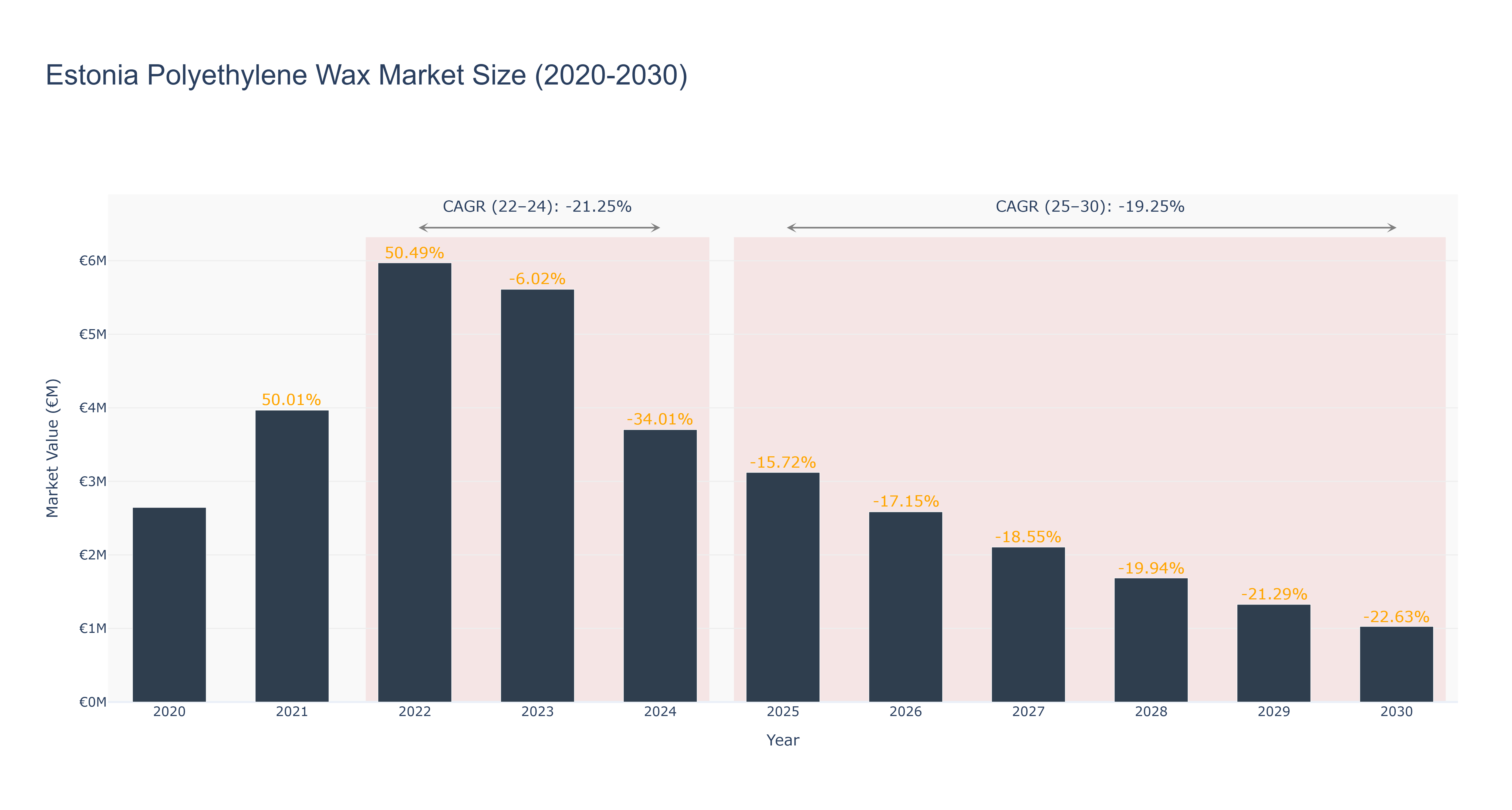
The Estonia Polyethylene Wax Market experienced a peak market size of €5.97 million in 2022, followed by a decline to €3.70 million in 2024. The market is forecasted to further decrease to €1.03 million by 2030, with a CAGR of -19.25% from 2025 to 2030. The market has been facing challenges with a negative growth trend since 2023, attributed to factors like changing consumer preferences and global economic conditions. Looking ahead, the industry drivers for this market include technological advancements in wax production processes and increasing demand from the packaging and cosmetics sectors. Recent developments indicate a shift towards sustainable practices in wax manufacturing, with companies investing in eco-friendly production methods to meet evolving consumer expectations. Future projects in the pipeline include collaborations with research institutions to enhance product innovation and quality control measures.
Estonia Polyethylene Wax Market: Production & Trade Performance (2019-2025)
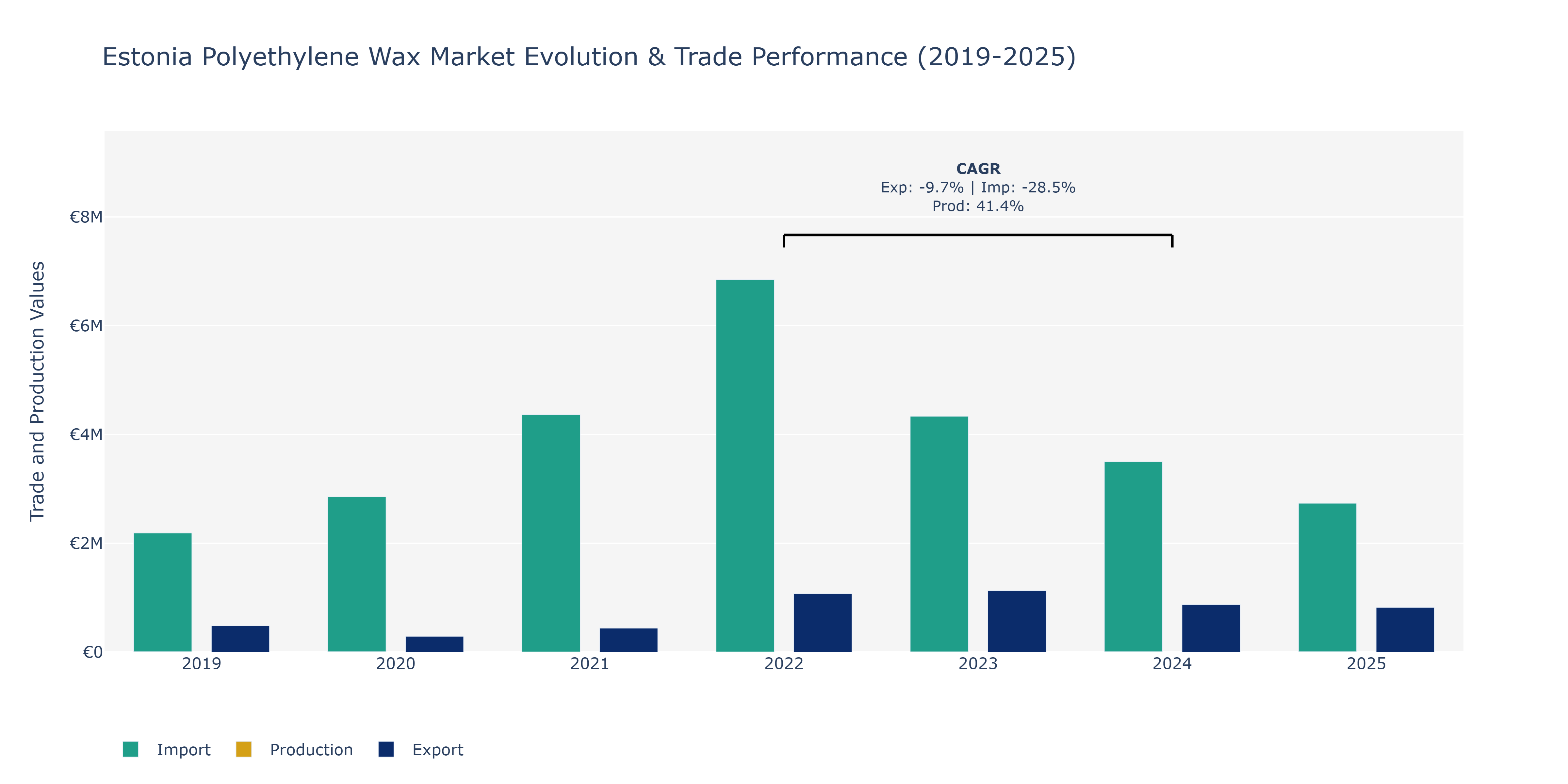
Between 2019 and 2025, the Estonia Polyethylene Wax market saw dynamic shifts in Exports, Imports, and Production. Exports experienced a notable fluctuation from €480.88 thousand in 2019 to a peak of €1.13 million in 2022 before decreasing to €820.97 thousand in 2025. Conversely, Imports steadily rose from €2.19 million in 2019 to €6.85 million in 2022, followed by a decline to €2.74 million in 2025. Production remained relatively stable from 2019 to 2021 at around €4.88 million but surged to €4.93 million in 2025. The fluctuations in Exports reflect global demand variations and competition, potentially influenced by evolving trade agreements and market conditions. The rise in Imports until 2022 could be attributed to increased demand for raw materials or technology upgrades. The surge in Production from 2021 to 2025 may stem from technological advancements or increased domestic consumption, indicating a strengthening local industry and potential for export growth in the future.
Estonia Polyethylene Wax Market Overview
The polyethylene wax market in Estonia is expanding, with applications in lubricants, coatings, and adhesives. Polyethylene wax is used in a wide range of industries, including plastics, rubber, and coatings, due to its excellent lubricating properties and ability to improve processing efficiency. As Estonias industrial base grows, the demand for polyethylene wax is likely to increase.
Drivers of the market
The polyethylene wax market in Estonia is growing due to its use in a wide range of applications, including coatings, adhesives, and plastics. Polyethylene wax is valued for its ability to enhance the properties of materials by improving their hardness, gloss, and wear resistance. The increasing demand for high-performance coatings and sealants in industries such as automotive, construction, and consumer goods is driving the growth of the polyethylene wax market. Additionally, as Estonia adopts more sustainable practices, the demand for environmentally friendly wax formulations is also on the rise.
Challenges of the market
The polyethylene wax market in Estonia faces challenges such as price volatility, environmental regulations, and competition from alternative wax products. Polyethylene wax is used in various applications, including coatings, lubricants, and adhesives, but its production is heavily dependent on petroleum-based feedstocks. Fluctuations in oil prices can directly impact the cost of polyethylene wax production. Additionally, the growing focus on environmental sustainability and reducing plastic waste puts pressure on the market to explore more eco-friendly alternatives, which can increase manufacturing costs. Furthermore, the market faces competition from other waxes made from renewable sources.
Government Policy of the market
Estonias government regulates the polyethylene wax market to ensure the safe and sustainable production and use of these materials. Polyethylene waxes are used in applications such as coatings, adhesives, and plastics processing. Policies encourage innovation in developing more eco-friendly wax formulations and support the use of renewable resources in their production.
Key Highlights of the Report:
- Estonia Polyethylene Wax Market Outlook
- Market Size of Estonia Polyethylene Wax Market, 2024
- Forecast of Estonia Polyethylene Wax Market, 2031
- Historical Data and Forecast of Estonia Polyethylene Wax Revenues & Volume for the Period 2021-2031
- Estonia Polyethylene Wax Market Trend Evolution
- Estonia Polyethylene Wax Market Drivers and Challenges
- Estonia Polyethylene Wax Price Trends
- Estonia Polyethylene Wax Porter`s Five Forces
- Estonia Polyethylene Wax Industry Life Cycle
- Historical Data and Forecast of Estonia Polyethylene Wax Market Revenues & Volume By Process for the Period 2021-2031
- Historical Data and Forecast of Estonia Polyethylene Wax Market Revenues & Volume By Polymerization for the Period 2021-2031
- Historical Data and Forecast of Estonia Polyethylene Wax Market Revenues & Volume By Modification for the Period 2021-2031
- Historical Data and Forecast of Estonia Polyethylene Wax Market Revenues & Volume By Thermal Cracking for the Period 2021-2031
- Historical Data and Forecast of Estonia Polyethylene Wax Market Revenues & Volume By Type for the Period 2021-2031
- Historical Data and Forecast of Estonia Polyethylene Wax Market Revenues & Volume By LDPE for the Period 2021-2031
- Historical Data and Forecast of Estonia Polyethylene Wax Market Revenues & Volume By HDPE for the Period 2021-2031
- Historical Data and Forecast of Estonia Polyethylene Wax Market Revenues & Volume By Oxidized for the Period 2021-2031
- Historical Data and Forecast of Estonia Polyethylene Wax Market Revenues & Volume By Micronized for the Period 2021-2031
- Historical Data and Forecast of Estonia Polyethylene Wax Market Revenues & Volume By Application for the Period 2021-2031
- Historical Data and Forecast of Estonia Polyethylene Wax Market Revenues & Volume By Plastic Processing for the Period 2021-2031
- Historical Data and Forecast of Estonia Polyethylene Wax Market Revenues & Volume By Hot-melt Adhesive for the Period 2021-2031
- Historical Data and Forecast of Estonia Polyethylene Wax Market Revenues & Volume By Ink & Coating for the Period 2021-2031
- Estonia Polyethylene Wax Import Export Trade Statistics
- Market Opportunity Assessment By Process
- Market Opportunity Assessment By Type
- Market Opportunity Assessment By Application
- Estonia Polyethylene Wax Top Companies Market Share
- Estonia Polyethylene Wax Competitive Benchmarking By Technical and Operational Parameters
- Estonia Polyethylene Wax Company Profiles
- Estonia Polyethylene Wax Key Strategic Recommendations






































