Ethiopia Artificial Flowers Market Growth Rate Analysis (2021 - 2031)
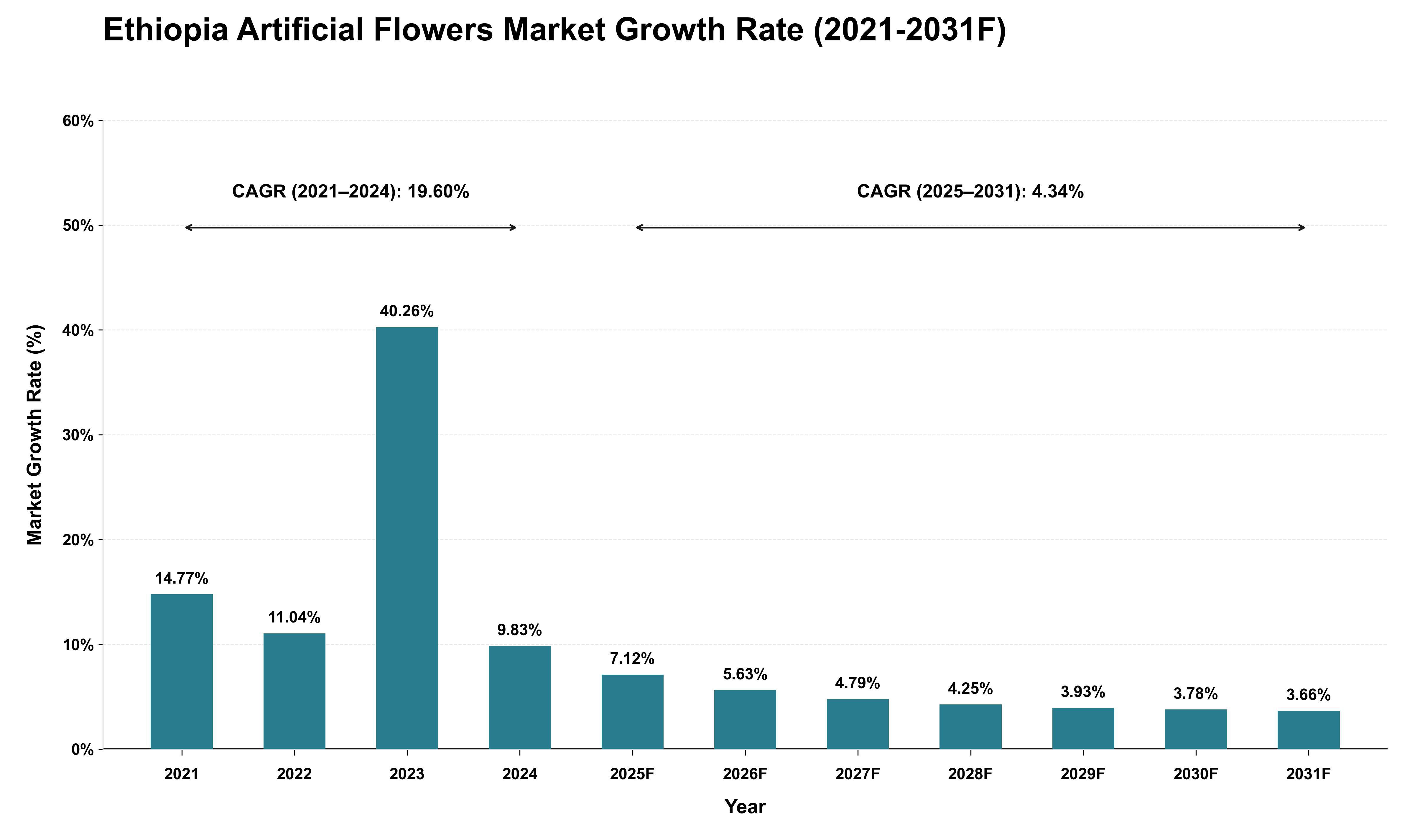
Between 2021 and 2024, the Ethiopian artificial flowers market experienced a robust CAGR of 19.60%, driven by a surge in consumer demand as post-pandemic recovery catalyzed increased spending on home decor and event planning. The significant growth in 2023 (40.26%) can be attributed to a rebound in tourism and hospitality sectors, which often utilize artificial flowers for aesthetic enhancement. However, as the market transitioned into 2025-2031, the forecasted CAGR of 4.34% indicates a shift towards more moderate growth rates, reflecting potential competitive pressures from both domestic producers and international imports amid changing consumer preferences. The anticipated decline in growth rates may also stem from broader economic cycles affecting disposable income levels and import reliance on cheaper alternatives from global suppliers, necessitating strategic adaptations by local manufacturers to maintain market relevance amidst evolving dynamics.
Key Highlights of the Report:
- Ethiopia Artificial Flowers Market Outlook
- Market Size of Ethiopia Artificial Flowers Market, 2024
- Forecast of Ethiopia Artificial Flowers Market, 2031
- Historical Data and Forecast of Ethiopia Artificial Flowers Revenues & Volume for the Period 2021-2031
- Ethiopia Artificial Flowers Market Trend Evolution
- Ethiopia Artificial Flowers Market Drivers and Challenges
- Ethiopia Artificial Flowers Price Trends
- Ethiopia Artificial Flowers Porter`s Five Forces
- Ethiopia Artificial Flowers Industry Life Cycle
- Historical Data and Forecast of Ethiopia Artificial Flowers Market Revenues & Volume By Material Type for the Period 2021-2031
- Historical Data and Forecast of Ethiopia Artificial Flowers Market Revenues & Volume By Clay & Porcelain for the Period 2021-2031
- Historical Data and Forecast of Ethiopia Artificial Flowers Market Revenues & Volume By Cotton & Silk for the Period 2021-2031
- Historical Data and Forecast of Ethiopia Artificial Flowers Market Revenues & Volume By Leather & Nylon for the Period 2021-2031
- Historical Data and Forecast of Ethiopia Artificial Flowers Market Revenues & Volume By Paper & Wax for the Period 2021-2031
- Historical Data and Forecast of Ethiopia Artificial Flowers Market Revenues & Volume By Plastic & Polyester for the Period 2021-2031
- Historical Data and Forecast of Ethiopia Artificial Flowers Market Revenues & Volume By Application for the Period 2021-2031
- Historical Data and Forecast of Ethiopia Artificial Flowers Market Revenues & Volume By Commercial for the Period 2021-2031
- Historical Data and Forecast of Ethiopia Artificial Flowers Market Revenues & Volume By Residential for the Period 2021-2031
- Ethiopia Artificial Flowers Import Export Trade Statistics
- Market Opportunity Assessment By Material Type
- Market Opportunity Assessment By Application
- Ethiopia Artificial Flowers Top Companies Market Share
- Ethiopia Artificial Flowers Competitive Benchmarking By Technical and Operational Parameters
- Ethiopia Artificial Flowers Company Profiles
- Ethiopia Artificial Flowers Key Strategic Recommendations






































