Ethiopia Bearings Market Growth Rate Analysis (2025 - 2031)
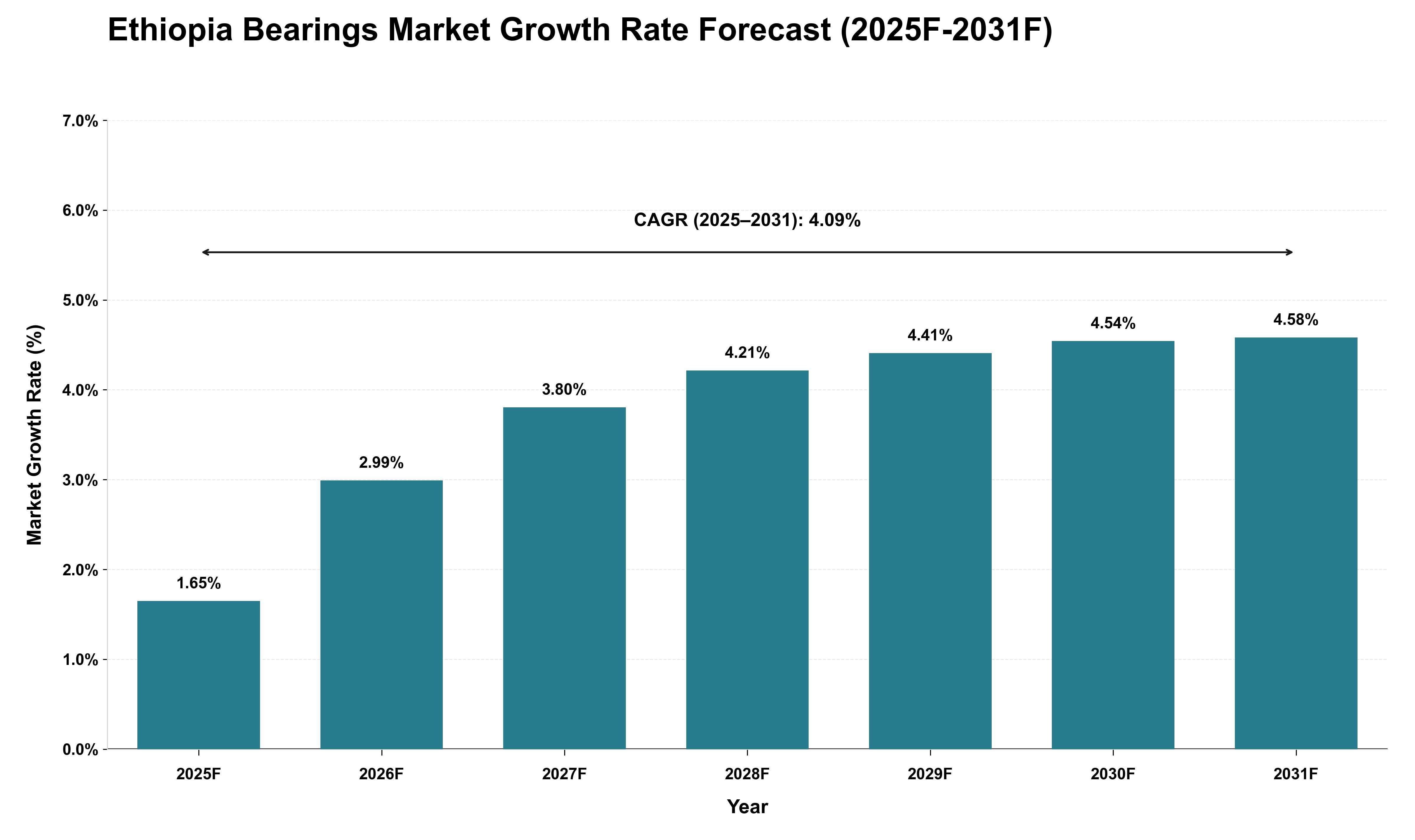
The Ethiopia bearings market is poised to experience a steady growth trajectory from 2025 to 2031, driven by macroeconomic factors such as industrial expansion and increased infrastructure investments. With a forecast CAGR of 4.09%, the annual growth rates will progressively rise, starting at 1.65% in 2025 and reaching approximately 4.58% by 2031. This upward trend reflects an anticipated recovery in manufacturing activities and heightened demand for machinery across various sectors, including automotive and construction. As Ethiopia continues to enhance its import capabilities, the reliance on foreign bearings will likely influence market dynamics, particularly as global supply chains stabilize post-pandemic disruptions. Additionally, cyclical trends in economic activity suggest that as domestic production ramps up, local manufacturers may gradually capture a larger share of the market, further supporting growth in this sector throughout the forecast period.
Key Highlights of the Report:
- Ethiopia Bearings Market Outlook
- Market Size of Ethiopia Bearings Market, 2024
- Forecast of Ethiopia Bearings Market, 2031
- Historical Data and Forecast of Ethiopia Bearings Revenues & Volume for the Period 2021-2031
- Ethiopia Bearings Market Trend Evolution
- Ethiopia Bearings Market Drivers and Challenges
- Ethiopia Bearings Price Trends
- Ethiopia Bearings Porter`s Five Forces
- Ethiopia Bearings Industry Life Cycle
- Historical Data and Forecast of Ethiopia Bearings Market Revenues & Volume By Product for the Period 2021-2031
- Historical Data and Forecast of Ethiopia Bearings Market Revenues & Volume By Ball Bearings for the Period 2021-2031
- Historical Data and Forecast of Ethiopia Bearings Market Revenues & Volume By Roller Bearings for the Period 2021-2031
- Historical Data and Forecast of Ethiopia Bearings Market Revenues & Volume By Application for the Period 2021-2031
- Historical Data and Forecast of Ethiopia Bearings Market Revenues & Volume By Automotive for the Period 2021-2031
- Historical Data and Forecast of Ethiopia Bearings Market Revenues & Volume By Agriculture for the Period 2021-2031
- Historical Data and Forecast of Ethiopia Bearings Market Revenues & Volume By Electrical for the Period 2021-2031
- Historical Data and Forecast of Ethiopia Bearings Market Revenues & Volume By Mining & Construction for the Period 2021-2031
- Historical Data and Forecast of Ethiopia Bearings Market Revenues & Volume By Railway & Aerospace for the Period 2021-2031
- Historical Data and Forecast of Ethiopia Bearings Market Revenues & Volume By Automotive Aftermarket for the Period 2021-2031
- Historical Data and Forecast of Ethiopia Bearings Market Revenues & Volume By Others for the Period 2021-2031
- Ethiopia Bearings Import Export Trade Statistics
- Market Opportunity Assessment By Product
- Market Opportunity Assessment By Application
- Ethiopia Bearings Top Companies Market Share
- Ethiopia Bearings Competitive Benchmarking By Technical and Operational Parameters
- Ethiopia Bearings Company Profiles
- Ethiopia Bearings Key Strategic Recommendations






































