Ethiopia Chemicals Market Growth Rate Analysis (2025 - 2031)
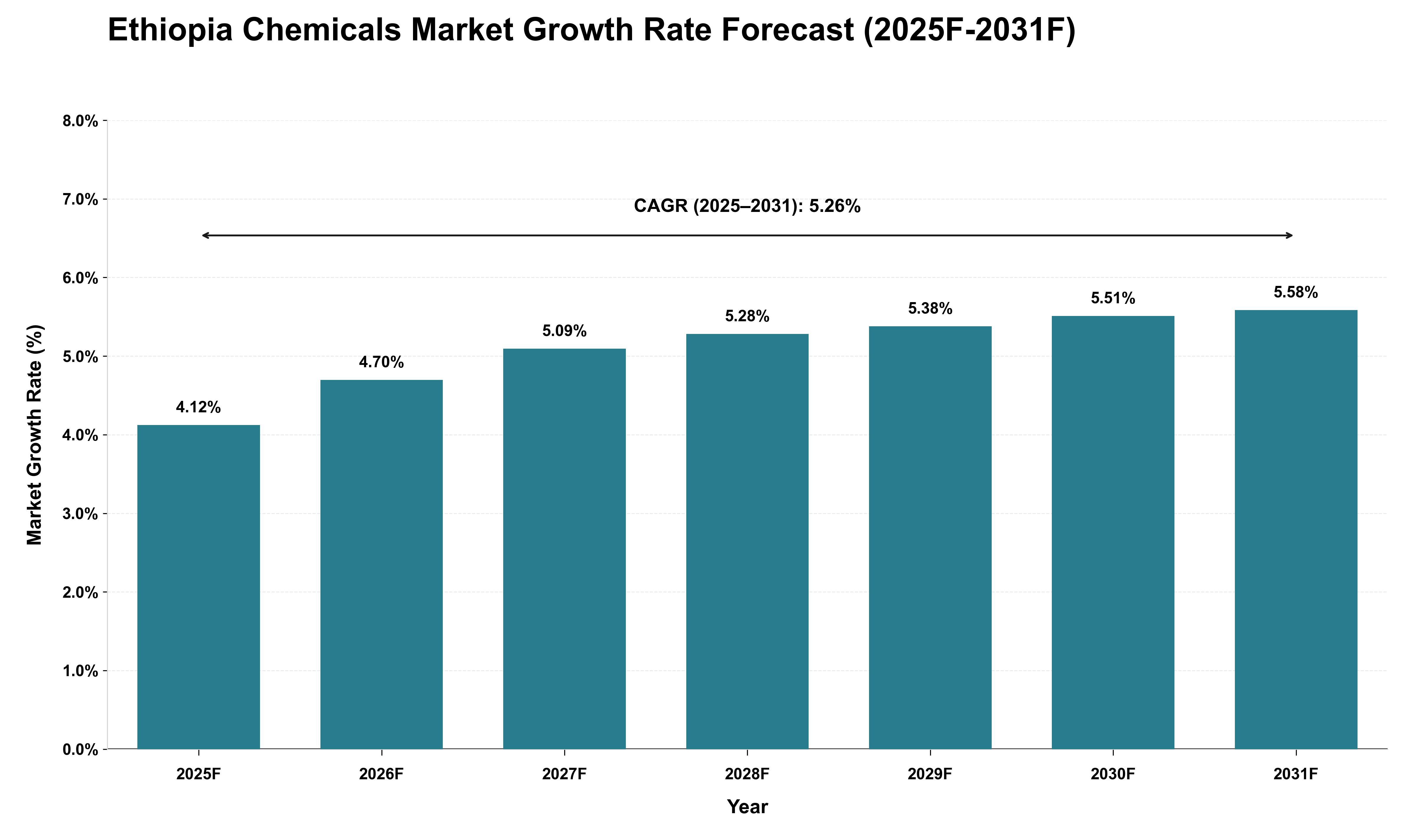
The projected growth trajectory of the Ethiopian chemicals market will exhibit a notable acceleration, with the annual growth rate increasing from 4.12% in 2025 to 5.58% by 2031, reflecting a compound annual growth rate (CAGR) of 5.26%. This upward trend can be attributed to anticipated regulatory reforms aimed at enhancing trade facilitation and reducing import tariffs, which will likely bolster domestic production capabilities and attract foreign investment. As Ethiopia continues to navigate its import dependencies, particularly in raw materials for chemical production, the gradual easing of trade restrictions is expected to stimulate local manufacturing. Furthermore, cyclical trends in global demand for chemicals will influence Ethiopia's export potential, particularly as regional markets expand. Overall, these macroeconomic factors will create a conducive environment for sustained growth within the sector throughout the forecast period.
Key Highlights of the Report:
- Ethiopia Chemicals Market Outlook
- Market Size of Ethiopia Chemicals Market, 2024
- Forecast of Ethiopia Chemicals Market, 2031
- Historical Data and Forecast of Ethiopia Chemicals Revenues & Volume for the Period 2021-2031
- Ethiopia Chemicals Market Trend Evolution
- Ethiopia Chemicals Market Drivers and Challenges
- Ethiopia Chemicals Price Trends
- Ethiopia Chemicals Porter`s Five Forces
- Ethiopia Chemicals Industry Life Cycle
- Historical Data and Forecast of Ethiopia Chemicals Market Revenues & Volume By Type for the Period 2021-2031
- Historical Data and Forecast of Ethiopia Chemicals Market Revenues & Volume By Agrochemicals for the Period 2021-2031
- Historical Data and Forecast of Ethiopia Chemicals Market Revenues & Volume By Dyes and Pigments for the Period 2021-2031
- Historical Data and Forecast of Ethiopia Chemicals Market Revenues & Volume By Construction Chemicals for the Period 2021-2031
- Historical Data and Forecast of Ethiopia Chemicals Market Revenues & Volume By Specialty Polymers for the Period 2021-2031
- Historical Data and Forecast of Ethiopia Chemicals Market Revenues & Volume By Textile Chemicals for the Period 2021-2031
- Historical Data and Forecast of Ethiopia Chemicals Market Revenues & Volume By Base Ingredients for the Period 2021-2031
- Historical Data and Forecast of Ethiopia Chemicals Market Revenues & Volume By Surfactants for the Period 2021-2031
- Historical Data and Forecast of Ethiopia Agrochemicals Chemicals Market Revenues & Volume By Others for the Period 2021-2031
- Ethiopia Chemicals Import Export Trade Statistics
- Market Opportunity Assessment By Type
- Ethiopia Chemicals Top Companies Market Share
- Ethiopia Chemicals Competitive Benchmarking By Technical and Operational Parameters
- Ethiopia Chemicals Company Profiles
- Ethiopia Chemicals Key Strategic Recommendations






































