Ethiopia Epoxy Market Growth Rate Analysis (2025 - 2031)
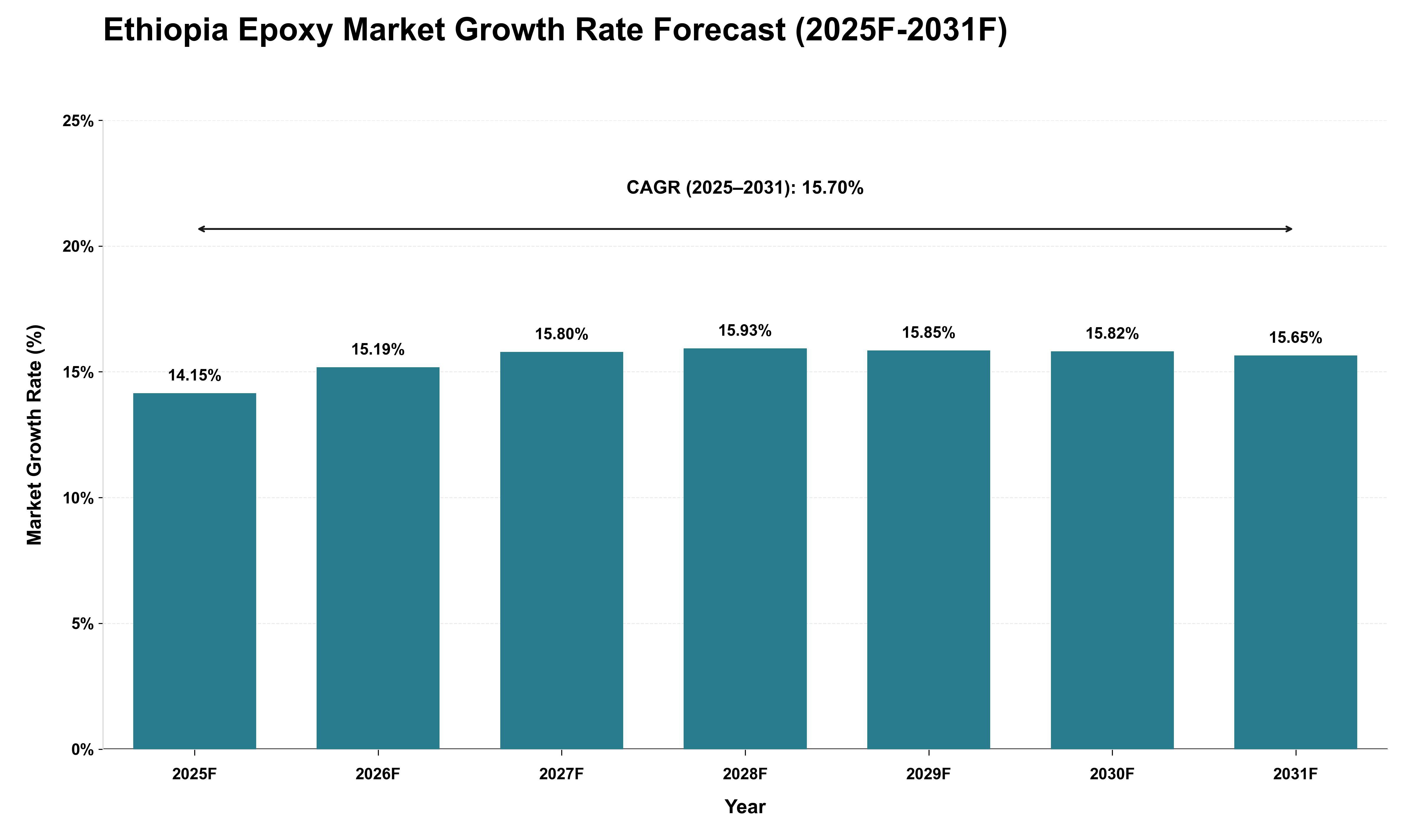
The Ethiopian epoxy market will experience robust growth driven by increasing industrialization and infrastructure development, which will enhance demand for epoxy resins in construction and manufacturing sectors. With a projected CAGR of 15.70% from 2025 to 2031, the annual growth rates will reflect a consistent upward trajectory, peaking at 15.93% in 2028 before stabilizing slightly. This growth will be supported by rising import dependencies as local production capacity struggles to meet burgeoning demand, necessitating increased imports of raw materials and finished products. Additionally, cyclical trends in global supply chains may influence pricing dynamics and availability, further impacting local market conditions. As Ethiopia's economy continues to evolve, the competitive landscape will likely shift, with both domestic and international players vying for market share amidst these favorable macroeconomic conditions.
Key Highlights of the Report:
- Ethiopia Epoxy Market Outlook
- Market Size of Ethiopia Epoxy Market, 2024
- Forecast of Ethiopia Epoxy Market, 2031
- Historical Data and Forecast of Ethiopia Epoxy Revenues & Volume for the Period 2021-2031
- Ethiopia Epoxy Market Trend Evolution
- Ethiopia Epoxy Market Drivers and Challenges
- Ethiopia Epoxy Price Trends
- Ethiopia Epoxy Porter`s Five Forces
- Ethiopia Epoxy Industry Life Cycle
- Historical Data and Forecast of Ethiopia Epoxy Market Revenues & Volume By Type for the Period 2021-2031
- Historical Data and Forecast of Ethiopia Epoxy Market Revenues & Volume By Liquid for the Period 2021-2031
- Historical Data and Forecast of Ethiopia Epoxy Market Revenues & Volume By Solid & Solution for the Period 2021-2031
- Historical Data and Forecast of Ethiopia Epoxy Market Revenues & Volume By Application for the Period 2021-2031
- Historical Data and Forecast of Ethiopia Epoxy Market Revenues & Volume By Construction for the Period 2021-2031
- Historical Data and Forecast of Ethiopia Epoxy Market Revenues & Volume By Automotive & transportation for the Period 2021-2031
- Historical Data and Forecast of Ethiopia Epoxy Market Revenues & Volume By Electrical & electronics for the Period 2021-2031
- Historical Data and Forecast of Ethiopia Epoxy Market Revenues & Volume By General industrial for the Period 2021-2031
- Historical Data and Forecast of Ethiopia Epoxy Market Revenues & Volume By Wind for the Period 2021-2031
- Historical Data and Forecast of Ethiopia Epoxy Market Revenues & Volume By Marine for the Period 2021-2031
- Historical Data and Forecast of Ethiopia Epoxy Market Revenues & Volume By Aerospace for the Period 2021-2031
- Historical Data and Forecast of Ethiopia Epoxy Market Revenues & Volume By Consumer goods for the Period 2021-2031
- Ethiopia Epoxy Import Export Trade Statistics
- Market Opportunity Assessment By Type
- Market Opportunity Assessment By Application
- Ethiopia Epoxy Top Companies Market Share
- Ethiopia Epoxy Competitive Benchmarking By Technical and Operational Parameters
- Ethiopia Epoxy Company Profiles
- Ethiopia Epoxy Key Strategic Recommendations






































