Ethiopia Ginger Market Growth Rate Analysis (2025 - 2031)
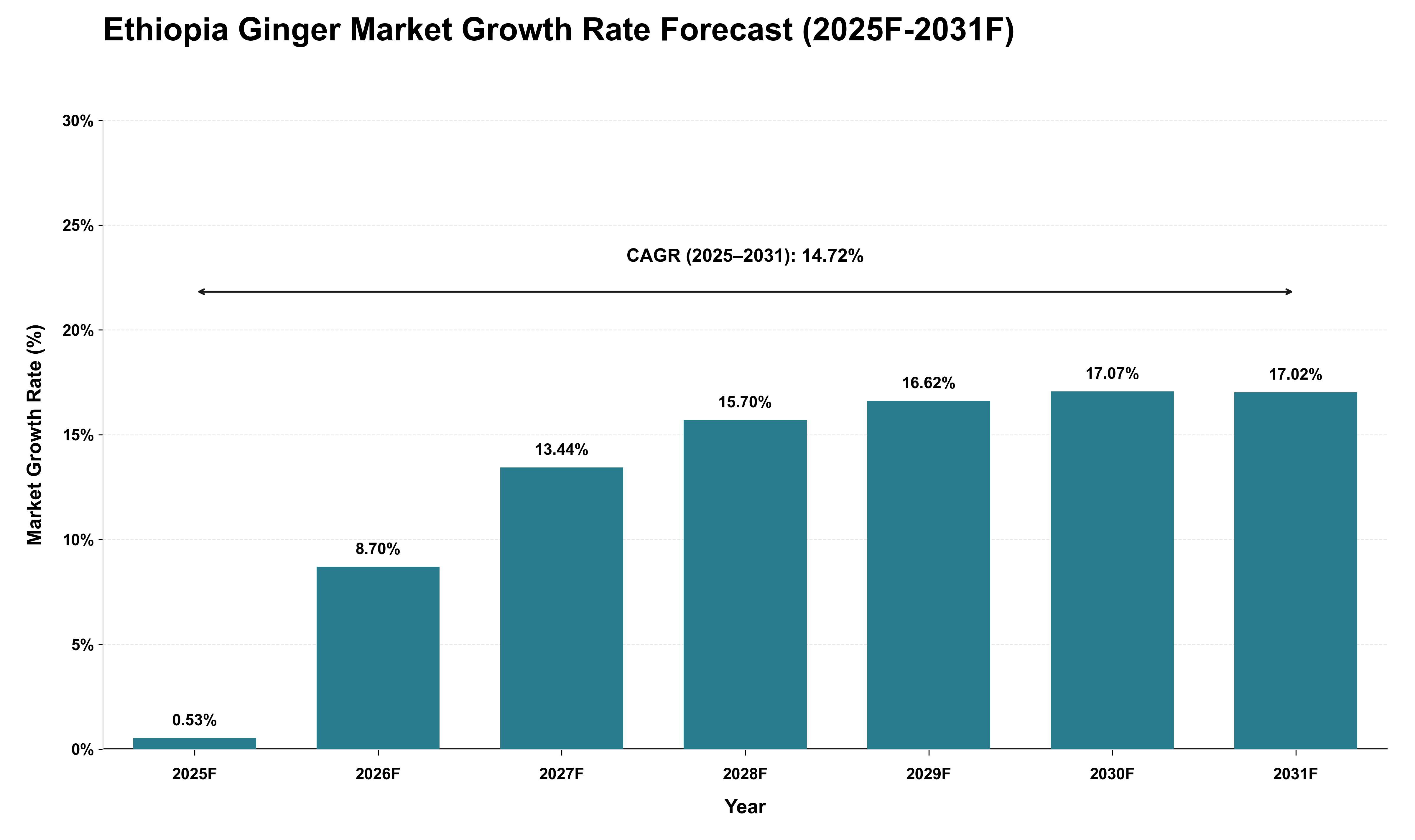
The Ethiopian ginger market will experience significant growth driven by evolving end-use demand, particularly in the food and beverage sector, as well as increasing interest in health and wellness products. The forecasted CAGR of 14.72% reflects a robust trajectory, with annual growth rates accelerating from 0.53% in 2025 to a peak of 17.07% in 2030, indicating a strong upward trend in consumption patterns. This surge will be influenced by rising domestic and international demand for ginger as a natural flavoring agent and functional ingredient, alongside Ethiopia's strategic positioning as a key supplier within the global spice trade. Import dependencies may shift as local production capabilities expand to meet this growing demand, while cyclical trends related to agricultural output and climate variability will also play critical roles in shaping supply dynamics throughout the forecast period.
Key Highlights of the Report:
- Ethiopia Ginger Market Outlook
- Market Size of Ethiopia Ginger Market, 2024
- Forecast of Ethiopia Ginger Market, 2031
- Historical Data and Forecast of Ethiopia Ginger Revenues & Volume for the Period 2021-2031
- Ethiopia Ginger Market Trend Evolution
- Ethiopia Ginger Market Drivers and Challenges
- Ethiopia Ginger Price Trends
- Ethiopia Ginger Porter`s Five Forces
- Ethiopia Ginger Industry Life Cycle
- Historical Data and Forecast of Ethiopia Ginger Market Revenues & Volume By Product Type for the Period 2021-2031
- Historical Data and Forecast of Ethiopia Ginger Market Revenues & Volume By Fresh Ginger for the Period 2021-2031
- Historical Data and Forecast of Ethiopia Ginger Market Revenues & Volume By Dried Ginger for the Period 2021-2031
- Historical Data and Forecast of Ethiopia Ginger Market Revenues & Volume By Preserved Ginger for the Period 2021-2031
- Historical Data and Forecast of Ethiopia Ginger Market Revenues & Volume By Ginger Oil for the Period 2021-2031
- Historical Data and Forecast of Ethiopia Ginger Market Revenues & Volume By Others for the Period 2021-2031
- Historical Data and Forecast of Ethiopia Ginger Market Revenues & Volume By Application for the Period 2021-2031
- Historical Data and Forecast of Ethiopia Ginger Market Revenues & Volume By Food Industry for the Period 2021-2031
- Historical Data and Forecast of Ethiopia Ginger Market Revenues & Volume By Pharmaceuticals Industry for the Period 2021-2031
- Historical Data and Forecast of Ethiopia Ginger Market Revenues & Volume By Cosmetics Industry for the Period 2021-2031
- Historical Data and Forecast of Ethiopia Ginger Market Revenues & Volume By Others for the Period 2021-2031
- Historical Data and Forecast of Ethiopia Ginger Market Revenues & Volume By Distribution Channel for the Period 2021-2031
- Historical Data and Forecast of Ethiopia Ginger Market Revenues & Volume By Traditional Retail for the Period 2021-2031
- Historical Data and Forecast of Ethiopia Ginger Market Revenues & Volume By Modern Retail Stores for the Period 2021-2031
- Historical Data and Forecast of Ethiopia Ginger Market Revenues & Volume By Others for the Period 2021-2031
- Ethiopia Ginger Import Export Trade Statistics
- Market Opportunity Assessment By Product Type
- Market Opportunity Assessment By Application
- Market Opportunity Assessment By Distribution Channel
- Ethiopia Ginger Top Companies Market Share
- Ethiopia Ginger Competitive Benchmarking By Technical and Operational Parameters
- Ethiopia Ginger Company Profiles
- Ethiopia Ginger Key Strategic Recommendations






































