Ethiopia Textile Market Growth Rate Analysis (2025 - 2031)
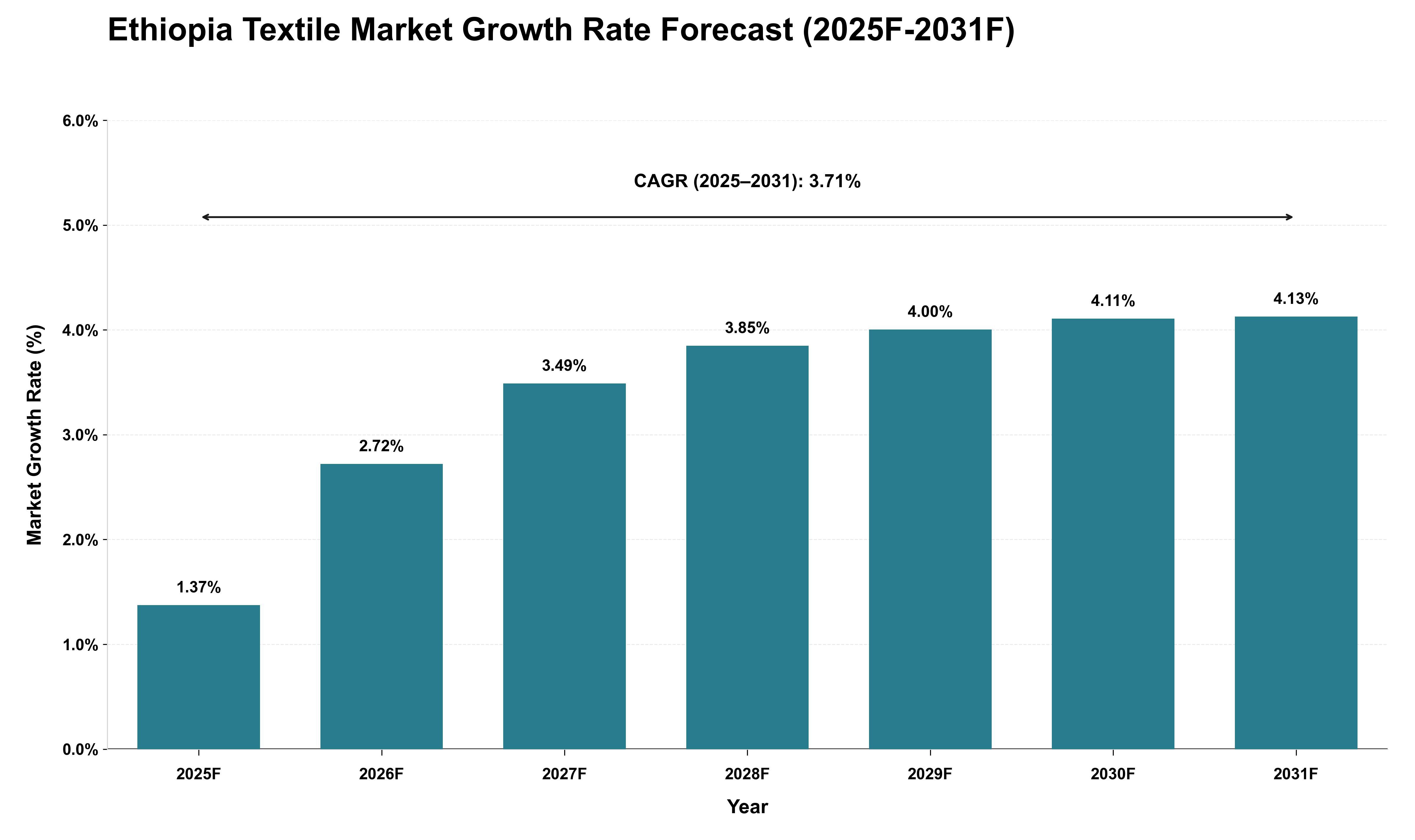
The Ethiopian textile market is poised to experience a steady growth trajectory from 2025 to 2031, driven by technological advancements and product substitution dynamics. With a projected CAGR of 3.71%, the market will likely witness an initial growth rate of 1.37% in 2025, gradually accelerating to approximately 4.13% by 2031. This upward trend suggests that as domestic production capabilities improve through technology adoption, reliance on imported textiles may decrease, fostering local innovation and competitiveness. Additionally, the increasing consumer preference for sustainable and locally produced textiles will further stimulate demand for alternative materials and manufacturing processes. As global supply chains adapt to shifting consumer behaviors, Ethiopia's textile sector will benefit from enhanced efficiency and diversification in product offerings, positioning itself favorably within the broader regional market landscape during this forecast period.
Key Highlights of the Report:
- Ethiopia Textile Market Outlook
- Market Size of Ethiopia Textile Market, 2024
- Forecast of Ethiopia Textile Market, 2031
- Historical Data and Forecast of Ethiopia Textile Revenues & Volume for the Period 2021-2031
- Ethiopia Textile Market Trend Evolution
- Ethiopia Textile Market Drivers and Challenges
- Ethiopia Textile Price Trends
- Ethiopia Textile Porter`s Five Forces
- Ethiopia Textile Industry Life Cycle
- Historical Data and Forecast of Ethiopia Textile Market Revenues & Volume By Raw Material Types for the Period 2021-2031
- Historical Data and Forecast of Ethiopia Textile Market Revenues & Volume By Cotton for the Period 2021-2031
- Historical Data and Forecast of Ethiopia Textile Market Revenues & Volume By Chemical for the Period 2021-2031
- Historical Data and Forecast of Ethiopia Textile Market Revenues & Volume By Wool for the Period 2021-2031
- Historical Data and Forecast of Ethiopia Textile Market Revenues & Volume By Silk for the Period 2021-2031
- Historical Data and Forecast of Ethiopia Textile Market Revenues & Volume By Others for the Period 2021-2031
- Historical Data and Forecast of Ethiopia Textile Market Revenues & Volume By Product Types for the Period 2021-2031
- Historical Data and Forecast of Ethiopia Textile Market Revenues & Volume By Natural Fibers for the Period 2021-2031
- Historical Data and Forecast of Ethiopia Textile Market Revenues & Volume By Polyesters for the Period 2021-2031
- Historical Data and Forecast of Ethiopia Textile Market Revenues & Volume By Nylon for the Period 2021-2031
- Historical Data and Forecast of Ethiopia Textile Market Revenues & Volume By Others for the Period 2021-2031
- Historical Data and Forecast of Ethiopia Textile Market Revenues & Volume By Applications for the Period 2021-2031
- Historical Data and Forecast of Ethiopia Textile Market Revenues & Volume By Household for the Period 2021-2031
- Historical Data and Forecast of Ethiopia Textile Market Revenues & Volume By Technical for the Period 2021-2031
- Historical Data and Forecast of Ethiopia Textile Market Revenues & Volume By Fashion & Clothing for the Period 2021-2031
- Historical Data and Forecast of Ethiopia Textile Market Revenues & Volume By Others for the Period 2021-2031
- Ethiopia Textile Import Export Trade Statistics
- Market Opportunity Assessment By Raw Material Types
- Market Opportunity Assessment By Product Types
- Market Opportunity Assessment By Applications
- Ethiopia Textile Top Companies Market Share
- Ethiopia Textile Competitive Benchmarking By Technical and Operational Parameters
- Ethiopia Textile Company Profiles
- Ethiopia Textile Key Strategic Recommendations






































