Ethiopia Writing and Marking Instrument Market Growth Rate Analysis (2021 - 2031)
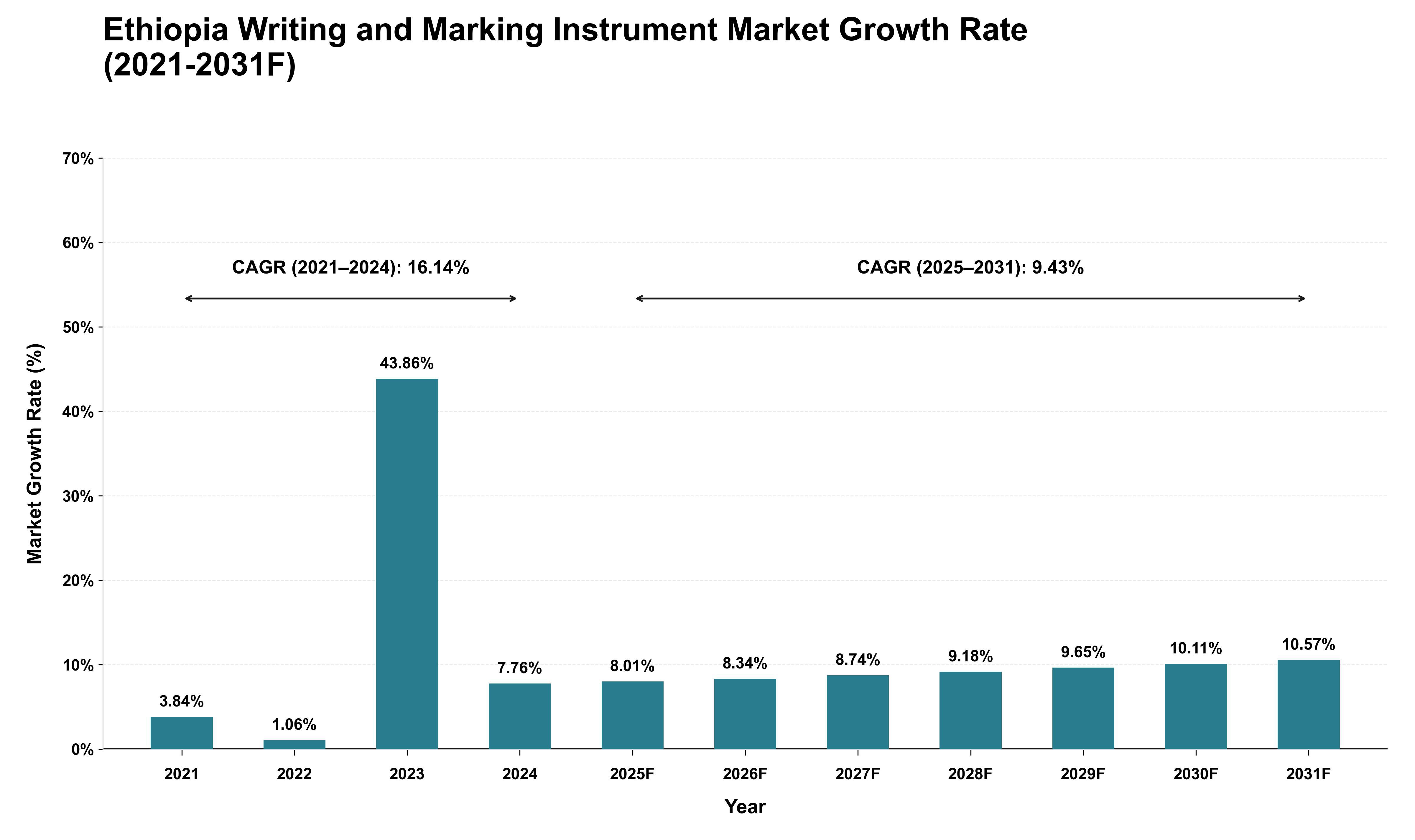
Between 2021 and 2024, the Ethiopian writing and marking instrument market experienced a robust CAGR of 16.14%, driven by a combination of regulatory shifts and trade policy adjustments that facilitated increased import reliance amid domestic production challenges. The significant growth in 2023 (43.86%) can be attributed to post-pandemic recovery dynamics, where heightened demand for educational supplies surged as schools reopened, coupled with global supply chain disruptions that temporarily inflated prices. Moving into the forecast period (2025-2031), the market is expected to grow at a more moderate CAGR of 9.43%, reflecting anticipated stabilization in global commodity prices and a gradual easing of supply chain constraints. Regulatory frameworks aimed at enhancing local manufacturing capabilities may also influence import patterns, potentially leading to a more balanced trade environment as Ethiopia seeks to bolster its domestic production while still relying on imports for certain high-demand items.
Key Highlights of the Report:
- Ethiopia Writing and Marking Instrument Market Outlook
- Market Size of Ethiopia Writing and Marking Instrument Market, 2024
- Forecast of Ethiopia Writing and Marking Instrument Market, 2031
- Historical Data and Forecast of Ethiopia Writing and Marking Instrument Revenues & Volume for the Period 2021-2031
- Ethiopia Writing and Marking Instrument Market Trend Evolution
- Ethiopia Writing and Marking Instrument Market Drivers and Challenges
- Ethiopia Writing and Marking Instrument Price Trends
- Ethiopia Writing and Marking Instrument Porter`s Five Forces
- Ethiopia Writing and Marking Instrument Industry Life Cycle
- Historical Data and Forecast of Ethiopia Writing and Marking Instrument Market Revenues & Volume By Type for the Period 2021-2031
- Historical Data and Forecast of Ethiopia Writing and Marking Instrument Market Revenues & Volume By Pen for the Period 2021-2031
- Historical Data and Forecast of Ethiopia Writing and Marking Instrument Market Revenues & Volume By Coloring and Writing Instrument for the Period 2021-2031
- Historical Data and Forecast of Ethiopia Writing and Marking Instrument Market Revenues & Volume By Pencil for the Period 2021-2031
- Historical Data and Forecast of Ethiopia Writing and Marking Instrument Market Revenues & Volume By Markers and Highlighters for the Period 2021-2031
- Historical Data and Forecast of Ethiopia Writing and Marking Instrument Market Revenues & Volume By Writing Accessories for the Period 2021-2031
- Historical Data and Forecast of Ethiopia Writing and Marking Instrument Market Revenues & Volume By Applications for the Period 2021-2031
- Historical Data and Forecast of Ethiopia Writing and Marking Instrument Market Revenues & Volume By Online Stores for the Period 2021-2031
- Historical Data and Forecast of Ethiopia Writing and Marking Instrument Market Revenues & Volume By Offline Stores for the Period 2021-2031
- Ethiopia Writing and Marking Instrument Import Export Trade Statistics
- Market Opportunity Assessment By Type
- Market Opportunity Assessment By Applications
- Ethiopia Writing and Marking Instrument Top Companies Market Share
- Ethiopia Writing and Marking Instrument Competitive Benchmarking By Technical and Operational Parameters
- Ethiopia Writing and Marking Instrument Company Profiles
- Ethiopia Writing and Marking Instrument Key Strategic Recommendations






































