Fiji Textile Bags Market Growth Rate Analysis (2025 - 2031)
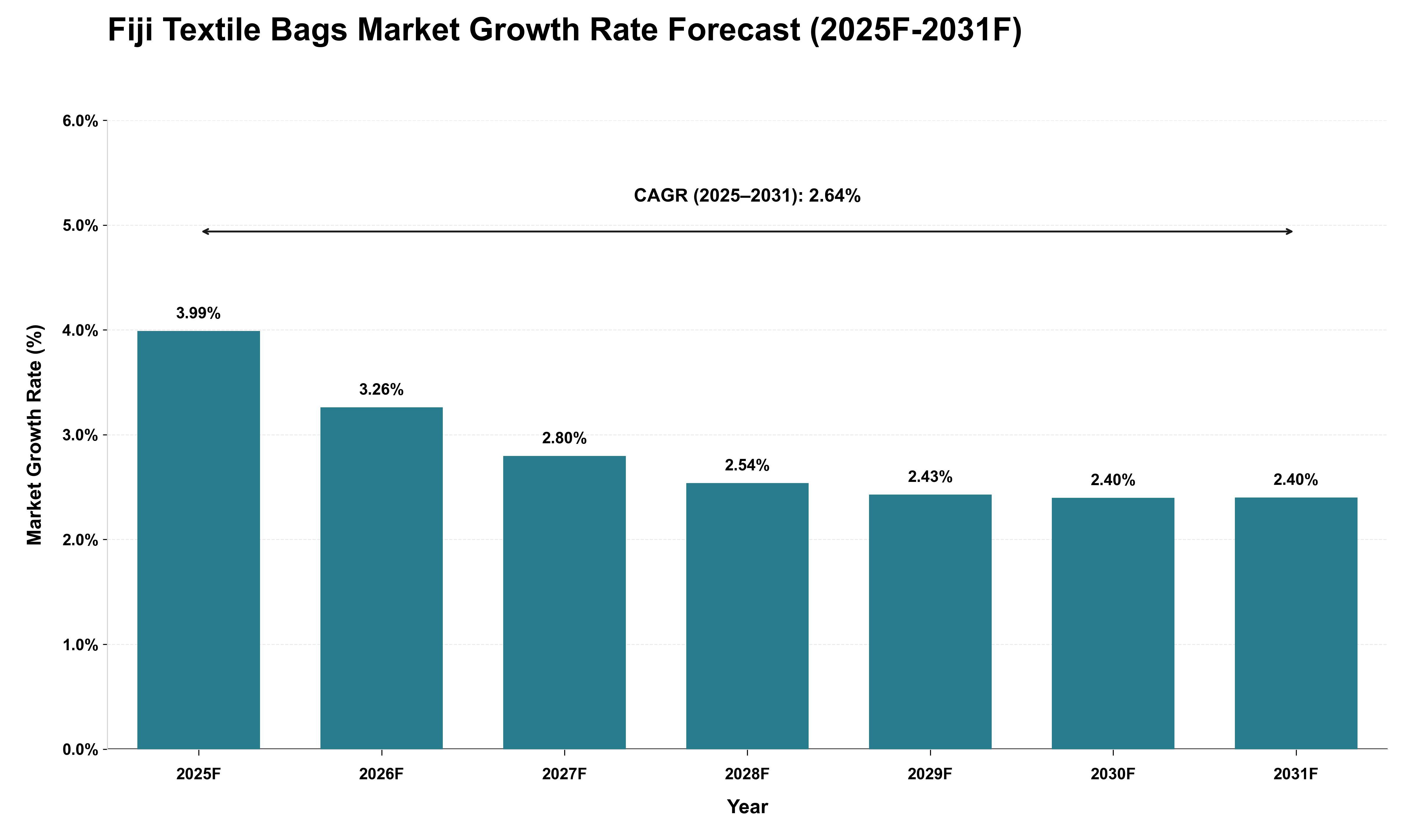
The Fiji textile bags market is poised to experience a steady growth trajectory from 2025 to 2031, with an overall CAGR of 2.64%. This growth will be underpinned by increasing global demand for sustainable packaging solutions, as consumers and businesses alike prioritize eco-friendly alternatives. In the initial years, particularly in 2025, the market will benefit from heightened awareness and regulatory support for reducing plastic waste, driving a robust growth rate of 3.99%. However, as the market evolves, competitive dynamics will intensify; manufacturers may face challenges related to import dependencies on raw materials and fluctuating costs associated with production inputs. By 2030 and 2031, growth rates are expected to stabilize at around 2.40%, reflecting a more mature phase where companies will need to innovate continuously to maintain their competitive edge amidst changing consumer preferences and potential economic headwinds impacting discretionary spending.
Key Highlights of the Report:
- Fiji Textile Bags Market Outlook
- Market Size of Fiji Textile Bags Market, 2024
- Forecast of Fiji Textile Bags Market, 2031
- Historical Data and Forecast of Fiji Textile Bags Revenues & Volume for the Period 2021-2031
- Fiji Textile Bags Market Trend Evolution
- Fiji Textile Bags Market Drivers and Challenges
- Fiji Textile Bags Price Trends
- Fiji Textile Bags Porter`s Five Forces
- Fiji Textile Bags Industry Life Cycle
- Historical Data and Forecast of Fiji Textile Bags Market Revenues & Volume By Size for the Period 2021-2031
- Historical Data and Forecast of Fiji Textile Bags Market Revenues & Volume By Less than 14" x 26" for the Period 2021-2031
- Historical Data and Forecast of Fiji Textile Bags Market Revenues & Volume By 18" x 30" for the Period 2021-2031
- Historical Data and Forecast of Fiji Textile Bags Market Revenues & Volume By 22" x 36" for the Period 2021-2031
- Historical Data and Forecast of Fiji Textile Bags Market Revenues & Volume By 22" x 40" for the Period 2021-2031
- Historical Data and Forecast of Fiji Textile Bags Market Revenues & Volume By Above 28" x 40" for the Period 2021-2031
- Historical Data and Forecast of Fiji Textile Bags Market Revenues & Volume By Material Type for the Period 2021-2031
- Historical Data and Forecast of Fiji Textile Bags Market Revenues & Volume By Cotton for the Period 2021-2031
- Historical Data and Forecast of Fiji Textile Bags Market Revenues & Volume By Burlap for the Period 2021-2031
- Historical Data and Forecast of Fiji Textile Bags Market Revenues & Volume By Others for the Period 2021-2031
- Historical Data and Forecast of Fiji Textile Bags Market Revenues & Volume By Sales Channel for the Period 2021-2031
- Historical Data and Forecast of Fiji Textile Bags Market Revenues & Volume By Retailers for the Period 2021-2031
- Historical Data and Forecast of Fiji Textile Bags Market Revenues & Volume By Wholesalers for the Period 2021-2031
- Historical Data and Forecast of Fiji Textile Bags Market Revenues & Volume By E-commerce for the Period 2021-2031
- Fiji Textile Bags Import Export Trade Statistics
- Market Opportunity Assessment By Size
- Market Opportunity Assessment By Material Type
- Market Opportunity Assessment By Sales Channel
- Fiji Textile Bags Top Companies Market Share
- Fiji Textile Bags Competitive Benchmarking By Technical and Operational Parameters
- Fiji Textile Bags Company Profiles
- Fiji Textile Bags Key Strategic Recommendations






































