Finland Canned Tuna Market Size (2020-2030)
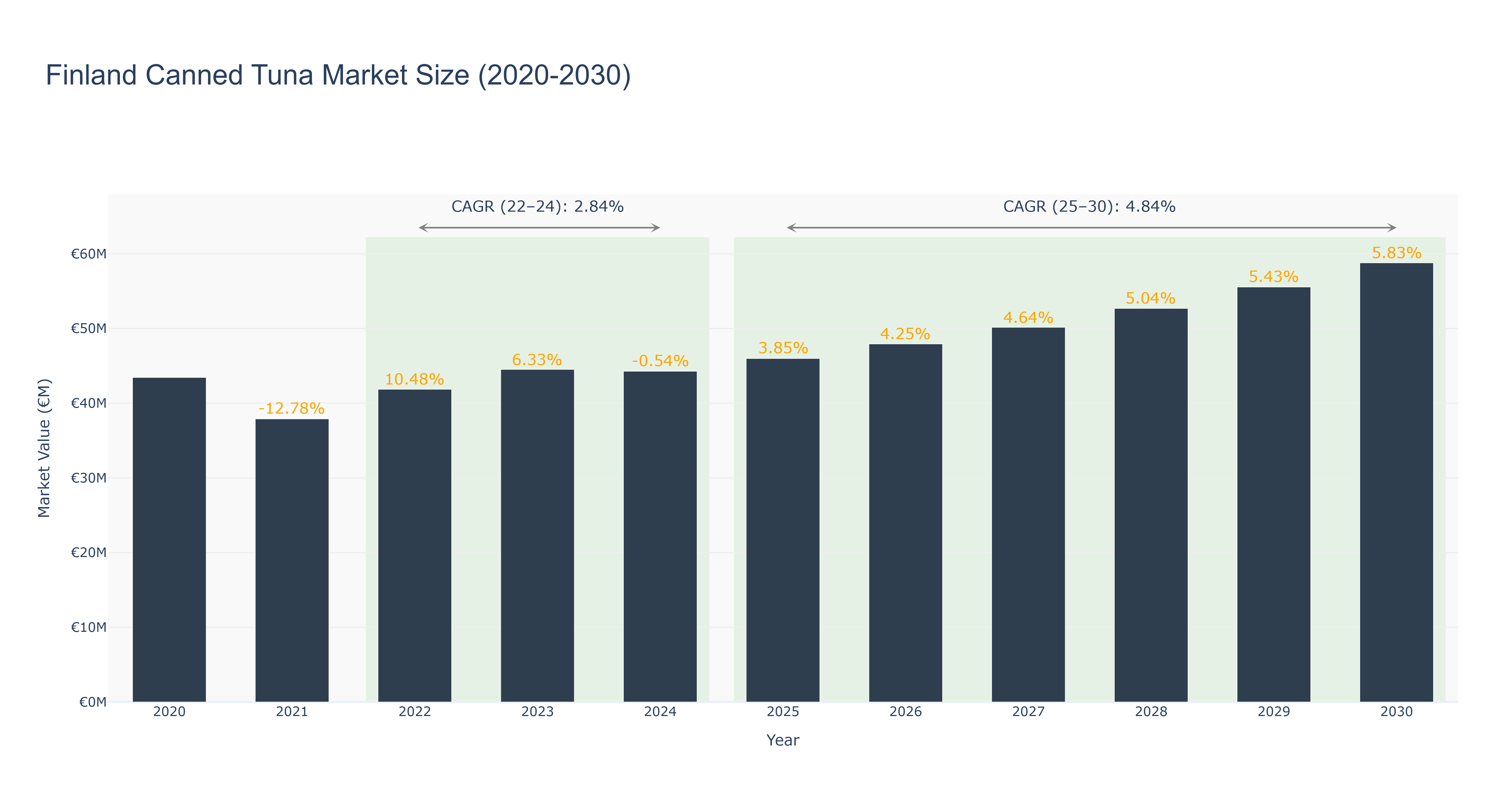
The Finland Canned Tuna Market experienced a peak market size of €58.79 million in 2030, with a steady growth trajectory over the years. From 2020 to 2024, the market size fluctuated between €43.45 million in 2020 to €44.28 million in 2024. The forecasted market size from 2025 to 2030 is projected to increase, with a Compound Annual Growth Rate (CAGR) of 4.83% from 2025 to 2030. The market showed a CAGR of 2.84% from 2022 to 2024. The market's growth can be attributed to increasing health consciousness among consumers and the rising demand for convenient and protein-rich food options. Looking ahead, Finland is set to introduce sustainable fishing practices in the canned tuna industry, aligning with the growing global focus on environmental sustainability in food production.
Finland Canned Tuna Market: Production & Trade Performance (2019-2025)
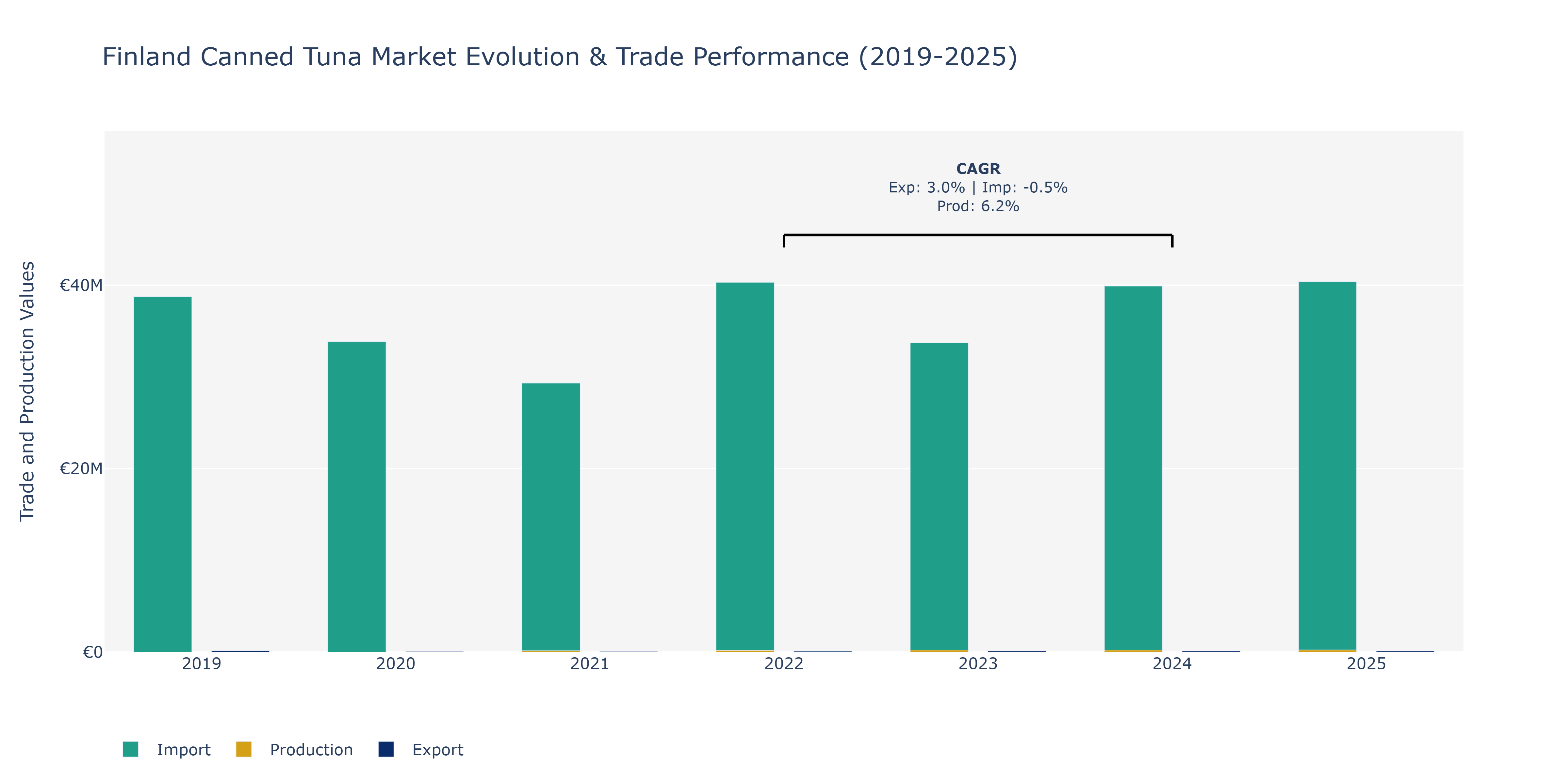
In the Finland Canned Tuna Market, exports experienced a consistent decrease from 2019 to 2021, with a slight increase in 2022 before reaching a peak of €107.33 thousand in 2025. This fluctuation could be attributed to changing consumer preferences towards healthier and sustainable food options, leading to fluctuations in demand for canned tuna products. Conversely, imports showed a general decline from 2019 to 2020, followed by a slight increase in 2021 before stabilizing around €40.38 million in the following years. The rise in production from 2021 to 2025, reaching €224.77 thousand, could indicate growing domestic capabilities and investments in production facilities to meet the increasing demand for canned tuna products. The market's growth aligns with the global trend of consumers seeking convenient, protein-rich food options amidst busy lifestyles, as reported by Food Dive.
Finland Canned Tuna Market Overview
The canned tuna market in Finland is an important segment of the country`s canned food industry. Tuna is widely consumed as a versatile, convenient, and nutritious protein source. Finlands strong preference for canned seafood, combined with its focus on sustainability, influences the demand for ethically sourced and eco-friendly canned tuna products. The market is growing as consumers look for high-quality, responsibly caught tuna that meets strict environmental and health standards. Additionally, the rise in consumer interest in plant-based diets and sustainable food practices is driving innovation in the canned tuna segment, with new products featuring sustainable sourcing and packaging.
Drivers of the market
The Canned Tuna Market in Finland is driven by the increasing popularity of tuna as a source of lean protein and its convenience as a ready-to-eat meal option. With a rising focus on health and convenience, canned tuna continues to be a staple in households and foodservice operations.
Challenges of the market
The canned tuna market in Finland is impacted by rising concerns over overfishing and the environmental sustainability of tuna fisheries, which has led to stricter regulations and consumer demand for responsibly sourced products. Additionally, competition from fresh and frozen tuna products, as well as price fluctuations in raw tuna, add complexity to the market.
Government Policy of the market
The Finnish governments policies regarding the canned tuna market align with global sustainability standards, promoting responsible fishing practices and the protection of marine biodiversity. Regulations ensure that canned tuna products meet safety and quality standards, and the government encourages the use of sustainable sourcing practices and eco-friendly packaging.
Key Highlights of the Report:
- Finland Canned Tuna Market Outlook
- Market Size of Finland Canned Tuna Market, 2024
- Forecast of Finland Canned Tuna Market, 2031
- Historical Data and Forecast of Finland Canned Tuna Revenues & Volume for the Period 2021-2031
- Finland Canned Tuna Market Trend Evolution
- Finland Canned Tuna Market Drivers and Challenges
- Finland Canned Tuna Price Trends
- Finland Canned Tuna Porter`s Five Forces
- Finland Canned Tuna Industry Life Cycle
- Historical Data and Forecast of Finland Canned Tuna Market Revenues & Volume By Product for the Period 2021-2031
- Historical Data and Forecast of Finland Canned Tuna Market Revenues & Volume By Skipjack for the Period 2021-2031
- Historical Data and Forecast of Finland Canned Tuna Market Revenues & Volume By Yellowfin for the Period 2021-2031
- Historical Data and Forecast of Finland Canned Tuna Market Revenues & Volume By Others for the Period 2021-2031
- Historical Data and Forecast of Finland Canned Tuna Market Revenues & Volume By Distribution Channel for the Period 2021-2031
- Historical Data and Forecast of Finland Canned Tuna Market Revenues & Volume By Hypermarket & Supermarket for the Period 2021-2031
- Historical Data and Forecast of Finland Canned Tuna Market Revenues & Volume By Specialty Stores for the Period 2021-2031
- Historical Data and Forecast of Finland Canned Tuna Market Revenues & Volume By Online for the Period 2021-2031
- Finland Canned Tuna Import Export Trade Statistics
- Market Opportunity Assessment By Product
- Market Opportunity Assessment By Distribution Channel
- Finland Canned Tuna Top Companies Market Share
- Finland Canned Tuna Competitive Benchmarking By Technical and Operational Parameters
- Finland Canned Tuna Company Profiles
- Finland Canned Tuna Key Strategic Recommendations






































