Finland Edible Oils Market Size (2020-2030)
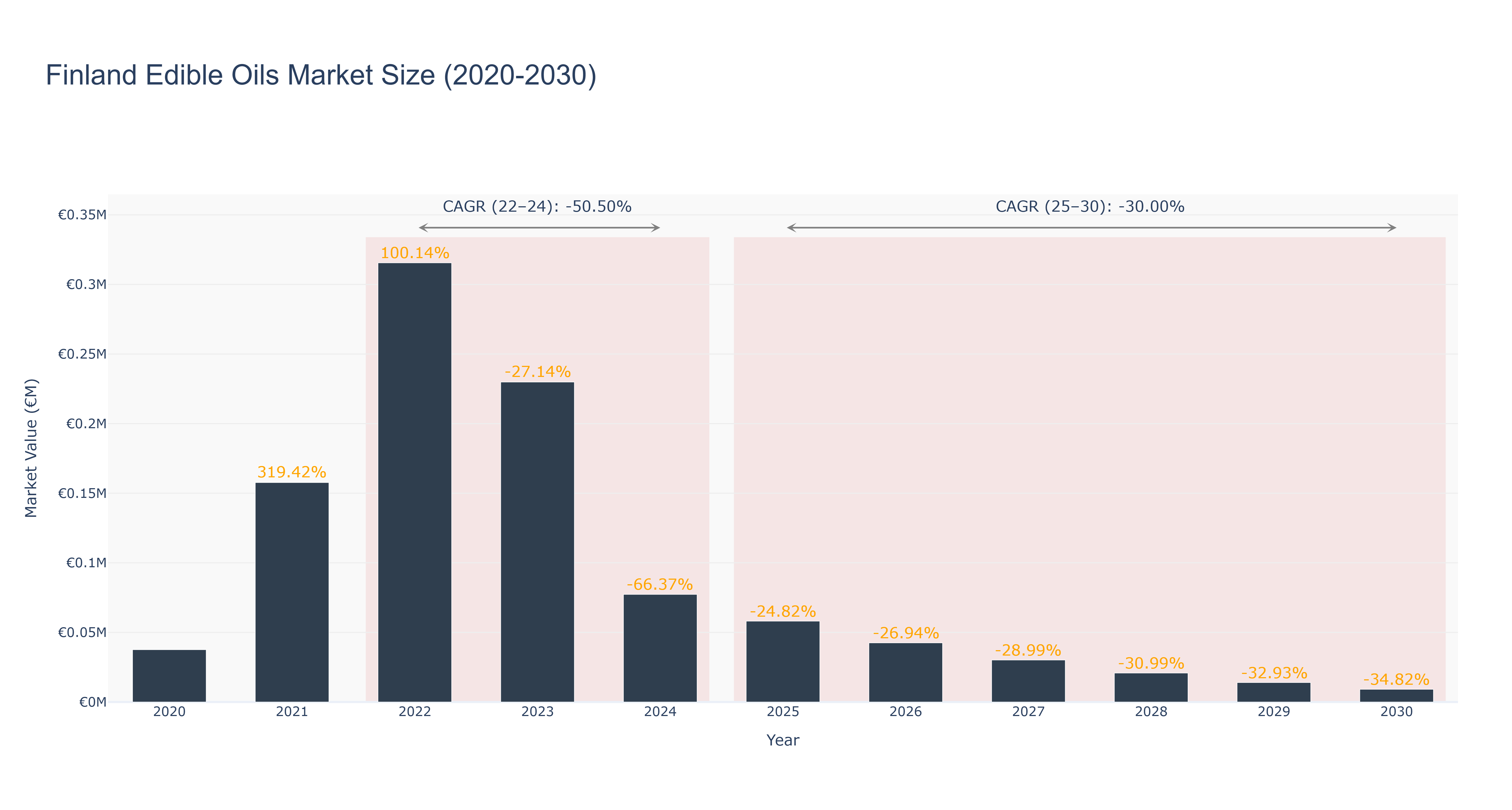
Finland Edible Oils Market has shown a fluctuating trend over the years. The peak market size of €0.32 million was observed in 2022, followed by a decline to €0.08 million in 2024. The forecasted market size is expected to further decrease to €0.01 million by 2030, with a CAGR of -30.0% from 2025 to 2030. The market experienced a significant drop in size from 2022 to 2024, attributed to changing consumer preferences towards healthier alternatives and economic factors. Looking ahead, the industry drivers include increasing health consciousness among consumers and sustainable production practices. Recent developments indicate a shift towards organic and locally sourced edible oils, with future projects focusing on enhancing distribution channels and promoting eco-friendly packaging solutions to align with evolving market demands.
Finland Edible Oils Market: Production & Trade Performance (2019-2025)
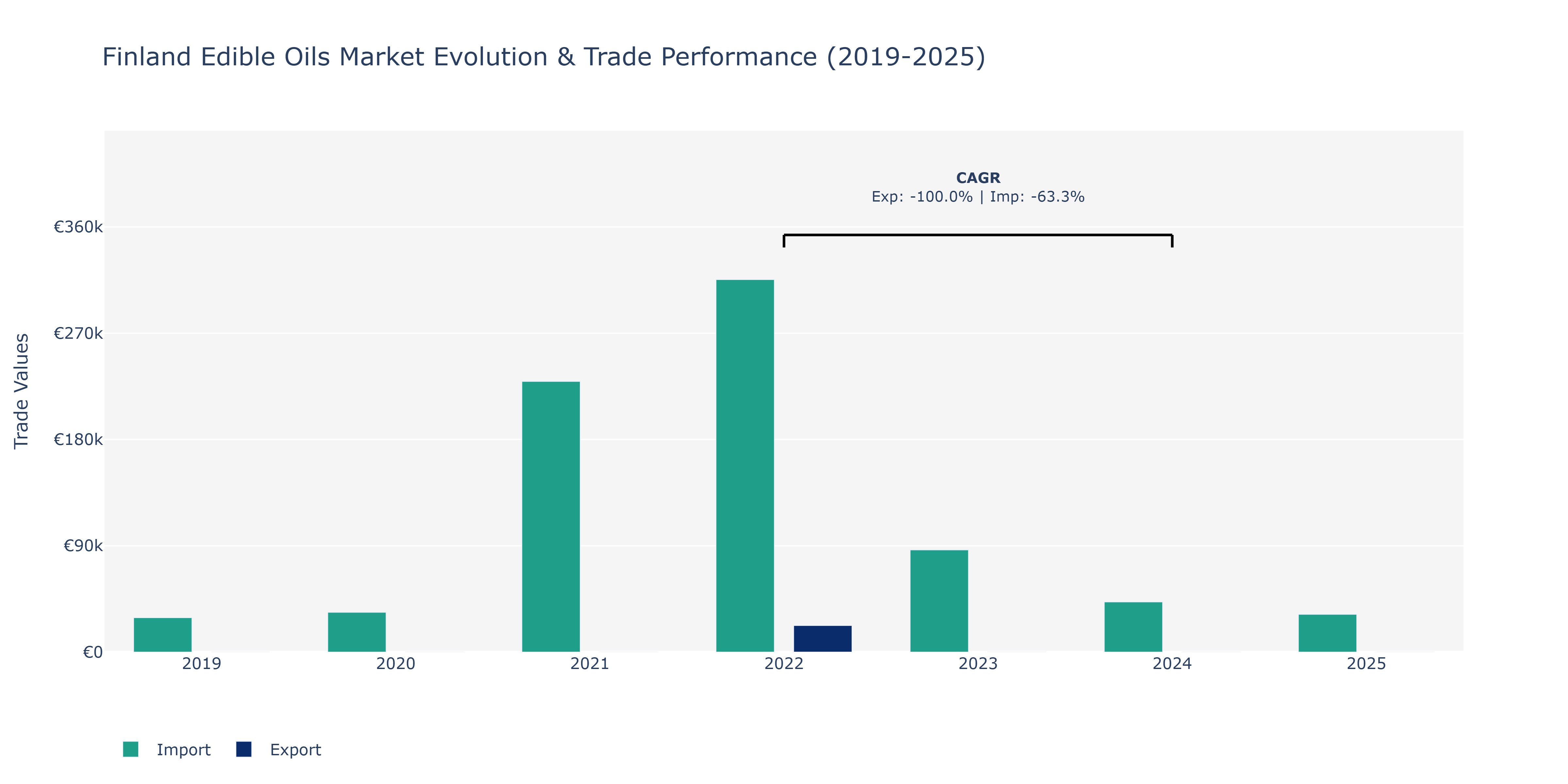
In the Finland Edible Oils Market, imports experienced notable fluctuations during the period under review. In 2019, imports stood at €29.05 thousand and rose by approximately 16% in 2020 to reach €33.6 thousand. However, a substantial surge was observed in 2021 when imports skyrocketed to €229.16 thousand, marking a significant peak. The trend shifted in 2022 when exports recorded a value of €22.4 thousand, comparatively lower than the previous year, while imports surged to €315.37 thousand. This spike can be attributed to various factors such as changing consumer preferences, economic conditions, and global supply chain disruptions impacting trade volumes. The following years saw a decline in imports, with figures dropping to €42.4 thousand in 2024 and €31.87 thousand in 2025. Such fluctuations in imports could have been influenced by shifts in demand patterns, currency fluctuations affecting pricing, and regulatory changes impacting market dynamics.
Key Highlights of the Report:
- Finland Edible Oils Market Outlook
- Market Size of Finland Edible Oils Market, 2024
- Forecast of Finland Edible Oils Market, 2031
- Historical Data and Forecast of Finland Edible Oils Revenues & Volume for the Period 2021-2031
- Finland Edible Oils Market Trend Evolution
- Finland Edible Oils Market Drivers and Challenges
- Finland Edible Oils Price Trends
- Finland Edible Oils Porter`s Five Forces
- Finland Edible Oils Industry Life Cycle
- Historical Data and Forecast of Finland Edible Oils Market Revenues & Volume By Type for the Period 2021-2031
- Historical Data and Forecast of Finland Edible Oils Market Revenues & Volume By Palm Oil for the Period 2021-2031
- Historical Data and Forecast of Finland Edible Oils Market Revenues & Volume By Soybean Oil for the Period 2021-2031
- Historical Data and Forecast of Finland Edible Oils Market Revenues & Volume By Sunflower Oil for the Period 2021-2031
- Historical Data and Forecast of Finland Edible Oils Market Revenues & Volume By Rapeseed Oil for the Period 2021-2031
- Historical Data and Forecast of Finland Edible Oils Market Revenues & Volume By Olive Oil for the Period 2021-2031
- Historical Data and Forecast of Finland Edible Oils Market Revenues & Volume By Packaging Type for the Period 2021-2031
- Historical Data and Forecast of Finland Edible Oils Market Revenues & Volume By Pouches for the Period 2021-2031
- Historical Data and Forecast of Finland Edible Oils Market Revenues & Volume By Jars for the Period 2021-2031
- Historical Data and Forecast of Finland Edible Oils Market Revenues & Volume By Cans for the Period 2021-2031
- Historical Data and Forecast of Finland Edible Oils Market Revenues & Volume By Bottles for the Period 2021-2031
- Historical Data and Forecast of Finland Edible Oils Market Revenues & Volume By End Use for the Period 2021-2031
- Historical Data and Forecast of Finland Edible Oils Market Revenues & Volume By Domestic for the Period 2021-2031
- Historical Data and Forecast of Finland Edible Oils Market Revenues & Volume By Food Service for the Period 2021-2031
- Historical Data and Forecast of Finland Edible Oils Market Revenues & Volume By Industrial for the Period 2021-2031
- Finland Edible Oils Import Export Trade Statistics
- Market Opportunity Assessment By Type
- Market Opportunity Assessment By Packaging Type
- Market Opportunity Assessment By End Use
- Finland Edible Oils Top Companies Market Share
- Finland Edible Oils Competitive Benchmarking By Technical and Operational Parameters
- Finland Edible Oils Company Profiles
- Finland Edible Oils Key Strategic Recommendations






































