Finland Linen Yarn Market Size (2020-2030)
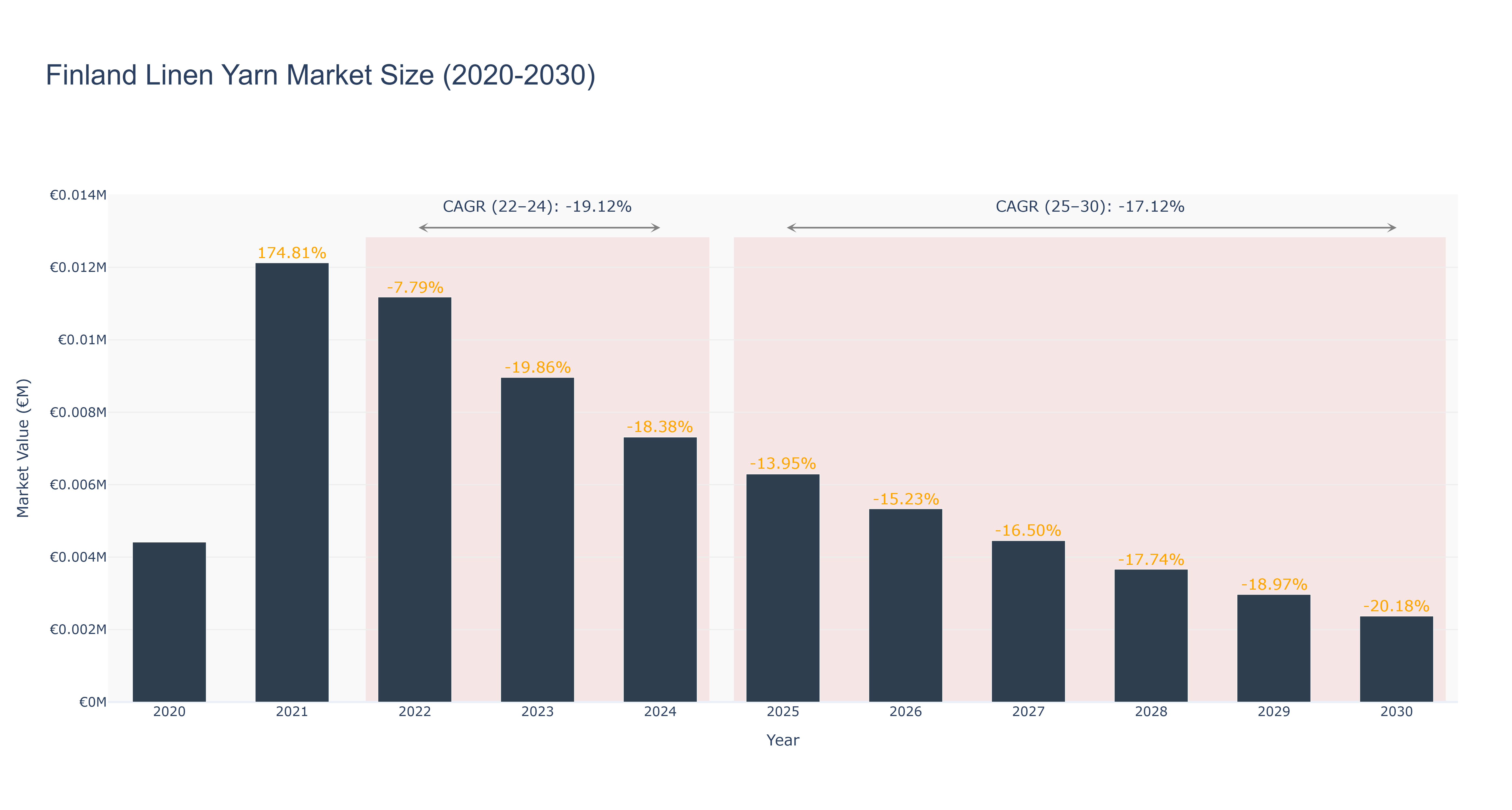
The Finland Linen Yarn Market has experienced a significant decline following a peak market size of €12.12 thousand in 2021, reflecting a volatile trajectory characterized by an overall downturn from 2022 to 2024. The actual market size decreased from €11.18 thousand in 2022 to €7.31 thousand in 2024, with a CAGR of -19.12% during this period. The forecasted outlook from 2025 to 2030 suggests continued contraction, with projected market sizes declining from €6.29 thousand in 2025 to €2.37 thousand by 2030, resulting in a CAGR of -17.12%. The downturn can be attributed to reduced consumer demand and increased competition from synthetic fibers, which have adversely affected traditional linen yarn sales. As the market evolves, potential opportunities may arise from sustainability trends and innovations in textile technology, but the overall sentiment remains cautious amid ongoing challenges.
Finland Linen Yarn Market: Production & Trade Performance (2019-2025)
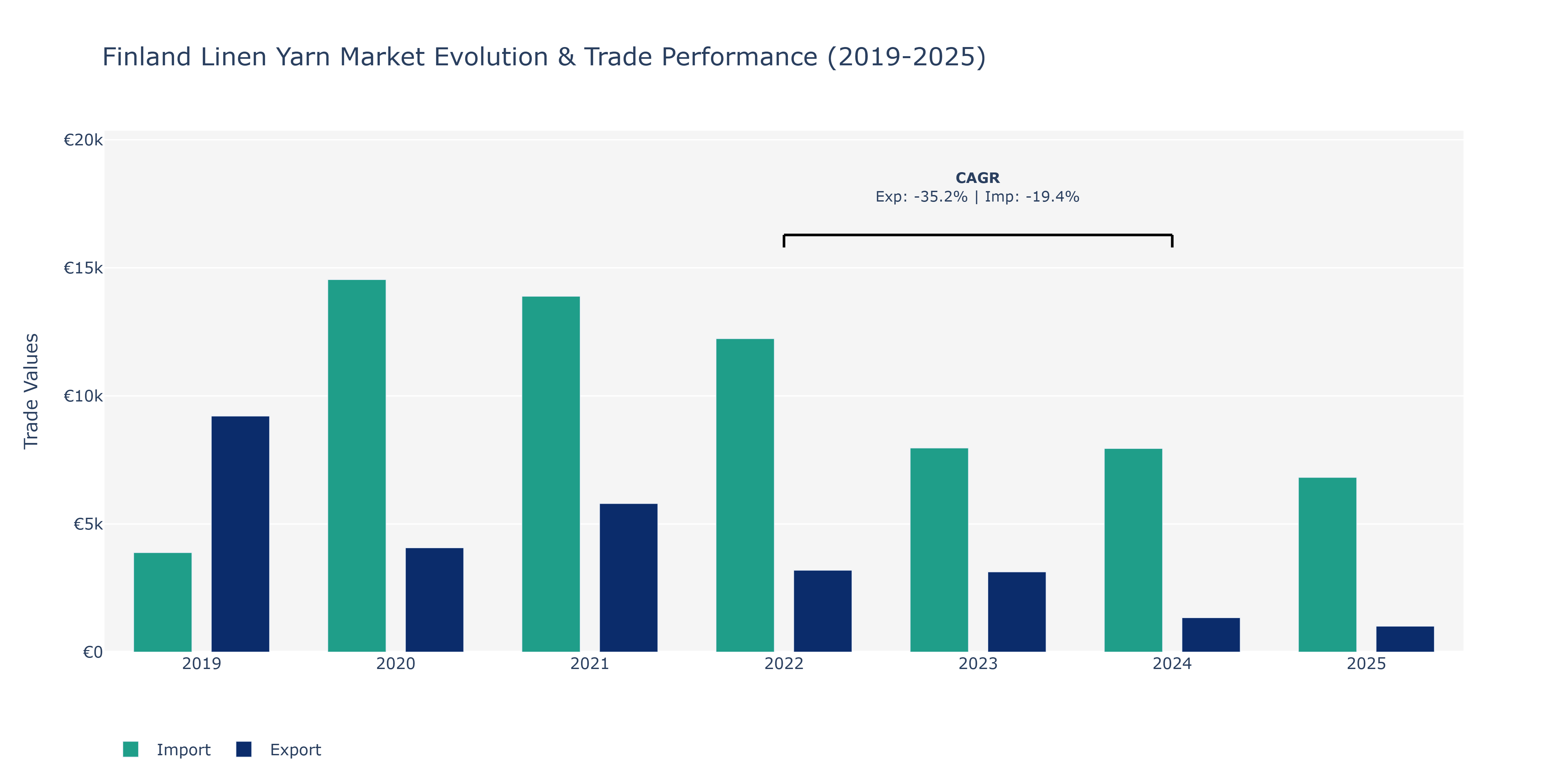
In the Finland Linen Yarn Market, the exports exhibited a noticeable decline from €9.21 thousand in 2019 to €1.34 thousand in 2024, primarily driven by a substantial drop in 2020. Conversely, imports followed a fluctuating pattern, reaching €14.54 thousand in 2020 before gradually decreasing to €6.82 thousand in 2025. The peak points for exports and imports were observed in 2019 and 2020, respectively. These fluctuations can be attributed to various factors such as changes in global demand for linen products, currency exchange rates affecting pricing competitiveness, and the impact of trade agreements on market accessibility. The significant decline in exports could be influenced by increased competition from other linen-producing countries, while the fluctuating imports may reflect shifting domestic consumption patterns or evolving trade regulations impacting inbound shipments. To mitigate the export decline, market players could focus on product diversification, innovation in production processes, and strategic marketing initiatives to enhance market competitiveness and expand export opportunities.
Key Highlights of the Report:
- Finland Linen Yarn Market Outlook
- Market Size of Finland Linen Yarn Market, 2024
- Forecast of Finland Linen Yarn Market, 2031
- Historical Data and Forecast of Finland Linen Yarn Revenues & Volume for the Period 2021-2031
- Finland Linen Yarn Market Trend Evolution
- Finland Linen Yarn Market Drivers and Challenges
- Finland Linen Yarn Price Trends
- Finland Linen Yarn Porter`s Five Forces
- Finland Linen Yarn Industry Life Cycle
- Historical Data and Forecast of Finland Linen Yarn Market Revenues & Volume By Products for the Period 2021-2031
- Historical Data and Forecast of Finland Linen Yarn Market Revenues & Volume By Dry spun yarn for the Period 2021-2031
- Historical Data and Forecast of Finland Linen Yarn Market Revenues & Volume By Wet spun yarn for the Period 2021-2031
- Historical Data and Forecast of Finland Linen Yarn Market Revenues & Volume By Blended yarn for the Period 2021-2031
- Historical Data and Forecast of Finland Linen Yarn Market Revenues & Volume By Applications for the Period 2021-2031
- Historical Data and Forecast of Finland Linen Yarn Market Revenues & Volume By Clothings for the Period 2021-2031
- Historical Data and Forecast of Finland Linen Yarn Market Revenues & Volume By Beddings for the Period 2021-2031
- Historical Data and Forecast of Finland Linen Yarn Market Revenues & Volume By Others for the Period 2021-2031
- Finland Linen Yarn Import Export Trade Statistics
- Market Opportunity Assessment By Products
- Market Opportunity Assessment By Applications
- Finland Linen Yarn Top Companies Market Share
- Finland Linen Yarn Competitive Benchmarking By Technical and Operational Parameters
- Finland Linen Yarn Company Profiles
- Finland Linen Yarn Key Strategic Recommendations






































