France Golf Apparel Market Top 5 Importing Countries and Market Competition (HHI) Analysis
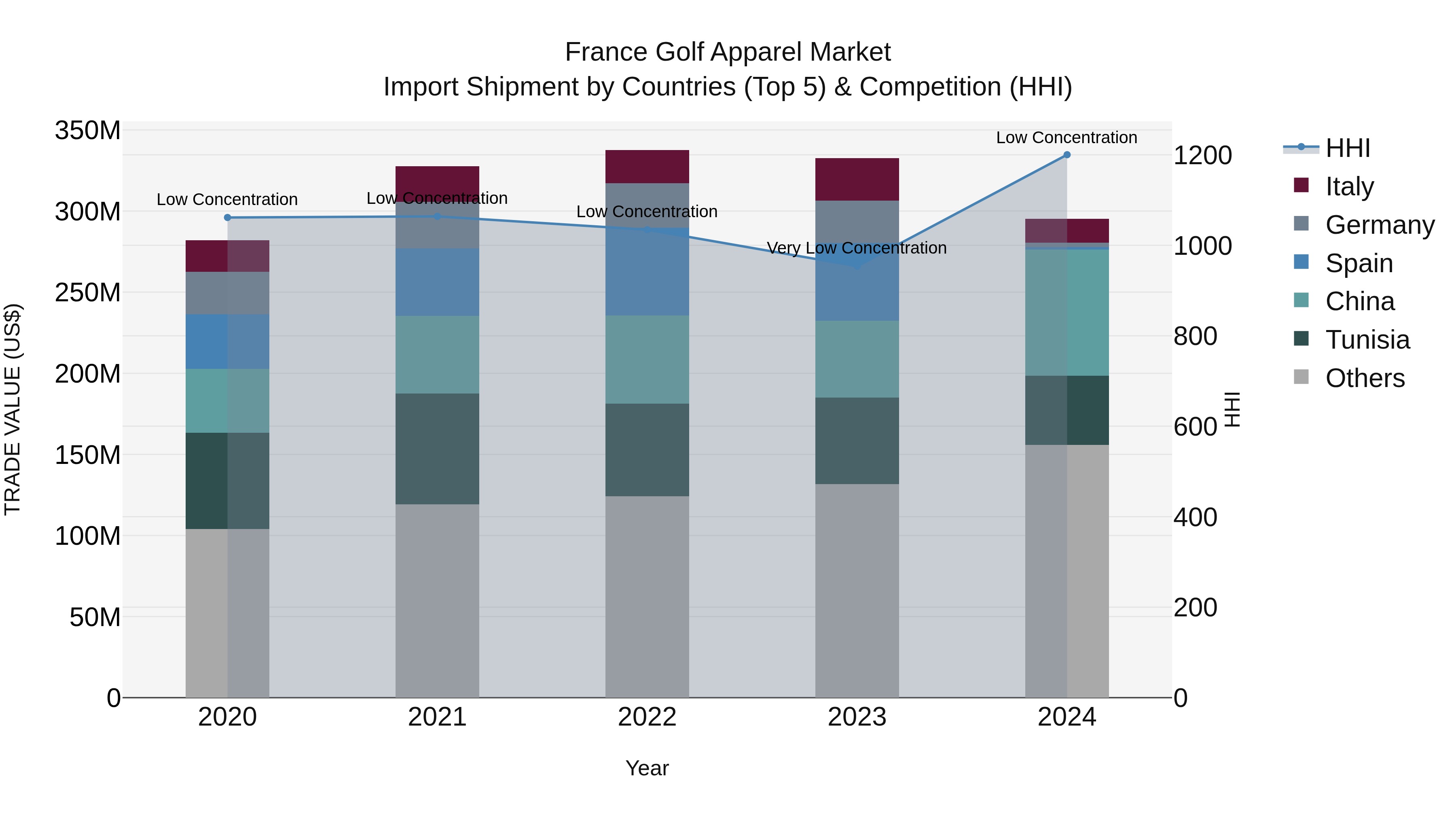
France`s golf apparel import market saw a shift in top exporting countries in 2024, with China, Tunisia, Turkey, Morocco, and Bangladesh leading the pack. Despite a slight decrease in growth rate from 2023 to 2024, the market concentration remained low, indicating a diverse range of sources for golf apparel imports. With a modest compound annual growth rate (CAGR) of 1.14% from 2020 to 2024, the industry continues to show resilience amidst changing dynamics. France`s golf apparel import market remains dynamic and open to a variety of international suppliers.
France Golf Apparel Market Overview
The golf apparel market in France is a growing sector driven by a rising interest in golf among both men and women. The market offers a wide range of apparel options, including golf shirts, pants, shorts, outerwear, and accessories such as hats and gloves. Key players in the market include international brands like Nike, Adidas, and Under Armour, as well as local brands catering to the specific preferences of French golfers. The market is characterized by a focus on performance-enhancing materials, stylish designs, and a growing trend towards sustainability in manufacturing processes. With an increasing number of golf courses and clubs across France, the demand for high-quality golf apparel is expected to continue to rise, presenting opportunities for both established and emerging brands to capture market share.
France Golf Apparel Market Trends
The golf apparel market in France is currently witnessing a shift towards more sustainable and eco-friendly materials, with a growing emphasis on performance and functionality. Brands are incorporating technical fabrics that offer moisture-wicking properties, UV protection, and stretch for increased comfort and mobility on the golf course. Athleisure-inspired designs that seamlessly transition from the course to everyday wear are also gaining popularity among consumers. Additionally, there is a rising demand for customizable and personalized golf apparel, allowing golfers to express their individual style on the course. Collaboration between golf apparel brands and professional golfers or influencers is also a prevalent trend, driving brand visibility and credibility within the market. Overall, the France golf apparel market is experiencing a blend of performance-driven innovation, sustainability, and style evolution.
France Golf Apparel Market Challenges
In the France golf apparel market, some challenges that are commonly faced include strong competition from established brands, seasonality of the sport, and changing consumer preferences. Established brands have a loyal customer base and a strong market presence, making it difficult for new or smaller players to gain traction. Additionally, the seasonality of golf as a sport means that demand for golf apparel fluctuates throughout the year, requiring companies to carefully manage their inventory and marketing strategies. Furthermore, changing consumer preferences towards more sustainable and eco-friendly products present a challenge for companies in terms of sourcing materials and production processes. Overall, navigating these challenges requires companies to stay agile, innovative, and responsive to evolving market trends in order to stay competitive in the France golf apparel market.
France Golf Apparel Market Investment Opportunities
The France golf apparel market presents lucrative investment opportunities due to the growing popularity of golf in the country. Investing in premium golf apparel brands that offer high-quality, stylish, and performance-driven clothing can be a profitable venture. Additionally, there is a rising trend towards sustainable and eco-friendly golf apparel, creating a niche market for environmentally conscious consumers. Collaborating with professional golfers or sponsoring golf events can also enhance brand visibility and attract a loyal customer base. With the increasing number of golf courses and events in France, there is a growing demand for innovative and fashionable golf apparel, making it an attractive market for investors seeking to capitalize on the expanding golf industry.
France Golf Apparel Market Government Policy
In France, government policies related to the golf apparel market primarily focus on promoting sustainability and environmental responsibility. The French government has implemented regulations to encourage the use of eco-friendly materials and production processes in the manufacturing of golf apparel. Additionally, there are policies in place to support local production and the development of French golf apparel brands. The government also emphasizes fair labor practices and compliance with labor laws within the golf apparel industry. Overall, these policies aim to foster a sustainable and ethical market for golf apparel in France, aligning with the country`s commitment to environmental protection and social responsibility.
France Golf Apparel Market Future Outlook
The future outlook for the France golf apparel market appears positive, with steady growth expected in the coming years. Factors such as the rising popularity of golf as a recreational sport, increasing participation rates among both men and women, and a growing trend towards athleisure wear are driving the demand for stylish and functional golf clothing. Additionally, advancements in fabric technology and sustainability practices within the apparel industry are likely to influence consumer preferences, with a shift towards more eco-friendly and performance-enhancing materials. As the French market continues to embrace golf as a leisure activity and lifestyle choice, there is a great opportunity for companies to innovate and cater to the evolving needs of golfers, thereby expanding their market presence and driving sales growth.
Key Highlights of the Report:
- France Golf Apparel Market Outlook
- Market Size of France Golf Apparel Market,2024
- Forecast of France Golf Apparel Market, 2031
- Historical Data and Forecast of France Golf Apparel Revenues & Volume for the Period 2021-2031
- France Golf Apparel Market Trend Evolution
- France Golf Apparel Market Drivers and Challenges
- France Golf Apparel Price Trends
- France Golf Apparel Porter's Five Forces
- France Golf Apparel Industry Life Cycle
- Historical Data and Forecast of France Golf Apparel Market Revenues & Volume By Product for the Period 2021-2031
- Historical Data and Forecast of France Golf Apparel Market Revenues & Volume By Topwear for the Period 2021-2031
- Historical Data and Forecast of France Golf Apparel Market Revenues & Volume By Bottomwear for the Period 2021-2031
- Historical Data and Forecast of France Golf Apparel Market Revenues & Volume By Gloves for the Period 2021-2031
- Historical Data and Forecast of France Golf Apparel Market Revenues & Volume By Cap for the Period 2021-2031
- Historical Data and Forecast of France Golf Apparel Market Revenues & Volume By Others for the Period 2021 - 2029
- Historical Data and Forecast of France Golf Apparel Market Revenues & Volume By End use for the Period 2021-2031
- Historical Data and Forecast of France Golf Apparel Market Revenues & Volume By Men for the Period 2021-2031
- Historical Data and Forecast of France Golf Apparel Market Revenues & Volume By Women for the Period 2021-2031
- Historical Data and Forecast of France Golf Apparel Market Revenues & Volume By Kids for the Period 2021-2031
- Historical Data and Forecast of France Golf Apparel Market Revenues & Volume By Distribution Channel for the Period 2021-2031
- Historical Data and Forecast of France Golf Apparel Market Revenues & Volume By Retail for the Period 2021-2031
- Historical Data and Forecast of France Golf Apparel Market Revenues & Volume By Specialty Stores for the Period 2021-2031
- Historical Data and Forecast of France Golf Apparel Market Revenues & Volume By Sports Store for the Period 2021-2031
- Historical Data and Forecast of France Golf Apparel Market Revenues & Volume By Online Retailers for the Period 2021-2031
- France Golf Apparel Import Export Trade Statistics
- Market Opportunity Assessment By Product
- Market Opportunity Assessment By End use
- Market Opportunity Assessment By Distribution Channel
- France Golf Apparel Top Companies Market Share
- France Golf Apparel Competitive Benchmarking By Technical and Operational Parameters
- France Golf Apparel Company Profiles
- France Golf Apparel Key Strategic Recommendations






































