France Kitchen and Table Glassware Market Top 5 Importing Countries and Market Competition (HHI) Analysis
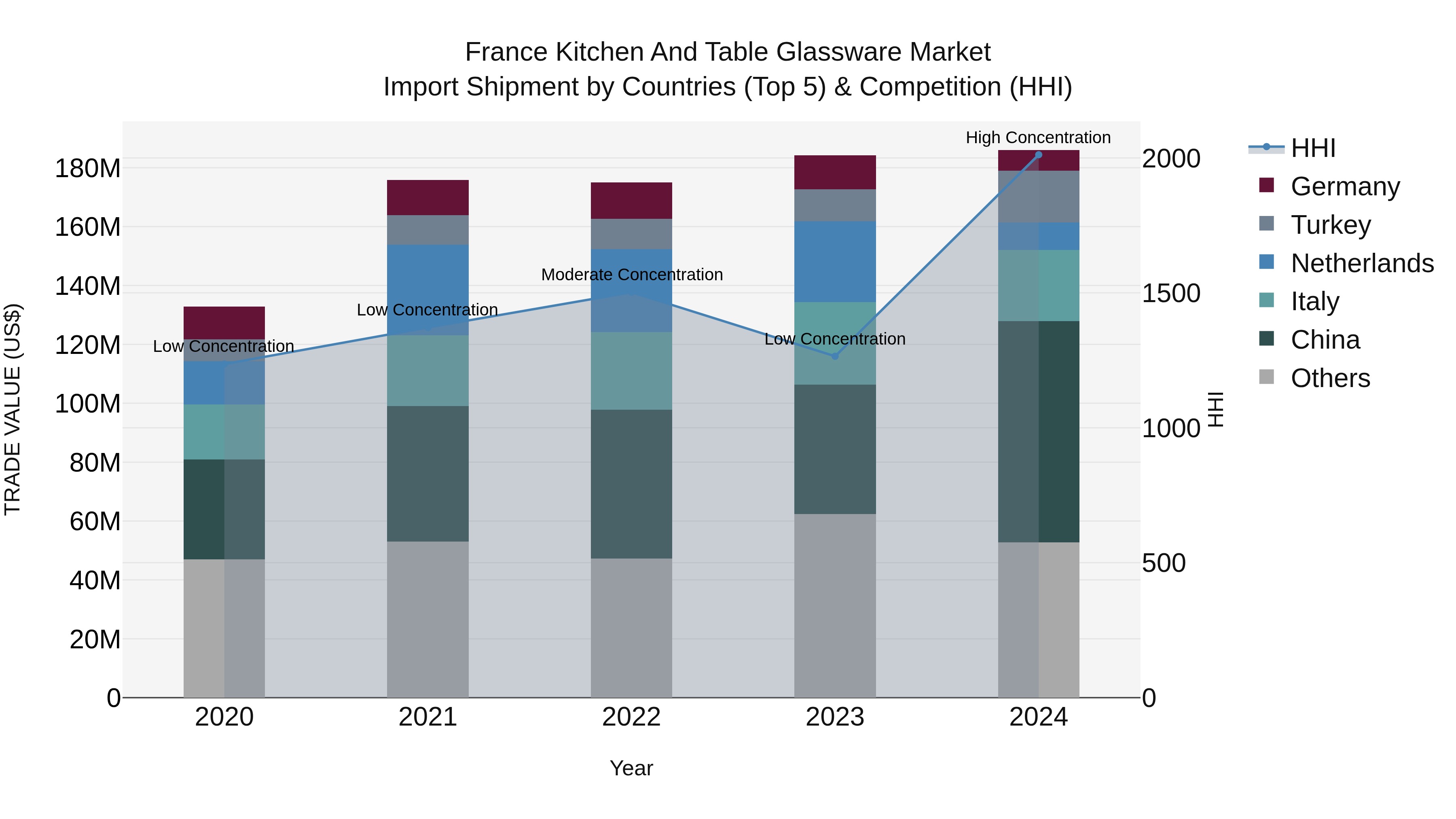
The France kitchen and table glassware import market experienced a shift in concentration from low to high in 2024, with top exporting countries being China, Italy, Turkey, UAE, and Netherlands. The industry demonstrated steady growth with a CAGR of 8.78% from 2020 to 2024, and a slight increase in growth rate from 2023 to 2024 at 0.96%. This indicates a competitive landscape in the market, potentially driving innovation and quality improvements to meet consumer demands. France remains a key market for glassware imports, attracting products from diverse global sources.
France kitchen and table glassware Market Overview
The market for kitchen and table glassware in France is experiencing growth driven by changing consumer lifestyles, dining habits, and preferences for stylish and functional dinnerware and serveware. Kitchen and table glassware encompass a wide range of products including drinking glasses, stemware, dinner plates, bowls, and serving platters, designed for both practical use and aesthetic appeal. With consumers spending more time cooking and entertaining at home, there is a growing demand for glassware that complements modern kitchen decor, enhances dining experiences, and reflects personal tastes and preferences. Moreover, the durability, hygiene, and versatility of glassware make it a popular choice for everyday use as well as special occasions and gatherings. As manufacturers innovate to introduce new designs, materials, and features to meet evolving consumer demands, the kitchen and table glassware market in France is poised for continued expansion, driven by trends towards home cooking, casual dining, and socializing.
Drivers of the market
The kitchen and table glassware market in France is experiencing steady growth, driven by several key factors. Firstly, the increasing consumer interest in cooking, dining, and entertaining at home fuels the demand for kitchen and table glassware as essential accessories for food preparation, serving, and presentation in domestic kitchens and dining spaces. Kitchen and table glassware offer advantages such as transparency, versatility, and aesthetics, driving market expansion. Moreover, advancements in glass manufacturing techniques, design trends, and material innovations contribute to the development of diverse glassware products with enhanced features for durability, style, and functionality that meet the diverse needs and preferences of consumers for contemporary and practical kitchen and dining essentials. Additionally, the growing trend towards sustainable living and conscious consumption drives the adoption of glassware made from recycled glass, eco-friendly materials, and reusable designs that promote environmental stewardship and reduce plastic waste in the kitchen and dining areas. Furthermore, the increasing popularity of home cooking, meal prep, and culinary hobbies creates opportunities for market growth as consumers invest in high-quality glassware products such as mixing bowls, baking dishes, and serving platters that enable them to express their creativity, showcase their culinary skills, and enjoy memorable dining experiences with family and friends in the comfort of their homes.
Challenges of the market
Challenges in the France kitchen and table glassware market include competition from alternative materials such as plastic and ceramic, addressing concerns over product safety and durability, and adapting to changing consumer preferences for design and functionality.
Government Policy of the market
Government policies in France related to consumer products, food safety, and trade influence the kitchen and table glassware market. Regulations may include quality standards for glassware production, safety guidelines for food contact materials, and trade agreements affecting import and export of glassware products to ensure consumer safety, product quality, and market access.
Key Highlights of the Report:
- France kitchen and table glassware Market Outlook
- Market Size of France kitchen and table glassware Market, 2024
- Forecast of France kitchen and table glassware Market, 2031
- Historical Data and Forecast of France kitchen and table glassware Revenues & Volume for the Period 2021-2031
- France kitchen and table glassware Market Trend Evolution
- France kitchen and table glassware Market Drivers and Challenges
- France kitchen and table glassware Price Trends
- France kitchen and table glassware Porter's Five Forces
- France kitchen and table glassware Industry Life Cycle
- Historical Data and Forecast of France kitchen and table glassware Market Revenues & Volume By Type for the Period 2021-2031
- Historical Data and Forecast of France kitchen and table glassware Market Revenues & Volume By Drinkware for the Period 2021-2031
- Historical Data and Forecast of France kitchen and table glassware Market Revenues & Volume By Dinnerware for the Period 2021-2031
- Historical Data and Forecast of France kitchen and table glassware Market Revenues & Volume By Others for the Period 2021-2031
- Historical Data and Forecast of France kitchen and table glassware Market Revenues & Volume By Application for the Period 2021-2031
- Historical Data and Forecast of France kitchen and table glassware Market Revenues & Volume By Commercial Use for the Period 2021-2031
- Historical Data and Forecast of France kitchen and table glassware Market Revenues & Volume By Residential Use for the Period 2021-2031
- Historical Data and Forecast of France kitchen and table glassware Market Revenues & Volume By Distribution Channel for the Period 2021-2031
- Historical Data and Forecast of France kitchen and table glassware Market Revenues & Volume By Supermarket for the Period 2021-2031
- Historical Data and Forecast of France kitchen and table glassware Market Revenues & Volume By Independent Stores for the Period 2021-2031
- Historical Data and Forecast of France kitchen and table glassware Market Revenues & Volume By E-commerce for the Period 2021-2031
- Historical Data and Forecast of France kitchen and table glassware Market Revenues & Volume By Others for the Period 2021-2031
- Historical Data and Forecast of France kitchen and table glassware Market Revenues & Volume By Product for the Period 2021-2031
- Historical Data and Forecast of France kitchen and table glassware Market Revenues & Volume By Tea Pots for the Period 2021-2031
- Historical Data and Forecast of France kitchen and table glassware Market Revenues & Volume By Pitchers for the Period 2021-2031
- Historical Data and Forecast of France kitchen and table glassware Market Revenues & Volume By Coffee Brewers for the Period 2021-2031
- Historical Data and Forecast of France kitchen and table glassware Market Revenues & Volume By Wine Glass for the Period 2021-2031
- Historical Data and Forecast of France kitchen and table glassware Market Revenues & Volume By Beer Glass for the Period 2021-2031
- Historical Data and Forecast of France kitchen and table glassware Market Revenues & Volume By Cups for the Period 2021-2031
- Historical Data and Forecast of France kitchen and table glassware Market Revenues & Volume By Mugs for the Period 2021-2031
- Historical Data and Forecast of France kitchen and table glassware Market Revenues & Volume By Others for the Period 2021-2031
- France kitchen and table glassware Import Export Trade Statistics
- Market Opportunity Assessment By Type
- Market Opportunity Assessment By Application
- Market Opportunity Assessment By Distribution Channel
- Market Opportunity Assessment By Product
- France kitchen and table glassware Top Companies Market Share
- France kitchen and table glassware Competitive Benchmarking By Technical and Operational Parameters
- France kitchen and table glassware Company Profiles
- France kitchen and table glassware Key Strategic Recommendations






































