Gambia Bulk Food Ingredients Market: Import Trend Analysis
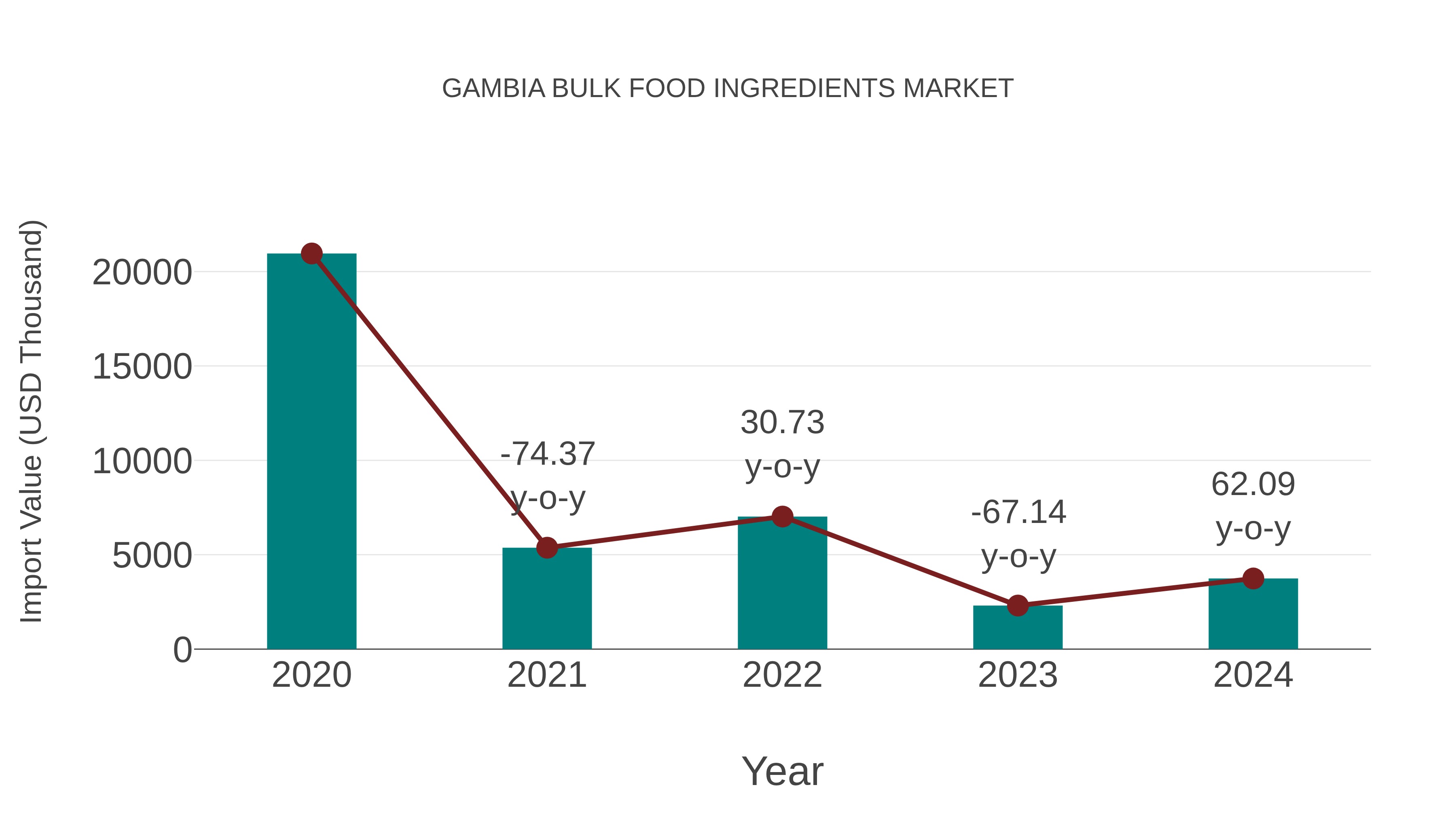
The Gambia bulk food ingredients market witnessed a negative Compound Annual Growth Rate (CAGR) of -35.00% from 2020 to 2024. However, in 20232024, there was a notable year-on-year growth rate of 62.09%, indicating a temporary surge in imports during that period.
Gambia Bulk Food Ingredients Market Overview
The bulk food ingredients market in Gambia is expanding due to increased consumption of processed foods and beverages. These ingredients, which include grains, spices, oils, and sugars, are in demand by food manufacturers, restaurants, and bakeries. With the population`s rising preference for ready-to-eat meals and imported food products, there is a steady demand for bulk food ingredients. The market is also supported by the growing food processing industry, which is central to Gambia`s economic diversification efforts.
Drivers of the market
The Gambia bulk food ingredients market is influenced by the growing demand for processed and ready-to-eat food products. The countrys expanding urban population, coupled with a shift in consumer preferences towards convenience foods, is driving the demand for bulk food ingredients. The increasing presence of international food brands, along with the rise in local food processing industries, further boosts the need for bulk ingredients. Additionally, the governments efforts to support the food industry through policies that enhance food security and promote local production contribute to the market`s growth.
Challenges of the market
The Bulk Food Ingredients Market in Gambia is constrained by issues such as inconsistent supply chains, poor transportation infrastructure, and lack of local production of certain bulk ingredients. Moreover, high import costs and tariffs contribute to rising prices, making bulk ingredients less affordable for local businesses and consumers. Limited local processing capabilities also mean that a significant portion of ingredients needs to be imported, further straining the market.
Government Policy of the market
The Gambias government is increasingly focused on ensuring the availability and affordability of bulk food ingredients to support the local food processing industry. Policies emphasize the enhancement of agricultural productivity and the establishment of supply chains that can deliver essential ingredients such as grains, oils, and spices in bulk. By fostering partnerships with both local and international suppliers, the government aims to stabilize food prices and improve food security across the nation.
Key Highlights of the Report:
- Gambia Bulk Food Ingredients Market Outlook
- Market Size of Gambia Bulk Food Ingredients Market, 2025
- Forecast of Gambia Bulk Food Ingredients Market, 2032
- Historical Data and Forecast of Gambia Bulk Food Ingredients Revenues & Volume for the Period 2022-2032F
- Gambia Bulk Food Ingredients Market Trend Evolution
- Gambia Bulk Food Ingredients Market Drivers and Challenges
- Gambia Bulk Food Ingredients Price Trends
- Gambia Bulk Food Ingredients Porter`s Five Forces
- Gambia Bulk Food Ingredients Industry Life Cycle
- Historical Data and Forecast of Gambia Bulk Food Ingredients Market Revenues & Volume By Application for the Period 2022-2032F
- Historical Data and Forecast of Gambia Bulk Food Ingredients Market Revenues & Volume By Food for the Period 2022-2032F
- Historical Data and Forecast of Gambia Bulk Food Ingredients Market Revenues & Volume By Beverages for the Period 2022-2032F
- Historical Data and Forecast of Gambia Bulk Food Ingredients Market Revenues & Volume By Distribution Channel for the Period 2022-2032F
- Historical Data and Forecast of Gambia Bulk Food Ingredients Market Revenues & Volume By Direct From Manufacturers for the Period 2022-2032F
- Historical Data and Forecast of Gambia Bulk Food Ingredients Market Revenues & Volume By Distributors for the Period 2022-2032F
- Gambia Bulk Food Ingredients Import Export Trade Statistics
- Market Opportunity Assessment By Application
- Market Opportunity Assessment By Distribution Channel
- Gambia Bulk Food Ingredients Top Companies Market Share
- Gambia Bulk Food Ingredients Competitive Benchmarking By Technical and Operational Parameters
- Gambia Bulk Food Ingredients Company Profiles
- Gambia Bulk Food Ingredients Key Strategic Recommendations






































