Georgia Cottonseed Oil Market Size Growth Rate
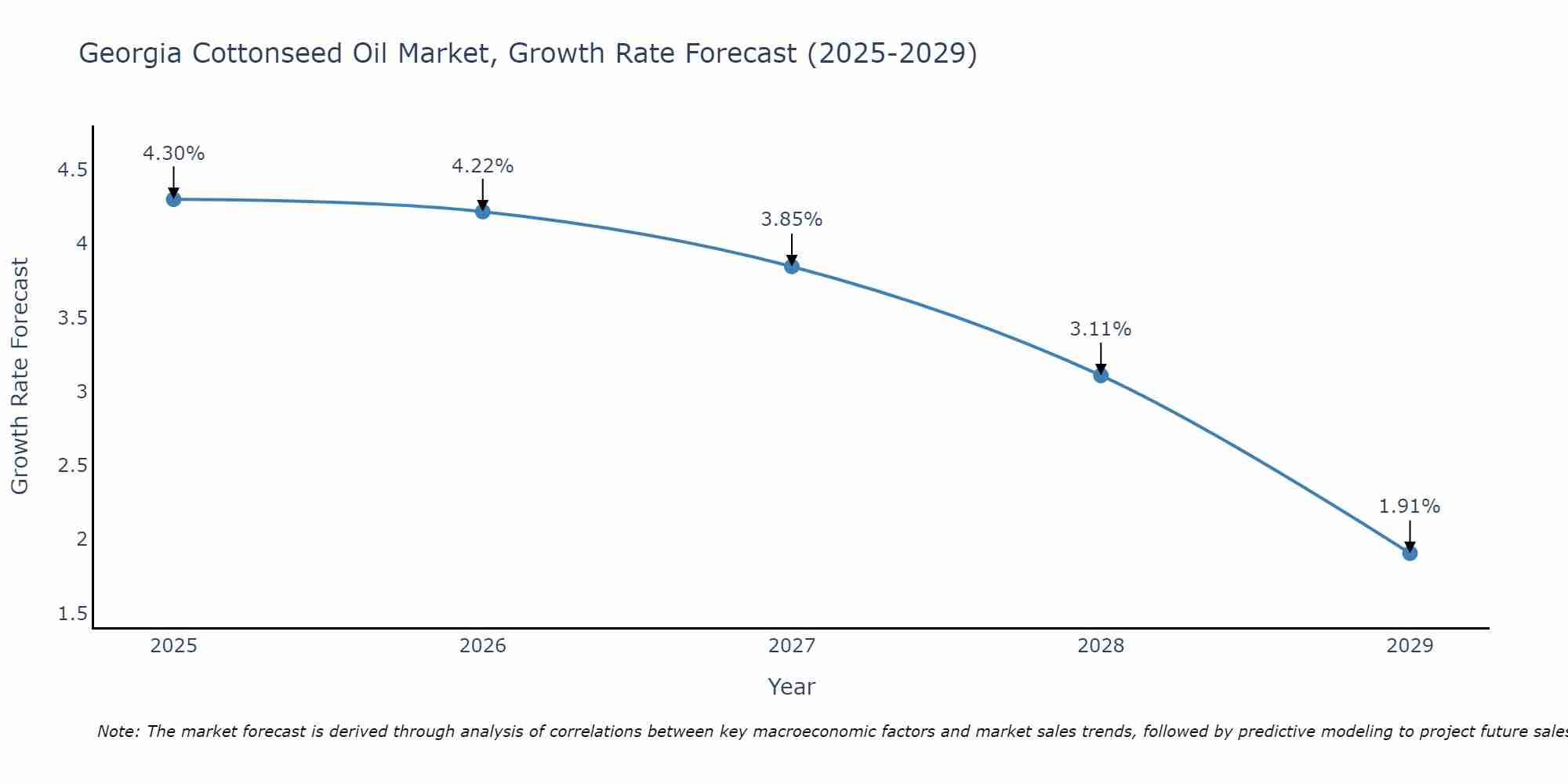
The Georgia Cottonseed Oil Market may undergo a gradual slowdown in growth rates between 2025 and 2029. Beginning strongly at 4.30% in 2025, growth softens to 1.91% in 2029.
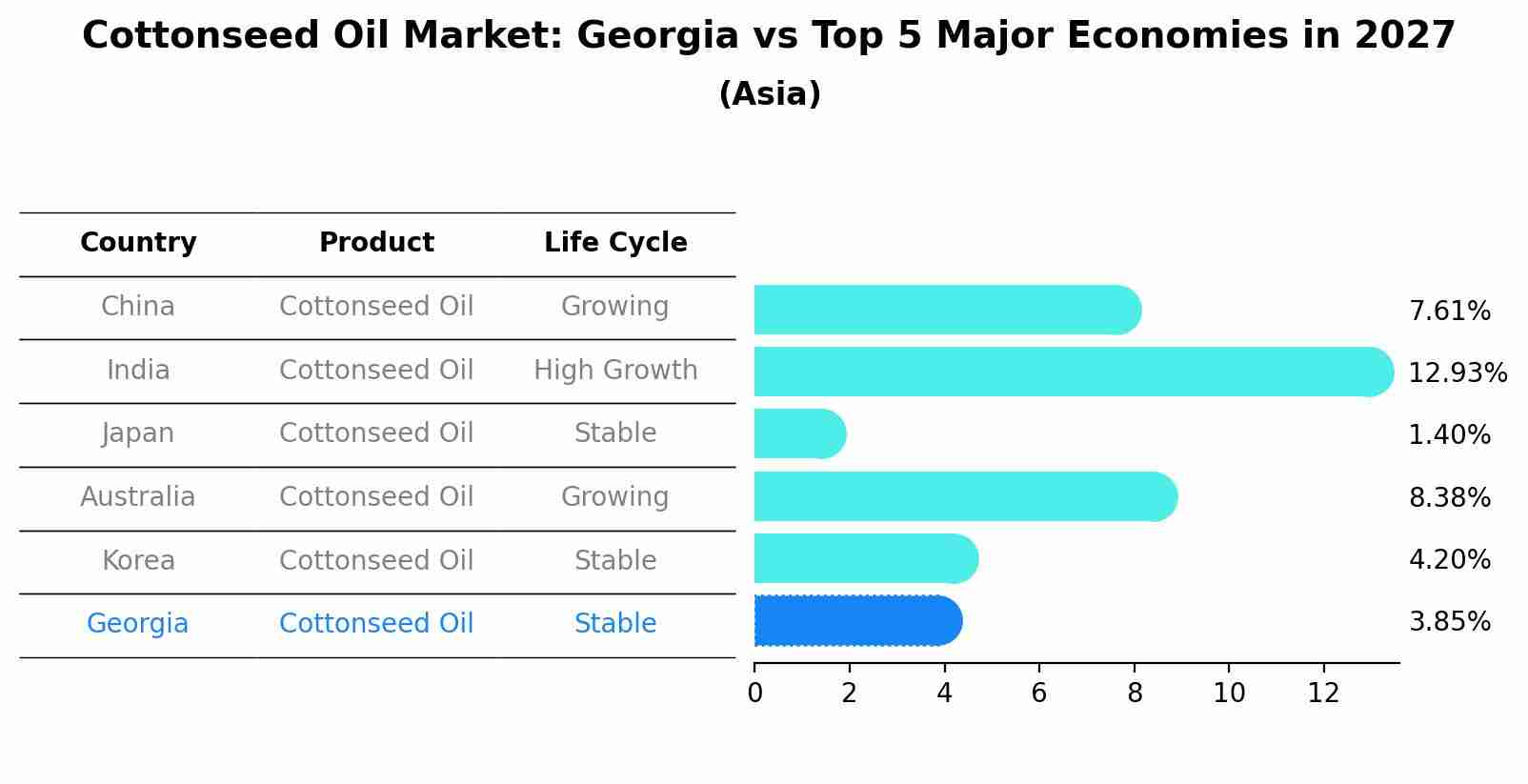
Cottonseed Oil Market: Georgia vs Top 5 Major Economies in 2027 (Asia)
The Cottonseed Oil market in Georgia is projected to grow at a stable growth rate of 3.85% by 2027, within the Asia region led by China, along with other countries like India, Japan, Australia and South Korea, collectively shaping a dynamic and evolving market environment driven by innovation and increasing adoption of emerging technologies.
Georgia Cottonseed Oil Market Overview
The Georgia cottonseed oil market focuses on the production, distribution, and consumption of oil extracted from cottonseeds. Cottonseed oil is used in various applications such as cooking oil, salad dressings, and cosmetics. Market dynamics include cotton production, oil extraction technology, health trends, and regulatory standards.
Drivers of the market
The cottonseed oil market in Georgia is driven by factors such as the increasing adoption of healthy cooking oils, rising consumer awareness about the health benefits of cottonseed oil, and its versatile applications in the food industry. Cottonseed oil is rich in antioxidants and has a high smoke point, making it suitable for various culinary purposes including frying, baking, and salad dressings. Furthermore, the growing demand for natural and non-GMO food ingredients is fueling the popularity of cottonseed oil as a healthier alternative to other cooking oils. However, fluctuations in cotton production and prices may impact the availability and pricing of cottonseed oil in the market.
Challenges of the market
The Georgia cottonseed oil market faces challenges related to competition from alternative vegetable oils and fluctuating market prices. Despite the nutritional benefits and versatility of cottonseed oil, consumers` growing preference for healthier oil options such as olive and avocado oil presents a challenge for producers. Moreover, uncertainties in global commodity markets and trade policies impact cottonseed oil prices, creating volatility and financial risk for industry stakeholders.
Government Policy of the market
Cottonseed oil is a versatile ingredient used in food, cosmetics, and industrial applications. In Georgia, the cottonseed oil market is influenced by factors such as cotton production levels, oil extraction technologies, and regulatory standards for food safety and quality. Government policies regarding agricultural subsidies, trade tariffs, and food labeling impact market dynamics and investment decisions in the cottonseed oil sector. Market players collaborate with farmers, processors, and regulatory agencies to ensure compliance with industry standards and promote sustainable practices in the cottonseed oil market in Georgia.
Key Highlights of the Report:
- Georgia Cottonseed Oil Market Outlook
- Market Size of Georgia Cottonseed Oil Market, 2024
- Forecast of Georgia Cottonseed Oil Market, 2031
- Historical Data and Forecast of Georgia Cottonseed Oil Revenues & Volume for the Period 2021-2031
- Georgia Cottonseed Oil Market Trend Evolution
- Georgia Cottonseed Oil Market Drivers and Challenges
- Georgia Cottonseed Oil Price Trends
- Georgia Cottonseed Oil Porter's Five Forces
- Georgia Cottonseed Oil Industry Life Cycle
- Historical Data and Forecast of Georgia Cottonseed Oil Market Revenues & Volume By Raw Material for the Period 2021-2031
- Historical Data and Forecast of Georgia Cottonseed Oil Market Revenues & Volume By Genetically Modified Cotton for the Period 2021-2031
- Historical Data and Forecast of Georgia Cottonseed Oil Market Revenues & Volume By Non-GM Cotton for the Period 2021-2031
- Historical Data and Forecast of Georgia Cottonseed Oil Market Revenues & Volume By End-Users for the Period 2021-2031
- Historical Data and Forecast of Georgia Cottonseed Oil Market Revenues & Volume By Retail for the Period 2021-2031
- Historical Data and Forecast of Georgia Cottonseed Oil Market Revenues & Volume By Food Processing for the Period 2021-2031
- Historical Data and Forecast of Georgia Cottonseed Oil Market Revenues & Volume By Cosmetics for the Period 2021-2031
- Historical Data and Forecast of Georgia Cottonseed Oil Market Revenues & Volume By Other Applications for the Period 2021-2031
- Georgia Cottonseed Oil Import Export Trade Statistics
- Market Opportunity Assessment By Raw Material
- Market Opportunity Assessment By End-Users
- Georgia Cottonseed Oil Top Companies Market Share
- Georgia Cottonseed Oil Competitive Benchmarking By Technical and Operational Parameters
- Georgia Cottonseed Oil Company Profiles
- Georgia Cottonseed Oil Key Strategic Recommendations






































