Georgia Hotel Furniture Market Summary
The georgia hotel furniture market was estimated at USD 541 Million in 2025 and is projected to reach USD 780 Million by 2032, growing at a CAGR of 6.2% from 2026 to 2032.
Georgia Hotel Furniture Market Year-wise Growth Rate and Key Drivers
This graph highlights how the Georgia Hotel Furniture Market has steadily grown over the past five years, supported by major growth factors.
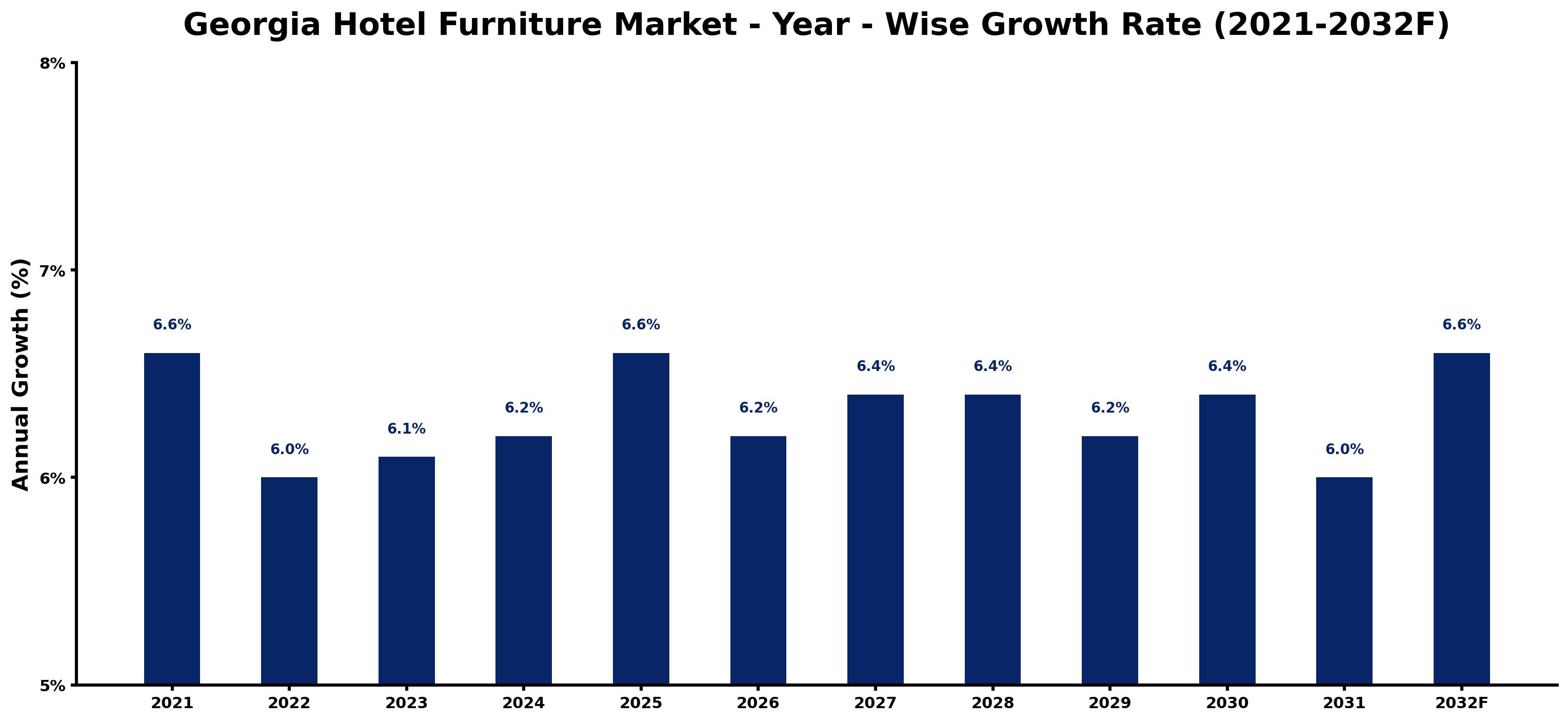
The table below presents the year wise growth rates along with the key drivers influencing the market
| Year | Growth Rate | Major Drivers |
| 2021 | 6.6% | Post-lockdown hospitality recovery spurred investments in furniture upgrades across hotels. |
| 2022 | 6.0% | Increased traveler confidence led to higher occupancy rates, driving furniture demand. |
| 2023 | 6.1% | Local sourcing trends encourage manufacturers to create region-specific hotel furniture lines. |
| 2024 | 6.2% | Sustainability practices motivate hotels to purchase eco-friendly furniture options. |
| 2025 | 6.6% | New luxury hotel developments enhance competition for innovative furniture solutions. |
| 2026 | 6.2% | Technological advancements in production streamline processes, reducing furniture costs significantly. |
| 2027 | 6.4% | Diverse market segments require tailored furniture designs, broadening supplier opportunities. |
| 2028 | 6.4% | Rising tourism numbers bolster the need for functional and aesthetic hotel interiors. |
| 2029 | 6.2% | Collaboration with local artisans enriches design authenticity, appealing to eco-conscious travelers. |
| 2030 | 6.4% | Increased digitalization enables enhanced online furniture sales for hotels and resorts. |
| 2031 | 6.0% | Greater focus on wellness amenities promotes demand for specialized furniture solutions. |
| 2032 | 6.6% | Expansion of boutique hotels emphasizes personalized furniture, creating premium market niches. |
Note - Market size estimations and growth projections presented in this report are based on 6Wresearch's advanced forecasting approach, validated with industry datasets as of June 2026.
Georgia Hotel Furniture Market Synopsis
The Georgia Hotel Furniture Market is projected to reach 6.2% and witness significant growth during the forecast period (2026-2032). This market is defined by a robust demand for high-quality, durable, and aesthetically pleasing furniture options tailored to the unique needs of the hospitality sector. As the number of hotels, resorts, and other accommodation facilities continues to rise across Georgia, hoteliers are increasingly focused on enhancing both the functionality and visual appeal of their spaces, driving the need for specialized furniture solutions.
Georgia Hotel Furniture Market Trends and Opportunities
In the current landscape, the Georgia Hotel Furniture Market is notable for its emphasis on sustainability and eco-friendliness. As more hotels align with the principles of sustainable tourism, there is a marked shift in preference towards furniture that not only exemplifies style but also adheres to environmentally responsible manufacturing practices. This transition is highlighted by several key trends:
- A surge in demand for custom-designed furniture pieces that reflect the unique branding of each hotel, allowing for a tailored and memorable guest experience.
- An increasing preference for durable materials capable of withstanding the rigors of frequent use in hospitality settings, ensuring longevity and reduced replacement costs.
- Growing awareness among hotel owners regarding the impact of furniture choices on overall guest satisfaction and property aesthetics.
- A notable trend towards minimalist and modern furniture designs, which enhance the ambiance of hotels while maximising space efficiency.
- Opportunities for collaboration between local artisans and hotel chains to create unique furniture collections that reflect the cultural essence of Georgia.
Georgia Hotel Furniture Market Challenges and Restraints
Despite the flourishing opportunities, the Georgia Hotel Furniture Market also presents several challenges that stakeholders must navigate effectively:
- The ongoing demand for high-quality furniture that meets aesthetic and functional requirements can lead to supply chain complexities, particularly in sourcing durable materials.
- Customization can result in lengthy production timelines and increased costs, which may deter some hotel owners from pursuing bespoke furniture options.
- The highly competitive nature of the market necessitates continuous innovation and adaptation to changing consumer preferences, requiring manufacturers to stay informed about the latest trends.
- Fluctuating material and transportation costs can adversely affect pricing strategies, impacting profit margins for suppliers and increasing purchasing challenges for hoteliers.
- The need for effective supply chain management becomes paramount, as inefficiencies can disrupt the timely delivery of furniture to meet hotel opening or renovation schedules.
Georgia Hotel Furniture Market Investment Opportunities
The growth trajectory of the Georgia Hotel Furniture Market presents several lucrative investment opportunities. As the hospitality sector continues to thrive, spurred by an influx of tourists attracted to Georgia's unique offerings, there is a pressing need for modernized furniture solutions. The following investment avenues are particularly noteworthy:
- Investing in innovative furniture designs that focus on sustainability can attract hotels looking to enhance their eco-friendly initiatives.
- Establishing partnerships with local manufacturers can provide access to unique furniture styles, catering to the demand for authenticity in hotel interiors.
- Developing a distribution network for furniture suppliers can facilitate immediate access to evolving market demands, especially for high-quality and durable pieces.
- Positioning investments towards modular and versatile furniture can address the shifting needs of hotels aimed at maximizing room functionality.
- Leveraging technological advancements in furniture production could yield cost efficiencies and improved product quality, attracting discerning hotel clients.
Georgia Hotel Furniture Market Government Investment and Initiatives
Government policies play an essential role in shaping the Georgia Hotel Furniture Market. The state has implemented regulations that ensure all hotel furniture meets essential safety and quality standards, particularly concerning fire safety and the use of non-hazardous materials. Additionally, initiatives encouraging sustainable manufacturing practices are gaining traction:
- The promotion of eco-friendly materials in furniture production aligns with broader environmental goals set by the government, helping to mitigate the impact of the hospitality sector on the environment.
- Tax incentives and subsidies are potentially available for businesses proactively investing in energy-efficient furniture options, further encouraging sustainable practices.
- Public investment in tourism infrastructure, including hotels, creates a ripple effect, increasing demand for quality furniture solutions to complement new developments.
- Collaboration between government agencies and the hotel sector can lead to initiatives aimed at improving the overall quality of accommodations in Georgia.
- Regulatory frameworks are being revised to adapt to current industry needs, ensuring a conducive operating environment for furniture manufacturers serving the hospitality sector.
Georgia Hotel Furniture Market Latest Developments (May 2025 - June 2026)
During the period from May 2025 to June 2026, the Georgia Hotel Furniture Market has experienced several noteworthy developments that signal the direction of industry trends. There has been a marked increase in awareness surrounding sustainable practices, with more hotels opting for eco-friendly furniture options that align with their corporate social responsibility goals. Furthermore, customization in furniture offerings has become a focal point for hoteliers, as they seek to differentiate their establishments through unique interior designs. Innovations in material technology have also begun to surface, providing opportunities for creating furniture that is not only durable but also lightweight and versatile. Networking events and trade shows have facilitated partnerships between manufacturers and hoteliers, paving the way for collaboration in furniture development. Additionally, the state government's endorsements of sustainable practices have seen a favorable response from the market, with more players exploring greener alternatives in their productions.
Georgia Hotel Furniture Market - Key Attractiveness of the Report
- 10 Years of Market Numbers
- Historical Data Starting from 2022 to 2025
- Base Year: 2025
- Forecast Data until 2032
- Key Performance Indicators Impacting the Market
- Major Upcoming Developments and Projects
Key Highlights of the Report:
- Georgia Hotel Furniture Market Outlook
- Market Size of Georgia Hotel Furniture Market, 2025
- Forecast of Georgia Hotel Furniture Market, 2032F
- Historical Data and Forecast of Georgia Hotel Furniture Revenues & Volume for the Period 2022-2032F
- Georgia Hotel Furniture Market Trend Evolution
- Georgia Hotel Furniture Market Drivers and Challenges
- Georgia Hotel Furniture Price Trends
- Georgia Hotel Furniture Porter's Five Forces
- Georgia Hotel Furniture Industry Life Cycle
- Historical Data and Forecast of Georgia Hotel Furniture Market Revenues & Volume By Product Types for the Period 2022-2032F
- Historical Data and Forecast of Georgia Hotel Furniture Market Revenues & Volume By Table and Chairs for the Period 2022-2032F
- Historical Data and Forecast of Georgia Hotel Furniture Market Revenues & Volume By Hotel Beds for the Period 2022-2032F
- Historical Data and Forecast of Georgia Hotel Furniture Market Revenues & Volume By Hotel Casegoods for the Period 2022-2032F
- Historical Data and Forecast of Georgia Hotel Furniture Market Revenues & Volume By Other for the Period 2022-2032F
- Historical Data and Forecast of Georgia Hotel Furniture Market Revenues & Volume By Applications for the Period 2022-2032F
- Historical Data and Forecast of Georgia Hotel Furniture Market Revenues & Volume By Business Hotel for the Period 2022-2032F
- Historical Data and Forecast of Georgia Hotel Furniture Market Revenues & Volume By Luxury Hotel for the Period 2022-2032F
- Historical Data and Forecast of Georgia Hotel Furniture Market Revenues & Volume By Boutique Hotel for the Period 2022-2032F
- Historical Data and Forecast of Georgia Hotel Furniture Market Revenues & Volume By Other for the Period 2022-2032F
- Georgia Hotel Furniture Import Export Trade Statistics
- Market Opportunity Assessment By Product Types
- Market Opportunity Assessment By Applications
- Georgia Hotel Furniture Top Companies Market Share
- Georgia Hotel Furniture Competitive Benchmarking By Technical and Operational Parameters
- Georgia Hotel Furniture Company Profiles
- Georgia Hotel Furniture Key Strategic Recommendations






































