Georgia Office Chair Market Size Growth Rate
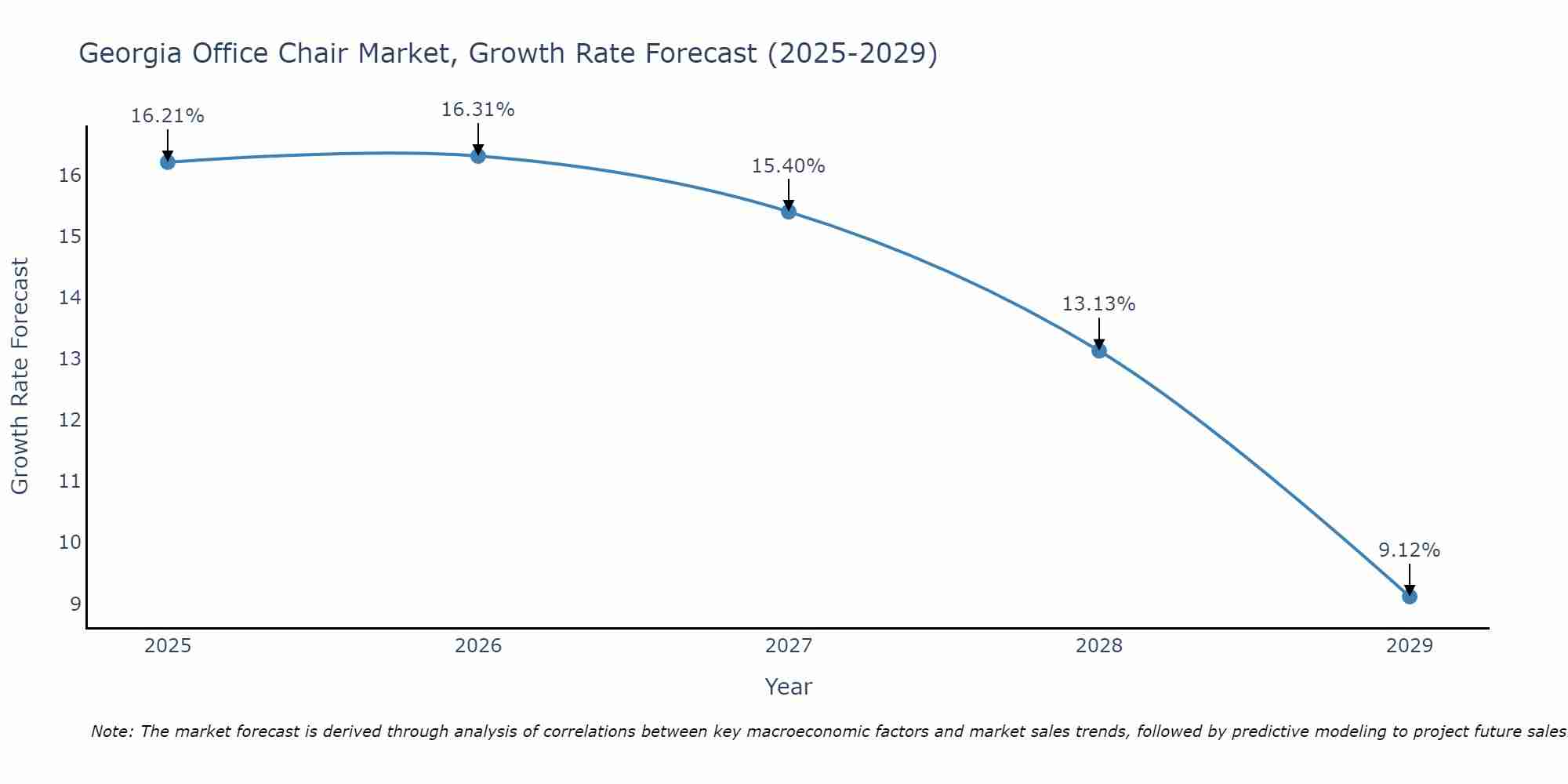
The Georgia Office Chair Market is projected to witness mixed growth rate patterns during 2025 to 2029. The growth rate begins at 16.21% in 2025, climbs to a high of 16.31% in 2026, and moderates to 9.12% by 2029.
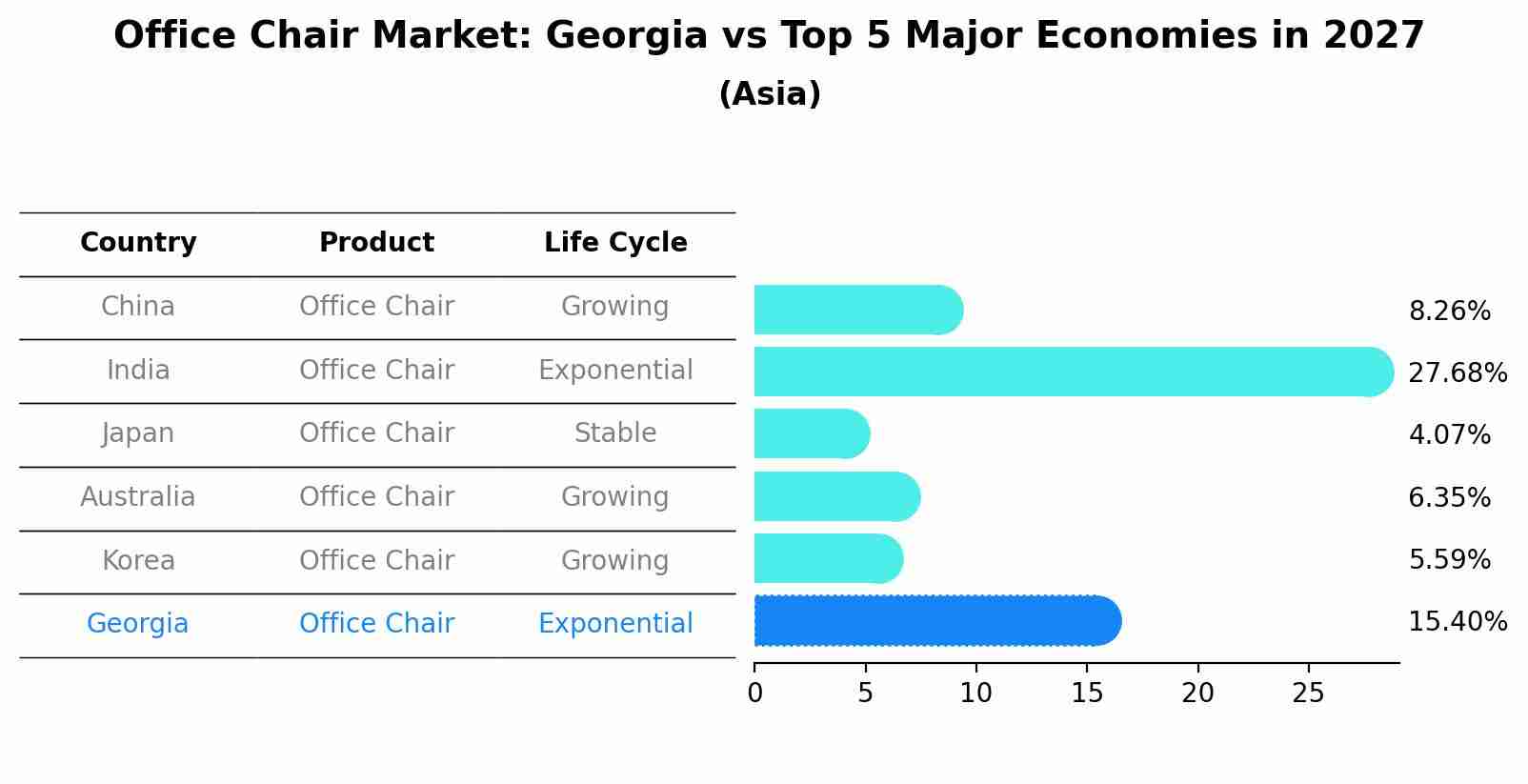
Office Chair Market: Georgia vs Top 5 Major Economies in 2027 (Asia)
By 2027, the Office Chair market in Georgia is anticipated to reach a growth rate of 15.40%, as part of an increasingly competitive Asia region, where China remains at the forefront, supported by India, Japan, Australia and South Korea, driving innovations and market adoption across sectors.
Georgia Office Chair Market Synopsis
The Georgia office chair market is a competitive and growing industry characterized by a diverse range of products catering to various customer preferences. With the increasing trend towards ergonomic designs and comfortable seating solutions in office spaces, there is a growing demand for high-quality office chairs in Georgia. Key players in the market offer a wide selection of chairs including executive chairs, task chairs, ergonomic chairs, and gaming chairs, targeting different customer segments. Online sales channels have gained significant traction in recent years, providing consumers with convenient access to a wide range of office chair options. The market is also influenced by factors such as price competitiveness, product innovation, and sustainability initiatives. Overall, the Georgia office chair market is dynamic, with opportunities for growth and market expansion.
Georgia Office Chair Market Trends
The Georgia Office Chair Market is currently experiencing a shift towards ergonomic designs and sustainability. With an increasing focus on employee well-being and comfort in the workplace, there is a growing demand for office chairs that offer adjustable features, lumbar support, and overall ergonomic support to reduce strain and improve productivity. Additionally, there is a noticeable trend towards sustainable materials and manufacturing processes, as companies and consumers alike are becoming more environmentally conscious. This has led to the rise of office chairs made from recycled materials, eco-friendly fabrics, and energy-efficient production methods. Overall, the Georgia Office Chair Market is moving towards a more health-conscious and environmentally friendly direction to meet the evolving needs and preferences of modern office spaces.
Georgia Office Chair Market Challenges
The Georgia office chair market faces several challenges, including intense competition from both domestic and international manufacturers offering a wide range of products at varying price points. Another challenge is the increasing trend towards remote work, which has reduced the demand for office chairs as companies downsize their physical office spaces. Additionally, fluctuations in raw material prices and supply chain disruptions can impact the manufacturing and pricing of office chairs in the market. Furthermore, changing consumer preferences for ergonomically designed, sustainable, and aesthetically pleasing office chairs present a challenge for manufacturers to innovate and adapt to these evolving trends to stay competitive in the Georgia market.
Georgia Office Chair Market Investment Opportunities
The Georgia office chair market presents various investment opportunities due to the growing demand for ergonomic and comfortable seating solutions in the corporate and home office sectors. With the increasing trend towards remote work and flexible office setups, there is a rising need for high-quality, adjustable chairs that promote good posture and productivity. Investors could consider opportunities in manufacturing or distributing ergonomic office chairs tailored to the specific needs of the Georgia market. Additionally, there is potential for innovation in sustainable materials and smart features to cater to the eco-conscious consumer base. Strategic partnerships with local businesses and interior designers could also enhance market penetration and brand visibility in Georgia`s competitive office furniture industry.
Jordan Agar Market Government Policies
The government policies related to the Georgia Office Chair Market primarily revolve around safety standards, taxation, and environmental regulations. The Georgia government mandates that all office chairs sold in the state must comply with safety standards set by relevant regulatory bodies to ensure consumer protection. Additionally, taxation policies such as sales tax rates on office chairs impact pricing and consumer purchasing behavior. Environmental regulations also play a role in the market, with measures in place to promote sustainability and reduce the environmental impact of office chair manufacturing and disposal processes. Overall, these government policies aim to ensure product quality, consumer safety, and environmental responsibility within the Georgia Office Chair Market.
Georgia Office Chair Market Future Outlook
The future outlook for the Georgia Office Chair Market appears promising, fueled by factors such as the growing number of businesses in the region, increasing focus on ergonomic workspaces, and a shift towards remote work arrangements post-pandemic. As companies strive to enhance employee comfort and productivity, demand for high-quality, adjustable office chairs is expected to rise. Additionally, the trend of flexible office layouts and collaborative work environments will drive the need for versatile seating solutions. With a strong economy and a thriving business landscape in Georgia, the office chair market is likely to experience steady growth in the coming years, presenting opportunities for manufacturers and retailers to innovate and cater to evolving consumer preferences.
Key Highlights of the Report:
- Georgia Office Chair Market Outlook
- Market Size of Georgia Office Chair Market, 2021
- Forecast of Georgia Office Chair Market, 2031
- Historical Data and Forecast of Georgia Office Chair Revenues & Volume for the Period 2018 - 2031
- Georgia Office Chair Market Trend Evolution
- Georgia Office Chair Market Drivers and Challenges
- Georgia Office Chair Price Trends
- Georgia Office Chair Porter's Five Forces
- Georgia Office Chair Industry Life Cycle
- Historical Data and Forecast of Georgia Office Chair Market Revenues & Volume By Product Type for the Period 2018 - 2031
- Historical Data and Forecast of Georgia Office Chair Market Revenues & Volume By Executive Office for the Period 2018 - 2031
- Historical Data and Forecast of Georgia Office Chair Market Revenues & Volume By Ergonomic for the Period 2018 - 2031
- Historical Data and Forecast of Georgia Office Chair Market Revenues & Volume By Conference for the Period 2018 - 2031
- Historical Data and Forecast of Georgia Office Chair Market Revenues & Volume By Material for the Period 2018 - 2031
- Historical Data and Forecast of Georgia Office Chair Market Revenues & Volume By Mesh for the Period 2018 - 2031
- Historical Data and Forecast of Georgia Office Chair Market Revenues & Volume By Lather for the Period 2018 - 2031
- Historical Data and Forecast of Georgia Office Chair Market Revenues & Volume By Plastic for the Period 2018 - 2031
- Historical Data and Forecast of Georgia Office Chair Market Revenues & Volume By Fabric for the Period 2018 - 2031
- Historical Data and Forecast of Georgia Office Chair Market Revenues & Volume By Sales Channel for the Period 2018 - 2031
- Historical Data and Forecast of Georgia Office Chair Market Revenues & Volume By Offline for the Period 2018 - 2031
- Historical Data and Forecast of Georgia Office Chair Market Revenues & Volume By Online for the Period 2018 - 2031
- Georgia Office Chair Import Export Trade Statistics
- Market Opportunity Assessment By Product Type
- Market Opportunity Assessment By Material
- Market Opportunity Assessment By Sales Channel
- Georgia Office Chair Top Companies Market Share
- Georgia Office Chair Competitive Benchmarking By Technical and Operational Parameters
- Georgia Office Chair Company Profiles
- Georgia Office Chair Key Strategic Recommendations






































