Georgia Propane Market Size Growth Rate
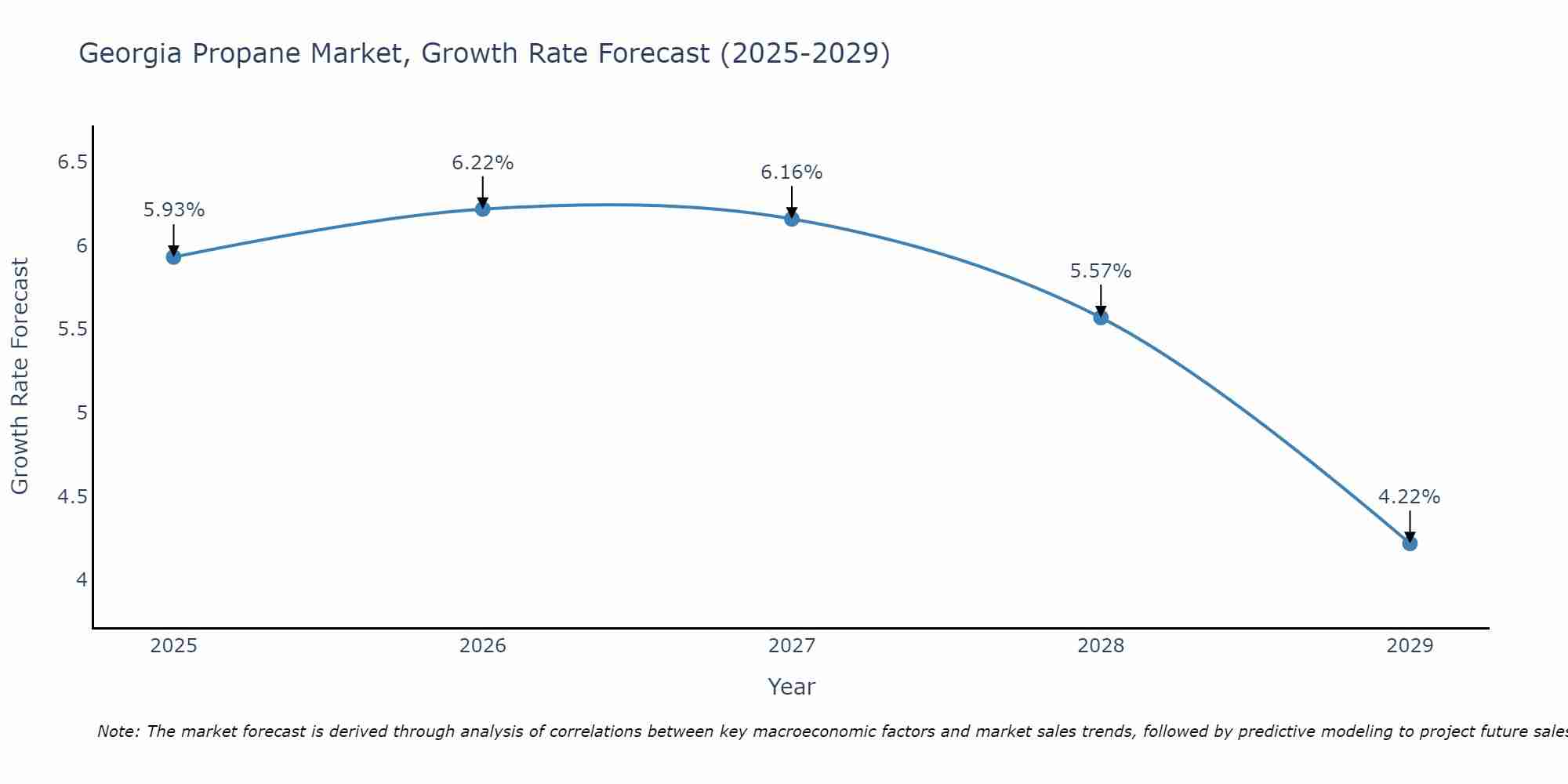
The Georgia Propane Market is projected to witness mixed growth rate patterns during 2025 to 2029. Growth accelerates to 6.22% in 2026, following an initial rate of 5.93%, before easing to 4.22% at the end of the period.
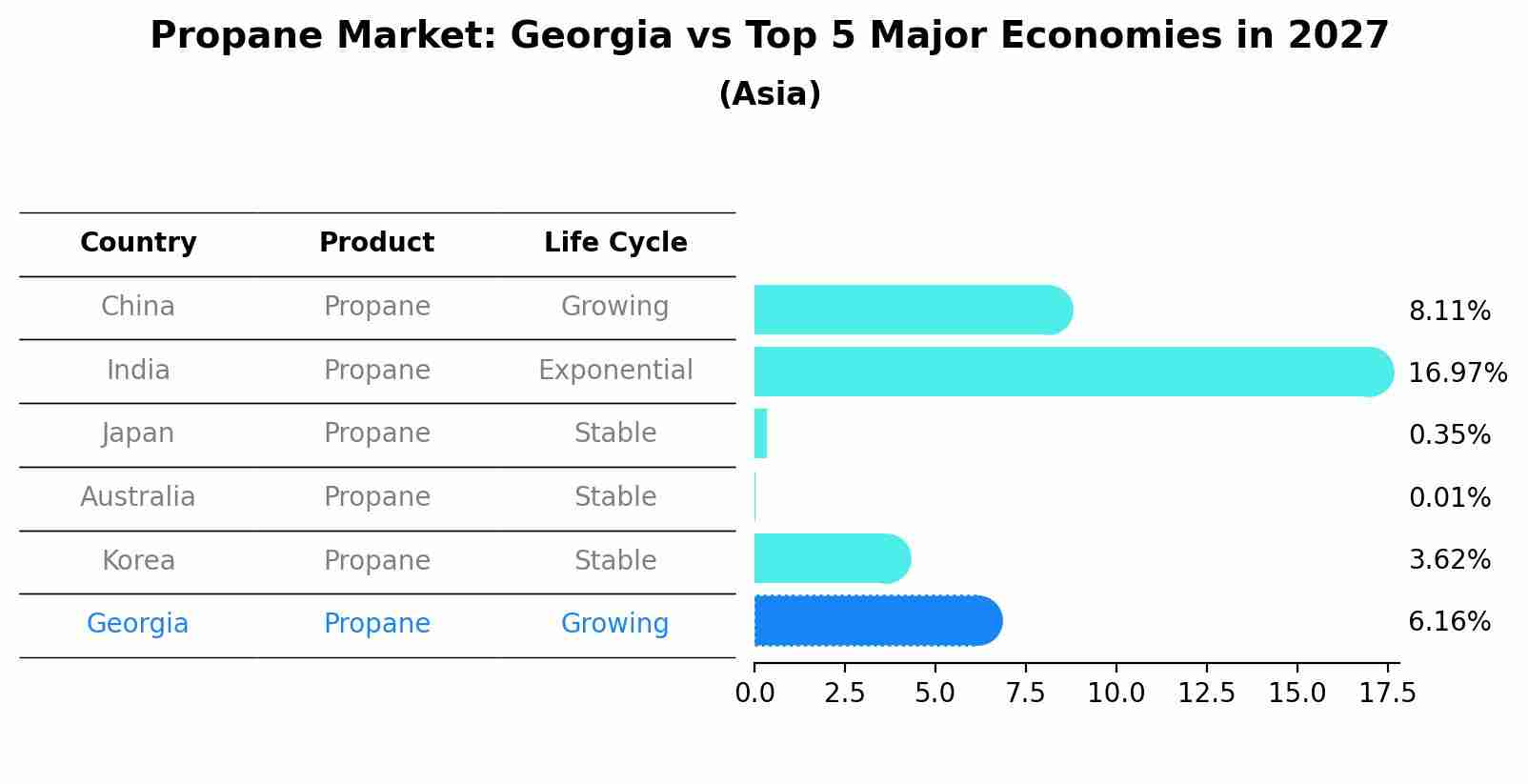
Propane Market: Georgia vs Top 5 Major Economies in 2027 (Asia)
The Propane market in Georgia is projected to grow at a growing growth rate of 6.16% by 2027, within the Asia region led by China, along with other countries like India, Japan, Australia and South Korea, collectively shaping a dynamic and evolving market environment driven by innovation and increasing adoption of emerging technologies.
Georgia Propane Market Overview
The Georgia propane market is witnessing steady growth fueled by the demand for clean and efficient energy solutions in residential, commercial, and industrial sectors. Propane, also known as liquefied petroleum gas (LPG), is a versatile fuel used for heating, cooking, transportation, and power generation. With increasing awareness of environmental sustainability and energy independence, consumers and businesses in Georgia are switching to propane for its lower emissions, cost-effectiveness, and versatility compared to traditional fuels such as electricity and natural gas, driving market expansion and adoption of propane-based solutions in the region.
Drivers of the market
The Georgia Propane Market is witnessing growth driven by factors such as the increasing demand for clean and efficient energy sources, the expansion of propane infrastructure, and the versatility of propane applications. Propane, also known as liquefied petroleum gas (LPG), is used for heating, cooking, transportation, agriculture, and industrial processes. With the growing emphasis on energy diversification, emission reduction, and energy security, the demand for propane is on the rise in Georgia. Moreover, the development of propane autogas infrastructure, incentives for alternative fuels, and technological advancements in propane appliances are driving market expansion as consumers and businesses seek cost-effective and sustainable energy solutions.
Challenges of the market
The Georgia propane market faces challenges related to supply chain dynamics, regulatory compliance, and market competition. Propane, a versatile fuel used for heating, cooking, and transportation, plays a significant role in residential, commercial, and industrial sectors. However, ensuring reliable propane supply and distribution to meet seasonal demand fluctuations, weather-related disruptions, and infrastructure constraints poses challenges for propane suppliers and distributors in terms of logistics planning, inventory management, and supply chain resilience. Moreover, complying with safety regulations, environmental standards, and transportation requirements for propane handling, storage, and distribution adds complexity to regulatory compliance efforts and operational risk management. Additionally, competing in a competitive market landscape, with the presence of both national propane suppliers and local distributors, demands differentiation, customer service excellence, and pricing strategies. Furthermore, navigating market dynamics, such as changes in energy policies, fuel pricing, and consumer preferences, presents challenges in terms of market forecasting, strategic planning, and business development. Overcoming these challenges necessitates collaboration between propane industry stakeholders, regulatory agencies, and consumer advocacy groups to ensure safe, reliable, and affordable propane supply and distribution in the Georgia propane market.
Government Policy of the market
The government of Georgia recognizes the importance of propane as a clean, efficient, and versatile energy source for residential, commercial, and industrial applications. Policies aim to support the growth and sustainability of the propane market by fostering infrastructure development, safety standards, and consumer awareness. Regulatory frameworks address standards for propane storage, distribution, and usage to ensure the safety of propane handling and minimize environmental impact. Additionally, support for energy efficiency programs, renewable propane production, and market competition contributes to the affordability and accessibility of propane for Georgia residents and businesses. By fostering collaboration between propane suppliers, distributors, and regulatory agencies, Georgia aims to enhance its energy resilience and contribute to sustainable development goals.
Key Highlights of the Report:
- Georgia Propane Market Outlook
- Market Size of Georgia Propane Market, 2024
- Forecast of Georgia Propane Market, 2031
- Historical Data and Forecast of Georgia Propane Revenues & Volume for the Period 2021-2031
- Georgia Propane Market Trend Evolution
- Georgia Propane Market Drivers and Challenges
- Georgia Propane Price Trends
- Georgia Propane Porter's Five Forces
- Georgia Propane Industry Life Cycle
- Historical Data and Forecast of Georgia Propane Market Revenues & Volume By Applications for the Period 2021-2031
- Historical Data and Forecast of Georgia Propane Market Revenues & Volume By Industrial for the Period 2021-2031
- Historical Data and Forecast of Georgia Propane Market Revenues & Volume By Commercial for the Period 2021-2031
- Historical Data and Forecast of Georgia Propane Market Revenues & Volume By Residential for the Period 2021-2031
- Historical Data and Forecast of Georgia Propane Market Revenues & Volume By Transportation for the Period 2021-2031
- Historical Data and Forecast of Georgia Propane Market Revenues & Volume By Agriculture for the Period 2021-2031
- Historical Data and Forecast of Georgia Propane Market Revenues & Volume By Chemicals and Refineries for the Period 2021-2031
- Georgia Propane Import Export Trade Statistics
- Market Opportunity Assessment By Applications
- Georgia Propane Top Companies Market Share
- Georgia Propane Competitive Benchmarking By Technical and Operational Parameters
- Georgia Propane Company Profiles
- Georgia Propane Key Strategic Recommendations






































