Georgia Used Car Market Summary
The georgia used car market was estimated at USD 247 Million in 2025 and is projected to reach USD 270 Million by 2032, growing at a CAGR of 1.2% from 2026 to 2032.
Georgia Used Car Market Year-wise Growth Rate and Key Drivers
This graph highlights how the Georgia Used Car Market has steadily grown over the past five years, supported by major growth factors.
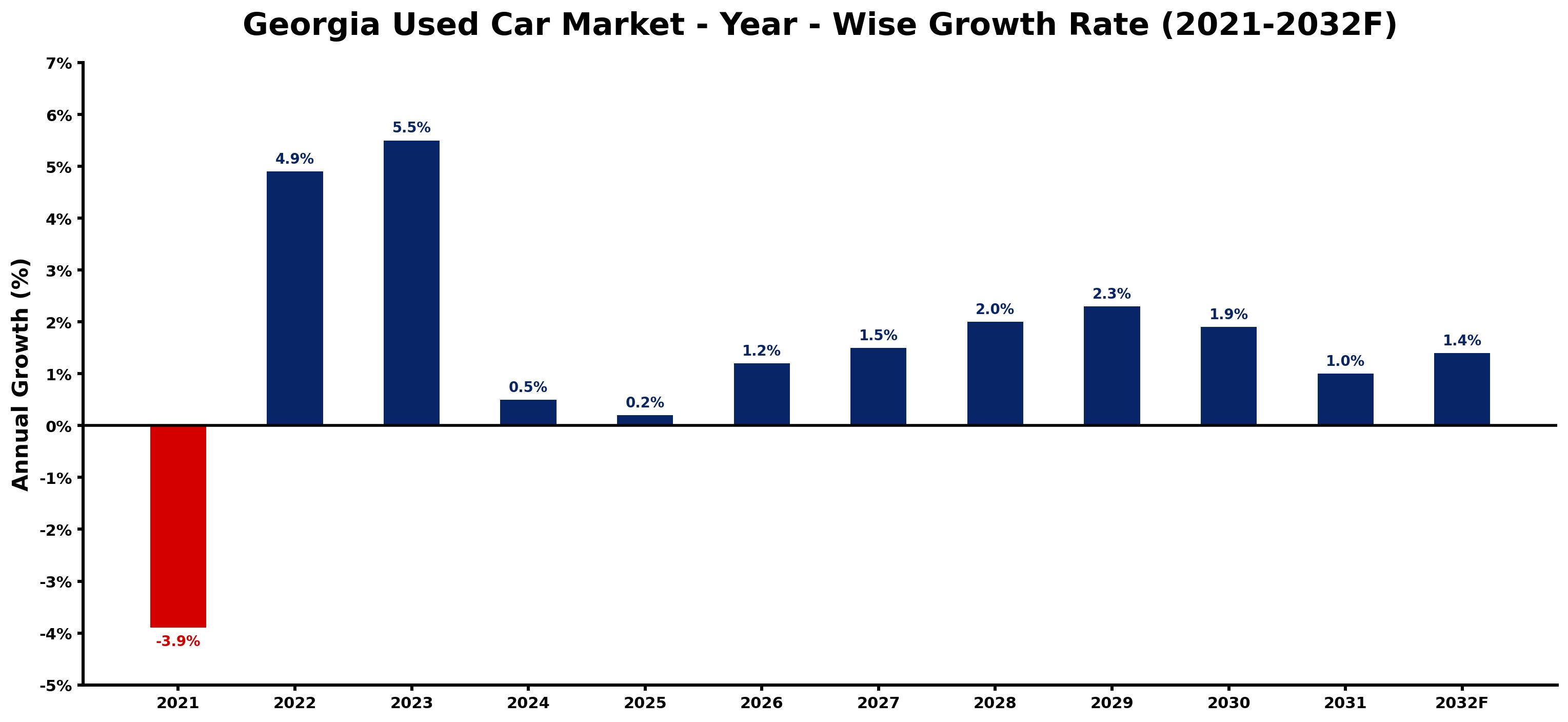
The table below presents the year wise growth rates along with the key drivers influencing the market
| Year | Growth Rate | Major Drivers |
| 2021 | -3.9% | A surge in remote work led to reduced demand for personal vehicles, particularly in urban areas. |
| 2022 | 4.9% | Supply chain disruptions prompt buyers to explore used cars amid new vehicle shortages. |
| 2023 | 5.5% | Economic recovery stimulates consumer spending, increasing interest in budget-friendly used vehicles. |
| 2024 | 0.5% | Rising fuel prices lead to heightened demand for fuel-efficient used car options. |
| 2025 | 0.2% | Local dealership expansions enhance availability, appealing to diverse buyer demographics across the state. |
| 2026 | 1.2% | Digital marketing strategies gain traction, connecting buyers with desired used car models online. |
| 2027 | 1.5% | Consumer financing options improve, making used cars more accessible to first-time buyers. |
| 2028 | 2.0% | Increased trade-in values incentivize owners to sell, boosting inventory for dealerships. |
| 2029 | 2.3% | Technological advancements enable better vehicle inspections, increasing buyer confidence in used options. |
| 2030 | 1.9% | Emerging trends in eco-friendly vehicles drive interest in hybrid and electric used cars. |
| 2031 | 1.0% | Community events foster relationships between dealerships and local buyers, enhancing market engagement. |
| 2032 | 1.4% | Shifts in urban living preferences encourage used car purchases among city dwellers prioritizing mobility. |
Note - Market size estimations and growth projections presented in this report are based on 6Wresearch's advanced forecasting approach, validated with industry datasets as of June 2026.
Georgia Used Car Market Synopsis
The Georgia Used Car Market is projected to reach 1.2% and witness significant growth during the forecast period (2026-2032). As one of the most dynamic sectors in the state, the market is driven by a combination of factors, including a steadily growing population, a robust economy, and a high rate of automobile ownership. The diverse automotive preferences of Georgia residents favor practical vehicle options, particularly trucks and SUVs, which dominate the used car landscape in the region.
Georgia Used Car Market Growth Drivers
Several key factors are propelling the growth of the Georgia Used Car Market. The state's expanding population, often accompanied by an influx of new residents, creates a persistent demand for vehicles. Additionally, economic stability fosters consumer confidence, encouraging purchases in the used car sector. Furthermore, the rising ownership rate contributes to an increased turnover in used vehicles, which feeds into the market cycle.
- The growing preference for fuel-efficient vehicles is transforming buyer behavior, as consumers increasingly seek affordable alternatives amid rising fuel costs.
- Enhanced online shopping platforms allow consumers to conveniently navigate and purchase vehicles, thereby expanding market reach and accessibility.
- This market is further buoyed by a surge in interest in certified pre-owned vehicles, which provide an appealing mix of affordability and reliability.
- Changing demographics among buyers, including younger generations more inclined to purchase used cars, are reshaping market dynamics.
- Advancements in technology have enabled dealerships to pivot towards digital marketing strategies, enhancing their competitiveness within the market.
Georgia Used Car Market Trends and Opportunities
As the Georgia Used Car Market evolves, it is marked by several notable trends that present opportunities for both buyers and sellers. The increased awareness of environmental issues has led to a rising demand for eco-friendly vehicles, including hybrids and electric cars, among consumers seeking sustainable transportation options.
- This trend aligns with the growing availability of these vehicle types in the used car market, attracting eco-conscious buyers.
- Online platforms are not only facilitating purchases but also offering enhanced transparency, allowing users to access comprehensive vehicle history, which is crucial for building consumer trust.
- Convenience remains a key factor in the buying process, with many consumers preferring online research and selection, followed by streamlined purchase processes.
- The emphasis on competitive pricing continues to shape the market, with buyers increasingly sensitive to vehicle condition, mileage, and overall value.
- Dealerships adopting innovative inventory management practices are better positioned to adapt to changing consumer preferences and enhance sales efficiency.
Georgia Used Car Market Challenges and Restraints
While the Georgia Used Car Market is poised for growth, it also faces several challenges that could impact its trajectory. A common concern among consumers is skepticism regarding the quality and reliability of pre-owned vehicles, which can hinder purchase decisions.
- The competitive landscape features numerous dealerships vying for market share, which can lead to aggressive pricing strategies that may affect profitability.
- Fluctuating demand, driven by economic conditions, can create instability for dealers in their inventory management and sales forecasting.
- Ensuring transparency in vehicle pricing and history is vital to maintaining consumer trust, but it often requires additional resources from dealerships.
- Complex regulations regarding vehicle sales and the need to navigate paperwork can create barriers, particularly for new entrants in the market.
- Furthermore, the rise of online platforms necessitates that traditional dealerships invest in digital tools and marketing strategies to remain competitive, adding financial pressure.
Georgia Used Car Market Investment Opportunities
Investors looking to capitalize on the Georgia Used Car Market will find a range of opportunities. The increasing demand for affordable vehicles positions the used car sector as an attractive proposition for those aiming to establish dealerships.
- Setting up a dealership in high-traffic areas can cater to the diverse needs of consumers seeking reliable vehicles, offering a wide selection of makes and models.
- Investing in online marketplaces or mobile applications designed for buying and selling used cars can tap into a rapidly growing segment of digitally-savvy consumers.
- Vehicle inspection and certification services present a unique opportunity to enhance buyer confidence, thereby adding value to pre-owned vehicles sold through dealerships.
- Developing partnerships with local businesses or service stations can aid in creating a comprehensive ecosystem that supports consumers throughout their vehicle ownership journey.
- Capitalizing on the trend toward sustainability, investors can focus on acquiring and reselling eco-friendly vehicles, catering to a growing demographic of environmentally-conscious buyers.
Georgia Used Car Market Government Investment and Initiatives
The Georgia Used Car Market operates within a framework of government policies designed to regulate the industry and safeguard consumer interests. State regulations require dealers to disclose vehicle histories, ensuring transparency in sales practices.
- Licensing requirements for all used car dealers are enforced, ensuring a standardized approach to vehicle sales and consumer protection.
- Advertising regulations mandate that dealers provide clear and accurate information about pricing and vehicle conditions, contributing to fair competition.
- The state also stipulates warranty provisions for certain used vehicles, bolstering consumer confidence against potential defects.
- Government initiatives aimed at promoting the sale of eco-friendly vehicles encourage the adoption of sustainable practices within the used car market.
- Public awareness campaigns by state agencies further educate consumers about their rights and options in the used car market, enhancing overall trust in the industry.
Georgia Used Car Market Latest Developments (May 2025 - June 2026)
In recent months, the Georgia Used Car Market has undergone several developments that signal a shift in industry dynamics. There has been an increasing push towards incorporating digital technology in the sales process, with many dealerships adopting new platforms to improve customer engagement and streamline transactions.
- Heightened focus on customer experience has led to the emergence of online tools that allow consumers to perform comprehensive research on vehicles before making a purchase.
- There has been a noticeable uptick in partnerships between traditional dealerships and online vehicle marketplaces, blurring the lines between physical and digital sales channels.
- Efforts to increase the availability of hybrid and electric vehicles in the used car market have been prioritized, aligning with consumer demand for more sustainable options.
- Moreover, various dealerships are enhancing their service offerings, including warranty programs and post-sale services, to attract more customers.
- The overall trend points towards increasing transparency and competitiveness in pricing, reflecting the growing influence of informed consumers in the marketplace.
Georgia Used Car Market - Key Attractiveness of the Report
- 10 Years of Market Numbers
- Historical Data Starting from 2022 to 2025
- Base Year: 2025
- Forecast Data until 2032
- Key Performance Indicators Impacting the Market
- Major Upcoming Developments and Projects
Key Highlights of the Report:
- Georgia Used Car Market Outlook
- Market Size of Georgia Used Car Market, 2025
- Forecast of Georgia Used Car Market, 2032F
- Historical Data and Forecast of Georgia Used Car Revenues & Volume for the Period 2022-2032F
- Georgia Used Car Market Trend Evolution
- Georgia Used Car Market Drivers and Challenges
- Georgia Used Car Price Trends
- Georgia Used Car Porter's Five Forces
- Georgia Used Car Industry Life Cycle
- Historical Data and Forecast of Georgia Used Car Market Revenues & Volume By Vehicle Type for the Period 2022-2032F
- Historical Data and Forecast of Georgia Used Car Market Revenues & Volume By Hatchbacks for the Period 2022-2032F
- Historical Data and Forecast of Georgia Used Car Market Revenues & Volume By Sedan for the Period 2022-2032F
- Historical Data and Forecast of Georgia Used Car Market Revenues & Volume By Sports Utility Vehicle for the Period 2022-2032F
- Historical Data and Forecast of Georgia Used Car Market Revenues & Volume By Others for the Period 2022-2032F
- Historical Data and Forecast of Georgia Used Car Market Revenues & Volume By Vendor for the Period 2022-2032F
- Historical Data and Forecast of Georgia Used Car Market Revenues & Volume By Organized for the Period 2022-2032F
- Historical Data and Forecast of Georgia Used Car Market Revenues & Volume By Unorganized for the Period 2022-2032F
- Historical Data and Forecast of Georgia Used Car Market Revenues & Volume By Fuel Type for the Period 2022-2032F
- Historical Data and Forecast of Georgia Used Car Market Revenues & Volume By Gasoline for the Period 2022-2032F
- Historical Data and Forecast of Georgia Used Car Market Revenues & Volume By Diesel for the Period 2022-2032F
- Historical Data and Forecast of Georgia Used Car Market Revenues & Volume By Alternative Fuel Vehicles for the Period 2022-2032F
- Georgia Used Car Import Export Trade Statistics
- Market Opportunity Assessment By Vehicle Type
- Market Opportunity Assessment By Vendor
- Market Opportunity Assessment By Fuel Type
- Georgia Used Car Top Companies Market Share
- Georgia Used Car Competitive Benchmarking By Technical and Operational Parameters
- Georgia Used Car Company Profiles
- Georgia Used Car Key Strategic Recommendations






































