Germany Bakeware Market Summary
The germany bakeware market was estimated at USD 238 Million in 2025 and is projected to reach USD 257 Million by 2032, growing at a CAGR of 0.6% from 2026 to 2032.
Germany Bakeware Market Year-wise Growth Rate and Key Drivers
This graph highlights how the Germany Bakeware Market has steadily grown over the past five years, supported by major growth factors.
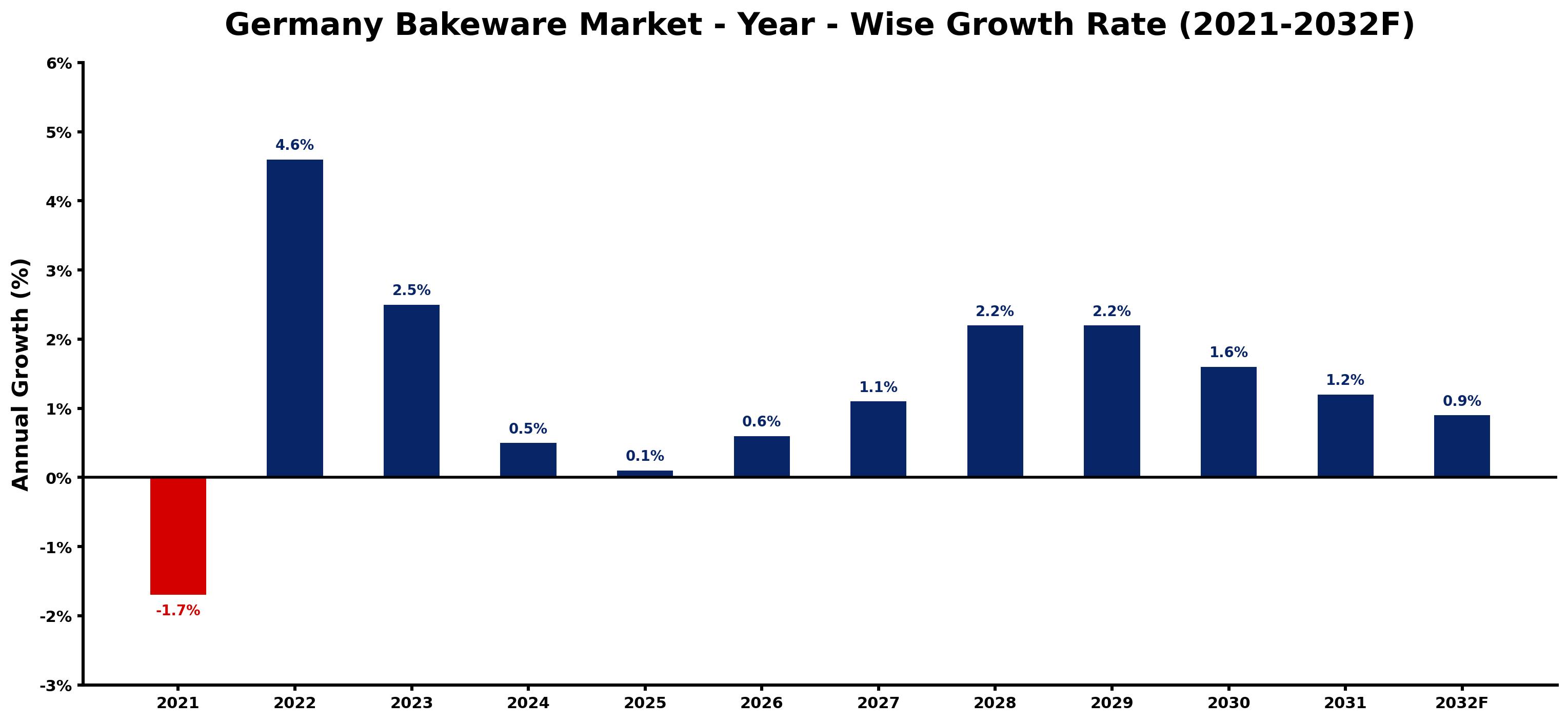
The table below presents the year wise growth rates along with the key drivers influencing the market
| Year | Growth Rate | Major Drivers |
| 2021 | -1.7% | Increased competition from imported alternatives drove down prices, impacting local bakeware manufacturers' sales. |
| 2022 | 4.6% | Sustainability gained traction, prompting brands to adopt environmentally friendly materials widely. |
| 2023 | 2.5% | Online shopping platforms expanded, enhancing accessibility for diverse bakeware products significantly. |
| 2024 | 0.5% | Home baking workshops increased, driving demand for specialized tools and bakeware sets. |
| 2025 | 0.1% | Market diversification occurred as artisanal baking trends emerged, influencing design preferences markedly. |
| 2026 | 0.6% | Technological innovations in non-stick coatings enhanced the performance of bakeware products notably. |
| 2027 | 1.1% | Focus on health consciousness led to a rise in demand for gluten-free baking tools. |
| 2028 | 2.2% | Collaboration between chefs and brands created limited editions, attracting niche market segments directly. |
| 2029 | 2.2% | Culinary shows spurred consumer interest, creating a surge in premium bakeware sales noticeably. |
| 2030 | 1.6% | Social media influence reshaped consumer preferences, emphasizing aesthetic and functional bakeware designs. |
| 2031 | 1.2% | Customization trends flourished, allowing consumers to personalize bakeware according to their tastes. |
| 2032 | 0.9% | Sustainable practices became mainstream, necessitating innovative materials and recycling initiatives within the market. |
Note - Market size estimations and growth projections presented in this report are based on 6Wresearch's advanced forecasting approach, validated with industry datasets as of June 2026.
Germany Bakeware Market Synopsis
The Germany Bakeware Market is projected to reach 0.6% and witness significant growth during the forecast period (2026-2032). This dynamic segment of the consumer goods industry is being propelled by the rising enthusiasm for home baking, underscored by the popularity of cooking shows and social media influencers promoting baked goods. Consequently, there is a diverse portfolio of bakeware products available in the German market, ranging from baking pans and molds to sheets and decorating tools. Manufacturers are increasingly innovating to meet consumer demands for high-quality, durable, and technologically advanced bakeware solutions, thus shaping the overall landscape of the market.
Germany Bakeware Market Trends and Opportunities
The Germany Bakeware Market is witnessing several key trends that are influencing purchasing behavior and product development. The shift towards premium quality bakeware is evident as consumers prioritize durability and performance. Specifically, products featuring superior non-stick properties and enhanced heat distribution are in high demand. Furthermore, there is a notable increase in consumer interest in:
- Eco-friendly bakeware solutions, particularly those made from silicone, ceramic, or sustainable materials that appeal to environmentally conscious buyers.
- Innovative designs and unique shapes aimed at those who aspire to create visually appealing baked goods, as aesthetics play a vital role in consumer choices.
- The convenience of online shopping, which has catalyzed growth in e-commerce platforms for bakeware products, enhancing accessibility for consumers.
- Customizable baking items, demonstrating a growing willingness among consumers to invest in specialized equipment that reflects personal style.
- The increasing trend towards health-conscious baking, leading to a demand for products that support healthier baking practices, such as lower-fat or gluten-free alternatives.
Germany Bakeware Market Challenges and Restraints
Despite its promising growth, the Germany Bakeware Market faces a number of challenges that could impact its trajectory. Competitive pressures are intensifying, with both domestic and international manufacturers vying for market share. This competitive landscape often leads to price wars that can compress profit margins for companies. Additional challenges include:
- Shifts in consumer preferences towards more innovative and sustainable options, which may challenge traditional manufacturers that struggle to adapt quickly.
- Strict regulatory frameworks concerning food safety and product quality, necessitating compliance that can complicate manufacturing processes.
- Economic fluctuations and uncertainties, which may influence consumer spending patterns and willingness to invest in higher-priced bakeware.
- The lingering impacts of the global pandemic, which continue to affect supply chains, placing additional strain on manufacturers and distributors.
- The necessity for continuous product innovation to keep pace with evolving consumer demands, which requires significant investment in research and development.
Germany Bakeware Market Investment Opportunities
The evolving landscape of the Germany Bakeware Market presents numerous investment opportunities for stakeholders. Given the rising demand for quality kitchenware, investors may consider:
- Exploring innovative and eco-friendly products, such as those made from biodegradable or recycled materials, to attract environmentally conscious consumers.
- Capitalizing on the demand for specialty baking items, including customized molds and unique baking accessories that cater to niche markets.
- Forming partnerships with local bakeries or pastry chefs to develop signature bakeware lines that can appeal to specialized consumer segments.
- Investing in baking kits or bundled products that cater to novice bakers, thereby expanding market reach.
- Conducting targeted market research to pinpoint specific consumer preferences and trends, enabling informed investment decisions.
Germany Bakeware Market Government Investment and Initiatives
The governance of the Germany Bakeware Market is supported by various regulations and initiatives aimed at ensuring product safety, consumer protection, and sustainable practices. The government enforces strict food safety regulations to guarantee the quality of bakeware products, alongside comprehensive labeling requirements that enhance transparency for consumers. Environmental policies also play a significant role in promoting sustainable manufacturing and disposal practices within the market. Furthermore, competition laws are in place to prevent monopolistic practices, ensuring a fair marketplace. These government initiatives not only promote public health and safety but also encourage innovation and sustainability within the industry, thereby fostering a conducive environment for growth.
Germany Bakeware Market Latest Developments (May 2025 - June 2026)
In the period from May 2025 to June 2026, the Germany Bakeware Market has shown resilience and adaptability amidst evolving consumer demands and market dynamics. The trend towards premium and eco-friendly bakeware continues to gain momentum, with consumers increasingly gravitating towards products that reflect their values regarding health and sustainability. Innovations in product design and functionality have also been prominent, with manufacturers unveiling new shapes and materials aimed at enhancing user experience. Additionally, e-commerce platforms have seen significant growth, allowing for easier accessibility and a wider reach of bakeware products. This period has demonstrated the market's capacity for innovation and responsiveness, setting a positive tone for the anticipated growth trajectory leading up to 2032.
Germany Bakeware Market - Key Attractiveness of the Report
- 10 Years of Market Numbers
- Historical Data Starting from 2022 to 2025
- Base Year: 2025
- Forecast Data until 2032
- Key Performance Indicators Impacting the Market
- Major Upcoming Developments and Projects
Key Highlights of the Report:
- Germany Bakeware Market Outlook
- Market Size of Germany Bakeware Market, 2025
- Forecast of Germany Bakeware Market, 2032F
- Historical Data and Forecast of Germany Bakeware Revenues & Volume for the Period 2022-2032F
- Germany Bakeware Market Trend Evolution
- Germany Bakeware Market Drivers and Challenges
- Germany Bakeware Price Trends
- Germany Bakeware Porter's Five Forces
- Germany Bakeware Industry Life Cycle
- Historical Data and Forecast of Germany Bakeware Market Revenues & Volume By Product Type for the Period 2022-2032F
- Historical Data and Forecast of Germany Bakeware Market Revenues & Volume By Ceramic for the Period 2022-2032F
- Historical Data and Forecast of Germany Bakeware Market Revenues & Volume By Aluminium for the Period 2022-2032F
- Historical Data and Forecast of Germany Bakeware Market Revenues & Volume By Cast Iron for the Period 2022-2032F
- Historical Data and Forecast of Germany Bakeware Market Revenues & Volume By Stainless Steel for the Period 2022-2032F
- Historical Data and Forecast of Germany Bakeware Market Revenues & Volume By Glass for the Period 2022-2032F
- Historical Data and Forecast of Germany Bakeware Market Revenues & Volume By Others for the Period 2022-2032F
- Historical Data and Forecast of Germany Bakeware Market Revenues & Volume By Applications for the Period 2022-2032F
- Historical Data and Forecast of Germany Bakeware Market Revenues & Volume By Commercial for the Period 2022-2032F
- Historical Data and Forecast of Germany Bakeware Market Revenues & Volume By Household for the Period 2022-2032F
- Germany Bakeware Import Export Trade Statistics
- Market Opportunity Assessment By Product Type
- Market Opportunity Assessment By Applications
- Germany Bakeware Top Companies Market Share
- Germany Bakeware Competitive Benchmarking By Technical and Operational Parameters
- Germany Bakeware Company Profiles
- Germany Bakeware Key Strategic Recommendations






































