Nigeria Bakeware Market Summary
The nigeria bakeware market was estimated at USD 185 Million in 2025 and is projected to reach USD 243 Million by 2032, growing at a CAGR of 4.8% from 2026 to 2032.
Nigeria Bakeware Market Year-wise Growth Rate and Key Drivers
This graph highlights how the Nigeria Bakeware Market has steadily grown over the past five years, supported by major growth factors.
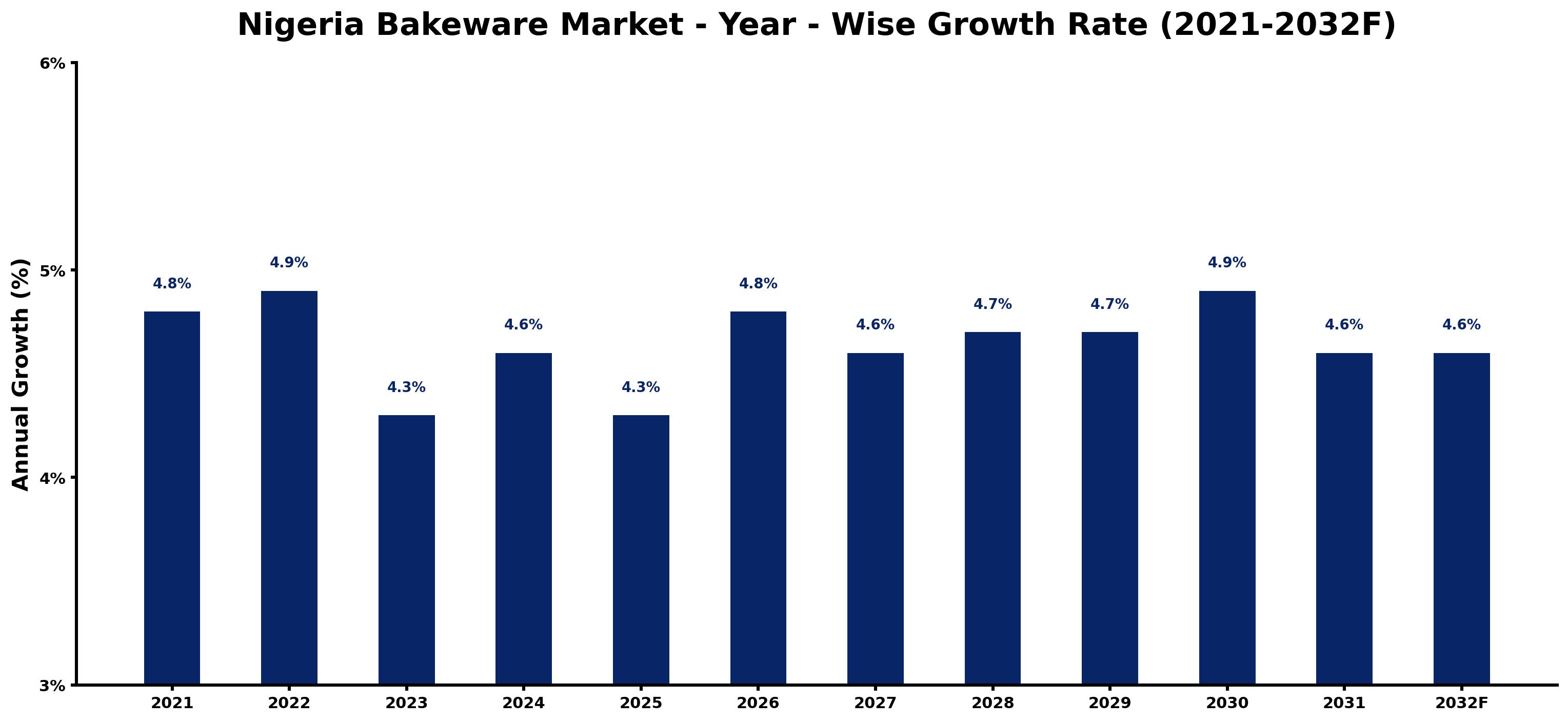
The table below presents the year wise growth rates along with the key drivers influencing the market
| Year | Growth Rate | Major Drivers |
| 2021 | 4.8% | Increased interest in home baking fosters demand for quality bakeware products. |
| 2022 | 4.9% | Local manufacturers ramp up production, enhancing availability across urban centers. |
| 2023 | 4.3% | E-commerce penetration grows, allowing consumers access to diverse bakeware options. |
| 2024 | 4.6% | Health trends encourage gluten-free and vegan baking, expanding market niches significantly. |
| 2025 | 4.3% | Celebrity chefs and social media influencers promote innovative bakeware designs widely. |
| 2026 | 4.8% | Investment in local sourcing uplifts small businesses, creating a vibrant bakeware ecosystem. |
| 2027 | 4.6% | Rising disposable incomes enable consumers to purchase premium bakeware brands frequently. |
| 2028 | 4.7% | Sustainability concerns push the market towards eco-friendly baking materials and methods. |
| 2029 | 4.7% | Improved logistics and infrastructure reduce distribution costs for bakeware suppliers. |
| 2030 | 4.9% | Baking classes and workshops proliferate, driving experiential purchases of bakeware tools. |
| 2031 | 4.6% | Expansion of culinary tourism in Nigeria attracts international brands to local markets. |
| 2032 | 4.6% | Innovative smart bakeware products emerge, integrating technology to enhance baking experiences. |
Note - Market size estimations and growth projections presented in this report are based on 6Wresearch's advanced forecasting approach, validated with industry datasets as of June 2026.
Nigeria Bakeware Market Synopsis
The Nigeria Bakeware Market is projected to reach 4.8% and witness significant growth during the forecast period (2026-2032). This growth is largely attributed to an increasing consumer interest in home baking, driven by rising disposable incomes, evolving food preferences, and the pervasive influence of baking shows on television and social media platforms. As consumers embrace the art of baking, the market has expanded to offer a diverse array of bakeware products, including pans, molds, sheets, and various accessories designed to meet the needs of both novice and seasoned bakers.
Nigeria Bakeware Market Growth Drivers
The Nigeria Bakeware Market is experiencing growth propelled by several critical factors:
- The rise of disposable income among Nigerian households enables more consumers to invest in quality bakeware products, facilitating an increase in baking activities at home.
- A shift in food preferences towards freshly baked goods, complemented by the growing trend of food blogging and social media sharing, encourages individuals to explore baking.
- The proliferation of baking shows and competitions on television and social media influences consumer behavior, fostering an interest in baking as both a hobby and a family activity.
- Innovative product offerings, such as non-stick bakeware and multifunctional items, attract consumers looking for both quality and ease of use in their baking endeavors.
- The increasing trend of gifting bakeware items during festive seasons and celebrations enhances market demand, as these products become popular gift choices.
Nigeria Bakeware Market Trends and Opportunities
The Nigeria Bakeware Market is witnessing several notable trends that present opportunities for manufacturers and retailers:
- Consumers are gravitating toward high-quality, durable bakeware made from materials such as silicone, carbon steel, and ceramic, which offer non-stick properties and ease of cleaning.
- There is an increasing demand for bakeware sets that feature a variety of items, including muffin pans, cake pans, and baking sheets, catering to consumers' diverse baking requirements.
- Versatility in product designs is gaining popularity, with consumers favoring bakeware that can double as serving dishes to enhance the baking and dining experience.
- The adoption of sustainable and environmentally friendly materials in bakeware production is emerging, aligning with the global trend of sustainability and consumer demand for eco-friendly products.
- Online retail platforms are becoming increasingly popular for purchasing bakeware, providing wider access to consumers and stimulating competition among sellers.
Nigeria Bakeware Market Challenges and Restraints
Despite its growth potential, the Nigeria Bakeware Market faces several challenges that must be addressed:
- Inconsistent product quality is a significant concern, as many offerings fail to meet consumers' expectations, which can deter purchases and damage brand reputations.
- Limited access to modern baking tools and equipment in certain regions restricts the ability of consumers to engage in baking, affecting overall market growth.
- High import duties on bakeware products lead to increased prices, making it difficult for consumers to afford quality bakeware and challenging local manufacturers' competitiveness.
- There is a general lack of awareness regarding baking techniques and tools, which results in lower demand for specialized bakeware items that could expand consumers' baking capabilities.
- Competition from informal sector vendors and counterfeit products undermines established manufacturers, complicating market dynamics and affecting product credibility.
Nigeria Bakeware Market Government Investment and Initiatives
Government policies play a pivotal role in shaping the Nigeria Bakeware Market. Adherence to food safety regulations set forth by the National Agency for Food and Drug Administration and Control (NAFDAC) is essential for ensuring product quality and consumer safety. Import regulations and tariffs imposed by the Federal Government significantly influence the pricing and availability of bakeware products in the country. Furthermore, the government has increasingly focused on the promotion of small and medium-sized enterprises (SMEs) through funding support and capacity-building programs, which contribute to local manufacturers' growth and competitiveness. These initiatives aim to safeguard consumer health, regulate imports, and bolster the development of the local bakeware industry.
Nigeria Bakeware Market Latest Developments (May 2025 - June 2026)
Recent developments in the Nigeria Bakeware Market reflect ongoing trends and shifts within the industry. Manufacturers are increasingly prioritizing innovation, introducing new designs and functionalities that resonate with the modern consumer's preferences for convenience and aesthetic appeal. There has been a noticeable increase in collaborations between local bakeries and bakeware manufacturers, aimed at creating bespoke products tailored to local baking traditions and practices. E-commerce platforms have ramped up their offerings, expanding their inventory of bakeware items, thus enhancing consumer accessibility. Additionally, promotional campaigns and workshops focusing on baking techniques are gaining traction, aiming to educate consumers and stimulate interest in home baking.
Nigeria Bakeware Market - Key Attractiveness of the Report
- 10 Years of Market Numbers
- Historical Data Starting from 2022 to 2025
- Base Year: 2025
- Forecast Data until 2032
- Key Performance Indicators Impacting the Market
- Major Upcoming Developments and Projects
Key Highlights of the Report:
- Nigeria Bakeware Market Outlook
- Market Size of Nigeria Bakeware Market, 2025
- Forecast of Nigeria Bakeware Market, 2032F
- Historical Data and Forecast of Nigeria Bakeware Revenues & Volume for the Period 2022-2032F
- Nigeria Bakeware Market Trend Evolution
- Nigeria Bakeware Market Drivers and Challenges
- Nigeria Bakeware Price Trends
- Nigeria Bakeware Porter's Five Forces
- Nigeria Bakeware Industry Life Cycle
- Historical Data and Forecast of Nigeria Bakeware Market Revenues & Volume By Product Type for the Period 2022-2032F
- Historical Data and Forecast of Nigeria Bakeware Market Revenues & Volume By Ceramic for the Period 2022-2032F
- Historical Data and Forecast of Nigeria Bakeware Market Revenues & Volume By Aluminium for the Period 2022-2032F
- Historical Data and Forecast of Nigeria Bakeware Market Revenues & Volume By Cast Iron for the Period 2022-2032F
- Historical Data and Forecast of Nigeria Bakeware Market Revenues & Volume By Stainless Steel for the Period 2022-2032F
- Historical Data and Forecast of Nigeria Bakeware Market Revenues & Volume By Glass for the Period 2022-2032F
- Historical Data and Forecast of Nigeria Bakeware Market Revenues & Volume By Others for the Period 2022-2032F
- Historical Data and Forecast of Nigeria Bakeware Market Revenues & Volume By Applications for the Period 2022-2032F
- Historical Data and Forecast of Nigeria Bakeware Market Revenues & Volume By Commercial for the Period 2022-2032F
- Historical Data and Forecast of Nigeria Bakeware Market Revenues & Volume By Household for the Period 2022-2032F
- Nigeria Bakeware Import Export Trade Statistics
- Market Opportunity Assessment By Product Type
- Market Opportunity Assessment By Applications
- Nigeria Bakeware Top Companies Market Share
- Nigeria Bakeware Competitive Benchmarking By Technical and Operational Parameters
- Nigeria Bakeware Company Profiles
- Nigeria Bakeware Key Strategic Recommendations






































