Germany Cloud POS Market Size & Growth Rate (2026-2032)
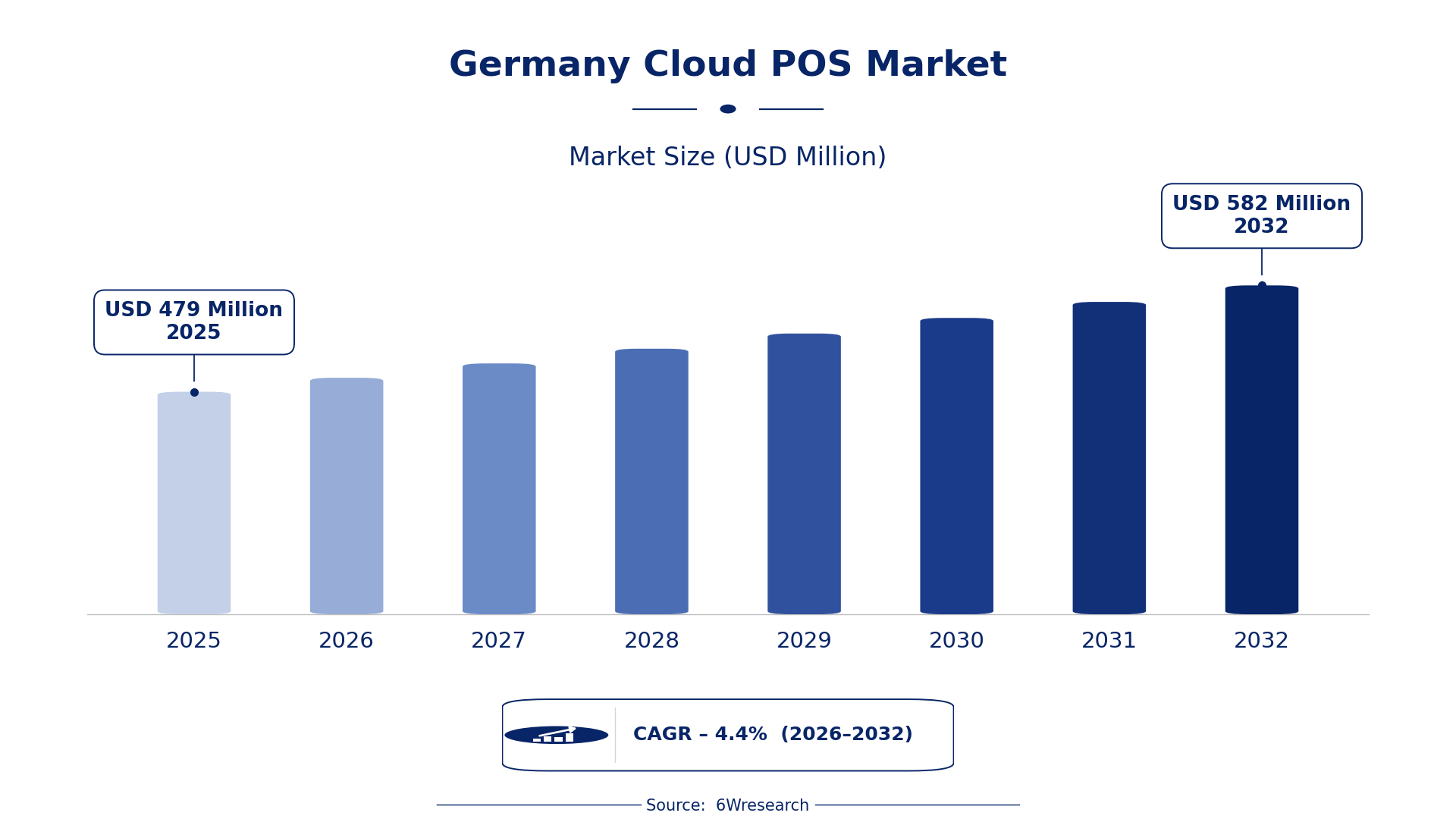
The Germany Cloud POS Market was estimated at USD 479 Million in 2025 and is projected to reach USD 582 Million by 2032, growing at a CAGR of 4.4% from 2026 to 2032.
Germany Cloud POS Market Synopsis
The German retail and hospitality sectors are witnessing a significant shift as cloud-based Point of Sale (POS) systems gain traction. Businesses are increasingly adopting these solutions to enhance customer experiences, optimize operations, and streamline payment processes. The transition from traditional systems to cloud POS technology is not just a trend; it reflects a fundamental change in how companies manage their sales and inventory.
The rise in digital transactions and the demand for integrated retail experiences are key drivers behind this transformation. In a market where real-time data analytics and omnichannel capabilities have become essential, cloud POS systems offer a competitive edge. Companies are leveraging these solutions to adapt to changing consumer behaviors and preferences, ensuring they remain relevant and responsive.
Germany Cloud POS Market Year-wise Growth Rate and Key Drivers
This graph illustrates the annual growth rates of the Germany Cloud POS Market from 2021 to 2032, highlighting a steady upward trajectory and projected expansion over the forecast period.
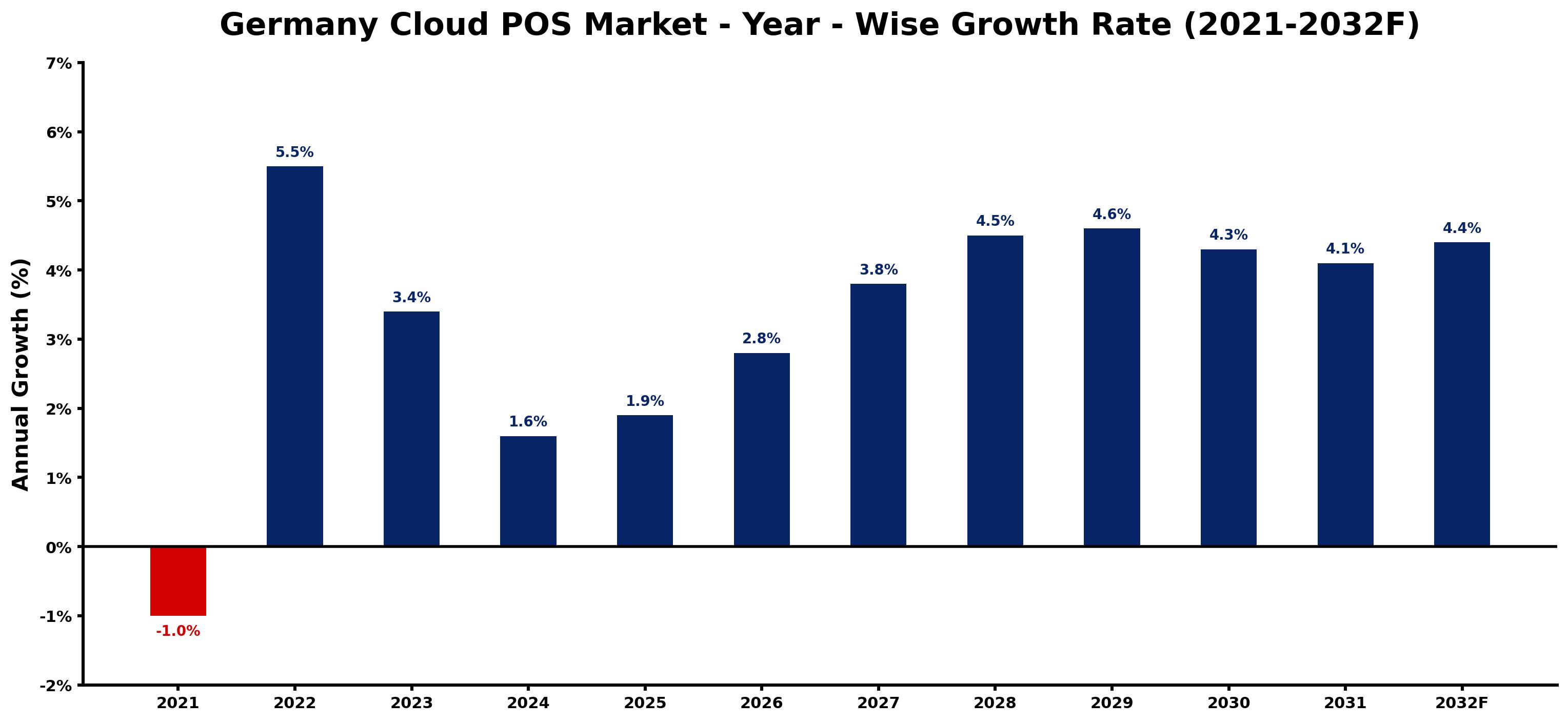
The table below presents the year‑wise growth rates along with the key drivers influencing the market
| Year | Growth Rate | Major Drivers |
| 2021 | -1.0% | POS hardware import tariffs increased under EU regulations. |
| 2022 | 5.5% | Germany's new digital payment regulations boosting cloud adoption. |
| 2023 | 3.4% | Increased demand for remote payment solutions post-pandemic. |
| 2024 | 1.6% | Growing penetration of mobile payment applications in retail. |
| 2025 | 1.9% | Government support for small businesses adopting digital solutions. |
| 2026 | 2.8% | Accelerated deployment of 5G improving transaction speeds. |
| 2027 | 3.8% | Rising trend of omnichannel retail strategies in Germany. |
| 2028 | 4.5% | Enhanced cybersecurity laws driving secure payment systems. |
| 2029 | 4.6% | Increasing partnerships between retailers and fintech startups. |
| 2030 | 4.3% | Supportive policy frameworks for tech-enabled retail innovations. |
| 2031 | 4.1% | Growing awareness of cloud benefits among German retailers. |
| 2032 | 4.4% | Emerging startups enhancing user-friendly POS technology. |
Note: Market size estimations and growth projections presented in this report are based on 6Wresearch's proprietary forecasting methodology, utilizing the latest available industry data, government publications, and primary research inputs.
Germany Cloud POS Market Key Takeaways
Below are some of the specific key takeaways from the market, including:
- The shift towards cloud-based solutions is driven by the need for scalability and flexibility in retail operations.
- Real-time data analytics from cloud POS systems are crucial for informed decision-making and strategy formulation.
- Integration with e-commerce platforms is a growing demand among retailers seeking omnichannel solutions.
- Contactless payment methods are becoming standard, further accelerated by the pandemic.
- Data security and compliance with regulations remain critical considerations for businesses adopting cloud POS systems.
Evaluation of Restraints in Germany Cloud POS Market
Despite the promising growth of the Germany Cloud POS market, several restraints hinder its potential. Chief among these is the challenge of integrating cloud solutions with existing legacy systems. Many businesses are hesitant to make the transition due to concerns about compatibility and the potential disruption of current operations. on top of that, ensuring data security while complying with stringent regulations poses a significant hurdle. Merchants need assurance that their cloud POS systems can handle sensitive customer data securely while providing seamless functionality. These factors create a cautious approach among some retailers, delaying broader adoption.
Germany Cloud POS Market Trends
Current trends shaping the Germany Cloud POS market include the increasing focus on contactless transactions and remote management capabilities. As consumer preferences shift towards convenience, businesses are prioritizing solutions that facilitate quick and efficient payment processes. The integration of Artificial Intelligence (AI) and Machine Learning (ML) into cloud POS systems is also gaining traction, allowing for enhanced customer insights and predictive analytics. on top of that, the rise of mobile payment solutions is encouraging retailers to adopt versatile cloud POS platforms that cater to on-the-go transactions.
Germany Cloud POS Market Opportunities
The opportunities within the Germany Cloud POS market are substantial. Retailers and hospitality businesses can capitalize on the growing demand for comprehensive analytics and inventory management features. Additionally, the trend towards omnichannel retailing presents a unique opportunity for cloud POS providers to develop solutions that seamlessly integrate online and offline sales. As businesses increasingly prioritize customer experience, there is a clear opening for advanced features that personalize interactions and streamline operations, making the investment in cloud POS technology a strategic move.
Government Initiatives in the Germany Cloud POS Market
Government policy plays a crucial role in shaping the Germany Cloud POS market, particularly in the realms of data security and consumer protection. Regulations are becoming increasingly stringent, ensuring that businesses comply with industry standards to safeguard customer information. This regulatory environment not only protects consumers but also fosters trust in digital transactions, encouraging businesses to adopt cloud solutions.
- A regulatory framework established in 2025 mandates compliance with PCI DSS standards to enhance transaction security.
- A national initiative focused on upgrading digital infrastructure is currently underway, aimed at supporting businesses in adopting advanced POS systems.
- Planned legislation expected to roll out by 2027 seeks to improve transparency in payment processing fees, impacting POS system pricing strategies.
- Recent efforts to streamline data protection regulations have simplified the compliance process for businesses transitioning to cloud-based systems.
- Ongoing public awareness campaigns are educating businesses about the benefits of cloud solutions, promoting a broader acceptance of the technology.
Future Insights of the Germany Cloud POS Market
Looking ahead to 2026-2032, the Germany Cloud POS market is set to experience continued growth, driven by technological advancements and changing consumer expectations. As businesses increasingly recognize the value of real-time data analytics, the demand for sophisticated cloud POS solutions will rise. on top of that, with the integration of emerging technologies like AI and IoT, cloud POS systems will evolve to offer more personalized customer experiences. The focus on sustainability and eco-friendly practices may also influence the development of cloud solutions, creating new avenues for innovation and investment.
Germany Cloud POS Market Latest Developments
Over the past 12-14 months, the Germany Cloud POS market has seen a flurry of activity, reflecting the increasing adoption of cloud technologies across various sectors. Companies are rapidly innovating to meet the demands of a digitally savvy consumer base, leading to notable advancements in cloud POS offerings.
- A major technology vendor launched a new cloud POS solution in early 2025, emphasizing enhanced security features and user-friendly interfaces.
- An ongoing initiative that began in mid-2025 is focused on developing AI-driven analytics capabilities within cloud POS systems to provide retailers with actionable insights.
- In Q3 2025, a leading regional operator announced plans for an expansion of its cloud POS services to include more comprehensive inventory management tools.
- A pilot program testing an integrated mobile payment solution is currently underway, aiming to provide a more flexible payment experience for customers.
- By late 2026, a new partnership between cloud service providers and retail associations is expected to facilitate training programs for businesses transitioning to cloud POS systems.
Germany Cloud POS Market - Key Attractiveness of the Report
- 10 Years of Market Numbers
- Historical Data Starting from 2022 to 2025
- Base Year: 2025
- Forecast Data until 2032
- Key Performance Indicators Impacting the Market
- Major Upcoming Developments and Projects
Key Highlights of the Report:
- Germany Cloud POS Market Outlook
- Market Size of Germany Cloud POS Market, 2025
- Forecast of Germany Cloud POS Market, 2032
- Historical Data and Forecast of Germany Cloud POS Revenues & Volume for the Period 2022-2032F
- Germany Cloud POS Market Trend Evolution
- Germany Cloud POS Market Drivers and Challenges
- Germany Cloud POS Price Trends
- Germany Cloud POS Porter's Five Forces
- Germany Cloud POS Industry Life Cycle
- Historical Data and Forecast of Germany Cloud POS Market Revenues & Volume By Application Areas for the Period 2022-2032F
- Historical Data and Forecast of Germany Cloud POS Market Revenues & Volume By Retail and Consumer Goods for the Period 2022-2032F
- Historical Data and Forecast of Germany Cloud POS Market Revenues & Volume By Travel and Hospitality for the Period 2022-2032F
- Historical Data and Forecast of Germany Cloud POS Market Revenues & Volume By Media and Entertainment for the Period 2022-2032F
- Historical Data and Forecast of Germany Cloud POS Market Revenues & Volume By Transport and Logistics for the Period 2022-2032F
- Historical Data and Forecast of Germany Cloud POS Market Revenues & Volume By Healthcare for the Period 2022-2032F
- Historical Data and Forecast of Germany Cloud POS Market Revenues & Volume By Component for the Period 2022-2032F
- Historical Data and Forecast of Germany Cloud POS Market Revenues & Volume By Solution for the Period 2022-2032F
- Historical Data and Forecast of Germany Cloud POS Market Revenues & Volume By Services for the Period 2022-2032F
- Historical Data and Forecast of Germany Cloud POS Market Revenues & Volume By Service for the Period 2022-2032F
- Historical Data and Forecast of Germany Cloud POS Market Revenues & Volume By Training, Consulting, and Integration for the Period 2022-2032F
- Historical Data and Forecast of Germany Cloud POS Market Revenues & Volume By Support and Maintenance for the Period 2022-2032F
- Historical Data and Forecast of Germany Cloud POS Market Revenues & Volume By Organization Size for the Period 2022-2032F
- Historical Data and Forecast of Germany Cloud POS Market Revenues & Volume By SMEs for the Period 2022-2032F
- Historical Data and Forecast of Germany Cloud POS Market Revenues & Volume By Large Enterprises for the Period 2022-2032F
- Germany Cloud POS Import Export Trade Statistics
- Market Opportunity Assessment By Application Areas
- Market Opportunity Assessment By Component
- Market Opportunity Assessment By Service
- Market Opportunity Assessment By Organization Size
- Germany Cloud POS Top Companies Market Share
- Germany Cloud POS Competitive Benchmarking By Technical and Operational Parameters
- Germany Cloud POS Company Profiles
- Germany Cloud POS Key Strategic Recommendations






































