Germany Dairy Market: Import Trend Analysis
Germany`s dairy market witnessed a slight decline in import momentum from 2023 to 2024, with a growth rate of -0.06%. Despite this, the market showed a strong Compound Annual Growth Rate (CAGR) of 10.39% from 2020 to 2024. This could be attributed to shifts in consumer preferences or changes in global trade dynamics impacting import volumes.
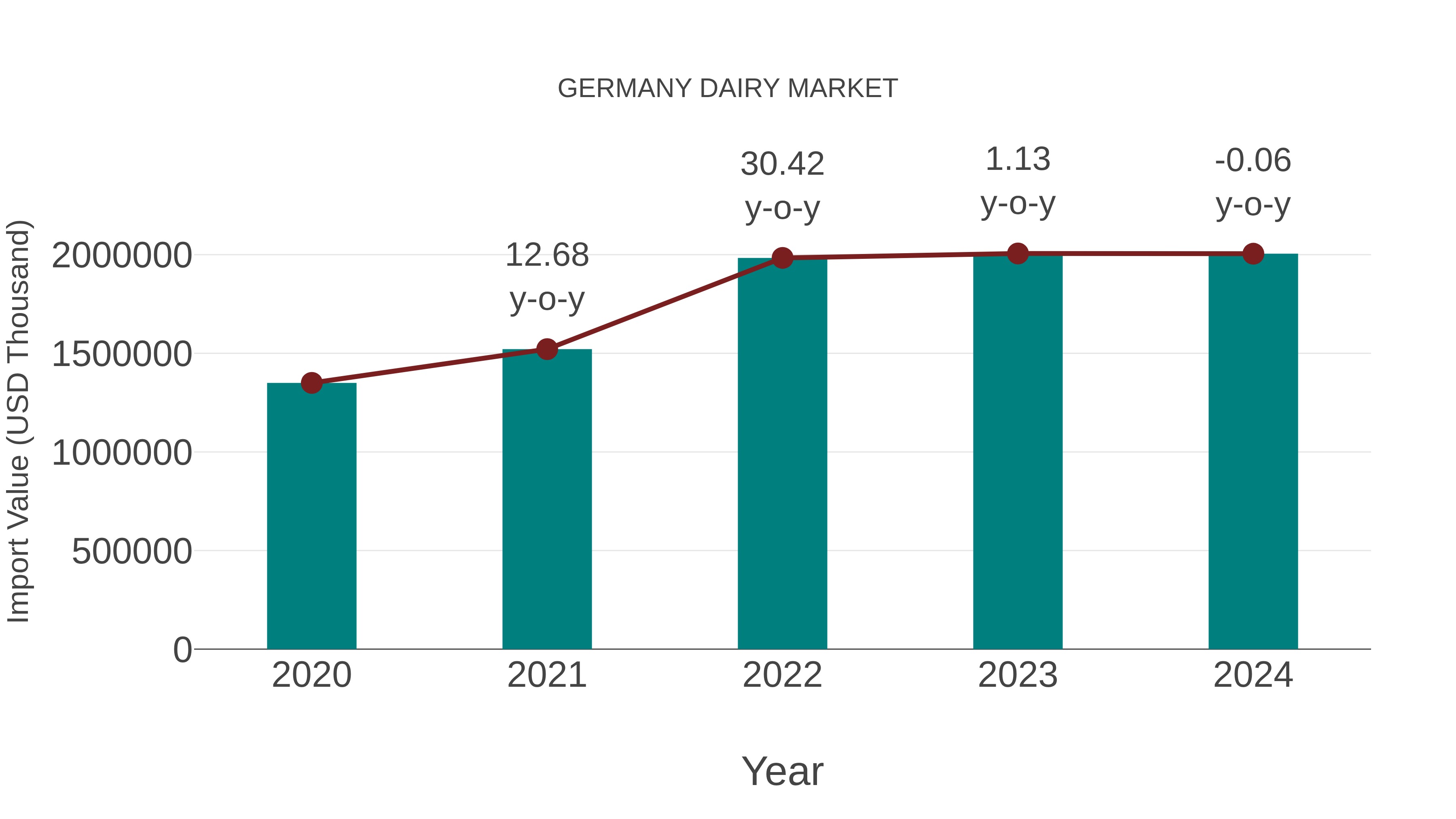
Germany Dairy Market Growth Rate
According to 6Wresearch internal database and industry insights, the Germany Dairy Market is projected to grow at a compound annual growth rate (CAGR) of 4.8% during the forecast period from 2026 to 2032.
Topics Covered in the Germany Dairy Market Report
The Germany Dairy Market report thoroughly covers the market by Category and distribution channel, providing an unbiased and detailed analysis of ongoing market trends, opportunities, challenges, and market drivers, helping stakeholders align their strategies with current and future market dynamics.
Germany Dairy Market Highlights
| Report Name | Germany Dairy Market |
| Forecast Period | 2026–2032 |
| CAGR | 4.8% |
| Growing Sector | Dairy |
Germany Dairy Market Synopsis
The Germany Dairy Market is experiencing continuous expansion as consumers increasingly choose organic, protein-rich and functional dairy products. The demand for dairy products is rising as consumers now understand their nutritional value and plant-based dairy alternatives have developed new products. Germany maintains its position as a European dairy market leader as consumers show greater interest in lactose-free and high-protein dairy products. The market experiences changes as technological advancements in dairy processing methods which improve product quality and safety standards.
Evaluation of Growth Drivers in the Germany Dairy Market
Below mentioned are some prominent drivers and their impact on the market dynamics:
| Drivers | Primary Segments Affected | Why It Matters (Evidence) |
| Increased Health Consciousness | Milk, Cheese, Yogurt | Consumers are increasingly choosing dairy products that support healthy lifestyles, such as those rich in protein or probiotics. |
| Rising Demand for Plant-Based Dairy | Milk, Cheese, Dairy Desserts | The increasing popularity of vegan and plant-based diets is driving demand for dairy alternatives such as almond milk and oat-based cheese. |
| Functional Dairy Products | Milk, Yogurt, Cheese | Consumers are gradually shifting towards dairy with value added functional ingredients like probiotics, prebiotics, fiber, and vitamin in it this shows their usual concern for health. |
| Organic and Natural Dairy Preferences | Milk, Butter, Yogurt | The growing trend towards organic food consumption is fueling demand for organic dairy products. |
| Technological Advancements in Dairy | All Dairy Categories | Innovations in dairy processing and packaging, such as advanced milk pasteurization and sustainable packaging, are improving product quality and extending shelf life. |
The Germany Dairy Market is projected to grow at a CAGR of 4.8% from 2026 to 2032. The Germany Dairy Market keeps fluctuating as people have become more inclined towards health-oriented, sustainable plant-based dairy substitutes. The market will experience continuous expansion as functional organic dairy products and new dairy technology developments drive market growth. The market will evolve as manufacturers will develop additional sustainable products to meet consumer demands for health and environmental protection. The dairy sector in Germany will develop into the future through these trends and production process improvements which will enable continuous market growth.
Evaluation of Restraints in the Germany Dairy Market
Below mentioned are some major restraints and their influence on the market dynamics:
| Restraints | Primary Segments Affected | What This Means (Evidence) |
| High Cost of Premium Dairy Products | Organic Dairy, Functional Dairy | Premium dairy products are often priced higher, limiting their appeal among price-sensitive consumers. |
| Competition from Non-Dairy Alternatives | Milk, Cheese, Yogurt | Plant-based alternatives are gaining popularity, offering a potential substitute for traditional dairy products. |
| Sustainability Concerns | All Dairy Categories | Increased consumer awareness about the environmental impact of dairy farming could limit the growth of conventional dairy products. |
| Regulatory Challenges | All Dairy Categories | Strict regulations on dairy production and processing may increase costs for manufacturers, affecting market dynamics. |
| Rising Veganism and Dairy-Free Diets | Milk, Cheese, Yogurt | The increasing popularity of vegan and dairy-free diets is creating difficulties for the conventional dairy industry. |
Germany Dairy Market Challenges
The Germany Dairy Industry faces growth challenges due to high production expenses and rising consumer demand for plant-based products which people consider healthier and environmentally friendly sustain their market position. Environmental requirements together with animal welfare standards create additional difficulties for businesses that want to enter new markets. The health risks associated with dairy products create market limitations which affect customer groups that include people with lactose intolerance. The organization needs to develop new solutions which will enable it to achieve its sustainability goals and create innovative dairy products to overcome existing challenges.
Germany Dairy Market Trends
Here are some major trends changing the Germany Dairy Market Growth dynamics:
- Growth in Plant-Based Dairy Alternatives: The demand for dairy alternatives which include oat milk, soy cheese and almond yogurt is growing as more people are adopting vegan and plant-based diets.
- Consumer Preference for Organic Dairy Products: Consumers who value sustainability and health protection see organic dairy products which include milk, cheese and yogurt as their preferred choice.
- Increase in Functional Dairy Products :The market for dairy products which offer health advantages has expanded as consumers now prefer products that contain probiotics in yogurt or essential vitamins and minerals in milk.
- Sustainability in Dairy Production : The significance of eco-friendly production methods, including sustainable farming and recyclable packaging, is now widely acknowledged as essential by both consumers and producers.
Investment Opportunities in the Germany Dairy Market
The Germany Dairy Market presents several investment opportunities, including:
- Plant-Based Dairy Alternatives: As consumer demand for plant-based dairy products rises, there are valuable investment opportunities to develop new alternatives that address the varying preferences of different consumers.
- Organic Dairy: The rising consumer demand for organic and sustainably produced products creates a strong business opportunity for investments in organic dairy production and certification processes.
- Functional Dairy Products: The growing consumer demand for functional foods enables companies to develop dairy products which provide extra health benefits through probiotic and high-protein milk fortification.
- Sustainable Packaging Solutions: The market will experience sustained growth through two main factors: eco-friendly packaging investments and the implementation of sustainable dairy production methods which will attract environmentally aware customers.
Top 5 Leading Players in the Germany Dairy Market
Below is the list of prominent companies leading the Germany Dairy Market Share:
1. Nestle
| Company Name | Nestlé |
|---|---|
| Established Year | 1867 |
| Headquarters | Vevey, Switzerland |
| Official Website | Click Here |
Nestlé is a leading global provider of dairy products, offering a wide range of milk, cheese, and dairy-based desserts with an emphasis on nutritional value and quality.
2. Danone
| Company Name | Danone |
|---|---|
| Established Year | 1919 |
| Headquarters | Paris, France |
| Official Website | Click Here |
Danone is a key player in the dairy market, known for its yogurts, milk products, and plant-based alternatives, with a strong focus on health and sustainability.
3. Arla Foods
| Company Name | Arla Foods |
|---|---|
| Established Year | 1901 |
| Headquarters | Viby, Denmark |
| Official Website | Click Here |
Arla Foods is one of the largest dairy companies in Europe, specializing in a wide variety of dairy products, including milk, cheese, and butter, with a commitment to organic and sustainable practices.
4. Lactalis Group
| Company Name | Lactalis Group |
|---|---|
| Established Year | 1933 |
| Headquarters | Laval, France |
| Official Website | Click Here |
Lactalis is a global leader in the dairy industry, producing an array of dairy products including cheese, milk, butter, and yogurt, and is known for its focus on innovation and product diversification.
5. Muller Group
| Company Name | Müller Group |
|---|---|
| Established Year | 1896 |
| Headquarters | Fischach, Germany |
| Official Website | Click Here |
Müller is one of Germany's leading dairy companies, offering a wide variety of milk-based products, yogurt, and desserts, with a strong focus on product quality and innovation.
Government Regulations Introduced in the Germany Dairy Market
According to German government data, Germany has implemented essential regulations to safeguard the safety and quality of its dairy products. The German Dairy Regulation (MilchV) sets guidelines for dairy product labeling, quality assurance, and hygiene standards throughout the manufacturing and distribution process. The European Union's Common Agricultural Policy (CAP) governs dairy production requirements as it mandates that all products must comply with health and safety regulations in every EU nation including Germany. The monitoring system of Germany's Federal Food Safety and Veterinary Office (BVL) tracks dairy producers' compliance with safety and quality standards while assessing the ecological effects of dairy operations.
Future Insights of the Germany Dairy Market
The future of the Germany Dairy Market looks positive, with strong demand for health-conscious and plant-based dairy products. The dairy industry will be shaped by two factors which are technological progress in dairy processing, packaging and the rising demand for functional foods. The market will expand due to two factors which include rising consumer incomes together with their increasing demand for organic and sustainable products. The market evolution is shown by current trends which lead to the development of dairy products that focus on health and sustainability and show their dedication to environmental protection.
Market Segmentation Analysis
The report offers a comprehensive study of the following market segments and their leading categories:
By Product - Milk to Dominate the Market
According to Ritika Kalra, Senior Research Analyst, 6Wresearch Milk is expected to dominate the Germany Dairy Market due to its staple nature in the German diet and its broad consumer base. Among the various types, lactose-free and protein-enriched milk products are gaining substantial market traction.
By Distribution Channel - Off-Trade to Dominate the Market
The off-trade channel, especially supermarkets and grocery stores, is expected to dominate the Germany Dairy Market due to its wide reach and ease of access to consumers.
Key Attractiveness of the Report
- 10 Years of Market Numbers
- Historical Data Starting from 2022 to 2025
- Base Year: 2025
- Forecast Data until 2032
- Key Performance Indicators Impacting the Market
- Major Upcoming Developments and Projects
Key Highlights of the Report:
- Germany Dairy Market Outlook
- Market Size of Germany Dairy Market, 2025
- Forecast of Germany Dairy Market, 2032
- Historical Data and Forecast of Germany Dairy Revenues & Volume for the Period 2022-2032F
- Germany Dairy Market Trend Evolution
- Germany Dairy Market Drivers and Challenges
- Germany Dairy Price Trends
- Germany Dairy Porter's Five Forces
- Germany Dairy Industry Life Cycle
- Historical Data and Forecast of Germany Dairy Market Revenues & Volume By Category for the Period 2022-2032F
- Historical Data and Forecast of Germany Dairy Market Revenues & Volume By Butter for the Period 2022-2032F
- Historical Data and Forecast of Germany Dairy Market Revenues & Volume By Cheese for the Period 2022-2032F
- Historical Data and Forecast of Germany Dairy Market Revenues & Volume By Cream for the Period 2022-2032F
- Historical Data and Forecast of Germany Dairy Market Revenues & Volume By Dairy Desserts for the Period 2022-2032F
- Historical Data and Forecast of Germany Dairy Market Revenues & Volume By Milk for the Period 2022-2032F
- Historical Data and Forecast of Germany Dairy Market Revenues & Volume By Yogurt for the Period 2022-2032F
- Historical Data and Forecast of Germany Dairy Market Revenues & Volume By Distribution Channel for the Period 2022-2032F
- Historical Data and Forecast of Germany Dairy Market Revenues & Volume By Off-Trade for the Period 2022-2032F
- Historical Data and Forecast of Germany Dairy Market Revenues & Volume By On-Trade for the Period 2022-2032F
- Germany Dairy Import Export Trade Statistics
- Market Opportunity Assessment By Category
- Market Opportunity Assessment By Distribution Channel
- Germany Dairy Top Companies Market Share
- Germany Dairy Competitive Benchmarking By Technical and Operational Parameters
- Germany Dairy Company Profiles
- Germany Dairy Key Strategic Recommendations
Market Covered
The report offers a comprehensive study of the subsequent market segments:
By Category
- Butter
- Cheese
- Cream
- Dairy Desserts
- Milk
- Yogurt
By Distribution Channel
- Off-Trade
- On-Trade






































