Germany Ethyl Alcohol Market: Import Trend Analysis
In 2024, Germany`s ethyl alcohol market saw a declining trend in imports. This was influenced by various factors such as changes in consumer preferences, regulatory policies, and global market conditions. The decrease in imports reflected a shifting landscape in the industry during that year.
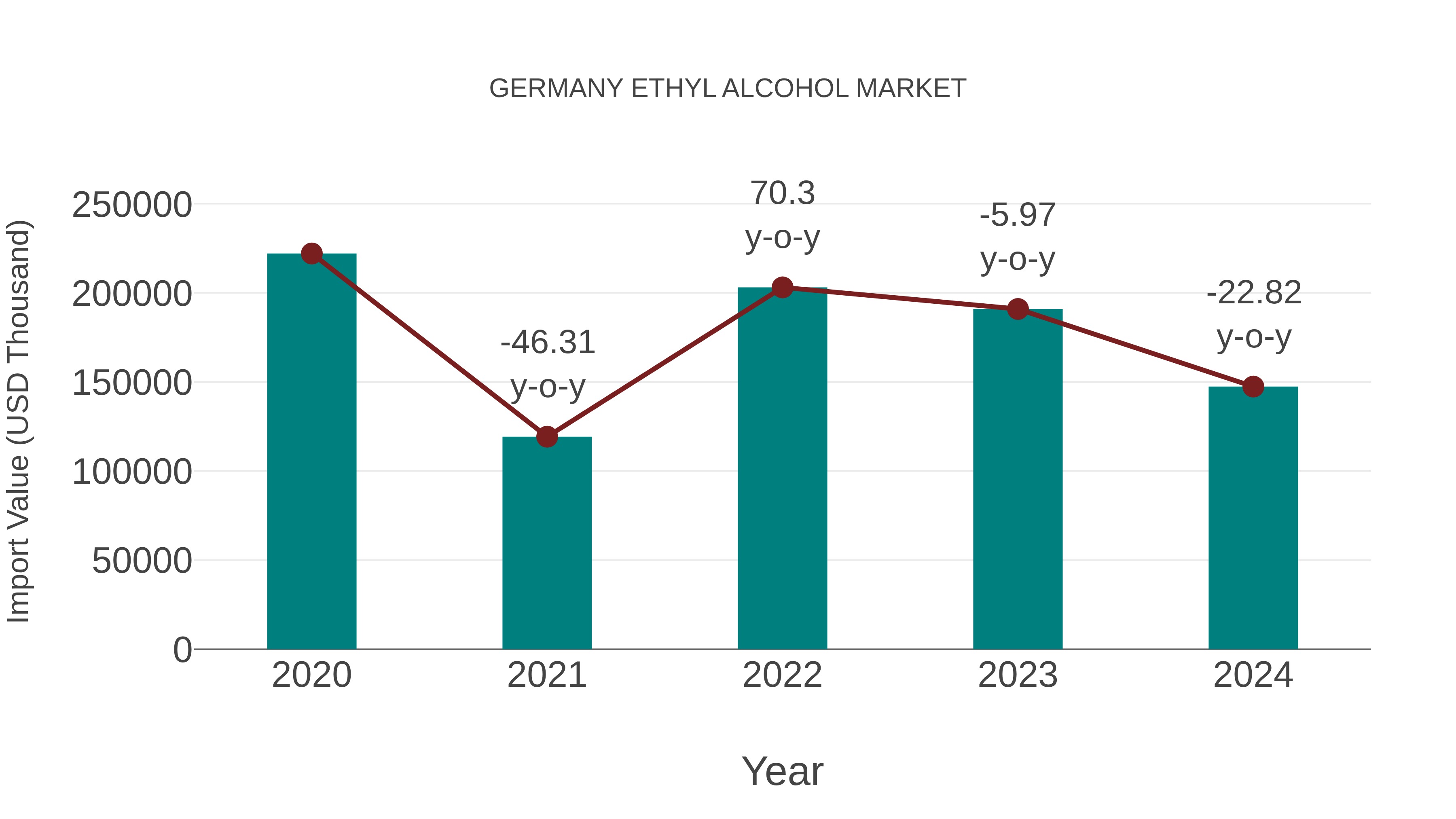
Germany Ethyl Alcohol Market Overview
The Germany Ethyl Alcohol Market is experiencing steady growth driven by various factors such as the increasing demand for ethyl alcohol in the pharmaceutical, beverage, and personal care industries. The market is witnessing a shift towards the use of ethyl alcohol as a key ingredient in hand sanitizers and disinfectants, especially in light of the COVID-19 pandemic. Additionally, the growing trend of organic and natural products is further fueling the demand for ethyl alcohol in the country. Key players in the market are focusing on expanding their product portfolios and investing in research and development to introduce innovative solutions. Government regulations promoting the use of ethyl alcohol as a sustainable and eco-friendly alternative are also contributing to the market growth. Overall, the Germany Ethyl Alcohol Market is poised for continued expansion in the coming years.
Germany Ethyl Alcohol Market Trends
Currently, the Germany Ethyl Alcohol Market is experiencing a growing demand for ethyl alcohol due to its versatile applications in industries such as pharmaceuticals, cosmetics, and food and beverages. The trend towards sustainable and eco-friendly products has also led to an increased interest in bio-based ethyl alcohol, driving market growth. Additionally, the COVID-19 pandemic has resulted in a surge in demand for ethyl alcohol as a key ingredient in hand sanitizers and disinfectants, further boosting market growth. With a focus on innovation and product development, manufacturers in the Germany Ethyl Alcohol Market are increasingly investing in research and development to create new formulations and applications for ethyl alcohol, catering to the evolving needs of consumers and industries.
Germany Ethyl Alcohol Market Challenges
In the Germany Ethyl Alcohol Market, some key challenges include increasing competition from alternative fuel sources, fluctuating raw material prices, and stringent regulations on alcohol production and consumption. The market faces pressure to shift towards sustainable practices and reduce carbon emissions, which can be costly and require significant investments in technology and infrastructure. Additionally, changing consumer preferences towards healthier lifestyles and decreased alcohol consumption pose a challenge for traditional ethyl alcohol products. Furthermore, the market is vulnerable to global economic and political uncertainties, which can impact demand and supply dynamics. Overall, companies in the Germany Ethyl Alcohol Market need to navigate these challenges by adapting to market trends, optimizing production processes, and innovating their product offerings to stay competitive in the evolving landscape.
Germany Ethyl Alcohol Market Investment Opportunities
In the Germany ethyl alcohol market, there are several investment opportunities worth considering. Firstly, with the increasing demand for bioethanol as a renewable fuel source, investing in ethanol production plants could be lucrative. Additionally, the growing trend towards organic and natural products presents an opportunity for investing in the production of organic ethyl alcohol for use in cosmetics, pharmaceuticals, and food industries. Furthermore, the expanding use of ethyl alcohol in the manufacturing of sanitizers and disinfectants due to the COVID-19 pandemic creates a potential investment avenue. Lastly, investing in research and development for innovative applications of ethyl alcohol, such as in the automotive sector for fuel blending or in the beverage industry for new product formulations, could lead to long-term growth opportunities in the Germany ethyl alcohol market.
Germany Ethyl Alcohol Market Government Policy
In Germany, the ethyl alcohol market is regulated by various government policies aimed at ensuring quality, safety, and compliance with environmental standards. The Federal Ministry for Food and Agriculture oversees regulations related to the production and labeling of ethyl alcohol for consumption, including the strict guidelines for ingredients, processing methods, and labeling requirements. Additionally, the Federal Ministry for the Environment, Nature Conservation, and Nuclear Safety enforces regulations concerning the environmental impact of ethyl alcohol production, such as waste disposal and emissions control. The government also imposes taxes and duties on ethyl alcohol products to regulate consumption and generate revenue. Overall, these policies create a framework that promotes responsible production, distribution, and consumption of ethyl alcohol in Germany.
Germany Ethyl Alcohol Market Future Outlook
The future outlook for the Germany Ethyl Alcohol Market appears positive, driven by increasing demand for ethanol as a key ingredient in the pharmaceutical, food and beverage, and automotive industries. The growing trend towards biofuels and renewable energy sources is expected to further boost market growth. Additionally, the rising awareness about the use of ethanol as a cleaner and more sustainable alternative to traditional fuels is likely to drive demand in the coming years. However, challenges such as regulatory constraints and pricing fluctuations of raw materials may impact market dynamics. Overall, the Germany Ethyl Alcohol Market is anticipated to witness steady growth, with opportunities for expansion in various end-use industries.
Key Highlights of the Report:
- Germany Ethyl Alcohol Market Outlook
- Market Size of Germany Ethyl Alcohol Market, 2025
- Forecast of Germany Ethyl Alcohol Market, 2032
- Historical Data and Forecast of Germany Ethyl Alcohol Revenues & Volume for the Period 2018 - 2032
- Germany Ethyl Alcohol Market Trend Evolution
- Germany Ethyl Alcohol Market Drivers and Challenges
- Germany Ethyl Alcohol Price Trends
- Germany Ethyl Alcohol Porter's Five Forces
- Germany Ethyl Alcohol Industry Life Cycle
- Historical Data and Forecast of Germany Ethyl Alcohol Market Revenues & Volume By Grade for the Period 2018 - 2032
- Historical Data and Forecast of Germany Ethyl Alcohol Market Revenues & Volume By Food Grade for the Period 2018 - 2032
- Historical Data and Forecast of Germany Ethyl Alcohol Market Revenues & Volume By Industrial Grade for the Period 2018 - 2032
- Historical Data and Forecast of Germany Ethyl Alcohol Market Revenues & Volume By Pharmaceutical Grade for the Period 2018 - 2032
- Historical Data and Forecast of Germany Ethyl Alcohol Market Revenues & Volume By Lab Grade for the Period 2018 - 2032
- Historical Data and Forecast of Germany Ethyl Alcohol Market Revenues & Volume By End-user Industry for the Period 2018 - 2032
- Historical Data and Forecast of Germany Ethyl Alcohol Market Revenues & Volume By Automotive and Transportation for the Period 2018 - 2032
- Historical Data and Forecast of Germany Ethyl Alcohol Market Revenues & Volume By Food and Beverage for the Period 2018 - 2032
- Historical Data and Forecast of Germany Ethyl Alcohol Market Revenues & Volume By Pharmaceutical for the Period 2018 - 2032
- Historical Data and Forecast of Germany Ethyl Alcohol Market Revenues & Volume By Cosmetics and Personal Care (Includes hand-Sanitizer) for the Period 2018 - 2032
- Historical Data and Forecast of Germany Ethyl Alcohol Market Revenues & Volume By Other End-user Industries for the Period 2018 - 2032
- Germany Ethyl Alcohol Import Export Trade Statistics
- Market Opportunity Assessment By Grade
- Market Opportunity Assessment By End-user Industry
- Germany Ethyl Alcohol Top Companies Market Share
- Germany Ethyl Alcohol Competitive Benchmarking By Technical and Operational Parameters
- Germany Ethyl Alcohol Company Profiles
- Germany Ethyl Alcohol Key Strategic Recommendations






































