Germany Hair Care Market: Import Trend Analysis
In 2024, Germany`s hair care market saw a notable increase in imports. The trend indicated a growing demand for international hair care products within the country. This surge in imports suggests a preference for a diverse range of hair care options among German consumers.
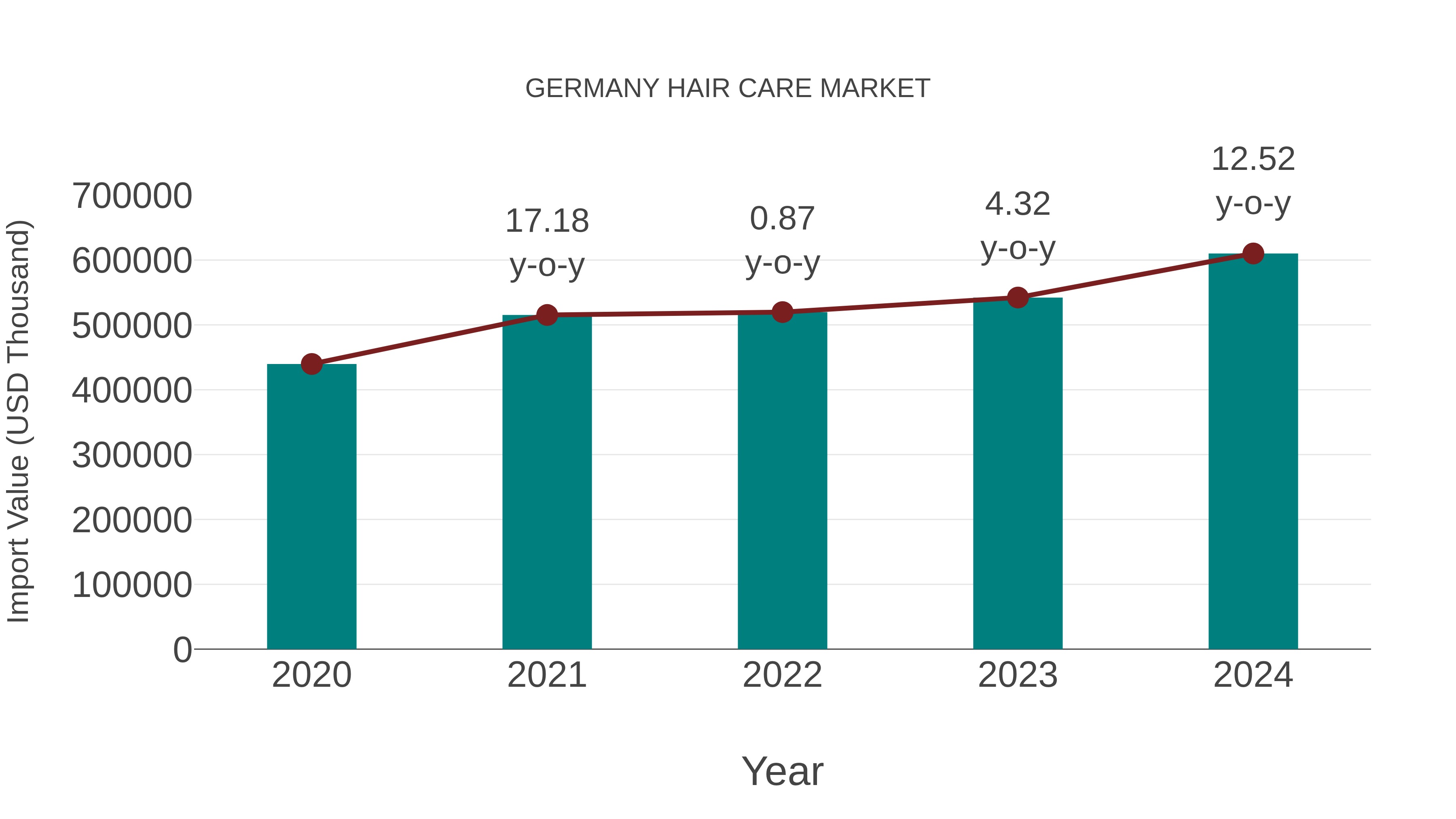
Germany Hair Care Market Growth Rate
According to 6Wresearch internal database and industry insights, the Germany Hair Care Market is projected to grow at a compound annual growth rate (CAGR) of 5.1% during the forecast period from 2026 to 2032.
Topics Covered in the Germany Hair Care Market Report:
The Germany Hair Care Market report covers the market comprehensively by type, by product type and distribution channel. The report provides a detailed and unbiased analysis of the ongoing market trends, opportunities, challenges, and market drivers, assisting stakeholders in aligning strategies with current and future market dynamics.
Germany Hair Care Market Highlights
| Report Name | Germany Hair Care Market |
| Forecast period | 2026-2032 |
| CAGR | 5.1% |
| Growing Sector | Personal Care |
Germany Hair Care Market Synopsis:
The Germany Hair Care Market is expected to grow steadily in the coming years as it is influenced by some major factors, such as the increasing demand for premium and natural hair care products. The rising shift towards personalized solutions, the rise in online shopping, and the increased focus on organic and eco-friendly products are major drivers that are estimated to boost the growth of the market. The demand for shampoos, conditioners, and styling products, particularly those that cater to specific hair types or concerns, is on the rise.
Evaluation of Growth Drivers in the Germany Hair Care Market:
Some prominent drivers and their impact on the Germany Hair Care Market dynamics:
| Drivers | Primary Segments Affected | Why it matters (evidence) |
| Increasing Disposable Income | By Type (Products, Services) | Rising disposable income allows consumers to spend on high-quality hair care products. |
| Increasing Focus on Hair Health | By Product Type (Shampoo, Conditioner) | Growing consumer awareness about hair care results in higher demand for health-focused products. |
| E-commerce Growth | By Distribution Channel (Online Stores) | Increasing E-commerce platforms in the country make hair care products more accessible for consumers. |
| Demand for Natural Products | By Product Type (Shampoo, Hair Oil, Others) | Health-conscious consumers are opting for organic and natural hair care products in the country. |
| Innovation in Hair Care | By Product Type (Hair Styling Product, Hair Gel) | New formulations and personalized hair care products are gaining popularity, pushing growth. |
Germany Hair Care Market is expected to grow at a CAGR of 5.1% during the forecast period from 2026–2032. Here are some important factors that are boosting this growth: the ongoing rise in disposable income of the middle-class population. Another such factor is the rising consumer's choice for organic and personalized solutions, which is likely to increase the demand for various hair care products, including shampoos, conditioners, styling products, and oils. Due to the strong expansion of online retail channels and the increasing interest in professional salon services, the Germany Hair Care Market growth is estimated to increase in the coming years.
Restraints in the Germany Hair Care Market
Below are some major restraints and their influence on the Germany Hair Care Market dynamics:
| Restraints | Primary Segments Affected | What this means (evidence) |
| High Competition from International Brands | By Product Type (Shampoo, Hair Color, Hair Gel) | The influx of global brands offering lower-cost products challenges local brands. |
| Raw Material Price Changes | By Product Type (Shampoo, Hair Oil, Hair Spray) | Raw material prices are unstable, particularly for natural ingredients such as oils and botanicals, which raises production costs. |
| Regulatory Constraints on Ingredients | By Product Type (Hair Color, Hair Gel, Hair Oil) | Strict EU rules regarding product formulations can hamper the use of certain ingredients, limiting product variety. |
| High Environmental Sustainability Pressures | By Product Type (All Products) | As companies invest in greener processes, an increase in the demand for eco-friendly products may drive up production costs. |
| Supply Chain and Distribution Challenges | By Distribution Channel (Online Stores, Hypermarkets) | Delays in transportation may result in product shortages or higher prices, affecting the competitiveness of products in the market. |
Challenges in the Germany Hair Care Market
On the other hand, the Germany Hair Care Market has a number of obstacles that could affect its expansion. Such challenges are high competition from imports, particularly from cheaper international brands, which squeeze local brands' margins and changing raw material prices, especially in natural ingredients like oils, can affect production costs. Other than that, regulatory challenges related to product safety and ingredient sourcing can slow down innovation or create additional compliance burdens for manufacturers.
Trends Shaping the Germany Hair Care Market
Below mentioned are some key trends that boost the market expansion:
- Personalized Hair Care Solutions: As consumers look for solutions that address their individual needs, such as scalp health, hair texture, and color protection, the demand for personalized hair care products tailored to specific hair types is on the rise.
- Natural and Organic Products: Due to the rising health consciousness, consumers are willing to spend on natural, organic, and cruelty-free hair care products.
- Hair Care for Men: As men’s attitudes towards self-care and grooming are shifting, there is a rise in the demand for specialized hair care products for men, especially in the grooming, styling, and scalp health categories.
Major Investment Opportunities in the Germany Hair Care Market
Below mentioned are some major investment opportunities that are estimated to increase the market share:
- Sustainable Hair Care Solutions: Companies are investing in eco-friendly, biodegradable packaging and the development of natural and organic hair care products.
- Increasing E-commerce Platforms: As online shopping expands, investing in digital platforms and direct-to-consumer sales models provides a significant opportunity to reach a larger audience.
- Premium and Professional-Grade Products: As consumers become more discerning, there is a significant opportunity to invest in high-end, salon-quality products with superior results.
Top 5 Leading Players in the Germany Hair Care Market:
Here are some top companies contributing to the Germany Hair Care Market share:
1. Henkel AG & Co. KGaA
| Company Name | Henkel AG & Co. KGaA |
| Headquarters | Düsseldorf, Germany |
| Established | 1876 |
| Website | Click here |
Henkel is a global leader in beauty and home care, known for brands like Schwarzkopf and Syoss. They offer a wide range of hair care products from shampoos to styling gels.
2. L'Oréal S.A.
| Company Name | L'Oréal S.A. |
| Headquarters | Paris, France (operates in Germany) |
| Established | 1909 |
| Website | Click here |
A leading global beauty and cosmetics company, L'Oréal offers a vast range of hair care products, including premium shampoos, conditioners, and hair color solutions.
3. Procter & Gamble (P&G)
| Company Name | Procter & Gamble (P&G) |
| Headquarters | Cincinnati, USA (operates in Germany) |
| Established | 1837 |
| Website | Click here |
P&G owns major hair care brands like Pantene, Head & Shoulders, and Herbal Essences, making it a significant player in the German hair care market.
4. Beiersdorf AG
| Company Name | Beiersdorf AG |
| Headquarters | Hamburg, Germany |
| Established | 1882 |
| Website | Click here |
Known for its NIVEA brand, Beiersdorf has a strong presence in the personal care market, offering products for both hair care and skincare.
5. Coty Inc.
| Company Name | Coty Inc. |
| Headquarters | New York, USA (operates in Germany) |
| Established | 1904 |
| Website | Click here |
Coty is a multinational beauty company, with key brands such as Wella, which is a market leader in professional hair care.
Government Regulations in the Germany Hair Care Market:
As per Germany government data, the market is measured by the European Union’s (EU) cosmetics regulations, which make sure product safety, ingredient transparency, and sustainability. The European Medicines Agency (EMA) and the European Commission govern the approval of raw materials used in hair care products, which make sure that they must meet health and safety standards. Along with that, sustainability regulations in the EU encourage manufacturers to use natural ingredients and eco-friendly packaging.
Future Insights of the Germany Hair Care Market:
The Germany Hair Care Market share is estimated to increase in the coming years, which is backed by the rising consumer demand for personalized, natural, and eco-friendly hair care products. As consumers become more health-conscious and environmentally aware, there will be a rise in the shift towards organic and sustainable ingredients. Also, e-commerce platforms will continue to grow in importance, offering consumers greater convenience and access to a wide range of products. The growing focus on men's grooming, as well as the rising popularity of salon-grade products, will further fuel market expansion.
Segmentation Analysis
The report offers a comprehensive study of the following market segments and their leading categories:
Product Segment to Lead the Market – By Type
According to Ashutosh, Senior Research Analyst at 6Wresearch, the product segment is expected to dominate the market as hair care products, such as shampoos, conditioners, and styling products, continue to be the most demanded offerings.
Shampoo to Lead the Market – By Product Type
The shampoo category is likely to boost the market, which is backed by the constant demand for daily hair cleansing products in the country. Shampoos are important in every consumer's routine, and the rise in demand for specialty shampoos, such as organic, sulfate-free, and anti-dandruff options, is fueling this growth.
Online Stores to Lead the Market – By Distribution Channel
Online stores are estimated to increase the Germany Hair Care Market revenue, as e-commerce continues to grow rapidly. The convenience of purchasing products online, as well as exclusive deals, subscription models, and a wide range of options, is driving consumer choices towards digital shopping.
Key Attractiveness of the Report
- 10 Years of Market Numbers
- Historical Data Starting from 2022 to 2025
- Base Year: 2025
- Forecast Data until 2032
- Key Performance Indicators Impacting the Market
- Major Upcoming Developments and Projects
Key Highlights of the Report:
- Germany Hair Care Market Overview
- Germany Hair Care Market Outlook
- Market Size of Germany Hair Care Market
- Forecast of Germany Hair Care Market, 2032
- Historical Data and Forecast of Germany Hair Care Revenues & Volume for the Period 2022-2032F
- Germany Hair Care Market Trend Evolution
- Germany Hair Care Market Drivers and Challenges
- Germany Hair Care Price Trends
- Germany Hair Care Porter's Five Forces
- Germany Hair Care Industry Life Cycle
- Historical Data and Forecast of Germany Hair Care Market Revenues & Volume By Type for the Period 2022-2032F
- Historical Data and Forecast of Germany Hair Care Market Revenues & Volume By Product for the Period 2022-2032F
- Historical Data and Forecast of Germany Hair Care Market Revenues & Volume By Services for the Period 2022-2032F
- Historical Data and Forecast of Germany Hair Care Market Revenues & Volume By Product Type for the Period 2022-2032F
- Historical Data and Forecast of Germany Hair Care Market Revenues & Volume By Shampoo for the Period 2022-2032F
- Historical Data and Forecast of Germany Hair Care Market Revenues & Volume By Hair Colour for the Period 2022-2032F
- Historical Data and Forecast of Germany Hair Care Market Revenues & Volume By Conditioner for the Period 2022-2032F
- Historical Data and Forecast of Germany Hair Care Market Revenues & Volume By Hair Styling Product for the Period 2022-2032F
- Historical Data and Forecast of Germany Hair Care Market Revenues & Volume By Hair Oil for the Period 2022-2032F
- Historical Data and Forecast of Germany Hair Care Market Revenues & Volume By Hair Spray for the Period 2022-2032F
- Historical Data and Forecast of Germany Hair Care Market Revenues & Volume By Hair Gel for the Period 2022-2032F
- Historical Data and Forecast of Germany Hair Care Market Revenues & Volume By Others for the Period 2022-2032F
- Historical Data and Forecast of Germany Hair Care Market Revenues & Volume By Distribution Channel for the Period 2022-2032F
- Historical Data and Forecast of Germany Hair Care Market Revenues & Volume By Online Stores for the Period 2022-2032F
- Historical Data and Forecast of Germany Hair Care Market Revenues & Volume By Hypermarkets for the Period 2022-2032F
- Historical Data and Forecast of Germany Hair Care Market Revenues & Volume By Direct Selling for the Period 2022-2032F
- Germany Hair Care Import Export Trade Statistics
- Market Opportunity Assessment By Type
- Market Opportunity Assessment By Product Type
- Market Opportunity Assessment By Distribution Channel
- Germany Hair Care Top Companies Market Share
- Germany Hair Care Competitive Benchmarking By Technical and Operational Parameters
- Germany Hair Care Company Profiles
- Germany Hair Care Key Strategic Recommendations
Market Scope and Segmentation
The report provides a detailed analysis of the following market segments
By Type
- Product
- Services
By Product Type
- Shampoo
- Hair Color
- Conditioner
- Hair Styling Product
- Hair Oil
- Hair Spray
- Hair Gel
- Others
By Distribution Channel
- Online Stores
- Hypermarkets
- Direct Selling






































