Germany Incident Response Market Size & Growth Rate (2026-2032)
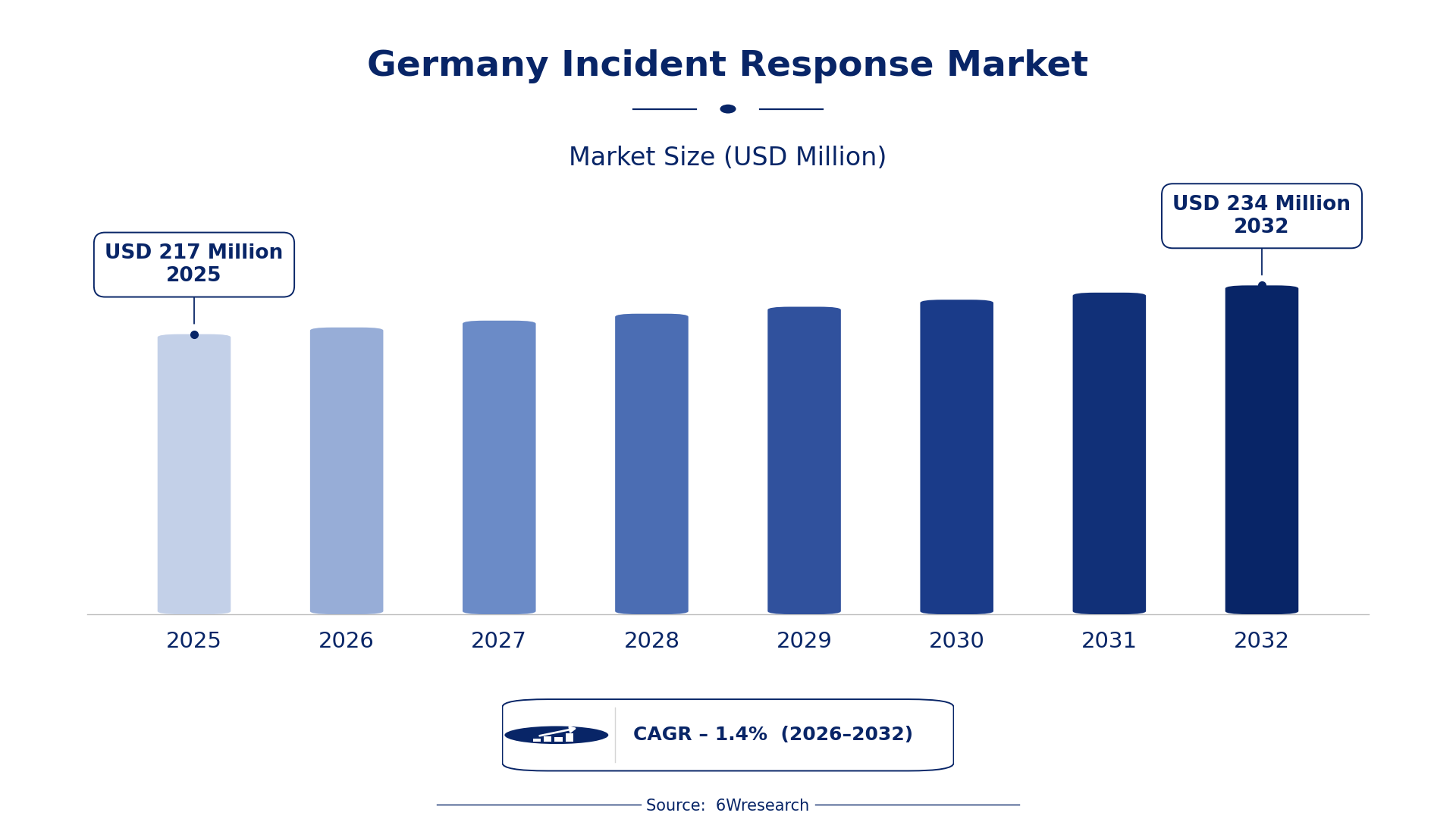
The Germany Incident Response Market was estimated at USD 217 Million in 2025 and is projected to reach USD 234 Million by 2032, growing at a CAGR of 1.4% from 2026 to 2032.
Germany Incident Response Market Synopsis
Recent developments in the Germany Incident Response Market highlight an urgent and pervasive threat from cyberattacks. Businesses across various sectors are increasingly recognizing that their existing security measures may not suffice in a landscape marked by escalating sophistication and frequency of cyber threats. As a response, investments in incident response solutions are surging, creating a dynamic market poised for evolution.
The market's growth is propelled by several factors, including stringent regulatory requirements and a heightened awareness of cybersecurity risks. Companies are prioritizing comprehensive incident response strategies to safeguard sensitive data and critical infrastructure. As firms look for effective solutions, both local and international vendors are expanding their service offerings, intensifying competition within the market.
Germany Incident Response Market Year-wise Growth Rate and Key Drivers
This graph illustrates the annual growth rates of the Germany Incident Response Market from 2021 to 2032, highlighting a steady upward trajectory and projected expansion over the forecast period.
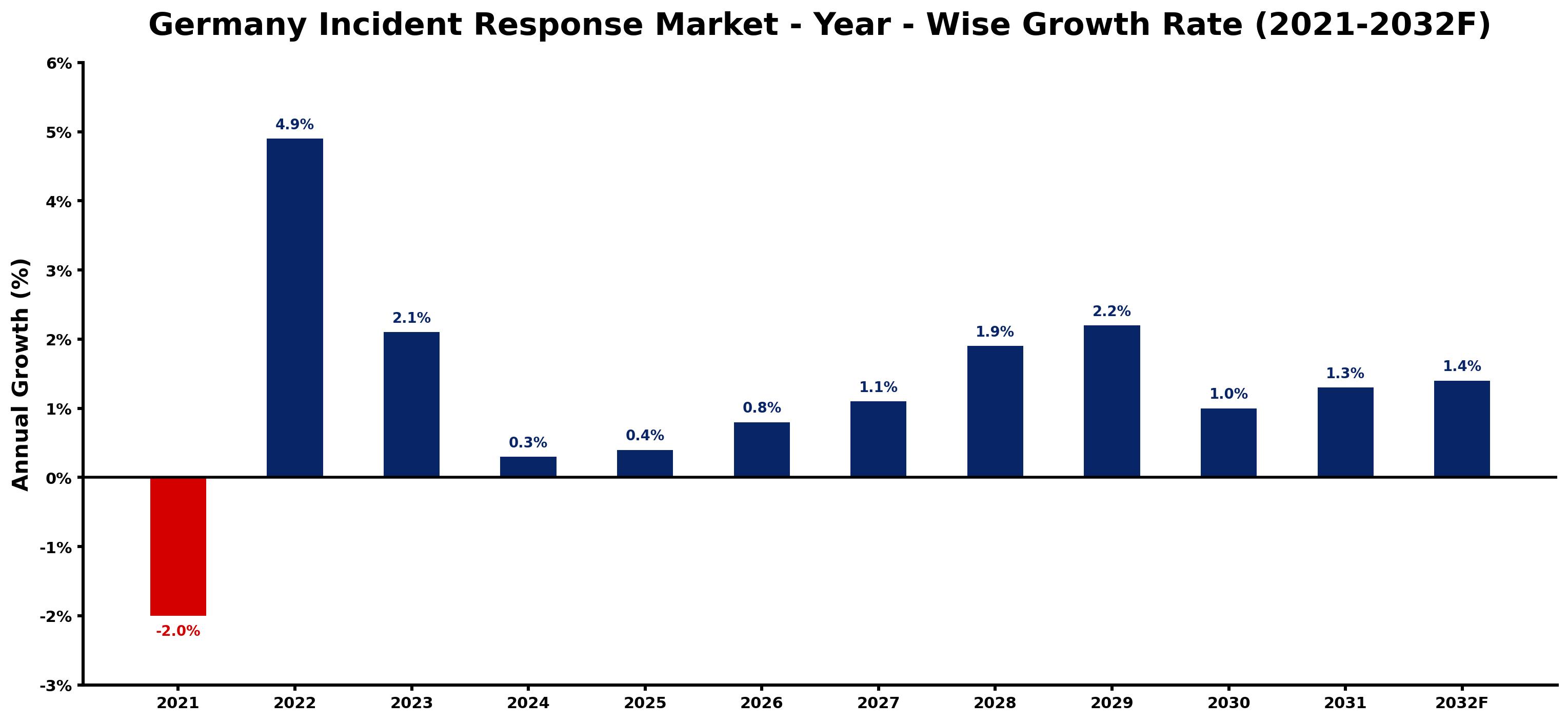
The table below presents the year‑wise growth rates along with the key drivers influencing the market
| Year | Growth Rate | Major Drivers |
| 2021 | -2.0% | Cybersecurity budget cuts by German SMEs hindered growth. |
| 2022 | 4.9% | Implementation of GDPR strengthened data breach response requirements. |
| 2023 | 2.1% | Cybersecurity Strategy 2023 increased government investment in cybersecurity. |
| 2024 | 0.3% | Increased ransomware attacks boosted demand for incident response. |
| 2025 | 0.4% | New EU Cyber Resilience Act enhanced operational standards. |
| 2026 | 0.8% | Rising digitalization in SMEs created urgent security needs. |
| 2027 | 1.1% | Growing cyber insurance market drove demand for response services. |
| 2028 | 1.9% | Cloud adoption prompted necessity for incident management solutions. |
| 2029 | 2.2% | Legislation on critical infrastructure fortified cybersecurity protocols. |
| 2030 | 1.0% | Digital transformation in corporations increased incident response urgency. |
| 2031 | 1.3% | Cybersecurity education programs expanded professional expertise availability. |
| 2032 | 1.4% | Regulatory pressure on data protection continued to rise. |
Note: Market size estimations and growth projections presented in this report are based on 6Wresearch's proprietary forecasting methodology, utilizing the latest available industry data, government publications, and primary research inputs.
Germany Incident Response Market Key Takeaways
Below are some of the specific key takeaways from the market, including:
- Increasing investment in automation tools to streamline incident response processes.
- The integration of threat intelligence is becoming essential for proactive risk management.
- There’s a strong focus on training and skill development for incident response teams.
- Regulatory compliance remains a driving force behind investments in incident response capabilities.
- Growing partnerships between businesses and cybersecurity firms to enhance response readiness.
Evaluation of Restraints in Germany Incident Response Market
Despite its potential, the Germany Incident Response Market faces notable obstacles. Organizations grapple with the increasing complexity of IT environments, which hampers their ability to respond effectively to incidents. The sophistication of cyber threats is escalating at an alarming rate, demanding constantly updated strategies and technologies. Additionally, there is a critical shortage of skilled cybersecurity professionals, making it difficult for companies to build robust incident response capabilities. Navigating the stringent data protection regulations, particularly GDPR, adds another layer of complexity that organizations must manage while striving for effective incident response.
Germany Incident Response Market Trends
A notable trend in the Germany Incident Response Market is the growing adoption of automation and orchestration tools. Companies are increasingly investing in technologies that allow rapid detection and mitigation of security incidents, thereby minimizing potential damage. on top of that, there’s a significant move toward integrating threat intelligence into incident response strategies. This proactive approach enhances organizations' ability to anticipate and respond to emerging threats. Skill development initiatives for incident response teams are also on the rise, reflecting the need for increased competencies to handle sophisticated cyber threats.
Germany Incident Response Market Opportunities
Opportunities for growth within the Germany Incident Response Market are abundant. As cyber threats escalate, there is a pressing demand for advanced incident response consulting services. Organizations are looking to develop and implement tailored incident response plans that align with their specific risks and regulatory requirements. Investment in the development of incident response platforms and tools presents lucrative prospects, particularly for businesses that can address local needs. Additionally, offering training programs aimed at enhancing the skills of incident response teams can fill a critical gap in the market, yielding attractive returns.
Government Initiatives in the Germany Incident Response Market
Government policy in Germany is playing an increasingly vital role in shaping the Incident Response Market. With an emphasis on enhancing cybersecurity infrastructure, regulations and standards are being established that organizations must adhere to for effective incident response. Such policies not only promote a culture of security but also enhance readiness among businesses to tackle cyber threats head-on.
- A recent initiative by the Federal Office for Information Security (BSI) established enhanced guidelines for incident response procedures tailored to critical infrastructure protection.
- Currently ongoing is the IT Security Act (IT-Sicherheitsgesetz), which mandates organizations in critical sectors to implement comprehensive incident response plans.
- Upcoming regulations set for 2026 aim to strengthen cybersecurity measures across public and private sectors, including enhanced incident reporting requirements.
- A planned national digital strategy, expected to roll out in the next two years, will further solidify incident response frameworks for businesses nationwide.
- Efforts by the BSI to promote public-private partnerships in cybersecurity initiatives are gaining traction, enhancing cooperative incident response capabilities across the board.
Future Insights of the Germany Incident Response Market
Looking ahead, the Germany Incident Response Market is expected to continue its upward trajectory. As businesses increasingly acknowledge the imperative of robust cybersecurity measures, we anticipate heightened investments in sophisticated incident response solutions. The integration of cutting-edge technologies, such as AI and machine learning, will become commonplace, greatly enhancing organizations' threat detection and response capabilities. Regulatory pressures will further drive the demand for effective incident response strategies, positioning the market for sustained growth in the coming years.
Germany Incident Response Market Latest Developments
In the past year, activity within the Germany Incident Response Market has accelerated, with organizations seeking to fortify their defenses against persistent cyber threats. The trend toward automation and technology integration has become particularly pronounced, with numerous companies exploring innovative solutions to enhance their incident response readiness.
- A major technology vendor announced the launch of a new automated incident response tool in Q2 2025, designed to streamline threat detection and mitigation processes.
- A leading regional operator is currently underway with a multi-phase training program aimed at enhancing the skills of incident response teams across several sectors.
- In early 2025, a consortium of cybersecurity firms initiated a collaborative effort to develop an advanced threat intelligence platform tailored for the German market.
- A public-private partnership focused on critical infrastructure cybersecurity is set to begin its first phase in mid-2026, aiming to enhance incident response strategies among key industries.
- Upcoming in late 2026 is the rollout of a national awareness campaign to educate organizations about the importance of effective incident response plans.
Germany Incident Response Market - Key Attractiveness of the Report
- 10 Years of Market Numbers
- Historical Data Starting from 2022 to 2025
- Base Year: 2025
- Forecast Data until 2032
- Key Performance Indicators Impacting the Market
- Major Upcoming Developments and Projects
Key Highlights of the Report:
- Germany Incident Response Market Outlook
- Market Size of Germany Incident Response Market, 2025
- Forecast of Germany Incident Response Market, 2032
- Historical Data and Forecast of Germany Incident Response Revenues & Volume for the Period 2022-2032F
- Germany Incident Response Market Trend Evolution
- Germany Incident Response Market Drivers and Challenges
- Germany Incident Response Price Trends
- Germany Incident Response Porter's Five Forces
- Germany Incident Response Industry Life Cycle
- Historical Data and Forecast of Germany Incident Response Market Revenues & Volume By Component for the Period 2022-2032F
- Historical Data and Forecast of Germany Incident Response Market Revenues & Volume By Solution for the Period 2022-2032F
- Historical Data and Forecast of Germany Incident Response Market Revenues & Volume By Services for the Period 2022-2032F
- Historical Data and Forecast of Germany Incident Response Market Revenues & Volume By Service for the Period 2022-2032F
- Historical Data and Forecast of Germany Incident Response Market Revenues & Volume By Retainer for the Period 2022-2032F
- Historical Data and Forecast of Germany Incident Response Market Revenues & Volume By Assessment for the Period 2022-2032F
- Historical Data and Forecast of Germany Incident Response Market Revenues & Volume By Response for the Period 2022-2032F
- Historical Data and Forecast of Germany Incident Response Market Revenues & Volume By Planning for the Period 2022-2032F
- Historical Data and Forecast of Germany Incident Response Market Revenues & Volume By Development for the Period 2022-2032F
- Historical Data and Forecast of Germany Incident Response Market Revenues & Volume By Security Type for the Period 2022-2032F
- Historical Data and Forecast of Germany Incident Response Market Revenues & Volume By Web Security for the Period 2022-2032F
- Historical Data and Forecast of Germany Incident Response Market Revenues & Volume By Application Security for the Period 2022-2032F
- Historical Data and Forecast of Germany Incident Response Market Revenues & Volume By Endpoint Security for the Period 2022-2032F
- Historical Data and Forecast of Germany Incident Response Market Revenues & Volume By Network Security for the Period 2022-2032F
- Historical Data and Forecast of Germany Incident Response Market Revenues & Volume By Cloud Security for the Period 2022-2032F
- Historical Data and Forecast of Germany Incident Response Market Revenues & Volume By Deployment Mode for the Period 2022-2032F
- Historical Data and Forecast of Germany Incident Response Market Revenues & Volume By On-Premises for the Period 2022-2032F
- Historical Data and Forecast of Germany Incident Response Market Revenues & Volume By Cloud for the Period 2022-2032F
- Historical Data and Forecast of Germany Incident Response Market Revenues & Volume By Organization Size for the Period 2022-2032F
- Historical Data and Forecast of Germany Incident Response Market Revenues & Volume By SMEs for the Period 2022-2032F
- Historical Data and Forecast of Germany Incident Response Market Revenues & Volume By Large Enterprises for the Period 2022-2032F
- Historical Data and Forecast of Germany Incident Response Market Revenues & Volume By Vertical for the Period 2022-2032F
- Historical Data and Forecast of Germany Incident Response Market Revenues & Volume By BFSI for the Period 2022-2032F
- Historical Data and Forecast of Germany Incident Response Market Revenues & Volume By Government for the Period 2022-2032F
- Historical Data and Forecast of Germany Incident Response Market Revenues & Volume By Healthcare and Life Sciences for the Period 2022-2032F
- Historical Data and Forecast of Germany Incident Response Market Revenues & Volume By Retail and E-Commerce for the Period 2022-2032F
- Historical Data and Forecast of Germany Incident Response Market Revenues & Volume By Travel and Hospitality for the Period 2022-2032F
- Historical Data and Forecast of Germany Incident Response Market Revenues & Volume By Manufacturing for the Period 2022-2032F
- Historical Data and Forecast of Germany Incident Response Market Revenues & Volume By IT and Telecommunication for the Period 2022-2032F
- Historical Data and Forecast of Germany Incident Response Market Revenues & Volume By Others for the Period 2022-2032F
- Germany Incident Response Import Export Trade Statistics
- Market Opportunity Assessment By Component
- Market Opportunity Assessment By Service
- Market Opportunity Assessment By Security Type
- Market Opportunity Assessment By Deployment Mode
- Market Opportunity Assessment By Organization Size
- Market Opportunity Assessment By Vertical
- Germany Incident Response Top Companies Market Share
- Germany Incident Response Competitive Benchmarking By Technical and Operational Parameters
- Germany Incident Response Company Profiles
- Germany Incident Response Key Strategic Recommendations






































