Germany Kitchenware Market: Import Trend Analysis
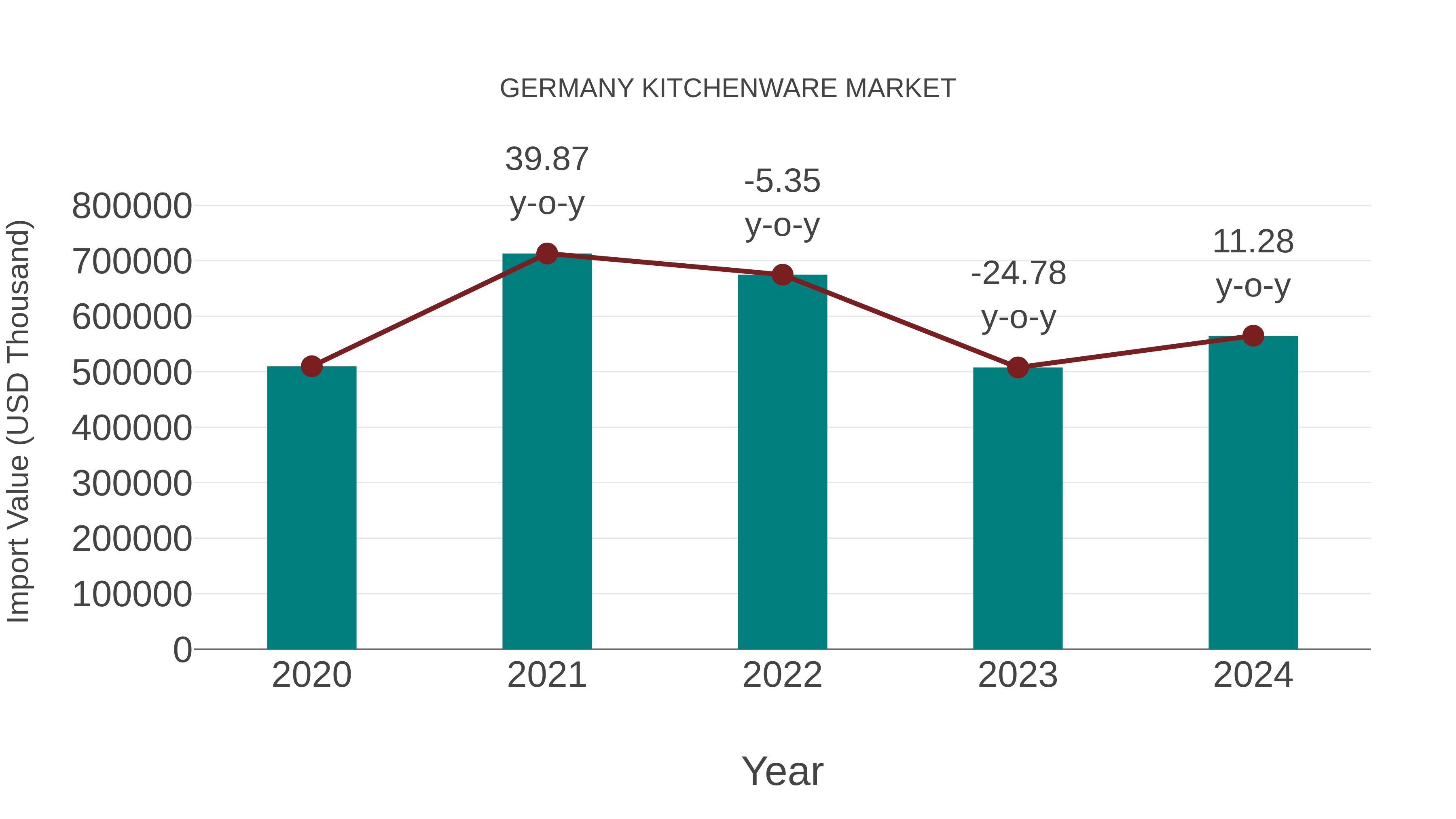
In 2024, Germany`s kitchenware market saw a notable increase in imports. The trend reflected a growing demand for foreign kitchen products among German consumers. This surge in imports impacted the market dynamics and competition among domestic and international kitchenware brands.
Germany Kitchenware Market Synopsis
The Germany kitchenware market is a thriving industry characterized by a wide range of high-quality products catering to the diverse needs of consumers. With a strong culture of cooking and dining at home, German consumers value durable and functional kitchenware items. The market offers a variety of products including cookware, bakeware, utensils, gadgets, and appliances from both domestic and international brands. Sustainability and eco-friendliness are increasingly important trends in the market, driving demand for products made from eco-friendly materials. E-commerce is witnessing significant growth in the kitchenware sector, offering consumers a convenient way to shop for a wide selection of products. Overall, the Germany kitchenware market is competitive, innovative, and focused on providing consumers with practical and stylish solutions for their cooking and dining needs.
Germany Kitchenware Market Trends
The Germany Kitchenware Market is currently experiencing a shift towards sustainable and eco-friendly products, driven by increasing consumer awareness of environmental issues. There is a growing demand for kitchenware made from natural materials such as bamboo, wood, and stainless steel, as well as products that are recyclable and have minimal packaging. Additionally, there is a trend towards multi-functional and space-saving kitchenware solutions, catering to the needs of urban dwellers with limited kitchen space. Smart kitchen gadgets and appliances are also gaining popularity, offering convenience and efficiency in cooking processes. Overall, the market is seeing a focus on quality, durability, and functionality, with an emphasis on products that align with sustainable living practices.
Germany Kitchenware Market Challenges
In the Germany Kitchenware Market, one of the key challenges is intense competition from both domestic and international players. This competition puts pressure on pricing strategies and product innovation efforts. Additionally, changing consumer preferences and an increasing focus on sustainability and quality are driving manufacturers and retailers to constantly adapt their offerings. Another challenge is the impact of economic fluctuations and regulatory changes, which can affect consumer spending habits and overall market demand. Moreover, the rise of online shopping and e-commerce platforms has led to a shift in consumer buying behavior, requiring traditional retailers to enhance their online presence and delivery services to stay competitive in the market. Overall, navigating these challenges effectively is crucial for companies operating in the Germany Kitchenware Market to sustain growth and profitability.
Germany Kitchenware Market Investment Opportunities
The Germany kitchenware market presents promising investment opportunities due to its growing demand for high-quality and innovative kitchen products. With an increasing focus on cooking at home and the rise of culinary trends, consumers are seeking durable, efficient, and aesthetically appealing kitchenware items. Investing in German kitchenware manufacturers or distributors can be lucrative, especially those offering eco-friendly and technologically advanced products to meet the evolving consumer preferences. Additionally, opportunities exist for investing in e-commerce platforms catering to the kitchenware sector, as online shopping continues to gain popularity. Collaborating with German kitchenware brands to expand their market reach domestically and internationally can also be a strategic investment move in this thriving industry.
Jordan Agar Market Government Policies
Government policies related to the Germany Kitchenware Market focus on ensuring product safety, environmental sustainability, and fair competition. The government regulates the industry through various laws and regulations, such as the Food and Commodities Act, which sets standards for kitchenware materials and production processes to protect consumer health. Additionally, there are guidelines for waste disposal and recycling to promote sustainability in the manufacturing and disposal of kitchenware products. Fair competition is supported through antitrust laws and regulations that prevent monopolies and promote a level playing field for businesses in the market. Overall, the government aims to create a safe, sustainable, and competitive environment for the Germany Kitchenware Market through its policies and regulations.
Germany Kitchenware Market Future Outlook
The future outlook for the Germany Kitchenware Market appears promising, driven by factors such as increasing consumer interest in cooking at home, rising disposable income levels, and a growing trend towards premium and innovative kitchen products. With a focus on sustainability and health-conscious living, there is a growing demand for eco-friendly and functional kitchenware products in the market. The rising popularity of cooking shows and social media influencers promoting culinary activities is also expected to fuel growth in the kitchenware sector. Manufacturers are likely to invest in product innovation, including smart kitchen appliances and multi-functional tools, to cater to evolving consumer preferences. E-commerce platforms are projected to play a significant role in expanding the market reach, offering convenience and a wide range of options for consumers.
Key Highlights of the Report:
- Germany Kitchenware Market Outlook
- Market Size of Germany Kitchenware Market, 2021
- Forecast of Germany Kitchenware Market, 2031
- Historical Data and Forecast of Germany Kitchenware Revenues & Volume for the Period 2018 - 2031
- Germany Kitchenware Market Trend Evolution
- Germany Kitchenware Market Drivers and Challenges
- Germany Kitchenware Price Trends
- Germany Kitchenware Porter's Five Forces
- Germany Kitchenware Industry Life Cycle
- Historical Data and Forecast of Germany Kitchenware Market Revenues & Volume By Product Type for the Period 2018 - 2031
- Historical Data and Forecast of Germany Kitchenware Market Revenues & Volume By Cookware for the Period 2018 - 2031
- Historical Data and Forecast of Germany Kitchenware Market Revenues & Volume By Bakeware for the Period 2018 - 2031
- Historical Data and Forecast of Germany Kitchenware Market Revenues & Volume By Others for the Period 2018 - 2031
- Historical Data and Forecast of Germany Kitchenware Market Revenues & Volume By End User for the Period 2018 - 2031
- Historical Data and Forecast of Germany Kitchenware Market Revenues & Volume By Residential Kitchen for the Period 2018 - 2031
- Historical Data and Forecast of Germany Kitchenware Market Revenues & Volume By Commercial Kitchens for the Period 2018 - 2031
- Historical Data and Forecast of Germany Kitchenware Market Revenues & Volume By Sales Channel for the Period 2018 - 2031
- Historical Data and Forecast of Germany Kitchenware Market Revenues & Volume By Online for the Period 2018 - 2031
- Historical Data and Forecast of Germany Kitchenware Market Revenues & Volume By Offline for the Period 2018 - 2031
- Germany Kitchenware Import Export Trade Statistics
- Market Opportunity Assessment By Product Type
- Market Opportunity Assessment By End User
- Market Opportunity Assessment By Sales Channel
- Germany Kitchenware Top Companies Market Share
- Germany Kitchenware Competitive Benchmarking By Technical and Operational Parameters
- Germany Kitchenware Company Profiles
- Germany Kitchenware Key Strategic Recommendations






































