Morocco Kitchenware Market Year-wise Growth Rate (2021-2031F)
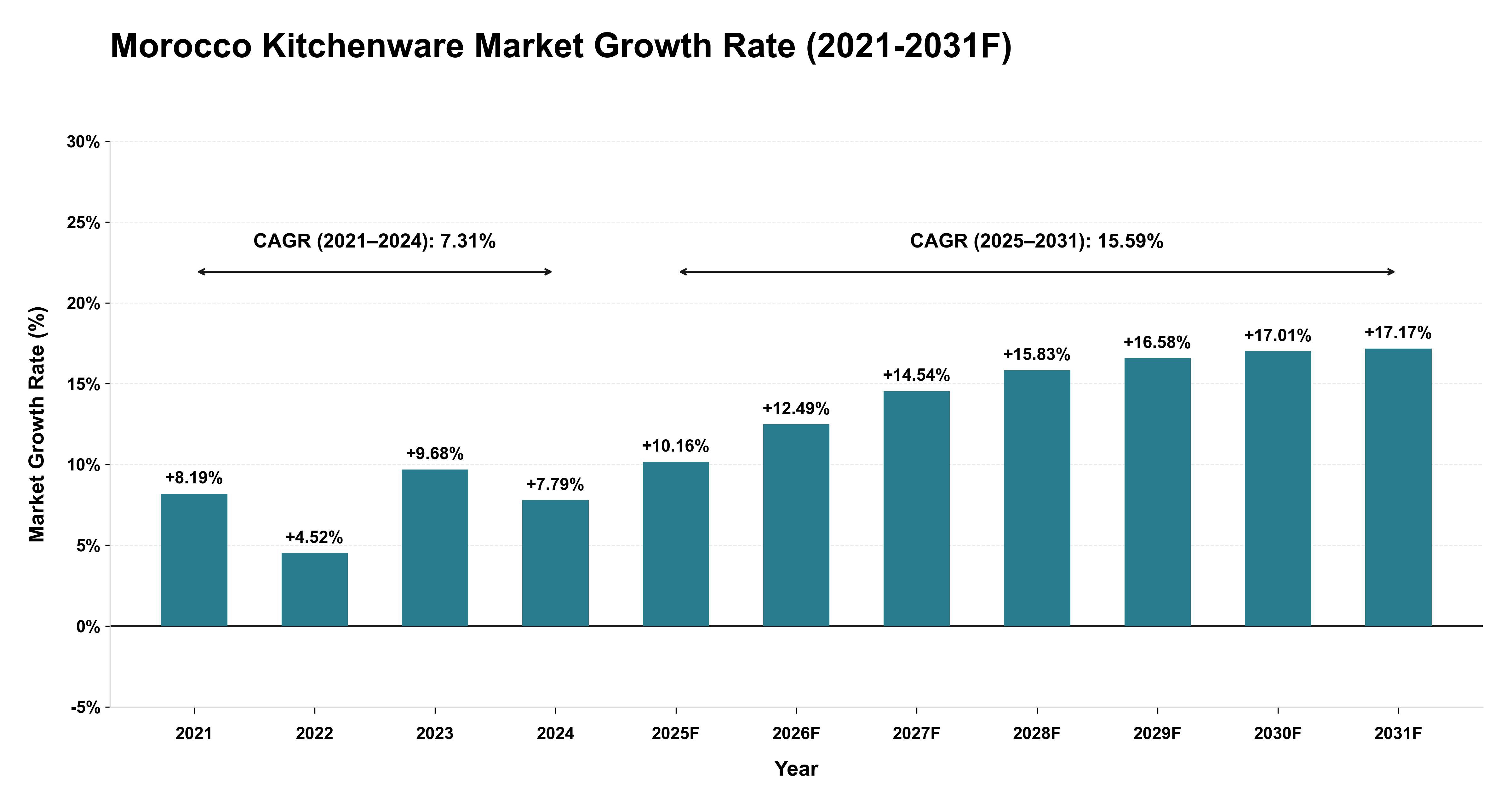
The Morocco Kitchenware Market displayed steady growth from 2021 to 2024, with a CAGR of 7.31%. This period saw fluctuating growth rates, starting strong at 8.19% in 2021, dipping to 4.52% in 2022, and rebounding to 9.68% in 2023 before stabilizing at 7.79% in 2024. The forecast period from 2025 to 2031 anticipates a significant acceleration, with a projected CAGR of 15.59%. This surge is underpinned by an upward trajectory starting at 10.16% in 2025 and steadily increasing to peak growth rates above 17% towards the end of the forecast period. The expected growth signifies increased consumer demand for kitchenware products, potentially driven by evolving consumer lifestyles, rising disposable incomes, and changing culinary preferences in Morocco. Additionally, advancements in kitchenware technology and materials may also contribute to this robust market expansion over the forecast timeline.
Morocco Kitchenware Market Synopsis
The Morocco kitchenware market is experiencing steady growth driven by factors such as rising disposable income, changing consumer lifestyles, and increasing awareness about healthy eating habits. Traditional Moroccan kitchenware such as tagines, couscous pots, and tea sets continue to be popular among locals and tourists alike, showcasing the country`s rich culinary heritage. Additionally, there is a growing demand for modern and innovative kitchenware products imported from international brands, particularly in urban areas. The market is competitive with both local manufacturers and international players vying for market share. Key distribution channels include specialty kitchenware stores, department stores, hypermarkets, and online platforms. As consumers become more discerning about quality and design, there is a trend towards premium and eco-friendly kitchenware products in the market.
Morocco Kitchenware Market Trends
The kitchenware market in Morocco is experiencing a growing demand for modern and innovative products that offer convenience and efficiency in the kitchen. Consumers are increasingly looking for multi-functional and space-saving kitchenware items that cater to their busy lifestyles. Sustainable and eco-friendly kitchenware options are also gaining popularity among environmentally conscious consumers. Additionally, there is a rising interest in high-quality cookware and utensils that enhance the cooking experience and provide durability. Manufacturers and retailers in the Morocco kitchenware market are focusing on offering a wide range of products that combine functionality with aesthetics to attract a diverse customer base. Online platforms and e-commerce channels are playing a significant role in expanding the reach of kitchenware products to a larger audience in the country.
Morocco Kitchenware Market Challenges
In the Morocco Kitchenware Market, some challenges faced include competition from imported products, fluctuating raw material costs, and the need for continuous innovation to meet changing consumer preferences. Imported kitchenware products often have a price advantage due to economies of scale, making it challenging for local manufacturers to compete. Additionally, the fluctuating costs of raw materials such as stainless steel or aluminum can impact profit margins and pricing strategies. To stay competitive, companies must invest in research and development to create unique and appealing products that cater to the tastes of Moroccan consumers. Adapting to trends such as eco-friendly materials or smart kitchen appliances is crucial for long-term success in this market.
Morocco Kitchenware Market Investment Opportunities
The Morocco kitchenware market presents several investment opportunities for both local and international investors. With the growing trend of home cooking and culinary culture in Morocco, there is a rising demand for high-quality kitchenware products such as cookware, bakeware, utensils, and kitchen gadgets. Investing in innovative and premium kitchenware brands that cater to the preferences of Moroccan consumers, such as traditional designs and durable materials, could be a profitable venture. Additionally, there is potential for e-commerce platforms specializing in kitchenware to expand their presence in the Moroccan market, as online shopping continues to gain popularity among consumers. Overall, tapping into the growing kitchenware sector in Morocco could be a lucrative investment opportunity for those looking to capitalize on the country`s evolving culinary landscape.
Jordan Agar Market Government Policies
Government policies related to the Morocco Kitchenware Market primarily focus on promoting domestic production, supporting small and medium-sized enterprises (SMEs), and ensuring product quality and safety standards. The Moroccan government has implemented initiatives to reduce import dependency by encouraging local manufacturing of kitchenware products, providing financial incentives and tax breaks to SMEs in the sector, and offering technical assistance to improve production processes. Additionally, there are regulations in place to enforce quality controls and safety standards for kitchenware products sold in the market, ensuring consumer protection and product reliability. Overall, the government`s policies aim to boost the competitiveness of the domestic kitchenware industry, stimulate economic growth, and safeguard consumer interests in Morocco.
Morocco Kitchenware Market Future Outlook
The future outlook for the Morocco Kitchenware Market appears promising with steady growth expected in the coming years. Factors such as increasing urbanization, rising disposable incomes, and changing consumer lifestyles are driving the demand for kitchenware products in the country. Moreover, the growing trend of home cooking and culinary activities, particularly among the younger population, is further fueling market growth. The rise of e-commerce platforms and online shopping is also expected to boost market accessibility and reach. Manufacturers and retailers in the kitchenware sector are likely to focus on product innovation, quality, and sustainability to cater to the evolving consumer preferences and to stay competitive in the market. Overall, the Morocco Kitchenware Market is poised for expansion and offers opportunities for both domestic and international players.
Key Highlights of the Report:
- Morocco Kitchenware Market Outlook
- Market Size of Morocco Kitchenware Market, 2021
- Forecast of Morocco Kitchenware Market, 2031
- Historical Data and Forecast of Morocco Kitchenware Revenues & Volume for the Period 2018 - 2031
- Morocco Kitchenware Market Trend Evolution
- Morocco Kitchenware Market Drivers and Challenges
- Morocco Kitchenware Price Trends
- Morocco Kitchenware Porter's Five Forces
- Morocco Kitchenware Industry Life Cycle
- Historical Data and Forecast of Morocco Kitchenware Market Revenues & Volume By Product Type for the Period 2018 - 2031
- Historical Data and Forecast of Morocco Kitchenware Market Revenues & Volume By Cookware for the Period 2018 - 2031
- Historical Data and Forecast of Morocco Kitchenware Market Revenues & Volume By Bakeware for the Period 2018 - 2031
- Historical Data and Forecast of Morocco Kitchenware Market Revenues & Volume By Others for the Period 2018 - 2031
- Historical Data and Forecast of Morocco Kitchenware Market Revenues & Volume By End User for the Period 2018 - 2031
- Historical Data and Forecast of Morocco Kitchenware Market Revenues & Volume By Residential Kitchen for the Period 2018 - 2031
- Historical Data and Forecast of Morocco Kitchenware Market Revenues & Volume By Commercial Kitchens for the Period 2018 - 2031
- Historical Data and Forecast of Morocco Kitchenware Market Revenues & Volume By Sales Channel for the Period 2018 - 2031
- Historical Data and Forecast of Morocco Kitchenware Market Revenues & Volume By Online for the Period 2018 - 2031
- Historical Data and Forecast of Morocco Kitchenware Market Revenues & Volume By Offline for the Period 2018 - 2031
- Morocco Kitchenware Import Export Trade Statistics
- Market Opportunity Assessment By Product Type
- Market Opportunity Assessment By End User
- Market Opportunity Assessment By Sales Channel
- Morocco Kitchenware Top Companies Market Share
- Morocco Kitchenware Competitive Benchmarking By Technical and Operational Parameters
- Morocco Kitchenware Company Profiles
- Morocco Kitchenware Key Strategic Recommendations






































