Germany Managed Mobility Services Market Size & Growth Rate (2026-2032)
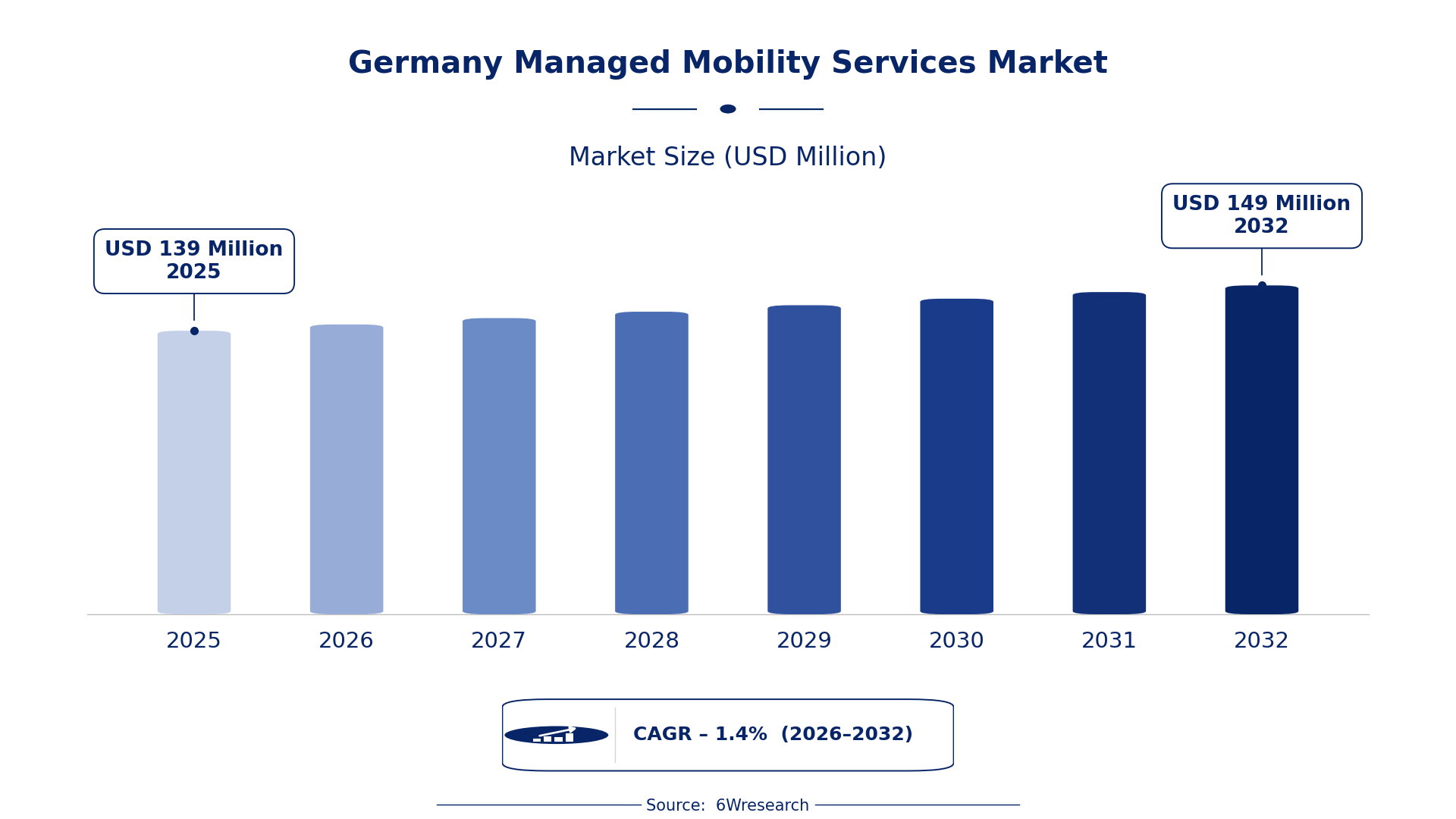
The Germany Managed Mobility Services Market was estimated at USD 139 Million in 2025 and is projected to reach USD 149 Million by 2032, growing at a CAGR of 1.4% from 2026 to 2032.
Germany Managed Mobility Services Market Synopsis
The primary driver of the Germany Managed Mobility Services Market is the increasing complexity organizations face in managing a multitude of mobile devices and applications. As businesses adapt to remote and hybrid work, the need for streamlined mobile operations has never been more pressing. Comprehensive managed mobility solutions offer organizations the ability to mitigate risks while enhancing workforce productivity.
Security concerns tied to mobile devices also strongly influence this market. With stringent regulations like GDPR in place, companies must prioritize data protection. Managed mobility service providers are thus increasingly seen as essential partners in navigating these challenges effectively.
Germany Managed Mobility Services Market Year-wise Growth Rate and Key Drivers
This graph illustrates the annual growth rates of the Germany Managed Mobility Services Market from 2021 to 2032, highlighting a steady upward trajectory and projected expansion over the forecast period.
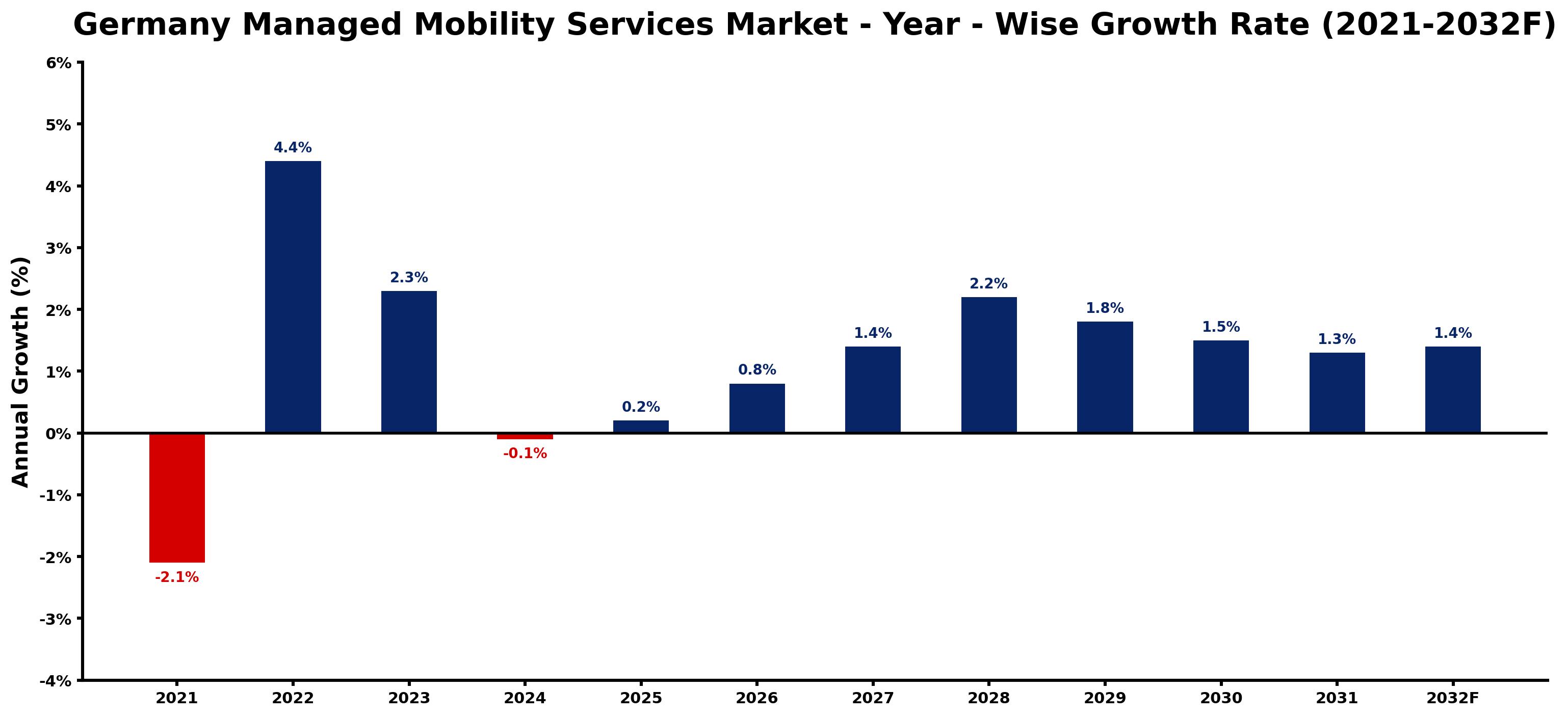
The table below presents the year‑wise growth rates along with the key drivers influencing the market
| Year | Growth Rate | Major Drivers |
| 2021 | -2.1% | Supply chain issues affecting device procurement and availability |
| 2022 | 4.4% | Increased tech adoption in German small businesses. |
| 2023 | 2.3% | Growing emphasis on sustainable corporate mobility solutions. |
| 2024 | -0.1% | Changes in Mobility Package impacting service provider operations |
| 2025 | 0.2% | Regulatory support for green fleet initiatives in Germany. |
| 2026 | 0.8% | Rising smartphone penetration driving app-based mobility services. |
| 2027 | 1.4% | Strong focus on data security within mobility framework. |
| 2028 | 2.2% | Germany's Digital Strategy boosts IT infrastructure investments. |
| 2029 | 1.8% | Expanding electric vehicle infrastructure enhances managed services viability. |
| 2030 | 1.5% | Incentives for telematics integration in corporate mobility strategies. |
| 2031 | 1.3% | Shift towards subscription models in German mobility trends. |
| 2032 | 1.4% | Enhanced cybersecurity regulations for managed mobility solutions. |
Note: Market size estimations and growth projections presented in this report are based on 6Wresearch's proprietary forecasting methodology, utilizing the latest available industry data, government publications, and primary research inputs.
Germany Managed Mobility Services Market Key Takeaways
Below are some of the specific key takeaways from the market, including:
- Organizations are prioritizing comprehensive solutions for mobile device management.
- The shift towards hybrid work models has amplified demand for managed mobility services.
- Data protection regulations significantly impact service offerings within the market.
- Flexibility and cost-effectiveness remain critical concerns for enterprises adopting mobility solutions.
- Emerging technologies like AI and IoT are shaping the future of managed mobility services.
Evaluation of Restraints in Germany Managed Mobility Services Market
The growth of the Germany Managed Mobility Services Market is tempered by several significant restraints. Organizations often struggle to balance the imperatives of security, flexibility, and cost management. As companies seek to enhance their mobility solutions, they face challenges related to data privacy regulations and the complexities of device management. Furthermore, competition from in-house IT teams can stifle demand for outsourced solutions, making it essential for service providers to differentiate their offerings effectively.
Germany Managed Mobility Services Market Trends
Currently, there is a clear trend towards integrating artificial intelligence into mobility management solutions. This technology aids in predictive analytics and enhances security measures, creating a more efficient service environment. Additionally, the focus on sustainability is gaining traction, prompting businesses to adopt eco-friendly practices in their mobile device lifecycle management.
The transition to 5G technology also presents opportunities for improved service offerings, including enhanced connectivity and speed. As organizations increasingly leverage cloud-based applications, the importance of seamless mobile device management grows. Such trends are indicative of a shifting market that demands agility and innovation.
Germany Managed Mobility Services Market Opportunities
As organizations increasingly invest in digital transformation initiatives, genuine growth opportunities lie in developing tailored managed mobility solutions. Service providers can explore niche markets such as health care and education, where specific compliance and security needs must be met. Additionally, partnerships with technology innovators will be crucial in enhancing service capabilities and customer offerings.
The rising trend of mobile application development presents further opportunities, as businesses seek to enhance their customer engagement through dedicated mobile platforms. Capturing this segment will require strategic investments and adaptive strategies to cater to diverse industry requirements.
Government Initiatives in the Germany Managed Mobility Services Market
Government policy plays a vital role in shaping the Germany Managed Mobility Services Market, especially regarding data protection and telecommunications regulations. With an emphasis on securing mobile communications, recent legislative initiatives aim to bolster cybersecurity frameworks and promote smart mobility solutions. Understanding this regulatory environment is essential for companies looking to operate within this sector.
- A national digital infrastructure upgrade programme now in its rollout phase aims to improve connectivity nationwide.
- A regulatory framework introduced in 2025 mandates stricter guidelines for data privacy in mobile communications.
- Currently ongoing initiatives focus on enhancing workforce mobility through public-private partnerships aimed at integrating mobility solutions in local businesses.
- A planned public-private initiative expected to expand access to telecom infrastructure by 2028 will support managed mobility services in remote regions.
Future Insights of the Germany Managed Mobility Services Market
From 2026 to 2032, the Germany Managed Mobility Services Market is likely to see transformative shifts driven by technological advancements. The integration of artificial intelligence and machine learning is set to redefine how mobility management is conducted, offering unprecedented levels of efficiency and security. Companies that proactively embrace these technologies will gain a competitive edge as they evolve with market demands. Enhanced data analytics capabilities will further empower organizations to make informed decisions regarding their mobile workforce strategies.
Germany Managed Mobility Services Market Latest Developments
In the last year, the Germany Managed Mobility Services Market has experienced a surge of activity characterized by technological advancements and strategic partnerships. Providers have been actively enhancing their offerings to better meet the needs of organizations navigating the complexities of mobile device management.
- A major technology vendor launched an AI-driven mobile device management solution in early 2025, designed to enhance security and streamline operations.
- A leading regional operator is currently implementing a nationwide upgrade of mobile network infrastructure to improve service delivery and connectivity.
- An initiative that began in mid-2025 and remains underway focuses on developing tailored mobility solutions for the healthcare sector.
- A rollout expected to begin in the second half of 2026 aims to enhance cloud-based application support, further elevating service capabilities for managed mobility.
Germany Managed Mobility Services Market - Key Attractiveness of the Report
- 10 Years of Market Numbers
- Historical Data Starting from 2022 to 2025
- Base Year: 2025
- Forecast Data until 2032
- Key Performance Indicators Impacting the Market
- Major Upcoming Developments and Projects
Key Highlights of the Report:
- Germany Managed Mobility Services Market Outlook
- Market Size of Germany Managed Mobility Services Market, 2025
- Forecast of Germany Managed Mobility Services Market, 2032
- Historical Data and Forecast of Germany Managed Mobility Services Revenues & Volume for the Period 2022-2032F
- Germany Managed Mobility Services Market Trend Evolution
- Germany Managed Mobility Services Market Drivers and Challenges
- Germany Managed Mobility Services Price Trends
- Germany Managed Mobility Services Porter's Five Forces
- Germany Managed Mobility Services Industry Life Cycle
- Historical Data and Forecast of Germany Managed Mobility Services Market Revenues & Volume By Function for the Period 2022-2032F
- Historical Data and Forecast of Germany Managed Mobility Services Market Revenues & Volume By Device Management for the Period 2022-2032F
- Historical Data and Forecast of Germany Managed Mobility Services Market Revenues & Volume By Application Management for the Period 2022-2032F
- Historical Data and Forecast of Germany Managed Mobility Services Market Revenues & Volume By Security Management for the Period 2022-2032F
- Historical Data and Forecast of Germany Managed Mobility Services Market Revenues & Volume By Maintenance & Support for the Period 2022-2032F
- Historical Data and Forecast of Germany Managed Mobility Services Market Revenues & Volume By Organization Size for the Period 2022-2032F
- Historical Data and Forecast of Germany Managed Mobility Services Market Revenues & Volume By SMEs for the Period 2022-2032F
- Historical Data and Forecast of Germany Managed Mobility Services Market Revenues & Volume By Large Enterprises for the Period 2022-2032F
- Historical Data and Forecast of Germany Managed Mobility Services Market Revenues & Volume By Industry Vertical for the Period 2022-2032F
- Historical Data and Forecast of Germany Managed Mobility Services Market Revenues & Volume By Healthcare for the Period 2022-2032F
- Historical Data and Forecast of Germany Managed Mobility Services Market Revenues & Volume By Manufacturing for the Period 2022-2032F
- Historical Data and Forecast of Germany Managed Mobility Services Market Revenues & Volume By Logistics and Transportation for the Period 2022-2032F
- Historical Data and Forecast of Germany Managed Mobility Services Market Revenues & Volume By Retail for the Period 2022-2032F
- Historical Data and Forecast of Germany Managed Mobility Services Market Revenues & Volume By Financial Services for the Period 2022-2032F
- Historical Data and Forecast of Germany Managed Mobility Services Market Revenues & Volume By Telecom and IT for the Period 2022-2032F
- Historical Data and Forecast of Germany Managed Mobility Services Market Revenues & Volume By Media and Entertainment for the Period 2022-2032F
- Historical Data and Forecast of Germany Managed Mobility Services Market Revenues & Volume By Travel and Hospitality for the Period 2022-2032F
- Germany Managed Mobility Services Import Export Trade Statistics
- Market Opportunity Assessment By Function
- Market Opportunity Assessment By Organization Size
- Market Opportunity Assessment By Industry Vertical
- Germany Managed Mobility Services Top Companies Market Share
- Germany Managed Mobility Services Competitive Benchmarking By Technical and Operational Parameters
- Germany Managed Mobility Services Company Profiles
- Germany Managed Mobility Services Key Strategic Recommendations






































