Germany Medical Gases Market: Import Trend Analysis
In 2024, Germany`s medical gases market witnessed a consistent upward trend in imports. The demand for imported medical gases in Germany surged, reflecting the country`s reliance on foreign suppliers to meet its healthcare needs.
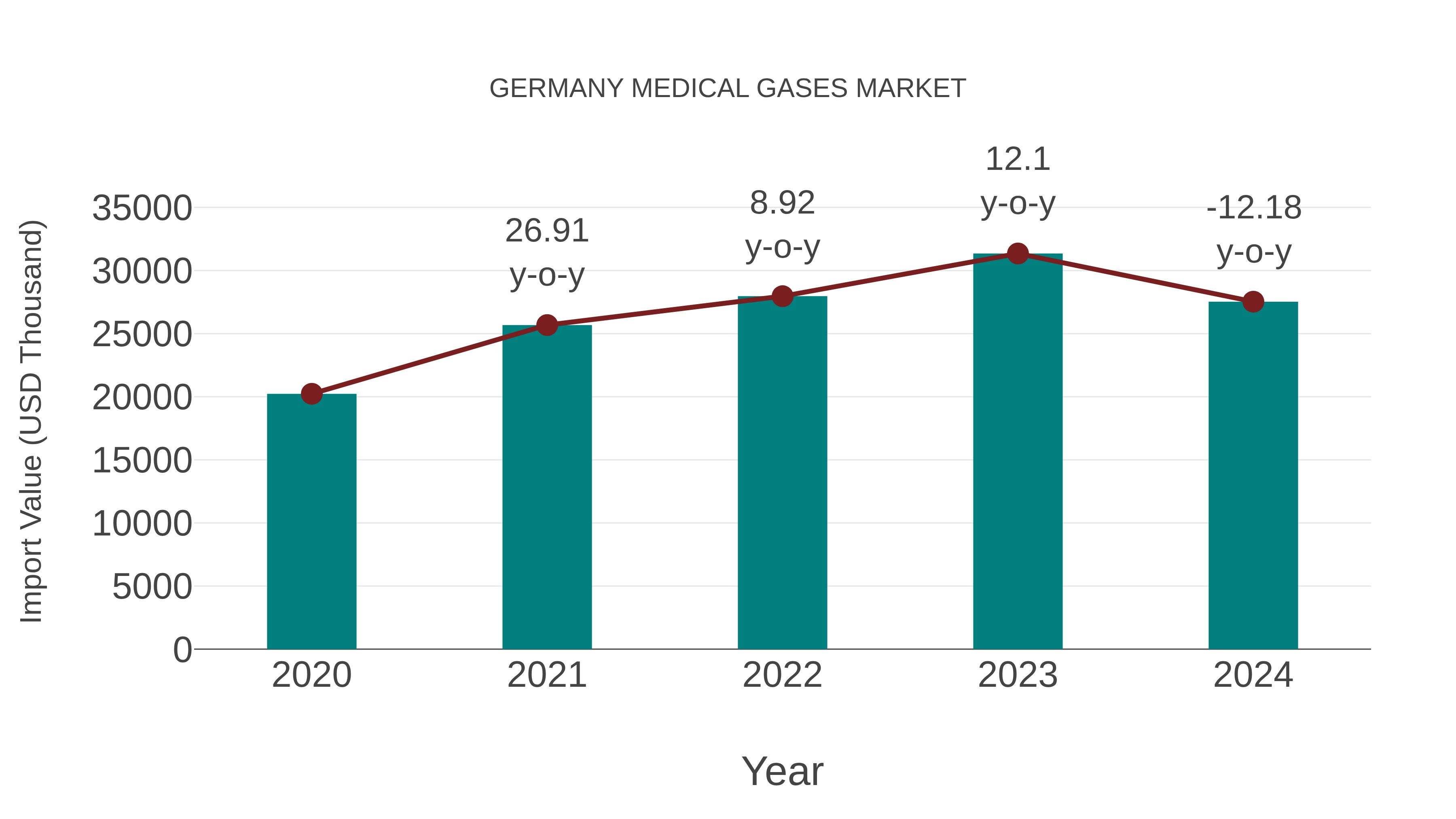
Germany Medical Gases Market Overview
The Germany medical gases market is characterized by a growing demand for various gases such as oxygen, nitrogen, nitrous oxide, carbon dioxide, and medical air for use in healthcare facilities. The market is driven by factors such as the increasing prevalence of chronic diseases, advancements in medical technology, and the rising geriatric population. Key players in the market include Linde plc, Air Liquide, and Praxair, Inc., who offer a wide range of medical gas products and services. The market is highly regulated to ensure the quality and safety of medical gases, with strict adherence to standards set by regulatory authorities. Additionally, the market is witnessing a trend towards the adoption of portable and convenient gas delivery systems to improve patient care and mobility within healthcare settings.
Germany Medical Gases Market Trends
The Germany medical gases market is experiencing notable trends such as the increasing demand for home healthcare services, which has led to a rise in the use of medical gases for respiratory therapies in residential settings. Additionally, the growing focus on providing high-quality patient care is driving the adoption of medical gases for various medical procedures and surgeries. Technological advancements in gas delivery systems and the shift towards eco-friendly and sustainable practices are also influencing the market landscape. Furthermore, the COVID-19 pandemic has highlighted the importance of medical gases in the treatment of respiratory illnesses, leading to a surge in demand for oxygen and other gases in healthcare facilities. Overall, the Germany medical gases market is witnessing a shift towards more personalized and efficient healthcare delivery through the use of advanced gas therapies.
Germany Medical Gases Market Challenges
In the Germany medical gases market, challenges include strict regulations governing the production, storage, and distribution of medical gases, which can increase operational costs for companies. Additionally, the need for specialized equipment and infrastructure for the safe handling of medical gases poses a barrier to entry for new players in the market. Competition among suppliers can also be intense, leading to pricing pressures and the need for companies to differentiate their offerings through quality, reliability, and customer service. Moreover, fluctuations in raw material prices and the increasing demand for medical gases due to the growing healthcare sector further complicate market dynamics, requiring companies to continuously adapt their strategies to remain competitive in the evolving landscape.
Germany Medical Gases Market Investment Opportunities
In the Germany medical gases market, there are several promising investment opportunities due to the increasing demand for medical gases in healthcare facilities. One area of potential investment is in the production and distribution of medical oxygen, nitrogen, and other gases that are essential for medical procedures and treatments. Additionally, the growing trend towards home healthcare services is creating a need for portable and convenient medical gas delivery systems, presenting an opportunity for companies specializing in innovative gas delivery solutions. Furthermore, with advancements in medical technology and the rise of telemedicine, investing in the development of specialized medical gas equipment and systems tailored for remote healthcare services could also be a lucrative opportunity in the Germany medical gases market.
Germany Medical Gases Market Government Policy
In Germany, government policies related to the medical gases market are primarily governed by the Medical Devices Act (Medizinproduktegesetz) and the regulations by the Federal Institute for Drugs and Medical Devices (BfArM). Medical gases are considered medical devices and must adhere to strict quality and safety standards set forth by these regulations. The government also monitors the production, distribution, and use of medical gases to ensure compliance with Good Manufacturing Practices (GMP) and Good Distribution Practices (GDP). Additionally, reimbursement policies by statutory health insurance funds play a significant role in the procurement and utilization of medical gases in healthcare facilities. Overall, government policies in Germany aim to guarantee the safety, quality, and accessibility of medical gases for healthcare providers and patients.
Germany Medical Gases Market Future Outlook
The Germany medical gases market is expected to experience steady growth in the coming years, driven by increasing demand for medical gases in various healthcare applications such as respiratory therapy, anesthesia, and emergency care. The market is anticipated to benefit from technological advancements in gas production and delivery systems, as well as the rising prevalence of chronic respiratory diseases and the aging population in Germany. Additionally, the ongoing focus on improving healthcare infrastructure and services in the country is likely to further fuel the demand for medical gases. However, regulatory challenges and price competition among market players could pose some challenges to market growth. Overall, with the increasing emphasis on patient safety and quality of care, the Germany medical gases market is projected to expand at a moderate yet sustainable pace in the foreseeable future.
Key Highlights of the Report:
- Germany Medical Gases Market Outlook
- Market Size of Germany Medical Gases Market,2025
- Forecast of Germany Medical Gases Market, 2032
- Historical Data and Forecast of Germany Medical Gases Revenues & Volume for the Period 2022-2032F
- Germany Medical Gases Market Trend Evolution
- Germany Medical Gases Market Drivers and Challenges
- Germany Medical Gases Price Trends
- Germany Medical Gases Porter's Five Forces
- Germany Medical Gases Industry Life Cycle
- Historical Data and Forecast of Germany Medical Gases Market Revenues & Volume By Technology Type for the Period 2022-2032F
- Historical Data and Forecast of Germany Medical Gases Market Revenues & Volume By Fractional Distillation for the Period 2022-2032F
- Historical Data and Forecast of Germany Medical Gases Market Revenues & Volume By Molecular Sieve for the Period 2022-2032F
- Historical Data and Forecast of Germany Medical Gases Market Revenues & Volume By Semipermeable Membrane for the Period 2022-2032F
- Historical Data and Forecast of Germany Medical Gases Market Revenues & Volume By Physical Separators for the Period 2022-2032F
- Historical Data and Forecast of Germany Medical Gases Market Revenues & Volume By Application Area for the Period 2022-2032F
- Historical Data and Forecast of Germany Medical Gases Market Revenues & Volume By Therapeutic Applications for the Period 2022-2032F
- Historical Data and Forecast of Germany Medical Gases Market Revenues & Volume By Pharmaceutical Manufacturing for the Period 2022-2032F
- Historical Data and Forecast of Germany Medical Gases Market Revenues & Volume By Diagnostic Applications for the Period 2022-2032F
- Historical Data and Forecast of Germany Medical Gases Market Revenues & Volume By Drug Discovery for the Period 2022-2032F
- Historical Data and Forecast of Germany Medical Gases Market Revenues & Volume By Quality Control for the Period 2022-2032F
- Historical Data and Forecast of Germany Medical Gases Market Revenues & Volume By End User for the Period 2022-2032F
- Historical Data and Forecast of Germany Medical Gases Market Revenues & Volume By Hospitals for the Period 2022-2032F
- Historical Data and Forecast of Germany Medical Gases Market Revenues & Volume By Home Healthcare for the Period 2022-2032F
- Historical Data and Forecast of Germany Medical Gases Market Revenues & Volume By Pharmaceutical Companies for the Period 2022-2032F
- Historical Data and Forecast of Germany Medical Gases Market Revenues & Volume By Academic Institutions for the Period 2022-2032F
- Historical Data and Forecast of Germany Medical Gases Market Revenues & Volume By Emergency Service Providers for the Period 2022-2032F
- Historical Data and Forecast of Germany Medical Gases Market Revenues & Volume By Product Type for the Period 2022-2032F
- Historical Data and Forecast of Germany Medical Gases Market Revenues & Volume By Oxygen Gases for the Period 2022-2032F
- Historical Data and Forecast of Germany Medical Gases Market Revenues & Volume By Carbon Dioxide Gases for the Period 2022-2032F
- Historical Data and Forecast of Germany Medical Gases Market Revenues & Volume By Nitrogen Gases for the Period 2022-2032F
- Historical Data and Forecast of Germany Medical Gases Market Revenues & Volume By Helium Gases for the Period 2022-2032F
- Historical Data and Forecast of Germany Medical Gases Market Revenues & Volume By Gas Mixtures for the Period 2022-2032F
- Germany Medical Gases Import Export Trade Statistics
- Market Opportunity Assessment By Technology Type
- Market Opportunity Assessment By Application Area
- Market Opportunity Assessment By End User
- Market Opportunity Assessment By Product Type
- Germany Medical Gases Top Companies Market Share
- Germany Medical Gases Competitive Benchmarking By Technical and Operational Parameters
- Germany Medical Gases Company Profiles
- Germany Medical Gases Key Strategic Recommendations






































