Germany Natural Stone Market: Import Trend Analysis
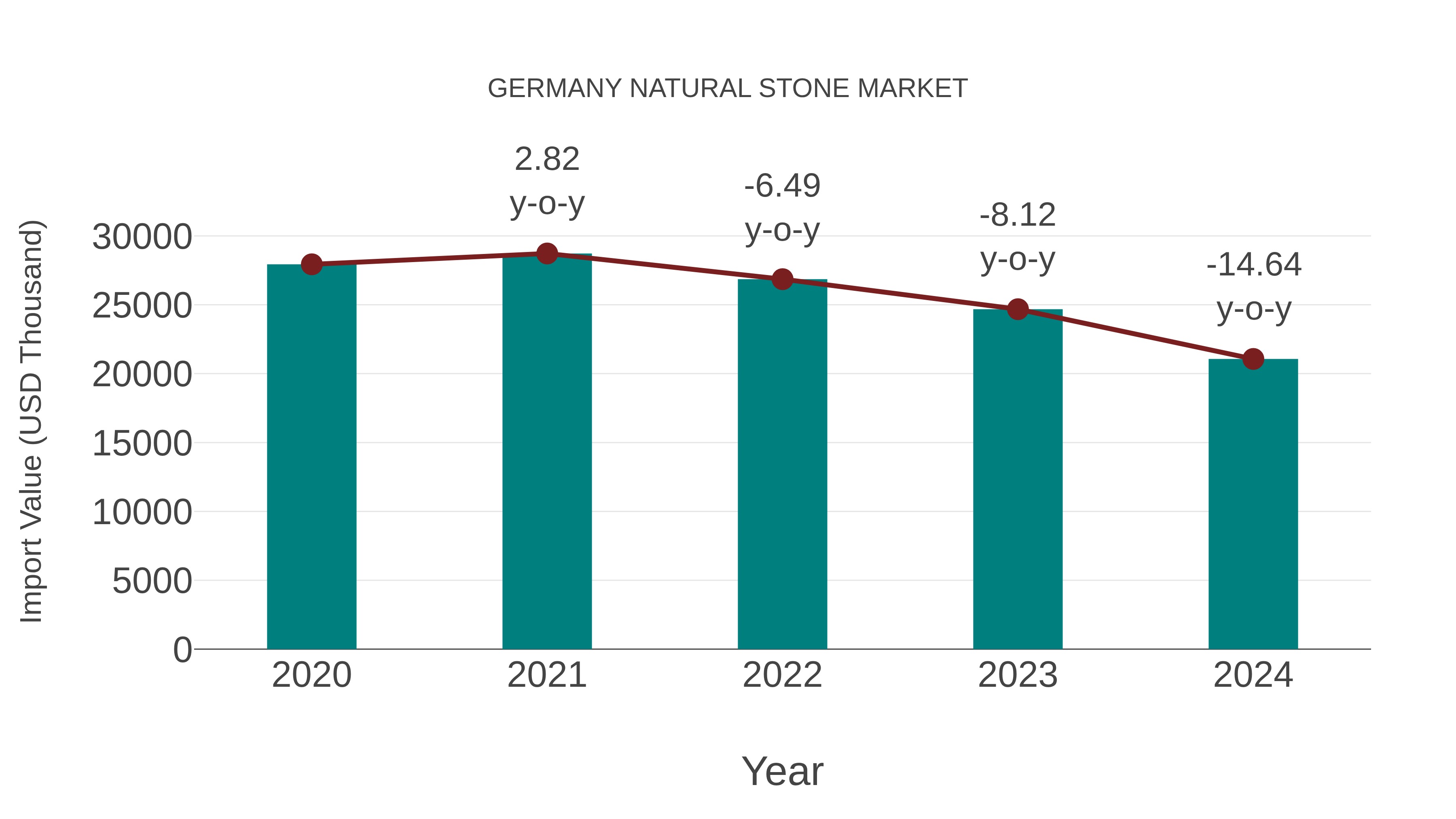
Germany`s natural stone market experienced a decline in imports from 2023 to 2024, with a growth rate of -14.64% for that period. The compound annual growth rate (CAGR) for imports from 2020 to 2024 was -6.81%. This negative trend could be attributed to shifts in demand, changes in trade policies, or market instability during that period.
Germany Natural Stone Market Synopsis
The Germany natural stone market is characterized by a growing demand for high-quality natural stone products across various sectors such as construction, landscaping, and interior design. The market is driven by factors like the durability, aesthetic appeal, and sustainability of natural stone materials. Key trends in the market include a shift towards sustainable and eco-friendly sourcing practices, as well as an increasing preference for unique and custom-designed natural stone products. Major players in the Germany natural stone market include both domestic and international manufacturers, who are focusing on product innovation and expanding their distribution networks to cater to the growing demand. Overall, the market is expected to witness steady growth in the coming years due to the country`s strong economy and increasing investments in infrastructure development projects.
Germany Natural Stone Market Trends
The Germany Natural Stone Market is experiencing a growing demand for sustainable and environmentally friendly products, with a focus on locally sourced materials and ethical extraction practices. Consumers are increasingly seeking unique and high-quality natural stones for interior and exterior design applications, such as flooring, countertops, and wall cladding. There is also a rising interest in innovative finishes and textures, as well as a preference for natural stone products that offer durability and longevity. Additionally, the market is seeing a trend towards the use of natural stones in landscaping and outdoor design projects, as they provide a timeless and sophisticated aesthetic. Overall, the Germany Natural Stone Market is evolving towards more eco-conscious and design-forward offerings to meet the demands of modern consumers.
Germany Natural Stone Market Challenges
In the Germany Natural Stone Market, challenges include increasing competition from alternative materials such as engineered stone and ceramics, fluctuating raw material prices, and environmental concerns related to extraction and transportation of natural stone. The market also faces issues with maintaining high quality standards and ensuring ethical sourcing practices, as well as meeting changing consumer preferences for sustainable and eco-friendly products. Additionally, the industry must navigate complex regulations and certifications related to natural stone extraction and processing, which can impact production costs and market competitiveness. Overall, the Germany Natural Stone Market must adapt to these challenges by innovating processes, enhancing sustainability efforts, and improving supply chain transparency to remain resilient in a dynamic and evolving market landscape.
Germany Natural Stone Market Investment Opportunities
The Germany Natural Stone Market offers several investment opportunities due to the steady growth in the construction industry and the increasing demand for high-quality natural stone products. Investors can consider investing in natural stone extraction and processing companies, as well as distribution and retail businesses that cater to the construction and interior design sectors. Additionally, there is potential in investing in technological advancements in the natural stone industry, such as innovative extraction methods or sustainable production practices. With Germany`s strong economy and reputation for quality craftsmanship, investing in the natural stone market can provide long-term growth potential and opportunities for diversification in the construction materials sector.
Jordan Agar Market Government Policies
The German government has implemented various policies to regulate and promote sustainability in the natural stone market. These policies include environmental regulations to ensure responsible quarrying practices, such as minimizing environmental impact and promoting reforestation. Additionally, there are also efforts to support the use of domestically sourced natural stone to reduce carbon emissions associated with transportation. The government has also introduced incentives for companies to invest in sustainable extraction and processing methods. Moreover, there are regulations in place to ensure worker safety and fair labor practices within the natural stone industry. Overall, the government`s policies aim to balance the economic benefits of the natural stone market with environmental conservation and social responsibility.
Germany Natural Stone Market Future Outlook
The Germany Natural Stone Market is poised for steady growth in the coming years, driven by increasing demand from the construction and infrastructure sectors. The market is expected to benefit from the growing preference for natural materials in various applications such as building facades, flooring, and countertops, due to their durability, aesthetic appeal, and sustainability. Additionally, the rising focus on eco-friendly and energy-efficient construction practices is likely to further boost the demand for natural stone products in Germany. With advancements in quarrying techniques and a wide variety of stone types available, the market is anticipated to expand, offering opportunities for both domestic and international suppliers to capitalize on the growing demand for natural stone in the country.
Key Highlights of the Report:
- Germany Natural Stone Market Outlook
- Market Size of Germany Natural Stone Market, 2021
- Forecast of Germany Natural Stone Market, 2031
- Historical Data and Forecast of Germany Natural Stone Revenues & Volume for the Period 2018 - 2031
- Germany Natural Stone Market Trend Evolution
- Germany Natural Stone Market Drivers and Challenges
- Germany Natural Stone Price Trends
- Germany Natural Stone Porter's Five Forces
- Germany Natural Stone Industry Life Cycle
- Historical Data and Forecast of Germany Natural Stone Market Revenues & Volume By Type for the Period 2018 - 2031
- Historical Data and Forecast of Germany Natural Stone Market Revenues & Volume By Marble for the Period 2018 - 2031
- Historical Data and Forecast of Germany Natural Stone Market Revenues & Volume By Granite for the Period 2018 - 2031
- Historical Data and Forecast of Germany Natural Stone Market Revenues & Volume By Limestone for the Period 2018 - 2031
- Historical Data and Forecast of Germany Natural Stone Market Revenues & Volume By Others for the Period 2018 - 2031
- Historical Data and Forecast of Germany Natural Stone Market Revenues & Volume By Application for the Period 2018 - 2031
- Historical Data and Forecast of Germany Natural Stone Market Revenues & Volume By Flooring for the Period 2018 - 2031
- Historical Data and Forecast of Germany Natural Stone Market Revenues & Volume By Memorial Arts for the Period 2018 - 2031
- Historical Data and Forecast of Germany Natural Stone Market Revenues & Volume By Wall Cladding for the Period 2018 - 2031
- Historical Data and Forecast of Germany Natural Stone Market Revenues & Volume By Others for the Period 2018 - 2031
- Historical Data and Forecast of Germany Natural Stone Market Revenues & Volume By Construction Type for the Period 2018 - 2031
- Historical Data and Forecast of Germany Natural Stone Market Revenues & Volume By New Construction for the Period 2018 - 2031
- Historical Data and Forecast of Germany Natural Stone Market Revenues & Volume By Renovation for the Period 2018 - 2031
- Germany Natural Stone Import Export Trade Statistics
- Market Opportunity Assessment By Type
- Market Opportunity Assessment By Application
- Market Opportunity Assessment By Construction Type
- Germany Natural Stone Top Companies Market Share
- Germany Natural Stone Competitive Benchmarking By Technical and Operational Parameters
- Germany Natural Stone Company Profiles
- Germany Natural Stone Key Strategic Recommendations






































