Germany Pepper Market: Import Trend Analysis
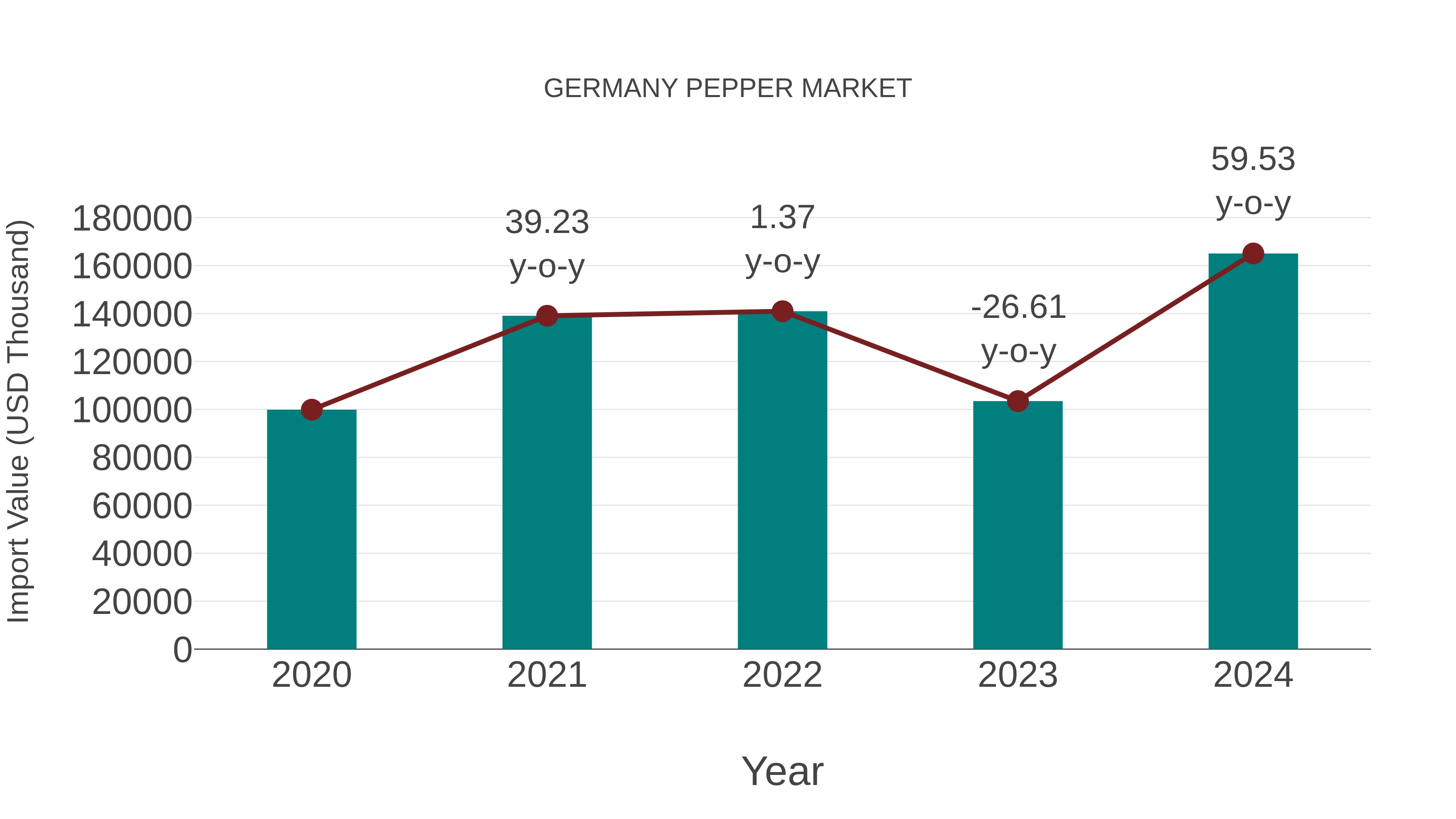
Germany`s import trend for the pepper market saw significant growth from 2023 to 2024, with a growth rate of 59.53%. The compound annual growth rate (CAGR) for the period 2020-2024 stood at 13.38%. This robust import momentum could be attributed to shifting consumer preferences towards diverse cuisines, driving demand for pepper imports in Germany.
Germany Pepper Market Overview
The Germany Pepper Market is characterized by steady demand and consumption due to its versatile use in culinary applications. Black pepper is the most commonly consumed type in the market, followed by white pepper and other specialty varieties. The market is driven by factors such as increasing awareness of the health benefits of pepper, growing preference for natural and organic ingredients, and the popularity of ethnic cuisines. Germany`s strong economy and high standards for food quality also contribute to the steady growth of the pepper market. Key players in the market include both domestic and international suppliers, with a focus on quality, sustainability, and innovation. Overall, the Germany Pepper Market is expected to continue its growth trajectory driven by consumer preferences for flavor-enhancing ingredients and the expanding food industry.
Germany Pepper Market Trends
Currently, the Germany Pepper Market is experiencing a shift towards organic and sustainably sourced peppers. Consumers are increasingly looking for products that are free from pesticides and chemicals, leading to a growing demand for organic peppers. Additionally, there is a rising interest in specialty peppers such as smoked, fermented, or exotic varieties, as consumers seek unique flavors and culinary experiences. The market is also witnessing an increase in online sales of peppers, driven by the convenience and variety offered by e-commerce platforms. Health-conscious consumers are driving the demand for peppers high in nutritional value, such as those rich in vitamins and antioxidants. Overall, the Germany Pepper Market is evolving to meet the changing preferences and demands of consumers towards healthier, more diverse, and ethically sourced pepper products.
Germany Pepper Market Challenges
Challenges in the Germany Pepper Market include stiff competition from other spice alternatives, fluctuating prices due to global supply chain disruptions and changing weather patterns affecting pepper crops, and strict regulations on food imports and quality standards. Additionally, consumer preferences for organic and sustainably sourced peppers present a challenge for traditional producers. The market is also impacted by currency exchange rates and economic uncertainties, which can affect import costs and consumer purchasing power. To succeed in this market, companies need to adapt to changing consumer preferences, invest in sustainable sourcing practices, and maintain competitive pricing strategies while ensuring compliance with quality standards and regulations.
Germany Pepper Market Investment Opportunities
In the Germany pepper market, there are several investment opportunities to consider. One option is investing in organic pepper production, as the demand for organic and sustainably grown peppers is on the rise due to increasing consumer preferences for healthier and environmentally friendly products. Another opportunity lies in value-added pepper products such as pepper sauces, spice blends, and flavored oils, which cater to the growing trend of gourmet cooking and culinary experimentation. Additionally, investing in technology and automation for pepper cultivation and processing can enhance efficiency and yield, leading to cost savings and higher profitability. Overall, the Germany pepper market offers diverse investment avenues that cater to evolving consumer preferences and market trends.
Germany Pepper Market Government Policy
Government policies in Germany related to the Pepper Market primarily focus on ensuring food safety, quality standards, and fair trade practices. The German government regulates pepper imports to maintain quality control and prevent the entry of substandard products. The market is also governed by agricultural policies that support sustainable farming practices and provide subsidies to local pepper producers. Additionally, there are strict labeling requirements to inform consumers about the origin and quality of the pepper they are purchasing. The government also plays a role in monitoring prices to prevent market manipulation and ensure fair competition among market players. Overall, the regulatory framework in Germany aims to protect consumer interests, promote domestic production, and maintain the reputation of German pepper in the global market.
Germany Pepper Market Future Outlook
The Germany Pepper Market is expected to experience steady growth in the coming years, driven primarily by increasing consumer demand for healthy and flavorful food products. Factors such as the growing popularity of ethnic cuisine, rising awareness about the health benefits of peppers, and the expanding food industry are likely to contribute to market expansion. Additionally, the trend towards organic and sustainable food products is expected to further boost the demand for high-quality peppers in the market. However, challenges such as fluctuating weather conditions impacting crop yields and price volatility may pose some hindrances. Overall, with the evolving consumer preferences and the focus on quality ingredients, the Germany Pepper Market is anticipated to show positive growth prospects in the foreseeable future.
Key Highlights of the Report:
- Germany Pepper Market Outlook
- Market Size of Germany Pepper Market, 2025
- Forecast of Germany Pepper Market, 2032
- Historical Data and Forecast of Germany Pepper Revenues & Volume for the Period 2022 - 2032F
- Germany Pepper Market Trend Evolution
- Germany Pepper Market Drivers and Challenges
- Germany Pepper Price Trends
- Germany Pepper Porter's Five Forces
- Germany Pepper Industry Life Cycle
- Historical Data and Forecast of Germany Pepper Market Revenues & Volume By Nature for the Period 2022 - 2032F
- Historical Data and Forecast of Germany Pepper Market Revenues & Volume By Organic for the Period 2022 - 2032F
- Historical Data and Forecast of Germany Pepper Market Revenues & Volume By Conventional for the Period 2022 - 2032F
- Historical Data and Forecast of Germany Pepper Market Revenues & Volume By Product Type for the Period 2022 - 2032F
- Historical Data and Forecast of Germany Pepper Market Revenues & Volume By White for the Period 2022 - 2032F
- Historical Data and Forecast of Germany Pepper Market Revenues & Volume By Black for the Period 2022 - 2032F
- Historical Data and Forecast of Germany Pepper Market Revenues & Volume By Green for the Period 2022 - 2032F
- Historical Data and Forecast of Germany Pepper Market Revenues & Volume By Red for the Period 2022 - 2032F
- Historical Data and Forecast of Germany Pepper Market Revenues & Volume By Application for the Period 2022 - 2032F
- Historical Data and Forecast of Germany Pepper Market Revenues & Volume By Food and Beverage for the Period 2022 - 2032F
- Historical Data and Forecast of Germany Pepper Market Revenues & Volume By Personal Care for the Period 2022 - 2032F
- Historical Data and Forecast of Germany Pepper Market Revenues & Volume By Others for the Period 2022 - 2032F
- Historical Data and Forecast of Germany Pepper Market Revenues & Volume By Form for the Period 2022 - 2032F
- Historical Data and Forecast of Germany Pepper Market Revenues & Volume By Whole Pepper for the Period 2022 - 2032F
- Historical Data and Forecast of Germany Pepper Market Revenues & Volume By Powdered Pepper for the Period 2022 - 2032F
- Germany Pepper Import Export Trade Statistics
- Market Opportunity Assessment By Nature
- Market Opportunity Assessment By Product Type
- Market Opportunity Assessment By Application
- Market Opportunity Assessment By Form
- Germany Pepper Top Companies Market Share
- Germany Pepper Competitive Benchmarking By Technical and Operational Parameters
- Germany Pepper Company Profiles
- Germany Pepper Key Strategic Recommendations






































